"The process is logical, and works very well in an environment where success or failure can be trivially measured and is hard to game."
Let me stop you right there
"Up or Out" is an HR phillosophy that was pioneered by New York law firm Cravath, Swaine & Moore, and later implimented in environments as diverse as McDonalds and the US military by McKinsey & Bain. It is based on the idea that staff tend to rise to positions at which they are insufficiently competant to be promoted [Peter Principle]; such people suffer are a huge drag on organizational effectiveness, and since it is broadly illegal to demote people back to a role in which they are competant, they must be dismissed.
The process is logical, and works very well in an environment where success or failure can be trivially measured and is hard to game. Doubly so in industries in which experience of failure is of little or no value. I'll leave it to you to assess the quality of match for this phillosophy and the officer corps.
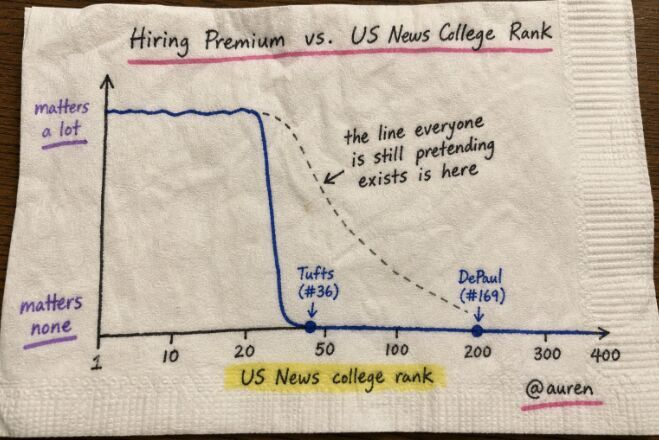
"Unless it's a top university, go to the cheapest one that you like."
This is the right advice for those deciding on which college to attend when thinking about future employment
Going to Boston University or Oberlin just won't matter
h/t @auren
The Army now has a “bring your own device,” option where you can check email from your personal cell. Being able to check work emails from your personal phone feels like a blessing, but it’s actually a curse.
Do not recommend
What actually changed my life was learning to do things I hated every single day.
Some people read the early chapters of Troubled and say, “I can’t recognize this person. How does the teenage kid I’m reading about become the person I’m speaking to now?”
The answer is simple: if you spend eight years in the military, you’re going to change.
And it took all eight of those years for me to reshape my personality, my outlook, and my priorities to the point where I could function as a self-sufficient adult.
I initially enlisted for four years. One of the most important lessons I learned during that time was that motivation is overrated. It took me a long time to understand this, but motivation is just a feeling. Do I want to do this? Do I not want to do this? Do I feel inspired today?
Self-discipline matters more than motivation. Self-discipline means doing what needs to be done regardless of how you feel. It means sticking to healthy routines and making good decisions even when you don’t feel motivated. If you can string together enough productive days over a long enough period of time, your life will begin to improve.
What’s happening internally, in terms of motivation or lack of motivation, matters less than people think. The real question is: can you do it anyway?
At first, that discipline was imposed from the outside. In basic training, the instructors enforce structure and routine. But over time, that external discipline gradually becomes internal self-discipline.
Even after my first four years in the Air Force, from ages seventeen to twenty-one, I knew I still wasn’t ready to leave that rigid structure behind. I understood that I needed more time inside an environment that demanded responsibility and consistency from me. So I reenlisted for another four years.
By the time I was twenty-four or twenty-five, I was finally prepared.
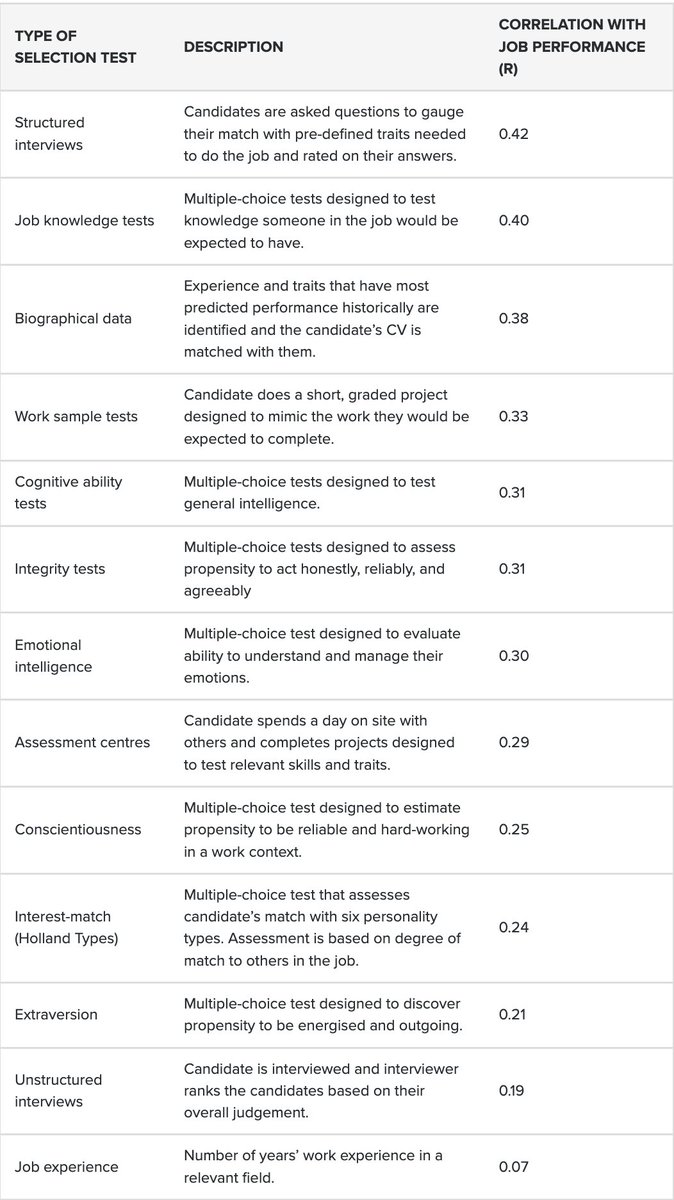
The worst predictors of job performance, according to hundreds of studies and the best meta-analysis available:
1. Years of experience
2. Unstructured interviews
3. Personality-match
What best predicts performance:
1. Structured interviews
2. Objectively tested biographical predictors
3. Work sample tests
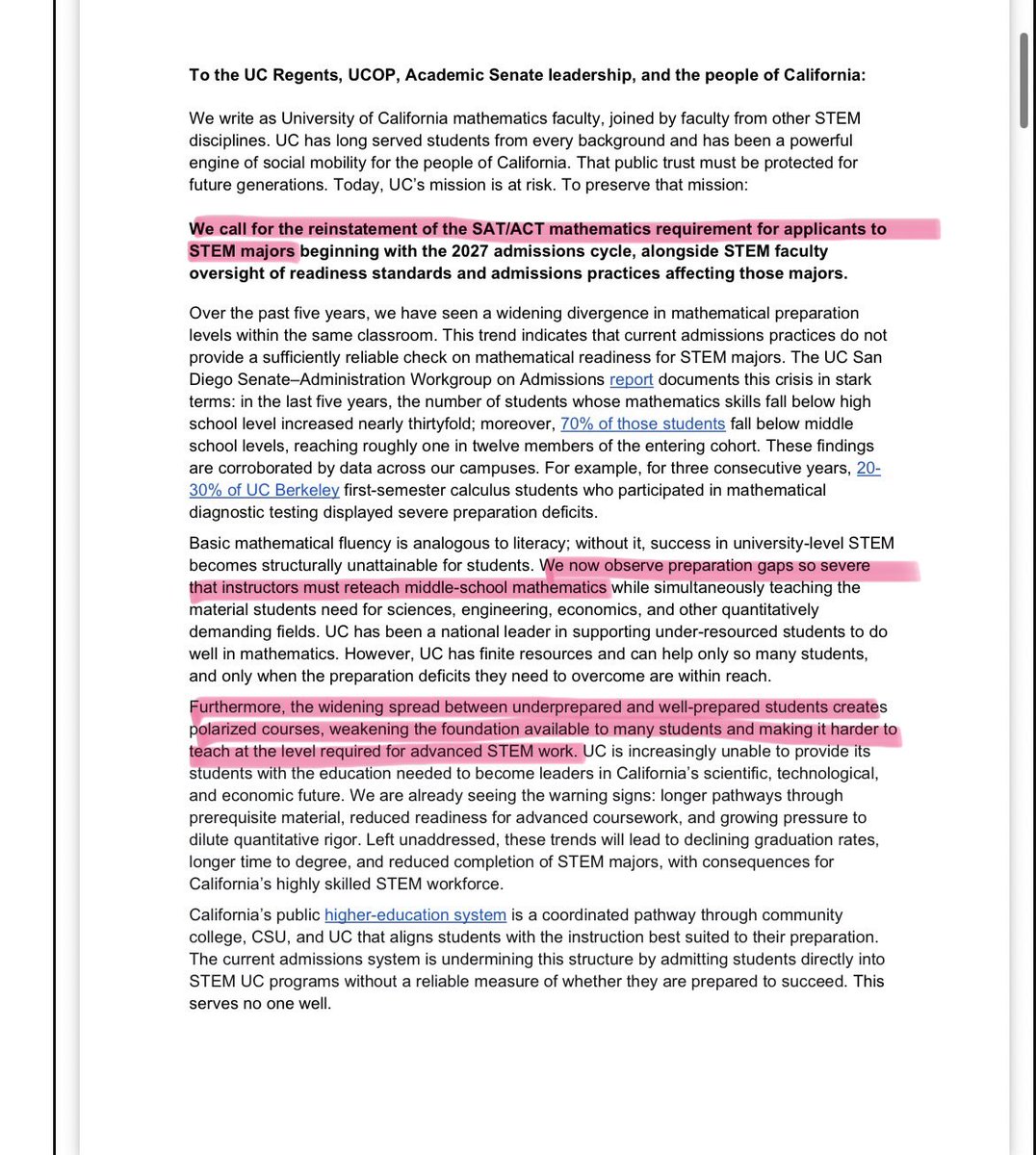
University of California STEM professors want standardized tests back due to severe math deficiencies among students:
“We now observe preparation gaps so severe that instructors must reteach middle school mathematics”
“The current admissions metric, based primarily on GPA & essays, can no longer reliably distinguish readiness for university-level STEM majors in an era of severe grade inflation & AI assisted application essays”
On this Memorial Day, I’m thinking about the rescue of the service member who went down in Iran.
The US is a place where we spend tremendous amount of resources to bring someone home.
So many foreigners commented negatively on it because, to them, people are a number and they have no issue enslaving their citizens and throwing away their lives in meet grinders.
Here, we’ve moved past that and will, hopefully, resist the urge to do things the European way, or the Eastern way.
A lot of people have complained about the cost of a $1 million to shoot down a $20k drone. Why? We wrap our troops in the best protection money can buy and the cost is shifting down at rapid speed.
The counter drone tech and disposable anti-drone drones tech is accelerating at amazing levels. The money won’t be an issue soon. We literally now have an anti-drone laser that is on its way to acceptance.
This is the best country in the world to be a voluntary service member and I hope that never changes.
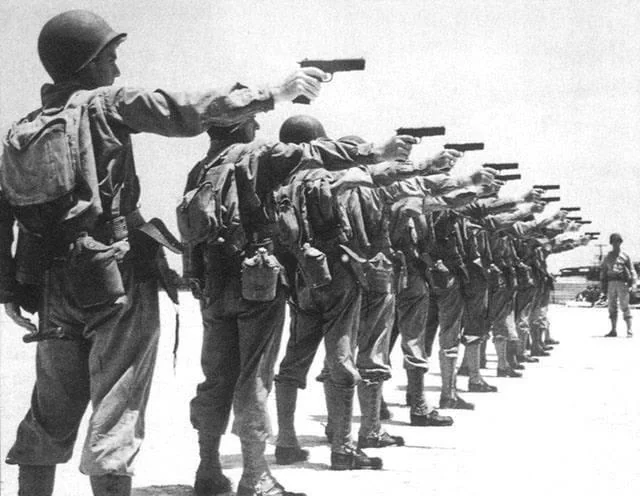
(TL;DR) Here's the thing about WW2. It called up millions of ordinary American men who were shoved into the IET pipeline—Initial Entry Training, aka: "Boot Camp," followed by specific jobs skills training—then spat out the other end as infantrymen, signalmen, artillerymen, adjutants, mechanics, truck drivers, tankers, et al.
And when it was all done? Most of them went back to civilian life. Their service (those who survived) ended when the war was over.
These were not professional soldiers. They were normies made to perform soldiering for a specific war, and only when the war was done did they exit the soldiering life. And went back to being normies again.
But the soldiering life gave them a shared experience they would keep with them. It provided a common nomenclature and emotional framework that could be referenced in an instant. Any setting or situation. Sometimes just even by guys looking at each other. They could tell.
(break whistle, guys sitting down to open lunch buckets)
"You in North Africa?"
"Naw, Bougainville. What about him over there?"
"Jumped from a Gooney Bird over France."
"I heard that was rough."
"Not as rough as The Bulge."
And so on, and so forth.
It was for many of them *the* singular touchstone of their lives. And it cut across economics, class, status, even ethnic barriers. A language of shared suffering, shared boredom, shared laughs, shared effort, sometimes shared terror, also sometimes tears, and ultimately formed a common-denominator vibrational bedrock which echoed through the decades. Influencing both families, and communities.
I think we need to build this.
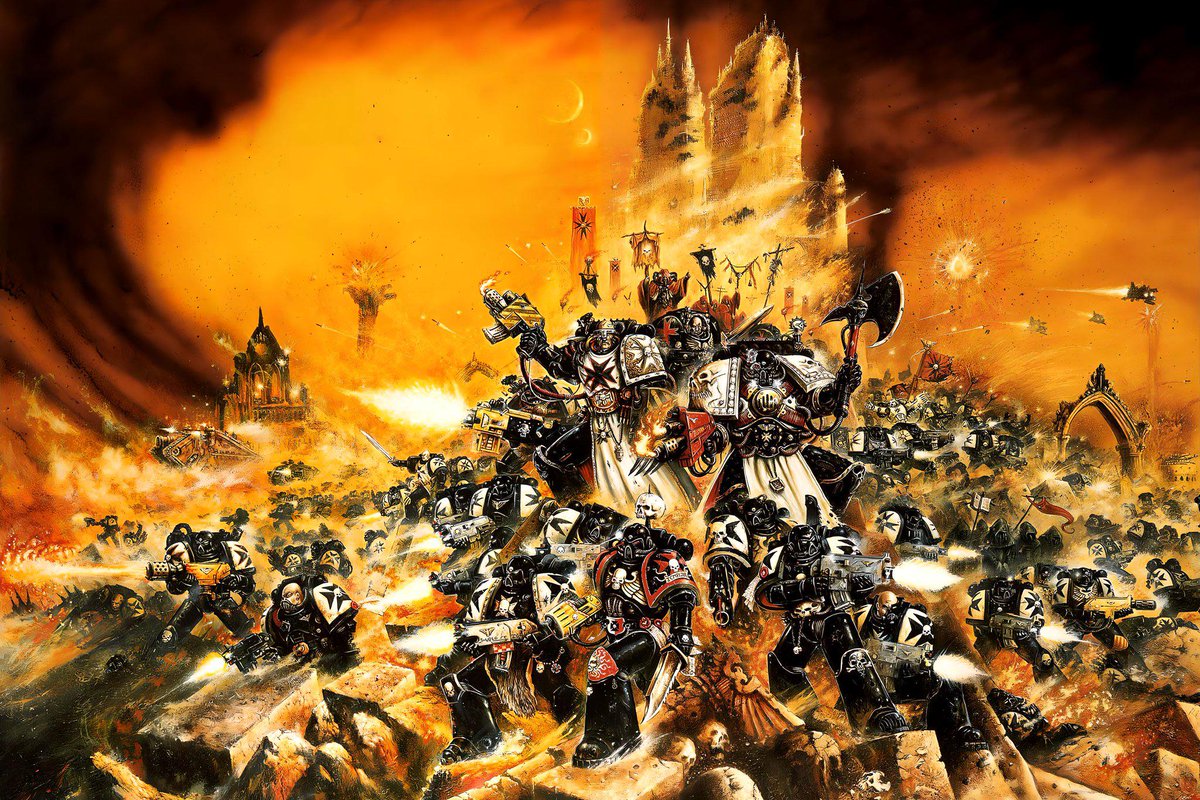
I designed this below image, representing Lewis and Clark on the Mississippi in the style of Argonath.
At $1 Billion or more, I think it can be done.
@MartinSkold2 Due to our internet age now versus then and then, I'm willing to press x to doubt. Trump memes have proliferated far beyond the few Bush memes, and there are basically no Clinton memes




![TheBlackHorse65's tweet photo. "Up or Out" is an HR phillosophy that was pioneered by New York law firm Cravath, Swaine & Moore, and later implimented in environments as diverse as McDonalds and the US military by McKinsey & Bain. It is based on the idea that staff tend to rise to positions at which they are insufficiently competant to be promoted [Peter Principle]; such people suffer are a huge drag on organizational effectiveness, and since it is broadly illegal to demote people back to a role in which they are competant, they must be dismissed.
The process is logical, and works very well in an environment where success or failure can be trivially measured and is hard to game. Doubly so in industries in which experience of failure is of little or no value. I'll leave it to you to assess the quality of match for this phillosophy and the officer corps.](https://pbs.twimg.com/media/HJ6CZV7WUAIAGdf.jpg)