Today's adoption of the revised Ambient Air Quality Directive marks a major win for clean air in Europe and beyond🎉
We urge member states to transpose this Directive into national law and implement these vital measures without delay: https://t.co/W5cR5jJvIO
#AirPollution#AAQD
Our real-time CO2 emission tracking indicates that the EU's emissions saw a big drop in 2023, falling below the pandemic levels in 2020. This is despite positive GDP growth and not accounted for by weather: clean energy, energy efficiency and savings are the drivers.
Devastated. The climate movement lost a real champion and I, my guiding light. Dr R Sreedhar supported movements from the ground up with his endless compassion and wisdom, took polluters head on in court, made a just transition real for so many, always advancing a better world.
🚨 BREAKING: Shell has reported £5.1 BILLION in profit for the last 3 months.
Ordinary people shouldn’t be paying to fix the climate crisis. Big Oil should.
In 2007, I emailed a bunch of people asking for help to register for the Bali COP. I was a PhD student. @SaleemulHuq’s reply came within seconds ‘come & meet me in London’. My story with @iied & climate fight began, my whole life was shaped. Now I am heartbroken beyond words💔
Please consider applying. Climate Policy Journal is a leading journal in the field, and getting stronger. This is an opportunity to develop real breadth of knowledge in this area, and to have a say in steering and shaping conversations. Please direct tweet me with any Qs.
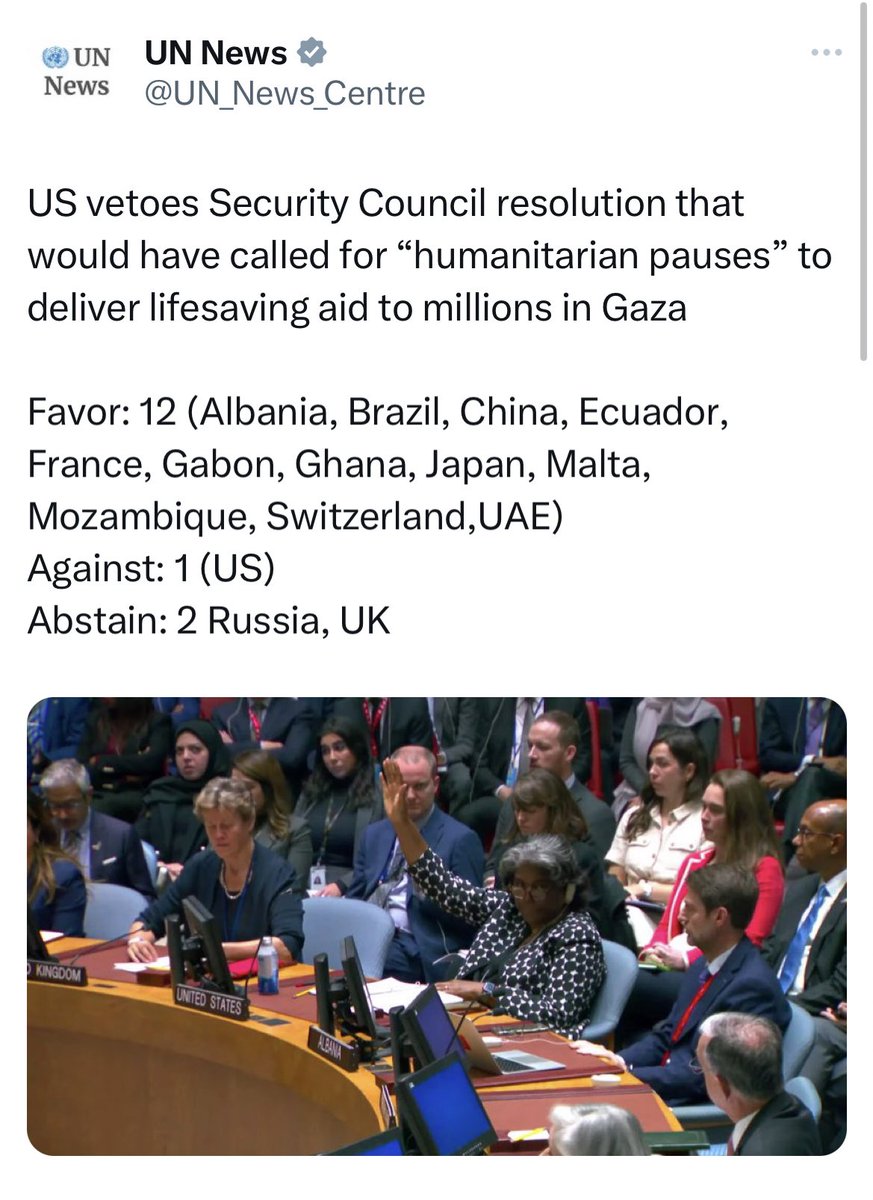
The @UN must be allowed access to deliver urgent humanitarian assistance to Palestinian civilians trapped & helpless in the Gaza Strip.
I appeal to the international community to mobilize immediate humanitarian support for this effort.
.@mohadow: "While daunting, the #greenenergy transition has the potential to transform billions of lives in the #GlobalSouth.
The Global South needs an #energy revolution built on innovation and new technology. NOT exploited labour. This must be done in a manner that protects local land rights and #indigenous communities' rights."
I was once again explaining to a reporter this week that South Africa's chronic power shortage has nothing to do with lack of power capacity. Rather, it is caused by excess capacity. As China, India, South Africa and many other countries chase the illusion of fixing their electricity shortage problems by adding more capacity to an already oversupplied grid, I think this basic insight needs to be laid out.
It seems hard for both laypeople and professionals who are used to well-managed grids to understand how overcapacity leads to power shortages and power cuts. South Africa and the country's national power company Eskom are the perfect case study, so let's zoom in a bit.
South Africa has been suffering from scheduled power cuts ("load-shedding") for years. It's an enormous drag on quality of life and the economy of the country.
The layperson intuition goes: if the lights keep going out, it must be the case that there aren't enough power plants to supply all the power we need. Why would we be through this otherwise?
Look at the numbers, and the story is completely different: the largest amount of power that South Africa has consumed from the grid during any hour of this year is 33 gigawatts. The country has 43.5 GW operating coal-fired capacity, 1.9 GW nuclear, 3.4 GW gas- and oil-fired capacity, 3.3 GW hydropower and pumped storage.
So all in all, there should be 52 GW power generating capacity in South Africa with fully controllable output in a system where no more than 33 GW needs to be delivered at any given time to keep the lights on and avoid load-shedding.
In the numbers above, I've excluded grid-connected wind and solar due to their variability, which means that they can't be guaranteed to be available when power demand peaks. The demand numbers are "residual demand", meaning generation from rooftop solar is subtracted.
So it's not lack of capacity - something else is going on. It takes money and effort to keep power plants operating reliably. You have to carry out regular maintenance, replace parts, and operate the plant appropriately.
When you have too many power plants, operating at low utilization, all of which cost money to keep running reliably, you're saddled with high costs and low revenue. You're perpetually out of money to maintain your fleet and because the overcapacity creates a very high tolerance for plant failures, your best bet is to put off maintenance and hope enough capacity stays operable.
The euphemistic term "load-shedding" where cutting off electricity to paying customers is equated to shedding off a burden is in fact a perfect metaphor. The problem is that in an oversupplied system, power generators almost invariably lack the incentives to keep their plants running and meet customer demand.
In short, if there are no incentives or money to keep plants operating, having more of them is more likely to make things worse than to make them better.
Eskom has been running in a hamster wheel for years where everything keeps falling apart, they don't have enough operable capacity to meet demand and they don't have the money, the plan or the time to take their plants offline for proper planned refit.
The details vary in the case of China and India, of course. In India's case, free electricity handouts, electricity theft and tariffs set below costs mean that generators lose money if they increase supply particularly to rural customers. Instead of fixing the incentives, regulators keep promoting the addition of more capacity to spread the misery.
In China's case, government attempts to control electricity prices have led to situations where power tariffs are insufficient to cover fuel costs. This means that plants save money by not buying fuel or faking technical failures to avoid having to generate at a loss.
The vast redundant capacity in China also means that there has been little incentive to fix the issue of outdated and inflexible grid operation, which is the main reason for power shortages in China.
My hope for South Africa is that the debacle of continuous rolling blackouts reaches a point where a Eskom is broken apart and a plan put in place to close down a part of the fleet and refurbish the rest to high standards of reliability and at least rudimentary level of air pollutant emissions control. This is what happened in Central and Eastern Europe after the fall of the Soviet Union, although it too took time.
However, currently things are moving in the other direction - already scheduled decommissioning keeps getting postponed as the hamster wheel spins.
Policymakers are understandably dead scared of being blamed for power shortages. Regardless of the facts, because few people understand that more capacity doesn't solve most power shortages, power plant retirements or denial of permits for new projects is a ticket for getting blamed. So that's why more coal plants get approved and decommissioning gets postponed.
So for South Africa, the likely scenario is a utility death spiral where consumers vote with their feet and Eskom falls into irrelevance.
MAJOR victory today 🎉
In 2021, we proposed the Climate Corps and launched a massive inside-outside organizing effort to win it.
Today, the American Climate Corps has finally come true.
Thank you to @POTUS and the countless communities and organizers who made this a reality💪🏽
🗞️ TODAY: @IKEAFoundation grants $2️⃣0️⃣M to champion #JustTransition plans in Indonesia, South Africa & Vietnam, centering community voices at the heart of the energy transition process.
Learn about our plan towards an equitable & #JustGlobalSouth: https://t.co/FnU7kMKwpx
🧵⤵️