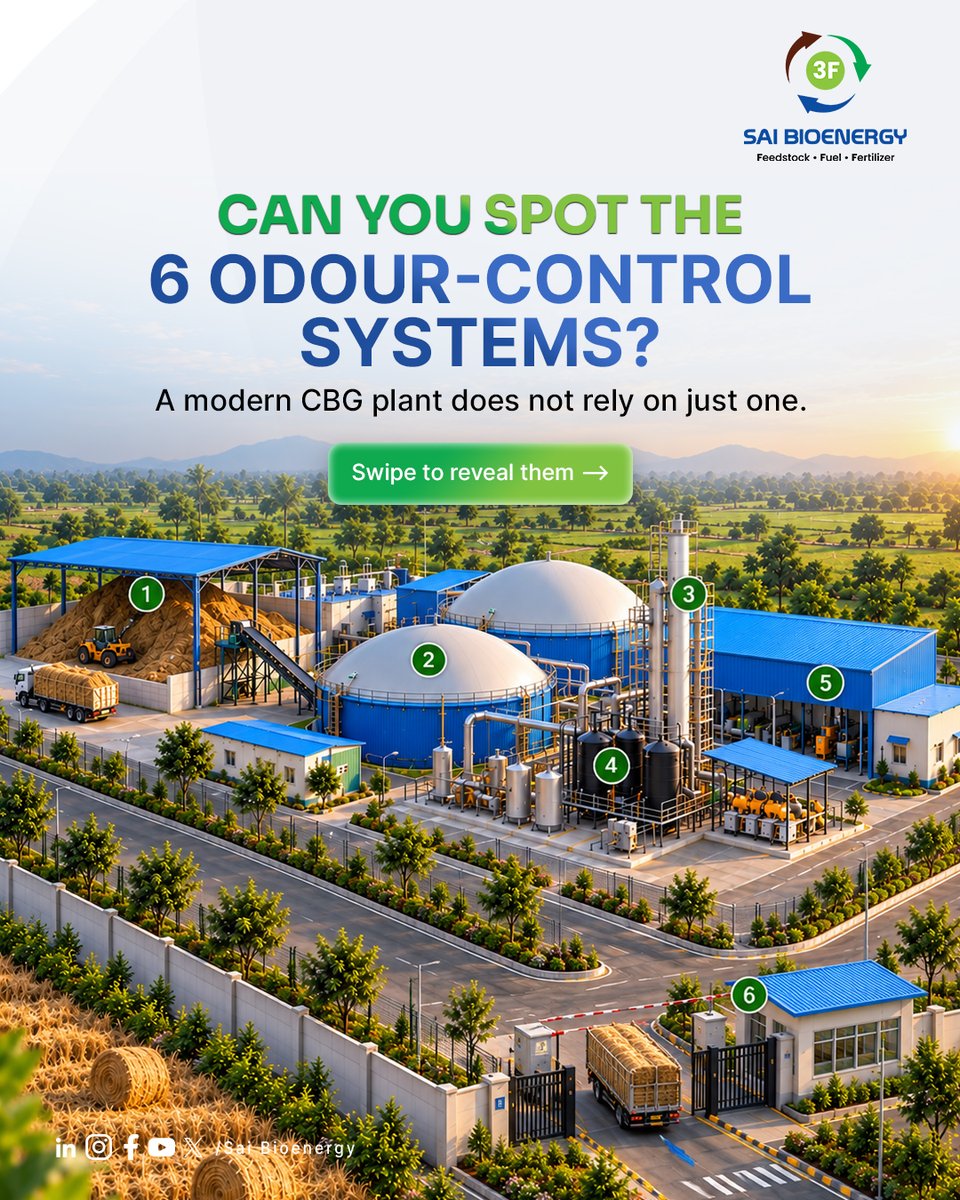
When people ask whether a CBG plant will smell, they deserve more than a simple assurance.
They deserve to understand the systems behind odour control.
Covered handling.
Sealed digestion.
Enclosed pipelines.
H₂S scrubbing.
Closed storage.
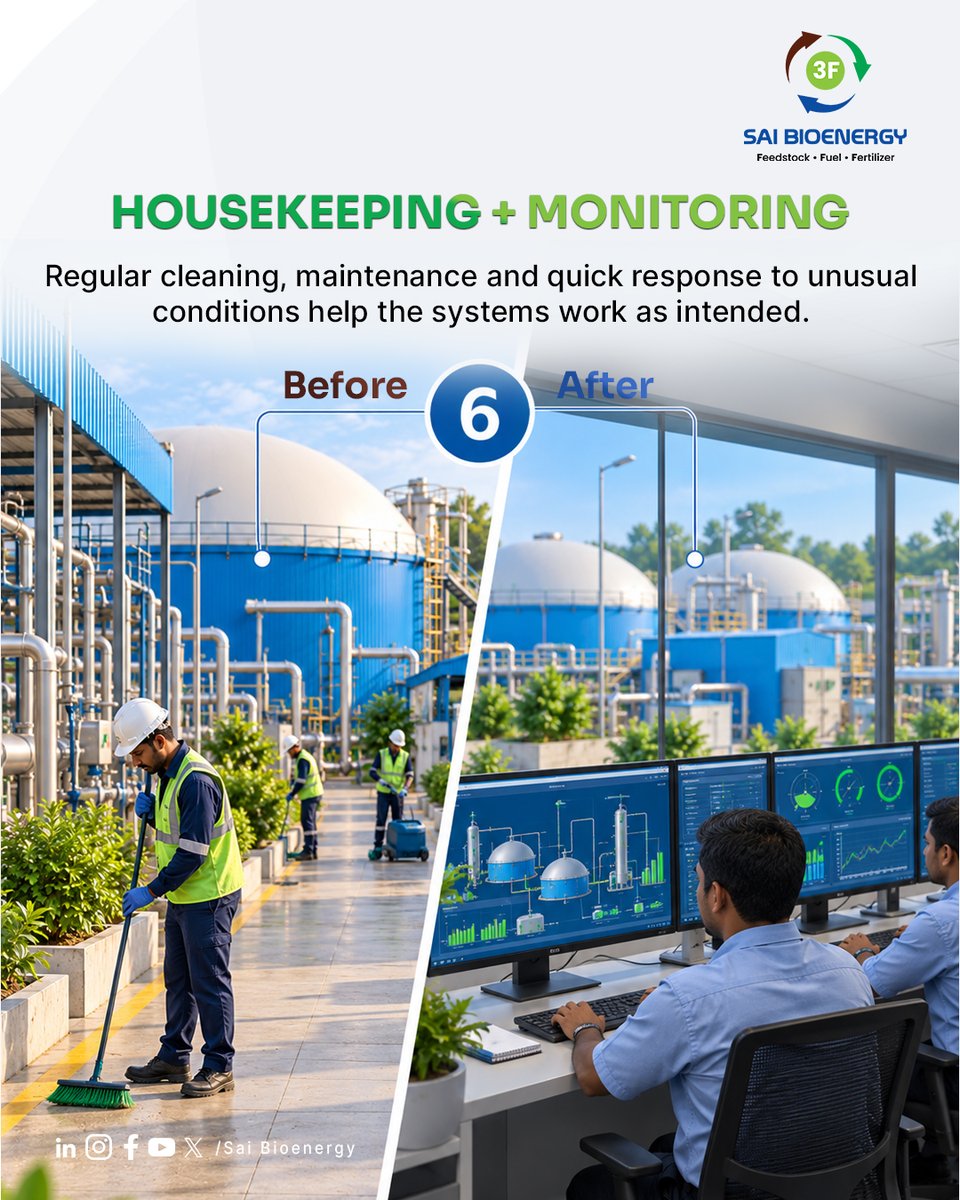
Routine housekeeping.
Regular monitoring.
That is how a modern CBG plant can manage odour during normal operations.
#viral#CBG#CompressedBiogas#BioCNG#Biogas#OdourControl#Bioenergy
Farmers have always been "Annadata", providers of food. Can they also be "Urjadata", providers of renewable energy?
Farm waste used to produce CBG, can create renewable fuel while also returning biofertilizer to agriculture.
What does “Annadata to Urjadata” mean to you?
Paddy straw can become renewable fuel and fertilizer. Depending on feedstock quality, 8–14 kg can yield 1 kg of renewable CBG plus ~1.4 kg wet fermented organic manure among other byproducts.
Feedstock → Fuel → Fertilizer
#CBG#CircularEconomy#PaddyStraw#SaiBioenergy
Farm waste is given a new life when collected and sold to a Compressed Biogas plant. It is processed and used in the manufacturing of Bio-CNG that can be used as fuel for automobiles, cooking gas and for industrial purposes.
#SaiBioenergy#CircularEconomy#CBG#Sustainable
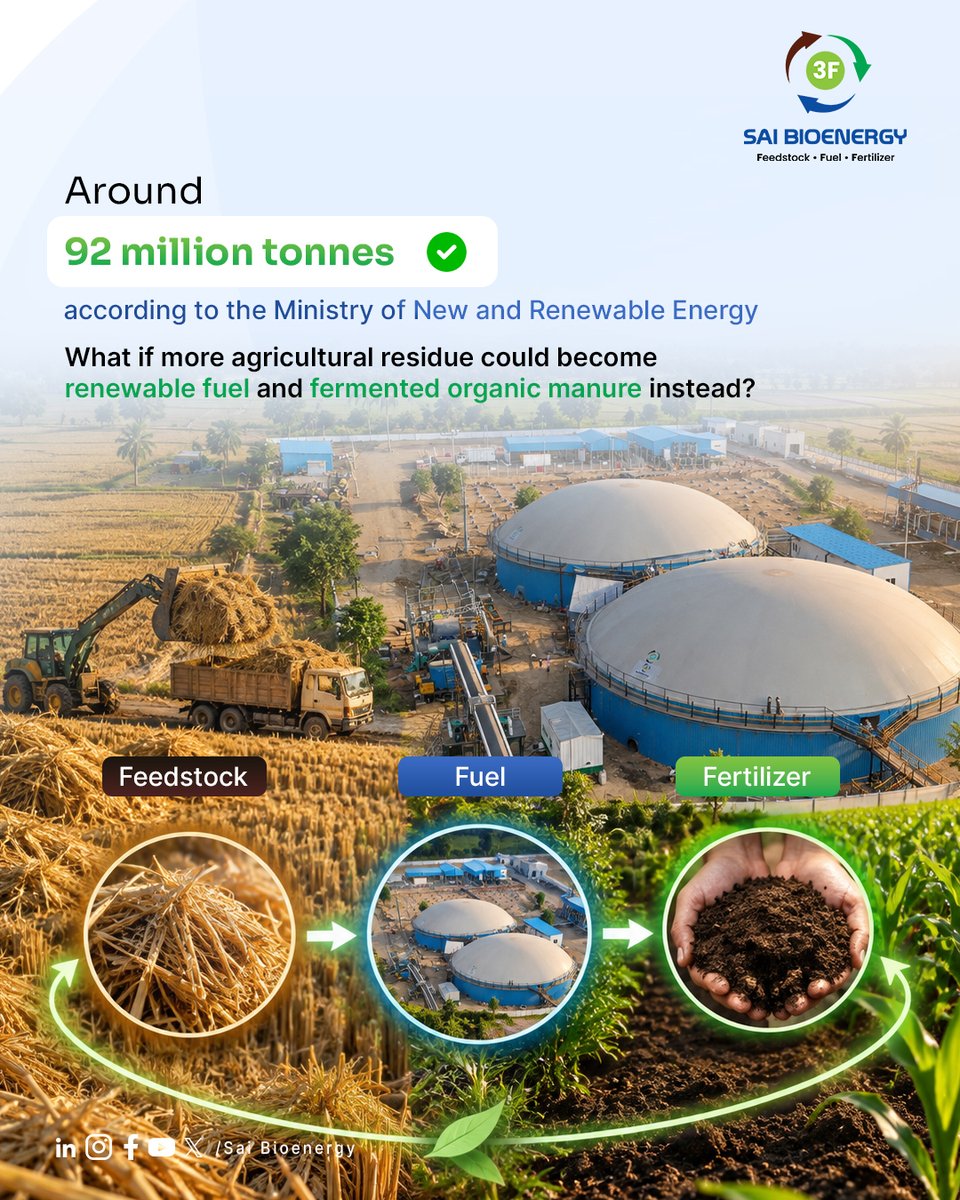
When suitable agricultural residue is used as feedstock for Compressed Biogas, it can help create renewable fuel and fermented organic manure for agriculture—keeping resources in use for longer.
That is the circular economy in action:
Feedstock → Fuel → Fertilizer.