Value investing. Back or not back? Best long term strategy or not? Look at the performance of Temple Bar and you will see it is most definitely back for Ian Lance (Temple Bar). Standout performance - and really interesting chat on the portfolio. https://t.co/h3m1ej3RFH
The Soviet Union turned the Aral Sea from the world's fourth-largest lake into a toxic wasteland in just forty years, directly causing one of history’s worst human-caused ecological catastrophes.
Adding to central planning's disastrous environmental record: when bureaucrats control resources, they destroy them faster than any capitalist ever could.
In 1960, Moscow's planners decided Uzbekistan and Kazakhstan should grow cotton for the empire. They diverted the Amu Darya and Syr Darya rivers to irrigate two million hectares of desert. The Aral Sea, deprived of its water sources, began shrinking immediately. By 2000, it had lost 75% of its volume. Today, rusted fishing boats sit in what locals call the Aralkum Desert.
The economic logic was textbook central planning stupidity. Cotton prices were set artificially high by the state, making the crop appear profitable on paper. The true costs never entered any calculation: the destruction of a fishing industry that employed 60,000 people, the collapse of local climate patterns, the salt storms that now poison crops 500 kilometers away. Private property owners would have factored these externalities into their decisions. The Politburo simply ignored them.
Markets can misprice things temporarily. States can eliminate entire ecosystems permanently. The Aral Sea disaster killed 24 fish species, created 150,000 square kilometers of new desert, and gave the region some of the world's highest rates of throat cancer and kidney disease.
Private actors respond to price signals and bear the costs of their mistakes. Central planners respond to political signals and force others to bear the costs of their disasters.
NINJA loans represent the most grotesque perversion of credit allocation you can imagine: bankers handing out half-million-dollar mortgages to people with no income, no job, and no assets. The acronym itself mocks every principle of sound banking. Yet somehow, an entire industry convinced itself this made sense.
You might wonder how any rational banker could approve such loans. These weren't private banks risking their own capital. Government-sponsored enterprises Fannie Mae and Freddie Mac purchased these loans, removing all risk from the originating banks. Socializing losses while privatizing gains produces reckless lending on an industrial scale.
The Federal Reserve kept interest rates artificially low from 2001 to 2004, flooding the economy with cheap credit. Banks had excess reserves burning holes in their balance sheets. Meanwhile, the Community Reinvestment Act pressured banks to lend in "underserved" communities, regardless of creditworthiness. Add deposit insurance through the FDIC, and you eliminate the market discipline that would normally prevent such insanity.
Free market economists predicted this disaster years before 2008. Government distorts price signals, and malinvestment follows as surely as night follows day. Yet when the inevitable collapse arrived, the same politicians who created these perverse incentives blamed "market failure" and "greed."
The state creates moral hazard, then acts shocked when people respond to the incentives you place in front of them.
The 19th century was history's greatest experiment in minimal government and maximal human flourishing. You had a federal budget that consumed roughly 3% of GDP, zero income tax until 1913, and a monetary system anchored to gold. The results speak louder than any economic theory: America transformed from an agricultural backwater into the world's industrial powerhouse in less than a century.
Consider the numbers. Real wages doubled between 1860 and 1890. Railroad mileage exploded from 30,000 miles in 1860 to 164,000 miles by 1890. Steel production jumped from 77,000 tons in 1870 to over 4 million tons by 1890. No central planning committee orchestrated this transformation. No industrial policy czar allocated resources. Entrepreneurs risked their own capital, succeeded or failed on their own merits, and consumers voted with their wallets.
The government's role was enforcing contracts and protecting property rights. No antitrust lawsuits against successful companies. No bailouts for failed ventures. No regulatory agencies strangling innovation in its cradle. When Jay Gould built his railroad empire, he answered to bondholders and customers, not bureaucrats. When Andrew Carnegie revolutionized steel production, the market rewarded efficiency and punished waste.
Critics love to mention the "robber barons" while ignoring that these men drove down prices and improved quality through relentless competition. Standard Oil reduced kerosene prices by 90% between 1870 and 1897. Carnegie slashed steel prices so dramatically that skyscrapers became economically viable. They got rich by making everyone else better off.
Today's economists worship GDP growth rates of 3% as miraculous achievements. Nineteenth-century America routinely posted growth rates above 4% with no stimulus packages, quantitative easing, or industrial policy. They had economic freedom and sound money.
Looking forward to interviewing Russell Jones tomorrow about his career in finance for the WCIB Oral History Project.
He is also the author of this (amongst other well regarded books) insiders tale
https://t.co/MSlY19VMn7
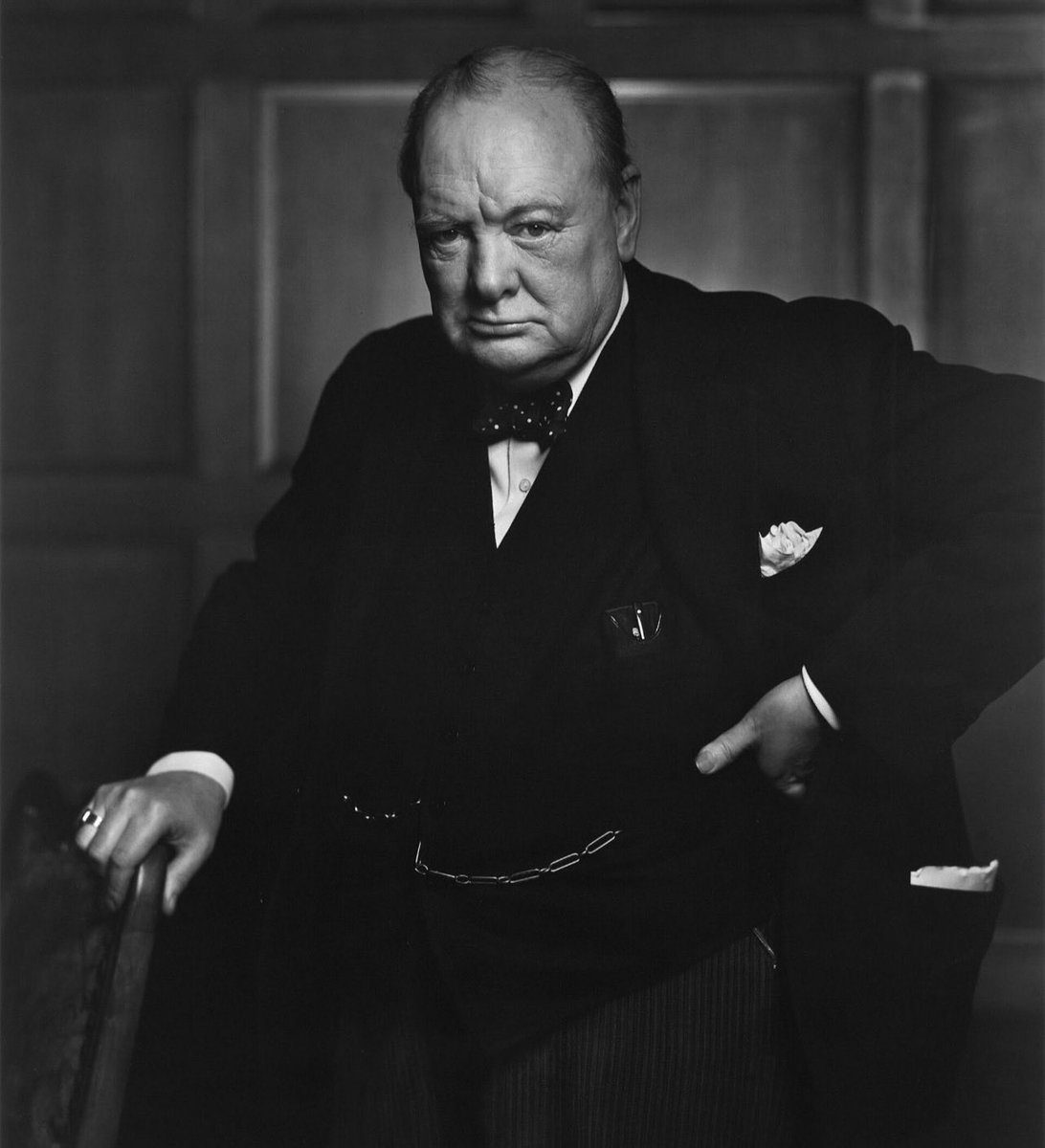
“Never give in. Never give in. Never, never, never, never-in nothing, great or small, large or petty-never give in, except to convictions of honour and good sense. Never yield to force. Never yield to the apparently overwhelming might of the enemy.”
-Winston Churchill
The government's view of the economy could be summed up in a few short phrases: If it moves, tax it. If it keeps moving, regulate it. And if it stops moving, subsidize it.
-Murray Rothbard