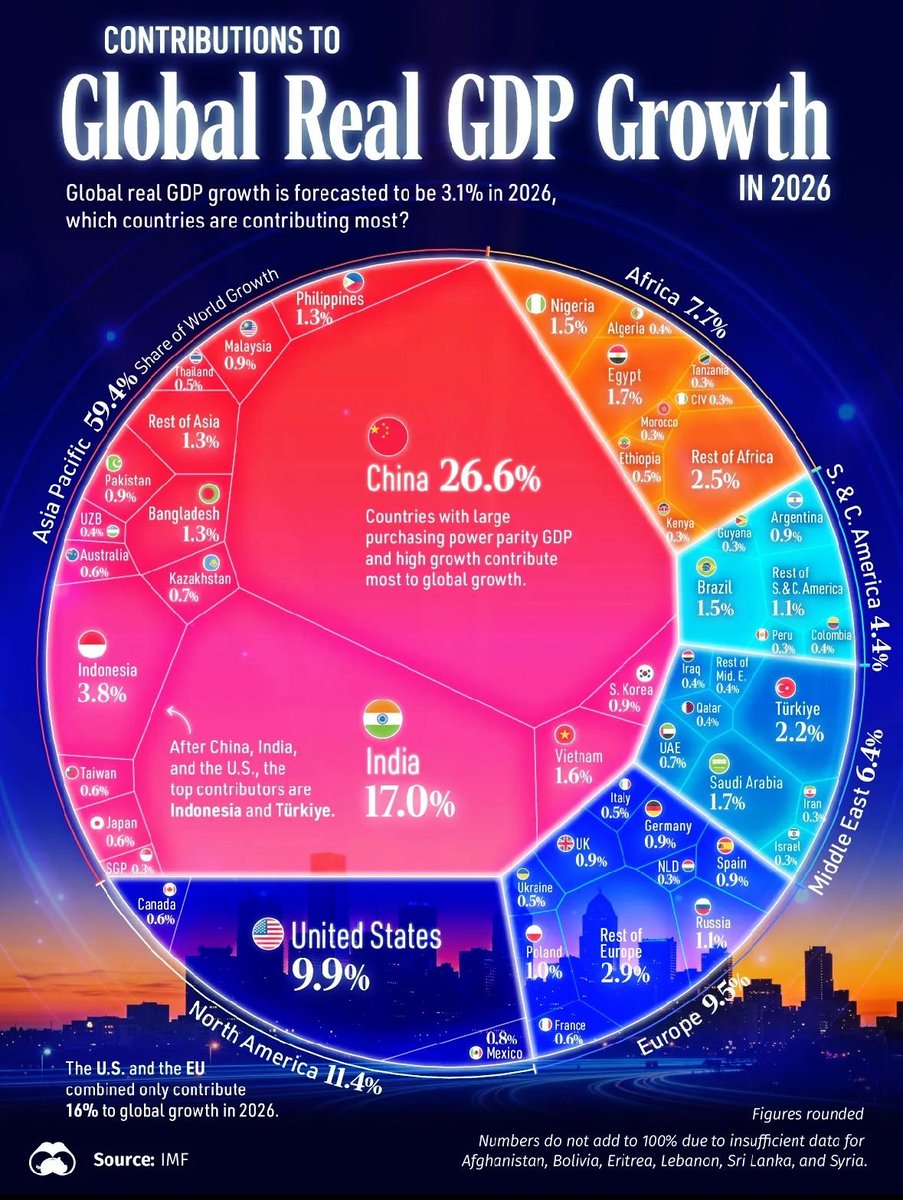
Global real GDP growth: ~3.1%
🇨🇳 China: 26.6% of incremental growth
🇮🇳 India: 17.0% (domestic demand + demographics)
🇺🇸 US: 9.9%
➡️ China + India = 40%+ of global growth.
#GlobalEconomy#India#China#GDP#Growth2026
BluSmart was a loot, not a startup.
SEBI has laid it bare: Anmol & Puneet Jaggi raised ₹975 Cr, routed ₹200+ Cr through a car dealer, and funneled crores into companies they privately owned.
Anmol alone pulled out Rs. 25.16 Cr.
•Rs. 6.2 Cr to his mother
•Rs. 3 Cr to his wife
•Rs. 1.8 Cr in foreign currency
•Golf kits, Titan, travel and spa bills - it’s all in the order.
This wasn’t mismanagement.
This was design.
But still there are founders supporting them saying “They meant well.”
No.
This was fraud - wrapped in ESG, hyped by PR, and funded by silence.
🇮🇳 "Fancy ice creams, hyperfast groceries... but where’s the real innovation?"
Union Minister @PiyushGoyal calls for a reality check on Indian startups at @StartupMhakumbh ⚡️
Here's what he said about China—and what should India focus on? 👇
#Startups#IndiaVsChina #TechInnovation #StartupEcosystem @PiyushGoyalOffc@CimGOI
Starting from May 1, 2025 -
ATM Cash withdrawal fee:
Rs. 17 – Rs. 19 per transaction
Balance inquiry fee:
Rs. 6 – Rs. 7 per transaction
Retail customers will be the ones affected mostly
Effective from May 1, 2025, customers will have a limit of five free transactions at their own bank's ATMs and additional limited free transactions at other bank ATMs based on location.
Details 🔗 https://t.co/FhG10PImGj
#RBI
Had a great time at Expert Edge event of E-Summit 2025 @IIT Madras where I had the privilege of being a Finance Mentor to startups. Was amazed at the innovative ideas the founders are working on -each with potential to disrupt industries & solve real-world problems
#startups
Answering the million-dollar question: Old regime or new regime?
Here's a table that answers all your questions
For example, at ₹13.25 lakhs of income, you'll need more than ₹5 lakhs of deductions in old regime to pay less tax than new regime
Retweet to spread awareness🔁
Amidst the chatter about factchecking by @ABC@LinseyDavis@DavidMuir, want to mention that CFOs are the ones who fact checks the claims made by Business leaders with numbers. In the long run, this rigorous approach will help the business succeed and can be a key differentiator
The Reserve Bank of India (RBI) has recently imposed stringent provisioning requirements on banks for issuing infrastructure loans, in a bid to discourage high-risk lending*. This move comes in the wake of past delays and defaults on infrastructure projects, which have historically contributed to significant non-performing assets (NPAs) in the banking sector.
Under the new norms, banks are required to set aside provisions ranging from 1% to 5% of the loan amount, depending on the stage of the project. This is a significant increase from the previous norm of 0.4% throughout the loan tenure. These new norms are expected to impact various critical infrastructure sectors, including highway construction, power generation, renewable energy, and communication, all of which are vital for India's economic growth.
The response from infrastructure companies and banks has been mixed. While some view this as a necessary step to mitigate risks, others consider the rules to be onerous. Industry bodies like the National Highways Builders Federation (NHBF) have expressed concerns about increased borrowing costs and consequent delays.
Although provisions are marked as liabilities on the bank's balance sheet and no separate physical cash is parked, this move can significantly impact the bank's valuations, liquidity position, lending capacity, and loan book expansion, thereby affecting the country's economic growth.
In the current scenario of high interest rates being maintained over long periods, the RBI should consider easing provisioning norms, especially for critical infrastructures such as energy and renewables. This is particularly important given India's escalating power requirements, with the country meeting a record maximum power demand of 250 GW on May 30, led by a combined impact of weather-related loads and growing industrial and residential power consumption.
If the RBI's main focus is to protect banks and depositors from the risks associated with infrastructure projects, guidelines can be revised to ensure that the same average level of provisioning as before (0.4%) is required across the lifetime of the loan. Higher levels (>0.4%) can be set aside in the beginning, while lower levels (going close to 0%) can be maintained after the project becomes operational and starts generating profits. Since the provisioned capital has no other use except to reduce the lending capacity of banks, such norms would ensure higher overall liquidity in the banking sector and further fuel economic growth without considerable risks.
#RBI #EconomicReforms #Infrastructure #Banks #Provisions #ViksitBharat #IndiaGrowthStory #EconomicStimulus #RenewableEnergy #SustainableDevelopment
*Also see https://t.co/uVliZFoWi3