@DeepSafe_AI The distinction is important: post quantum security protects the signature scheme, while MPC protects the authorization process. Will be success sir
A pilot announced Monday is explicitly a post-quantum project. What it paired that with is the more interesting half.
The Responsible Fintech Institute convened the pilot; Safeheron leads the protocol work. Wallet generation and transfers are being tested on a quantum-resistant NEAR testnet, using an MPC protocol that supports ML-DSA-65 — one of the parameter sets standardized in NIST FIPS 204. Abu Dhabi Global Market, Malta's Financial Services Authority and Bhutan's Gelephu Financial Services Office are listed as regulatory participants, observing in the first phase; Bison Bank and DK Bank are the participating banks. Safeheron says the underlying protocol technology will eventually be open-sourced.
The pilot includes a "tentative" non-custodial 2-of-2 MPC participation design. Under that proposed policy, every signature would require both MPC participants; neither share would be sufficient on its own.
The pilot pairs a post-quantum signature scheme with a model in which no single share can produce a signature.
Post-quantum work matters, and it answers a different question: whether a signature scheme stays unforgeable against a quantum-capable adversary, not how many parties had to take part before one was produced. The pilot treats those as two requirements rather than one. That distinction is worth keeping.
CRVA starts from the second of those requirements. Under threshold MPC, signing authority is distributed: a valid signature requires contributions from enough participants, and no participant can produce one alone. That is a comparison about authorization structure, not a claim that CRVA uses ML-DSA.
Quantum resistance is a property of the signature scheme. Whether one party can authorize a transfer by itself is a property of the signing design.
Source: https://t.co/m7UzAGyb9U
#DeepSafe #CRVA #MPC
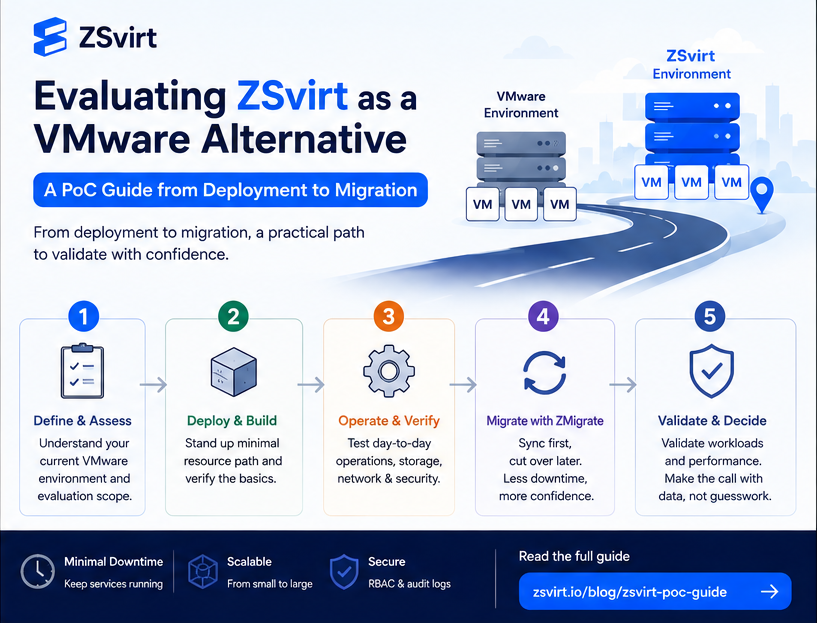
Evaluating a VMware alternative?
A PoC should be more than creating a VM.
1️⃣ Scope
2️⃣ Deploy
3️⃣ Operate
4️⃣ Verify
5️⃣ Migrate & validate
We put together a practical ZSvirt PoC guide.
Read the guide →https://t.co/eRUJ1MXdsN
#VMware#Virtualization#OpenSource