Make invisible science visible. 🔬
90+ interactive simulations for K–12, from plate tectonics to particle models. Students change the variables, watch what happens, and explain why.
🇬🇧🇫🇷🇪🇸 · NGSS-aligned · no student sign-up
12 are free 👉 https://t.co/cMGCe2GR1U
I used to teach science where I’d facilitate an experiment, stop it on occasion to explicitly teach, and then have them dive back in. While that was better than discovery learning, it was way worse than pre-teaching the science content. This is true of other subjects as well.
@PCSnow1604 That's why I think opportunity cost is the single most important idea in school improvement. Every hour our teachers—and our students—spend on one thing is an hour they don't have to spend on something else. And this matters most of all for students who find learning hardest...
At workshops we often talk about having “back pocket phrases” to use when a student answers incorrectly but you want to build a culture of error. That is you want to say: “that was wrong but it’s fine because your answer is still really valuable!”
Today Catherine Garland shared one of my favorite all time examples: “I was hoping to hear that mistake.”
And this is what happens when we don’t use standardised, externally assessed, anonymous examination as much as possible. The extrinsic motivators to game the system are overwhelming, and the grades become meaningless.
The teacher who gives a failing grade has to explain it to the student, the parents, and the principal.
The teacher who gives everyone an A has a quiet weekend.
Still confused about how grade inflation has gotten so bad?
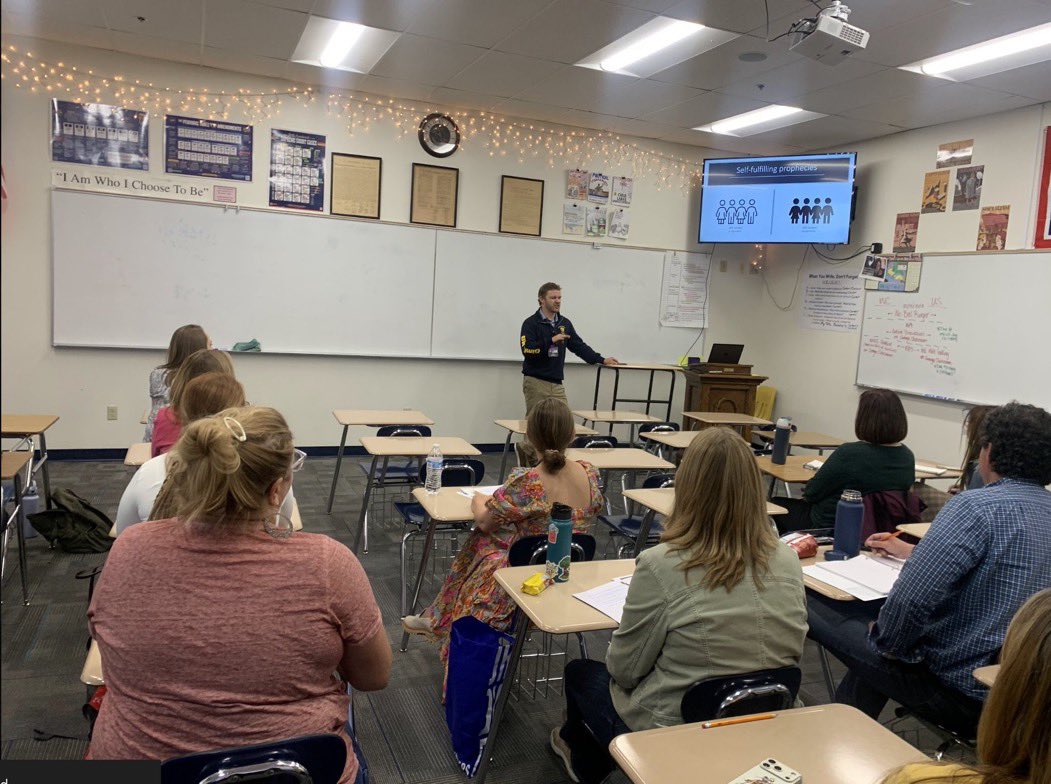
I’m not a fan of what the education overlords call “differentiation”, but you still have to adjust to what the students are telling you. This breakout was all about the perils and pitfalls of differentiation, and how the only kind that works is one based on real-time adaptation.
"a movement rooted in social justice but one which takes responsibility for outcomes."
Read that again please.
"but one which takes responsbility for outcomes."
See the difference?
I’m not interested in hearing about your “passion for social justice and equity” if you promote inquiry-based learning over explicit instruction, believe ambiguous, skills-based education is superior to knowledge-rich, content-focused education, and advocate for restorative circles instead of clear, consistent discipline.
You can’t say you’re passionate about social justice and equity while supporting practices that perpetuate inequitable access to knowledge and policies that harm students who are victims of verbal and physical abuse at the hands of their peers.
If you’ve listened to Season 2 of Sold a Story, you’ll recognize this 1966 video of Siegfried Engelman demonstrating his direct instruction approach to math with children who had been written off already by the education system.
His theory that if the kids aren’t learning, the teacher hasn’t done their job is key.
https://t.co/vxlWdGU1cA via @YouTube
One of the most eye-opening sections of Season 2 of "Sold a Story" is the deep dive @ehanford and her colleagues made into the archives of Project Follow Through unpacking how its findings about Direct Instruction were challenged and massaged. My review here:
https://t.co/LKvjXGgLy5
I'm super excited about this week's episode!
How do we make math teaching clear and more effective for every student?
I talk with @Kris_Boulton about designing better lessons by considering the four types of mathematical knowledge, and how we can ensure success for all students.
🎙️ Coming October 16. Don't miss it!
You can listen to the first two episodes of the new season of Sold a Story today.
We also have things for you to watch.
Who was Zig Engelmann?
https://t.co/MnjBrb9qdZ
You can listen to the first two episodes of Sold a Story Season 2 today.
We also have things for you to WATCH! https://t.co/MX66Yx1NzS
What is Direct Instruction?
We worry that putting struggling students in a separate class will embarrass them.
So instead, we leave them in a room where everyone else understands the lesson and they don’t.
And we do this day after day, year after year. It’s no wonder they feel like they don’t belong—they don’t.