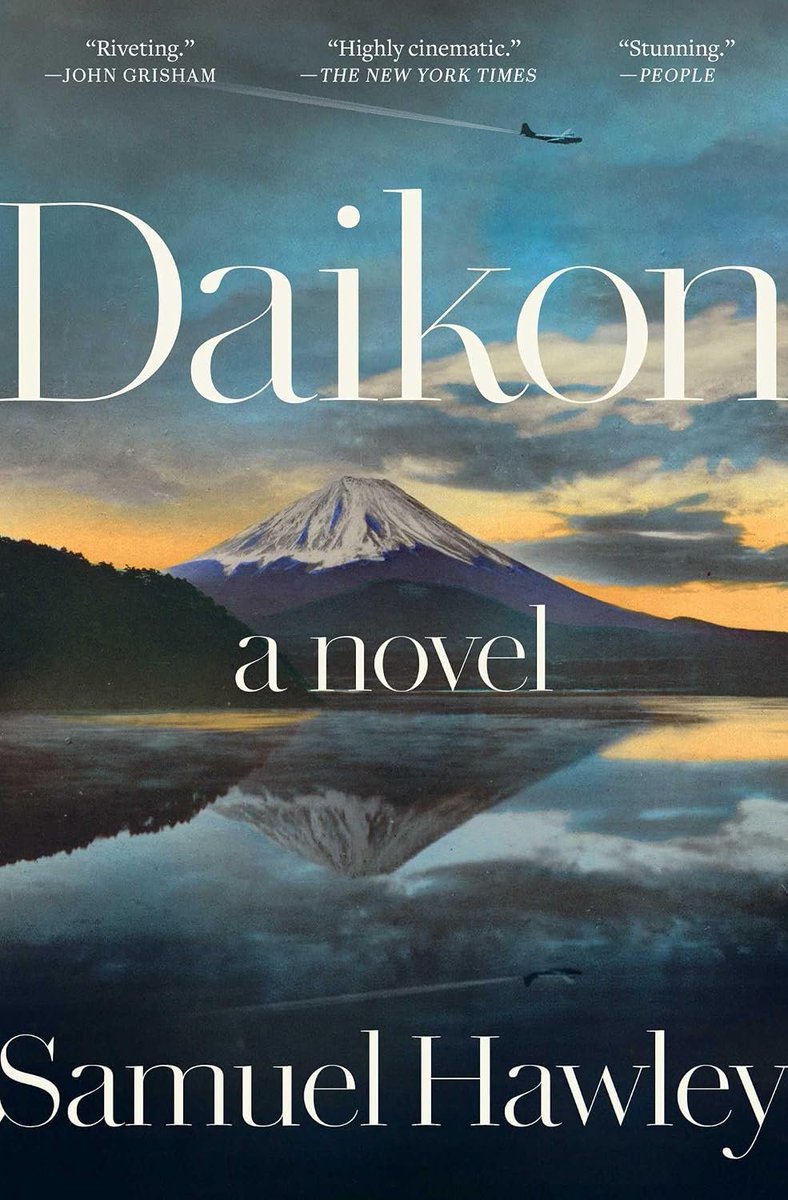
What if the Japanese had had an atomic bomb of their own? How would they have used it? The novel "Daikon" explores this intriguing premise.
#Hiroshima#atomicbomb
https://t.co/y45avqxEwj
"Daikon" tops The Daily Wire's list of Nine Books To Bring On Your Late Summer Vacation.
"One of the most exciting books of 2025!"
@AvidReaderPress@JHALiterary
https://t.co/7z14Yt4bog
Wonsan University of Agriculture was actually built on the site of the Territorial Abbey of Tokwon, a Catholic monastery founded by German Benedictine monks in 1909. During the Korean War, the North Korean government interned the monks (some of whom were Korean), after which many of them died from appalling prison conditions of executions. Abbot Bishop Boniface Sauer himself died in a North Korean prison in 1950.
A US bombing of Wonsan destroyed some of the buildings. However, some still remain and were repurposed for secular use after the war. One of the buildings (a rectory I think) is in use by the Wonsan University of Agriculture, pictured below. It has little if no traces of its past as shown below.
The Catholic Church began its beatification process of the Tokwon martyrs in 2007.
The deadliest hotel fire in history was the Daeyeongak Hotel fire in Seoul, South Korea, on Dec. 25, 1971. I was 11 years old, living with my family in Seoul, and remember watching it live on TV.
https://t.co/95tfbJDFMD
In the Imjin War of 1592-98, could Japanese dictator Toyotomi Hideyoshi have succeeded in his ultimate goal of conquering China? https://t.co/wbV3iRIZlL