Indian Stock Market: Leverage Is the New Squid Game
(a) Nithin K (Zerodha) & Andy M (Bloomberg) raise red flags (b) 2023-2026: India’s MTF Book Up 6X (c) Korea’s leverage 3X of India but in large caps; India’s 50% MTF book in Non-F&O stocks.
India’s Leverage Boom
a. In Korea, after forced liquidations of lakhs of retail investors (62% below 35 yrs), the government has set up suicide prevention hotlines; installed AI surveillance on bridges; established a National Suicide Response Office; and increased ICU beds for psychiatric patients in hospitals.
b. Indian retail investors who wish to stay away from this scenario: Repeat after me: No leverage, no margin. Once again: No leverage, no margin.
c. India’s leverage mania is growing: In March 2023, the Margin Trading Facility (MTF) Book (total volume of debt facility used) was ₹24,900 cr. In July 2026, it stands at ₹1.44 lakh cr (nearly 6X).
MTF BOOK:
Mar 2023 @ ₹25,000 cr
Mar 2025 @ ₹68,000 cr
June 2025 @ ₹85,000 cr
Aug 2025 @ ₹96,000 cr
Oct 2025 @ ₹1 lakh cr
Dec 2025 @ ₹1.16 lakh cr
Jan 2026 @ ₹1.16 lakh cr
Feb 2026 @ ₹1.15 lakh cr
1st MoM decline after 1 yr
Mar 2026 @ ₹1.06 lakh cr
Iran War/Oil Spike/FII Exits
Apr 2026 @ ₹1.16 lakh cr
May 2026 @ ₹1.27 lakh cr
June 2026 @ ₹1.33 lakh cr
July 2026 @ ₹1.44 lakh cr
Dangerous Leverage Trends
a. India’s leverage boom is unstoppable since FY2023. SEBI’s own June 2026 consultation paper says MTF Book is growing 50% year-on-year.
b. As of July 2026, MTF @ ₹1.44L cr is only 0.3% of total market cap. In case of Korea, it was 0.8% (nearly 3X of India).
So, purely in numerical terms, India is still much safer than Korea. But in qualitative terms, India poses a complex problem. (See next point.)
c. Korea’s leverage was concentrated in highly liquid large cap stocks: Samsung & SK Hynix. India’s MTF Book (July 2026) comprises 51% Non-F&O stocks.
Non-F&O are small caps & mid-caps with lower liquidity. Retail investors borrowing to load up on these stocks have no idea they are playing with fire.
d. While Korea’s leverage was chasing a roaring AI bull market, India’s leverage has been building in a market that has gone mostly sideways to down in the last 2 years.
If India’s leverage boom continues (50% Up YoY) while total market cap remains unchanged, then India is sitting on a time bomb like Korea.
Why Leverage Is Rising
Why are Indian retail investors doubling down on leverage when the market itself is failing to deliver returns?
a. India’s near-term inflation expectations @ 9% are exceeding FD rates @ 6%. Even long-term “buy-and-hold” in equities has gone nowhere for the last 2 years. This has created desperation among young investors to take higher risks.
b. SEBI’s tightening of F&O trading rules, higher lot sizes, and increased STT has pushed active retail traders toward cash market leverage as a substitute.
c. With the aggressive entry of discount apps and tech-first brokers, now even someone from a tier-3 town can use 1-click to lever up.
Zerodha’s MTF market share itself has jumped from 1% to 6.5% as it could no longer sit out and resist the temptation while its competitors made profits.
Risks of Non-F&O Leverage
a. Zerodha’s Kamath calls non-F&O leverage as the “dangerous half” because of its poor liquidity. Here’s how it works:
Market Crash → Non-F&O stock hits lower circuit → Zero buyers → Broker cannot margin sell → More lower circuits → Client equity wiped out → Bad debt lands on broker’s balance sheet → Broker himself is over-leveraged
(SEBI permits leverage up to 5X of broker’s net-worth)
b. PPFAS said in Feb 2026 that just a handful of large leveraged brokers control 50% of the total MTF book. This concentration risk can create a contagion effect if one of the brokers faces liquidation during a crash.
Kamath himself says in his yesterday’s X post: “My biggest nightmare is the way our MTF book has been growing along with the rest of the industry.”
Kamath acknowledges Zerodha’s MTF book of ₹9,000 crores is “by far the riskiest thing” the company has done in its history.
c. Kamath says India’s market leverage has increased only in the last 3-4 yrs. There hasn’t been any sharp market correction in this period. Therefore, the book has not been stress-tested.
Nobody, including SEBI, really knows how this will play out at scale in case of a market liquidity event.
d. Andy Mukherjee says in his today’s Bloomberg article: India’s MTF exposure lies across thousands of small loans. Brokers believe a few defaults among thousands cannot hurt the balance sheet.
But in reality, credit risk is never concentrated at the position level. The risk is herd behaviour at the aggregate level. If sentiment reverses, and leveraged money tries to exit together, nobody will be able to get out.
Andy further warns that if rupee remains weak and inflation worsens, RBI will be forced to raise interest rates at some point.
If that happens, the 9-18% interest burden on MTF positions rises further, while market goes down (and the underlying MTF stock collateral values go down.)
ENDQUOTE
“My gut says a lot of what the brokers are earning today as interest income, will be all given back when the market reversal happens.”
“Someone asked me what the risk model is in this situation. I said: “Pray that stocks don’t fall,” if that counts as a risk model.”
– Nithin Kamath, Zerodha Founder & CEO, Substack, Jan 21, 2026
@arabicatrader
A drone strike, presumably Iranian or Iranian-backed militias, was reportedly carried out against targets near a U.S. military base tonight.
More to come.
🇮🇳INDIA LOST AROUND 25 GOVERNMENT SCHOOLS EVERY DAY OVER THE LAST 10 YEARS.
Declined from 11.07 lakh (2014-15) to 10.13 lakh (2024-25).
That's a reduction of about 94,000 government schools over 10 years
- NITI Aayog
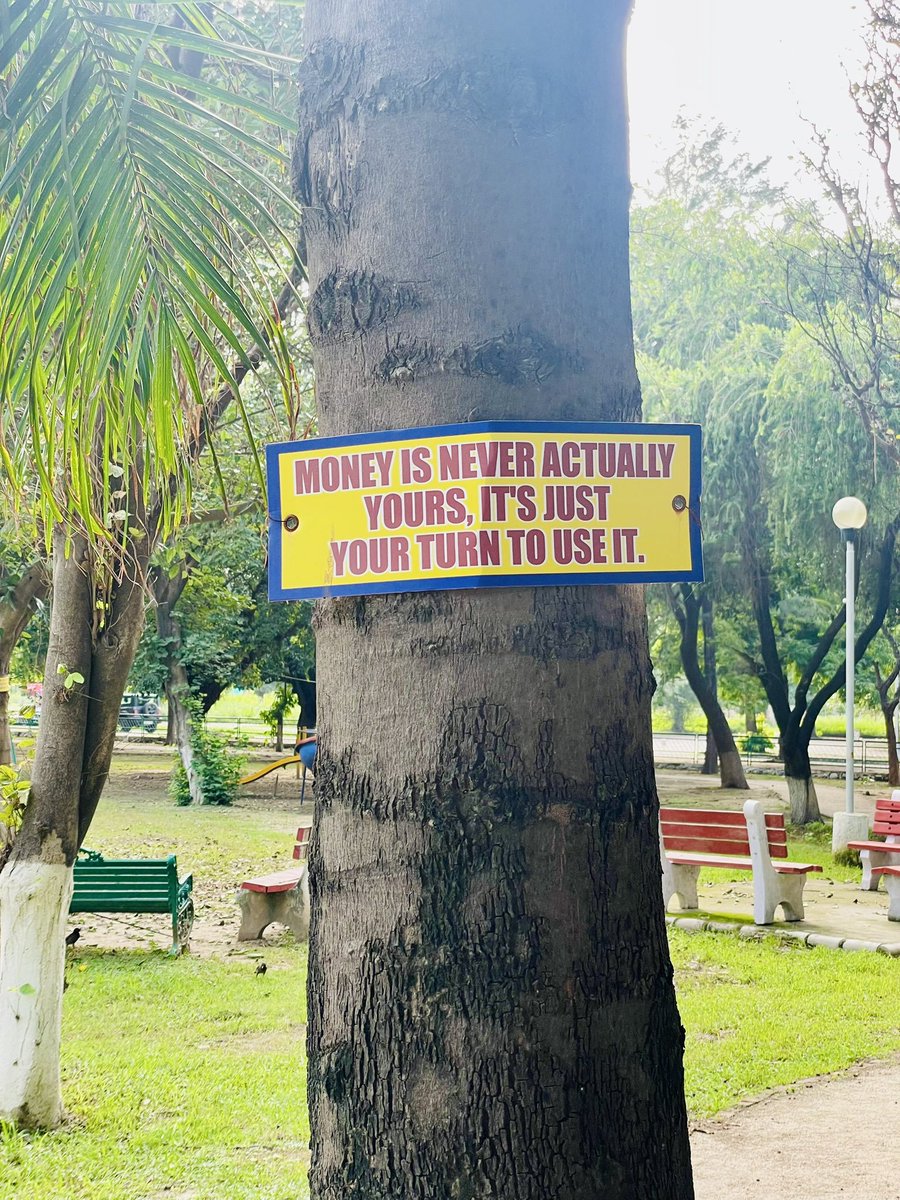
Price is what you pay, value is what you get- Warren Buffet
When you know the difference between “price” and “value,” then you will love investing in equities.
India’s unsecured-loan risk is not a headline banking crisis yet — but it is becoming a serious early warning signal.
Data points:
Personal loans: ₹16.5 lakh crore
PL stress: PAR 180+ at 5.3%
Credit-card balances: ₹3.4 lakh crore
Card stress: PAR 180+ at 6.9%
Fintech share in sub-₹50k personal loans: ~57%
Fintech small-ticket delinquency: ~6.4%
Household debt: 45.5% of GDP
Banking system GNPA: only ~1.8%
So the issue is not that banks are collapsing.
The real issue is that borrower-level stress is rising below the surface, especially in small-ticket digital loans, repeat borrowing, young borrowers, NBFC-led personal loans, credit cards, and consumption debt without collateral.
Clean bank NPAs do not always mean clean household balance sheets.
This is the real red flag in India’s unsecured-credit cycle.
✍️@AlgoBoffin
:::
TRUMP CLAIMS HORMUZ STRAIT WILL BE PERMANENTLY TOLL-FREE UNDER IRAN AGREEMENT, WARNS HE WILL RESUME MILITARY STRIKES ON TEHRAN IF IRAN FAILS TO DELIVER A FINAL NUCLEAR DEAL. - NYT
אם האיראנים משגרים טילים לעבר מדינת ישראל, באותו הרגע ישראל חייבת לצאת למתקפה ולהשמיד את האי ח׳ארג - ואז 90 אחוז מהייצוא של הנפט האיראני נעלם.
אם הם מחליטים להשתגע אנחנו יודעים להשתגע יותר.