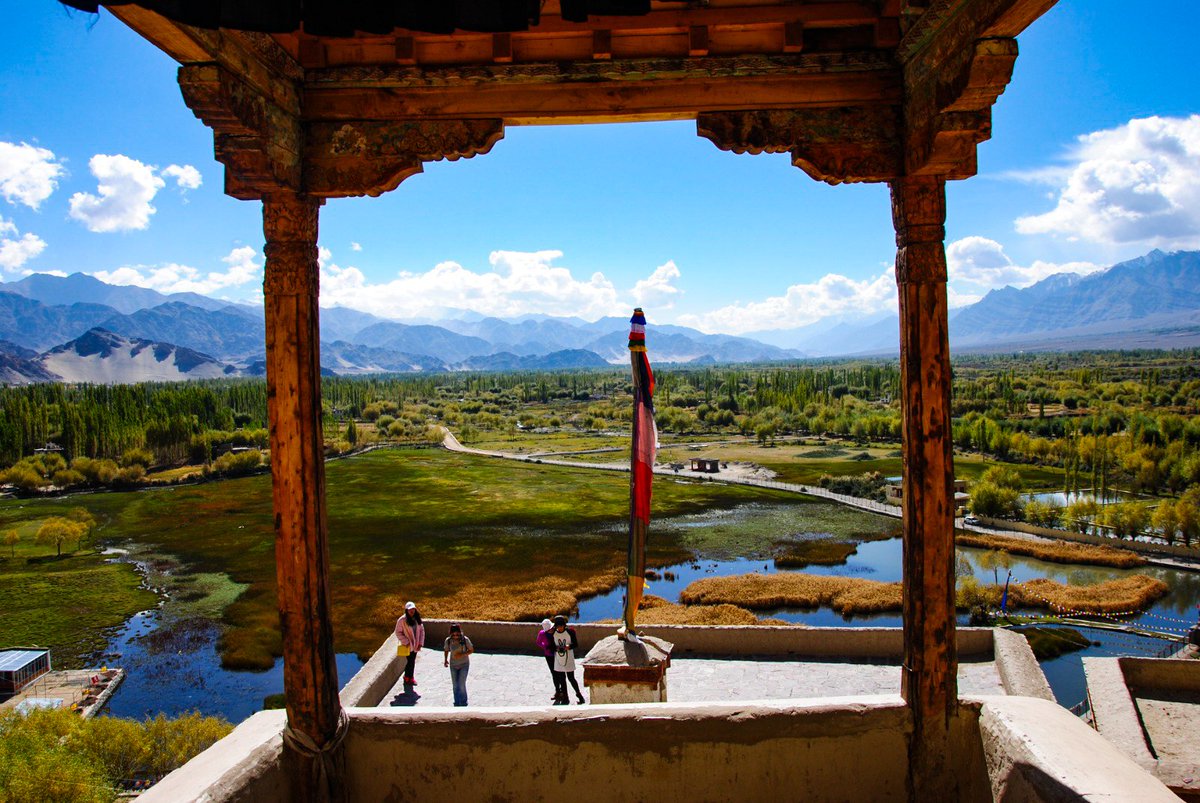
“We throw your subsidies back in your face. Get out of our land. It is a matter between us and India, not Pakistan.”
“Hum jaane, Hindustan jaane.” 💥
:PoJK echoes, demanding freedom from Pakistan’s oppression, rule and control over their own resources.
ज्ञानवापी में बुज़ुर्गों की भावनाएँ जुड़ी हैं, वे कहते हैं कि “जल्द मंदिर मुक्त कराइए।” भोजशाला में भी 96 साल के बुज़ुर्ग माँ सरस्वती की आरती कर रहे हैं। यह आस्था और भावनाओं का विषय है।
🚨 REPORTER : Trump praised PM Modi as a tough negotiator. Does this mean India has finally arrived on the world stage?
FOREIGN SECRETARY MISRI : I last checked and found that India has been on the world stage for the last 7000 years 😳🔥
Jats & Sikhs are foremost targets - to detach em from Dharma is top priority - in conversion Jihad.
And check in quoted post below how this same Maulana Sajjad Nomani confesses to have infiltrated the SGPC, have Jathedar of Akal Takht under his influence.
A Japanese immunologist spent 20 years proving that the chemicals trees release into the air walk into your bloodstream, hunt down your stress hormones, and arm your immune system in ways no therapist or pharmaceutical has ever matched, and most of the data has been sitting in Japanese medical journals for two decades waiting to be translated.
His name is Qing Li.
He is a clinical professor at Nippon Medical School in Tokyo and the president of the Japanese Society of Forest Medicine. The Japanese government has been funding his research since 2004, and the body of work he has produced is the reason forest bathing is now an officially prescribed clinical therapy in Japan and Korea.
The story actually starts in 1982, when the Japanese Ministry of Agriculture, Forestry and Fisheries coined the term shinrin-yoku to describe the practice of slow, mindful walking in a forest. They did it for a practical reason.
Japan was urbanizing fast, stress-related illness was climbing, and the country had thousands of square kilometers of forest sitting unused. The idea was to give people a reason to walk into the trees... They had no idea what was actually happening to the human body during those walks until Qing Li ran the first proper experiment in 2005.
He took twelve healthy adult men on a three-day, two-night trip to a forest park. They walked for a few hours each day. Nothing strenuous. No prescribed routes or breathing exercises. They simply walked slowly through the trees, breathing the air, looking at the forest.
Li drew blood and urine samples before the trip, on the second day, on the third day, on day seven after returning home, and again on day thirty.
The numbers that came back from the lab were not what anyone expected.
The activity of a specific type of immune cell called the natural killer cell, which is the cell your body uses to hunt down cancer cells and virus-infected cells before they can spread, had jumped by roughly 50 percent during the forest trip. The actual number of natural killer cells circulating in the bloodstream had increased significantly.
Three different anti-cancer proteins that those cells produce, called perforin, granzymes, and granulysin, had all risen sharply. And the effect did not disappear when the men went home. The immune boost was still measurable on day seven and was still partially present on day thirty.
Two hours a day in a forest had upgraded the immune system for a full month.
Li ran the same experiment with women a year later and found nearly identical results. Then he ran it with a control group who took a three-day trip through an urban area with the same amount of walking, the same hotel quality, and the same diet.
The urban group showed no measurable change in natural killer cell activity at all. The forest was doing the work, not the vacation.
The mechanism turned out to be a class of airborne molecules called phytoncides. Trees produce these compounds to defend themselves against insects, bacteria, and fungi. Pine, cedar, oak, and cypress trees release them in particularly large amounts, especially in warmer weather and after rainfall.
When you walk through a forest, you are inhaling those molecules into your lungs and absorbing them through your skin, and once inside your body they appear to directly stimulate the production and activity of the very immune cells Li was measuring in his lab.
Roughly 50 percent of the health benefit of a forest walk, according to Li's data, comes from the chemistry of the air itself. The other half comes from what the forest is doing to your nervous system.
This is where it stops being only about the immune system and starts being about stress.
A separate Japanese research team measured cortisol, the body's main stress hormone, in 84 participants across 35 different forest sites. They drew samples before and after a 30-minute walk in each forest and compared them to control walks in matched urban environments. The cortisol levels of the people who walked in the forest were lower than the cortisol levels of the people who walked in the city by a significant margin. Their heart rates were lower. Their blood pressure was lower.
The activity of their parasympathetic nervous system, which is the part responsible for rest and recovery, had gone up. The activity of their sympathetic nervous system, which is the part that drives fight or flight, had gone down.
Then a researcher at the University of Michigan named MaryCarol Hunter ran the cleanest version of this experiment ever done. She recruited participants from a city and told them to take a nature pill three times a week for eight weeks.
They were free to choose the time, the place, and the duration of the nature experience, as long as it was outside, in daylight, and free of phones, conversations, and aerobic exercise. They sent her saliva samples before and after each session so she could measure cortisol changes accurately and rule out the normal daily drop in stress hormones that happens to everyone.
The result was that participants experienced a 21.3 percent drop in cortisol per hour spent in nature, with the biggest payoff happening between minutes 20 and 30 of the walk.
After that, the cortisol kept dropping, but more slowly. The threshold dose for measurable stress relief was just 20 minutes outside in something that looked and felt like nature.
What none of this means is that nature is a substitute for therapy or for medication when someone genuinely needs them. Therapy treats different things than a walk does, and Li himself has been careful in interviews to call forest bathing a complementary intervention rather than a replacement for clinical care.
But what the research has settled is that the human body has a physiological response to being among trees that operates on the same biological systems modern medicine is trying to reach with drugs and clinical protocols, and that response is fast, measurable, and free.
The strangest part of Li's work is the implication he keeps repeating in interviews. The average person now spends more than 90 percent of their life indoors. Their cortisol stays elevated. Their natural killer cells stay sluggish.
Their parasympathetic nervous system rarely gets a chance to take over. The system that was tuned by millions of years of life under a canopy of trees is being asked to run permanently inside a box made of drywall and screens.
Your body has not forgotten what it is supposed to do in a forest. It is waiting for you to walk into one.
🚨India just honoured a healer
who has cured Stage 4 CANCER, Stage 4 DIABETES and Stage 4 ARTHRITIS WITH HERBS!🔥
Meet Yanung Jamoh Lego — the Adi “Queen of Herbs” from Arunachal Pradesh, awarded Padma Shri 2024 for traditional herbal medicine.
The official Padma citation credits her with helping 10,000+ patients with life-threatening diseases and 3 lakh+ patients over 29 years through herbal/traditional practices.
But her story is bigger than healing:
✅ BSc & MSc from Assam Agricultural University
✅ Former Agriculture Inspector, Govt. of Arunachal Pradesh
✅ Learned herbs from her folk-healer father
✅ 15-year apprenticeship before practice
✅ Founded Indigenous Herbal Heritage in 2009
✅ Trained/educated 1 lakh+ people
✅ Plants 5,000 medicinal plants every year
In an age obsessed with labs, one woman proved that India’s forests were also pharmacies — and our ancestors were scientists of nature.
Respect modern medicine. Preserve ancient knowledge. 🇮🇳🌿
RT and Follow @Sarfarosh_IND for such insights
#PadmaShri #YanungJamohLego #ArunachalPradesh #AdiTribe #IndianKnowledgeSystems
It doesn’t surprise me in the least that Americans can’t tell Indians, Pakistanis, Sikhs, Syrians, Libyans, Iraqis, or Afghans apart.
For a people so insular, even their next state passes for foreign territory.
What is far more telling is the British failure to make these distinctions.
For a country that once prided itself on knowing its colonies down to the last ethnographic detail, this studied ignorance is revealing.
It certainly sheds light on why the catch-all term “South Asian” becomes so conveniently elastic.
Especially when dealing with something as uncomfortable as the ‘grooming’ gang scandals.
There’s a certain symmetry to it. A country that once carved up their colonies along fault lines to maximise its own gain now appears increasingly unable to hold its own social fabric together.
Call it Karma, call it historical recoil but the irony is hard to miss: in dividing the world so efficiently, they may have forgotten how to preserve themselves.
Meloni is really a badass!
Trump gave a statement to an Italian TV channel claiming that Meloni had begged him for a photo.
Meloni responded with a video statement (below). Translation: Trump's statements are completely made up. I'm frankly appalled. I don't know why the POTUS behaves this way toward his own allies; after all, it's not the first time it has happened. I can only say it's a shame that he doesn't show the same determination toward the enemies of the West, the enemies of the US (probably a sarcastic taunt at Trump's surrender to Iran), and toward leaders with whom he instead proves far more accommodating. However, there is one thing he must remember: neither I nor Italy ever beg.
Perhaps you can begin by acquainting yourself with the history of northern India: one of invasions, marauders, and prolonged violence, and what it did to people’s lives and beliefs.
In hidden nooks, in quiet corners and the safety of our homes, we kept our faith alive.
You might then grasp the inconvenient truth: despite all of it, a culture and civilisation refused to be erased or decimated.
So your point about Hinduism being “extremely pleasant, prim and proper” in South India…
No, we didn’t have that luxury.