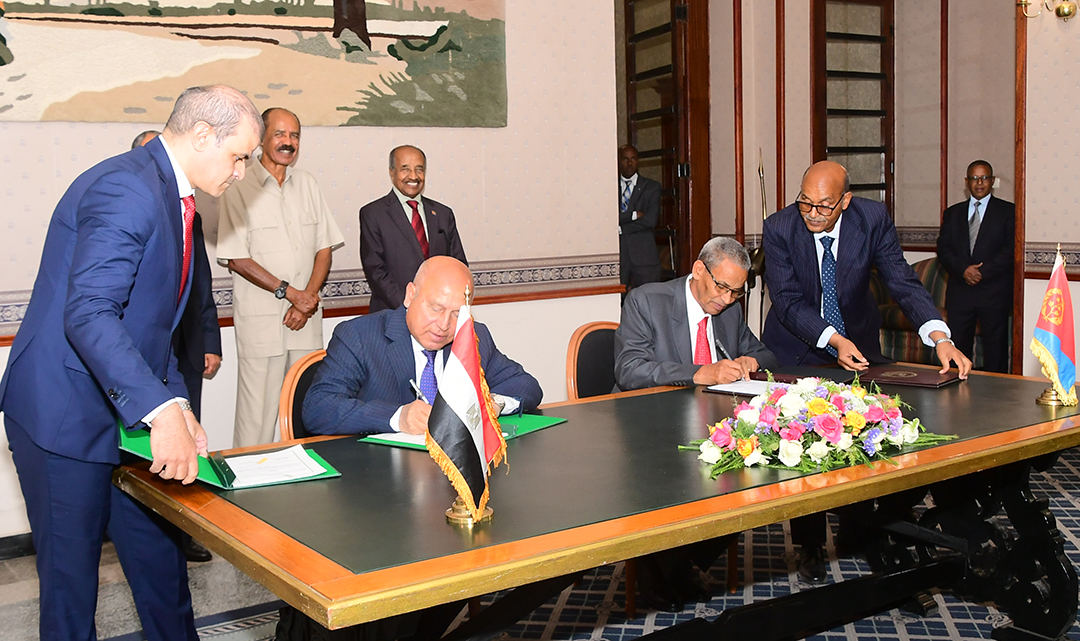
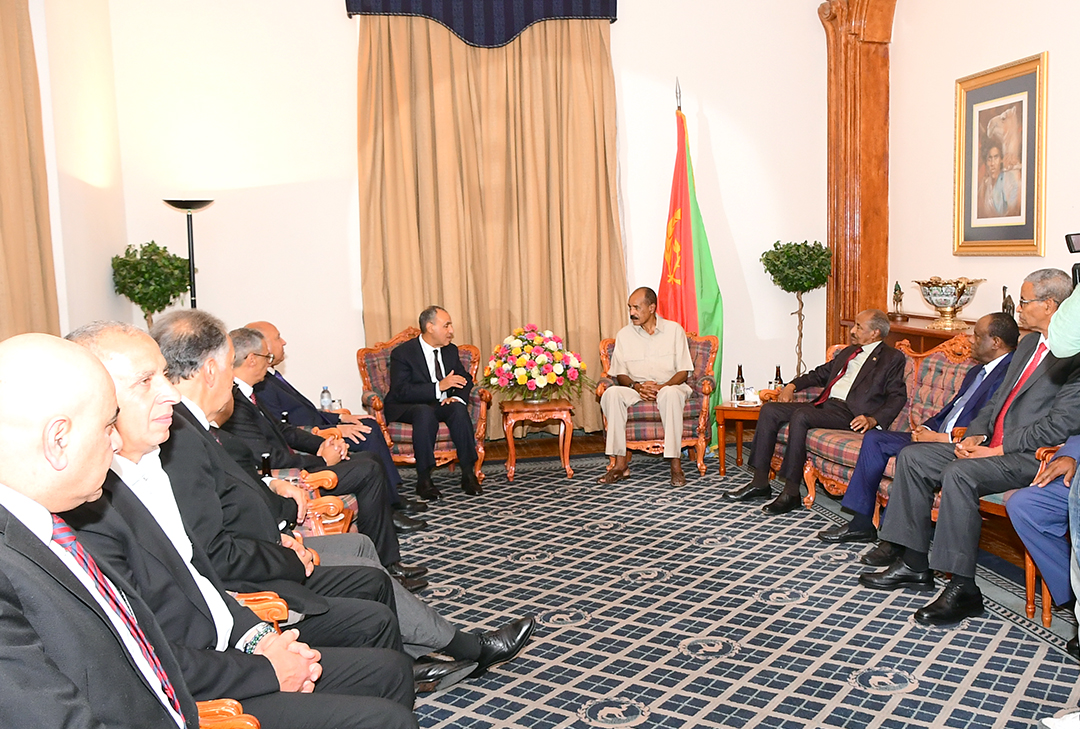
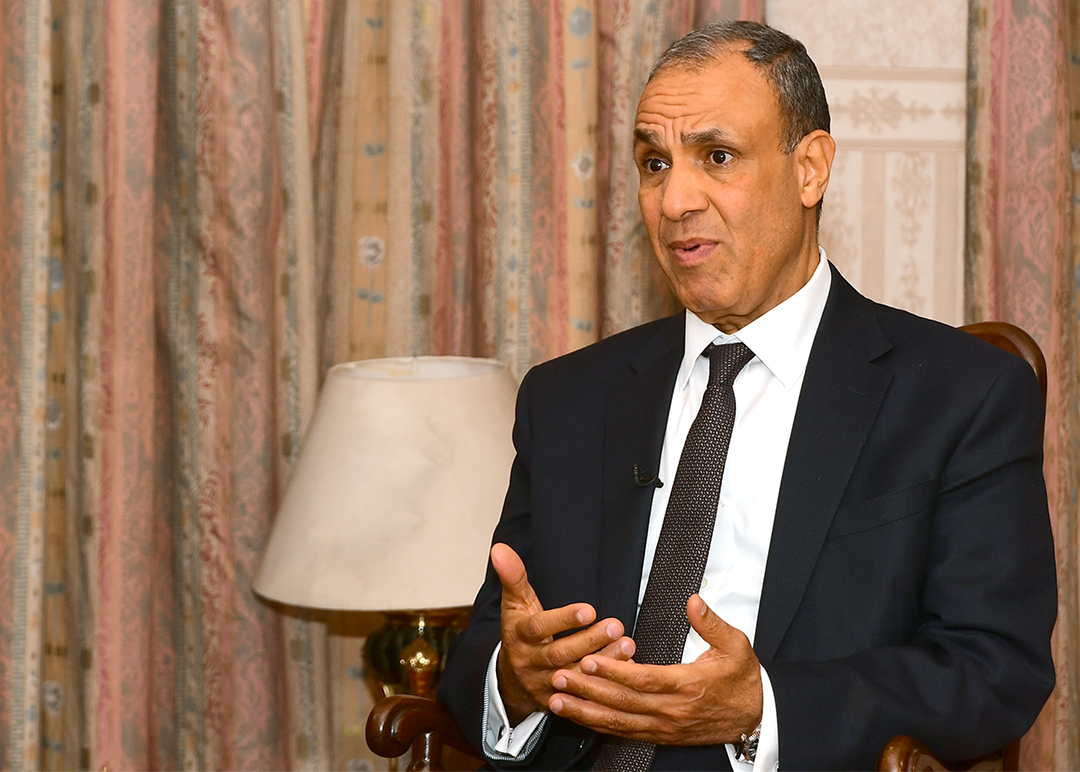
President Isaias Afwerki received, at the Denden Guest House in the late morning hours today, senior Egyptian delegation composed of Foreign Minister Dr. Badr Abdelatty; the Minister of Transportation, Lt. General Engineer Kamel Alwazir; and CEO's of several companies involved in the transport, energy and mining sectors.
The extensive discussions centered on further enhancement of all-rounded bilateral ties of cooperation as well as regional and international issues of mutual importance.
President Isaias underlined the significance of consolidating the all-rounded ties between Eritrea and Egypt to advance the mutual interests of the Eritrean and Egyptian peoples. In this respect, President Isaias expressed Eritrea's readiness to implement common projects in collaboration with Egyptian economic and trade companies.
Foreign Minister Badr Abdelatty, for his part, stated that the current visit was a manifestation and expression of the brotherly ties of friendship and cooperation that exist between the peoples of Eritrea and Egypt.
The principal purpose of the visit was to further consolidate economic and trade ties between the two countries in accordance with the guidelines charted out by President Isaias Afwerki and President Abdel Fattah el-Sisi, Dr. Badr noted.
On the occasion, the two countries signed an Agreement on Marine Transport "for developing cooperation in the sector with a view to contributing to the development of international shipping on the basis of the principles of the freedom of navigation".
The Agreement was signed by Eritrea's Minister of Transport and Communications, Mr. Berhane Tesfaselassie, and Egyptian Minister of Transport, Lt. General Kamel Alwazir.
Sebhat Ephrem, known as the #Eritrea|n Real Field Marshal, is a key military figure in modern Eritrean history, playing crucial roles in the liberation struggle, defense, and government leadership, serving as in different Minister positions including Defense.
Welcome back Sir!
Draw for AFCON 2027 - TODAY!
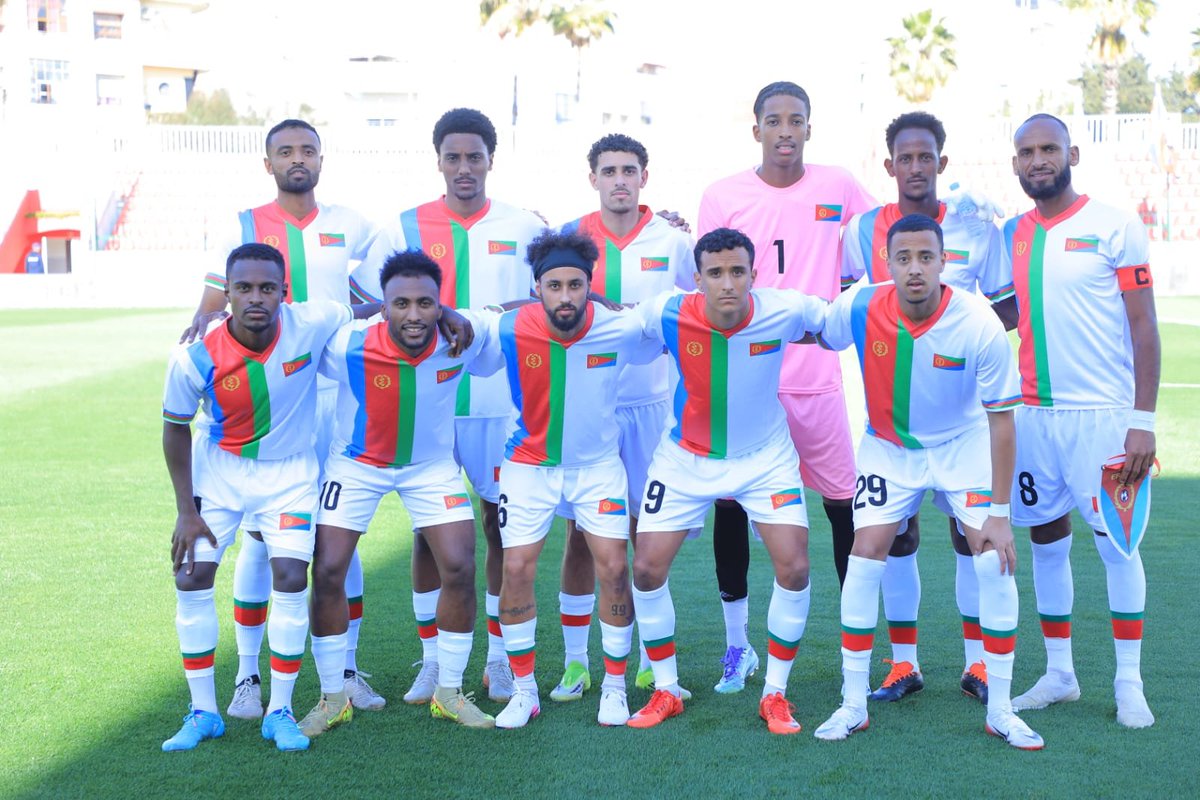
The journey to the 2027 Africa Cup of Nations officially begins today as African football nations discover their opponents for the tournament's qualifying series. This event will be jointly hosted by Kenya, Uganda, and Tanzania. For the Eritrea National Team, today is an important day as they learn which group they will be placed in. The draw ceremony will be held today, and the Confederation of African Football (CAF) will officially announce the results. The draw ceremony, organised by CAF, is expected to set the stage for what promises to be another fiercely contested race for places at Africa’s biggest football spectacle. “Pamoja,” a Swahili word meaning “togetherness,” has become the theme and identity of the 2027 finals, reflecting the historic joint hosting arrangement by the three East African nations. This will mark the first time the Africa Cup of Nations is staged in East Africa since 1976.
The Eritrea National Team is preparing for this occasion and will field a lineup of 25 talented players, many of whom have joined the team. We will follow the draw and share the results accordingly. The qualification campaign will also provide emerging football nations with an opportunity to challenge Africa’s established powers, continuing a recent trend where smaller countries are closing the competitive gap on the continent. CAF officials believe the “Pamoja 2027” project will not only showcase football but also strengthen regional cooperation and infrastructure development in East Africa. Preparations for the tournament have already gained momentum, with host cities upgrading stadiums, transport systems, and hospitality facilities ahead of the competition.
Today’s draw is anticipated to produce intriguing matchups, potential regional rivalries, and challenging qualification groups that could shape the fortunes of several football giants. As the balls are drawn and the fixtures are unveiled, the road to Pamoja 2027 officially comes alive, marking the start of another continental journey filled with ambition, pressure, dreams, and the enduring passion of African football.
Happy Independence!
Best wishes,
Yared Tesfay
#AFCON2027, #CAF, #AfricanFootball #Pamoja 2027
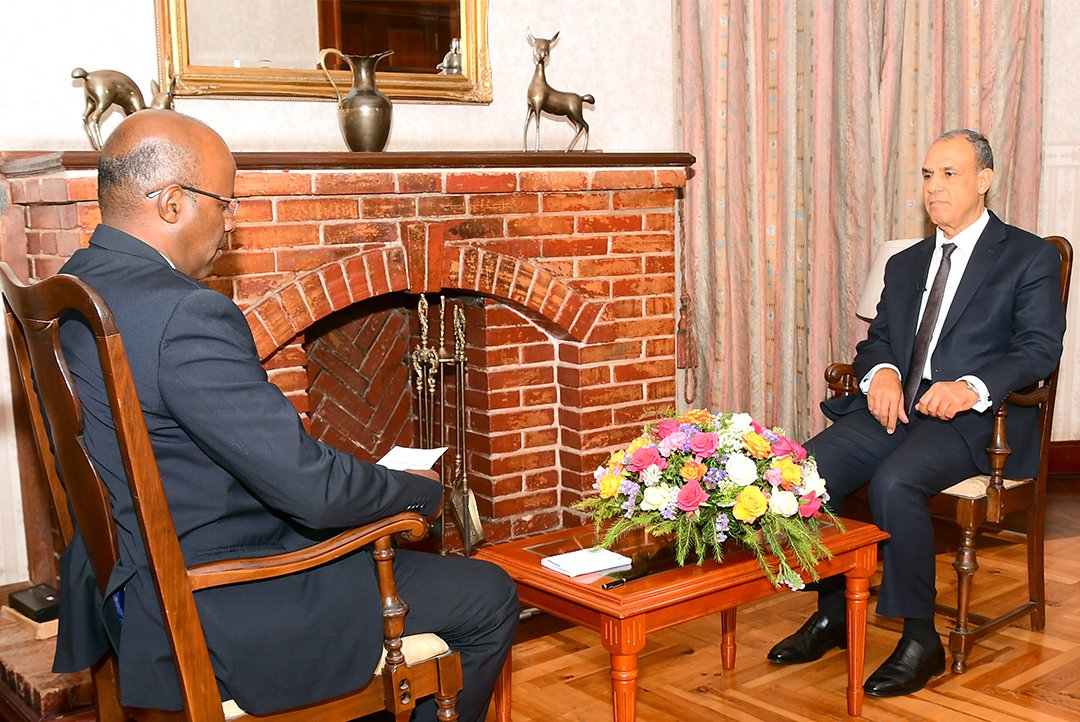
Foreign Minister Osman Saleh today met his Egyptian counterpart, Dr. Badr Abdelatty, and discussed modalities of implementation of the overall bilateral agreements of cooperation reached between the two sides.
Foreign Minister Osman underlined the significance of the visit of the senior Egyptian delegation and the importance of strengthening the bilateral ties of cooperation in these crucial times of fluid developments in the Horn of Africa region.
Dr. Badr, for his part, referred to the alignment of views and positions of the two sides on vital regional and international issues and stressed the importance of expediting the implementation of mutually agreed development programmes.
Exclusive Q &A: 'We Consider Eritrea a Pillar of Stability'; Egypt's Foreign Minister, Dr. Badr Abdellaty
*"...This visit comes amidst several important occasions, most notably the approaching celebration of the 35th Anniversary of Eritrea’s Independence. Heartfelt congratulations on this auspicious occasion. I am carrying a message from President El-Sisi to his brother President Isaias – a message of empathy, brotherhood, friendship, support, and solidarity".
*"...Firstly, we view Eritrea as a fundamental pillar of stability in this troubled region, the Horn of Africa. We admire President Isaias’s wisdom in managing relations with a high degree of tact, balance, and de-escalation. Secondly, there is a shared vision between the two Presidents regarding managing relations in the Red Sea and Horn of Africa. We manage these relations based on dialogue, focusing on improving living standards, enhancing economic and technical cooperation, and avoiding military escalation or rash adventures with unpredictable consequences. We cannot afford such situations; we already have more than enough problems".
*"...There is a strong alignment between Egyptian and Eritrean viewpoints that all matters related to the governance and security of the Red Sea and the Gulf of Aden are solely the responsibility of the littoral states. This is crystal clear and non-negotiable. Discussions are currently underway among the littoral states – particularly with Saudi Arabia, Eritrea, Egypt, Jordan, Yemen, and Somalia – to activate the Council of Arab and African States Bordering the Red Sea and the Gulf of Aden. The focus is on activating this council as quickly as possible to ensure that governance and security of the Red Sea are a reality, not just rhetoric. This necessitates activating the council’s mechanisms, which will be headquartered in Saudi Arabia. There are clear visions for linking ports and fostering logistical cooperation among Red Sea ports of the littoral states. Security, too, must be the sole responsibility of the littoral states and no other parties. This is a clear and non-negotiable point".
https://t.co/MzLeWmOVU4
The Anatomy of Revisionism: Dismantling the Prosperity Party’s Hostile Campaign against Eritrean Sovereignty
Ministry of Foreign Affairs
Research and Documentation Center
19 May 2026
"The Prosperity Party’s three-year hostile campaign against Eritrea exemplifies a dangerous pattern of externalizing domestic structural failures through aggressive foreign policy...Throughout these sustained provocations, the Government of Eritrea has maintained a principled position grounded in international law and a prudent policy of patience and restraint".
https://t.co/swQXbwB0gg
#African states need a coherent, regionally agreed foreign policy in dealing with the United States, #Europe, and other global powers; otherwise, they will struggle to achieve the peace and stability that are the essential bedrock for economic and social development across the continent.
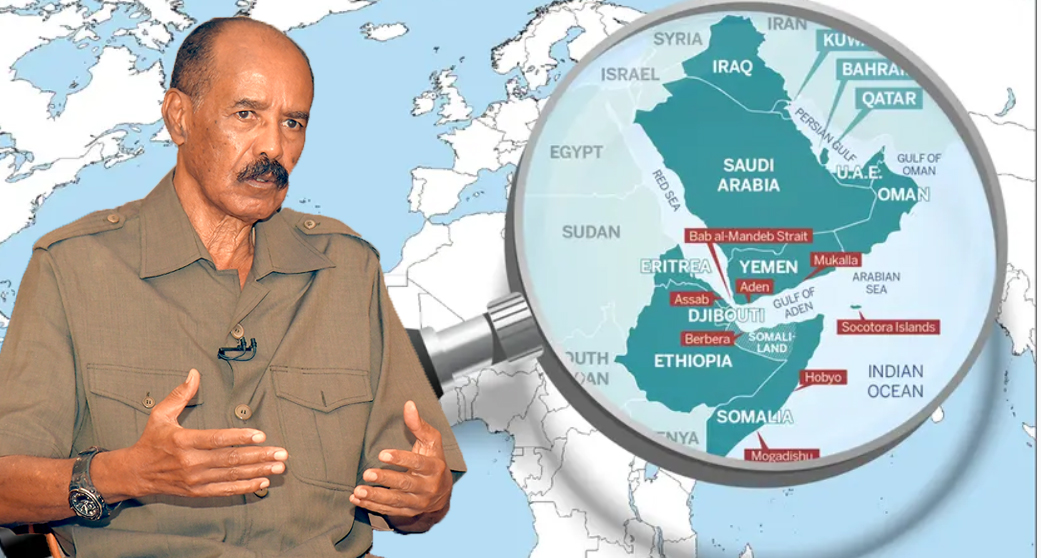
Earlier this year, President Isaias Afwerki explained that bilateral relations with the U.S. and other global powers is secondary—even tertiary—for #Eritrea's foreign policy, compared to the higher priority of building regional cooperation and fostering a harmonious political environment in the Horn of Africa. He underscored 'We need to do our homework, before we blame others for our predicament'
For much of the past century, the Horn of Africa (as it is in wider Africa) has witnessed leaders and states that believed themselves more powerful, wealthier, or historically superior to their neighbours, and were willing to act as satellite states at the expense of those neighbours. Abiy Ahmed is a typical and worst current example!
As a result, the peoples of the region have remained underdeveloped, too often drawn into conflict with one another, and deprived of the collective strength needed to negotiate and act as a serious global force.
For the sake of future African generations, this mentality of slavery and division must end. African states must respect one another, cooperate, and prosper together.
There is no alternative.
Press Statement
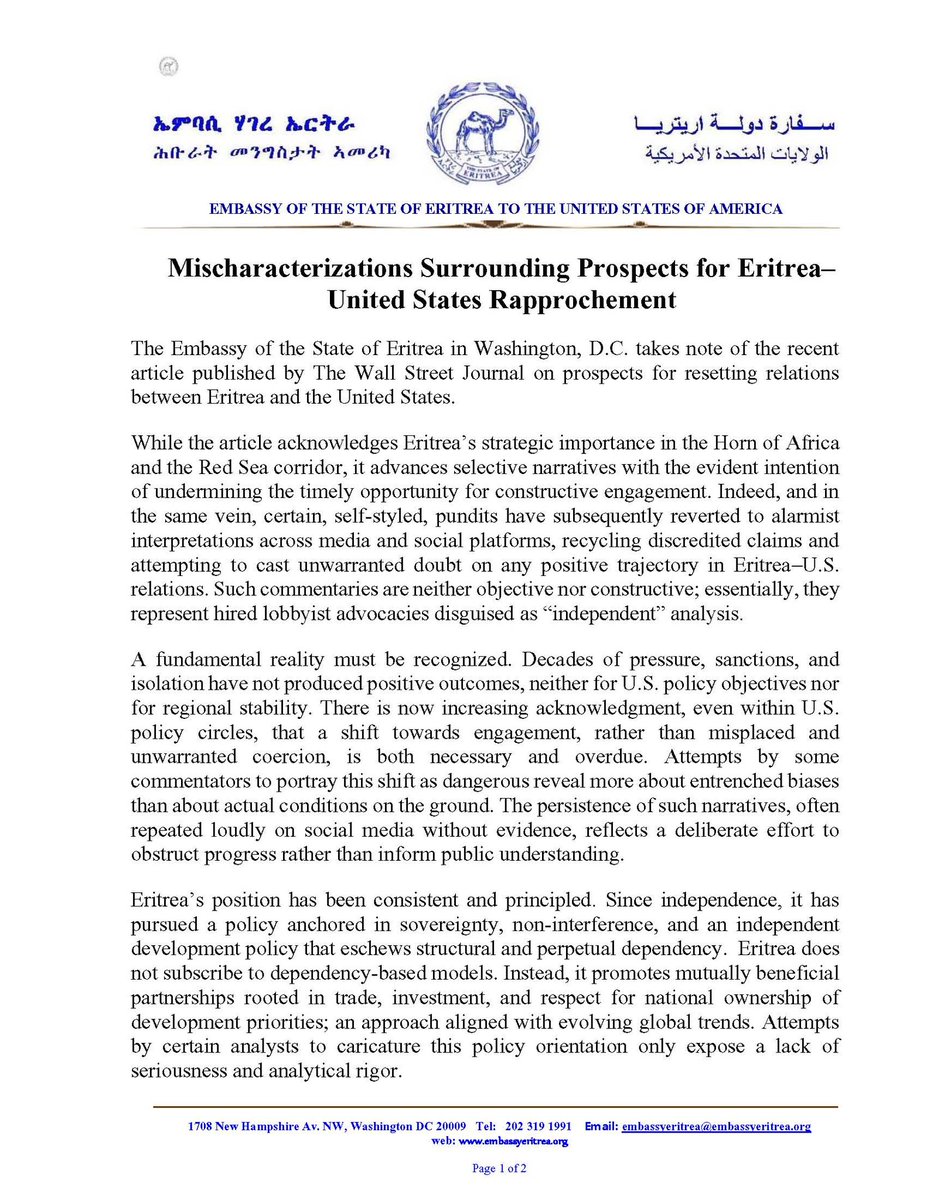
Mischaracterizations Surrounding Prospects for Eritrea-United States #Rapprochement
The #Embassy of the State of #Eritrea in Washington, D.C. takes note of the recent article published by The Wall Street Journal on prospects for resetting relations between Eritrea and the United States.
While the article acknowledges Eritrea's strategic importance in the #Horn of #Africa and the #RedSea corridor, it advances selective narratives with the evident intention of undermining the timely opportunity for constructive engagement. Indeed, and in the same vein, certain, self-styled, pundits have subsequently reverted to alarmist interpretations across media and social platforms, recycling discredited claims and attempting to cast unwarranted doubt on any positive trajectory in Eritrea-U.S. relations. Such commentaries are neither objective nor constructive; essentially, they represent hired lobbyist advocacies disguised as "independent" analysis.
A fundamental reality must be recognized. Decades of pressure, sanctions, and isolation have not produced positive outcomes, neither for #US policy objectives nor for regional stability. There is now increasing acknowledgment, even within U.S. policy circles, that a shift towards engagement, rather than misplaced and unwarranted coercion, is both necessary and overdue. Attempts by some commentators to portray this shift as dangerous reveal more about entrenched biases than about actual conditions on the ground. The persistence of such narratives, often repeated loudly on social media without evidence, reflects a deliberate effort to obstruct progress rather than inform public understanding.
Eritrea's position has been consistent and principled. Since independence, it has pursued a policy anchored in #sovereignty, non-interference, and an independent development policy that eschews structural and perpetual dependency. Eritrea does not subscribe to dependency-based models. Instead, it promotes mutually beneficial partnerships rooted in trade, investment, and respect for national ownership of development priorities; an approach aligned with evolving global trends. Attempts by certain analysts to caricature this policy orientation only expose a lack of seriousness and analytical rigor.
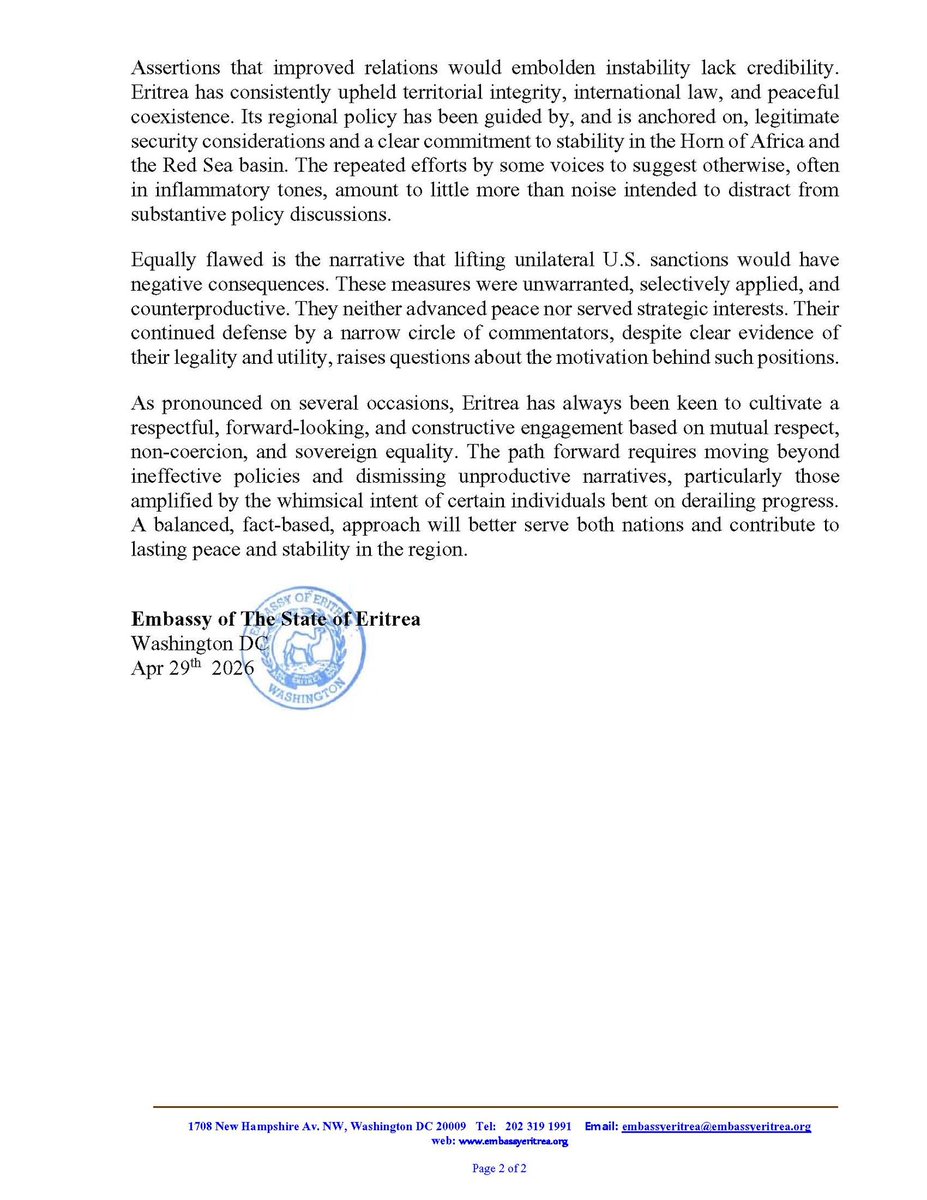
Assertions that improved relations would embolden instability lack credibility.
Eritrea has consistently upheld territorial integrity, international law, and peaceful coexistence. Its regional policy has been guided by, and is anchored on, legitimate security considerations and a clear commitment to stability in the Horn of Africa and the Red Sea basin. The repeated efforts by some voices to suggest otherwise, often in inflammatory tones, amount to little more than noise intended to distract from substantive policy discussions.
Equally flawed is the narrative that lifting unilateral U.S. sanctions would have negative consequences. These measures were unwarranted, selectively applied, and counterproductive. They neither advanced peace nor served strategic interests. Their continued defense by a narrow circle of commentators, despite clear evidence of their legality and utility, raises questions about the motivation behind such positions.
As pronounced on several occasions, Eritrea has always been keen to cultivate a respectful, forward-looking, and constructive engagement based on mutual respect, non-coercion, and sovereign equality. The path forward requires moving beyond ineffective policies and dismissing unproductive narratives, particularly those amplified by the whimsical intent of certain individuals bent on derailing progress.
A balanced, fact-based, approach will better serve both nations and contribute to lasting peace and stability in the region.
Great to catch up with Ms. Nahla Valji, UN Resident Coordinator in #Eritrea, during her short visit to New York. Our discussions reviewed the current portfolio of development projects and underscored the importance of aligning support with #Eritrea|s nationally defined priorities and long-term vision.
We also explored opportunities to deepen engagement in key sectors such as #tourism, an area with significant untapped potential, given #Eritrea’s rich cultural heritage, pristine coastline, and unique historical assets, including the #UNESCO-listed city of #Asmara. Strengthening partnerships in this space can serve as a catalyst for sustainable growth and job creation.
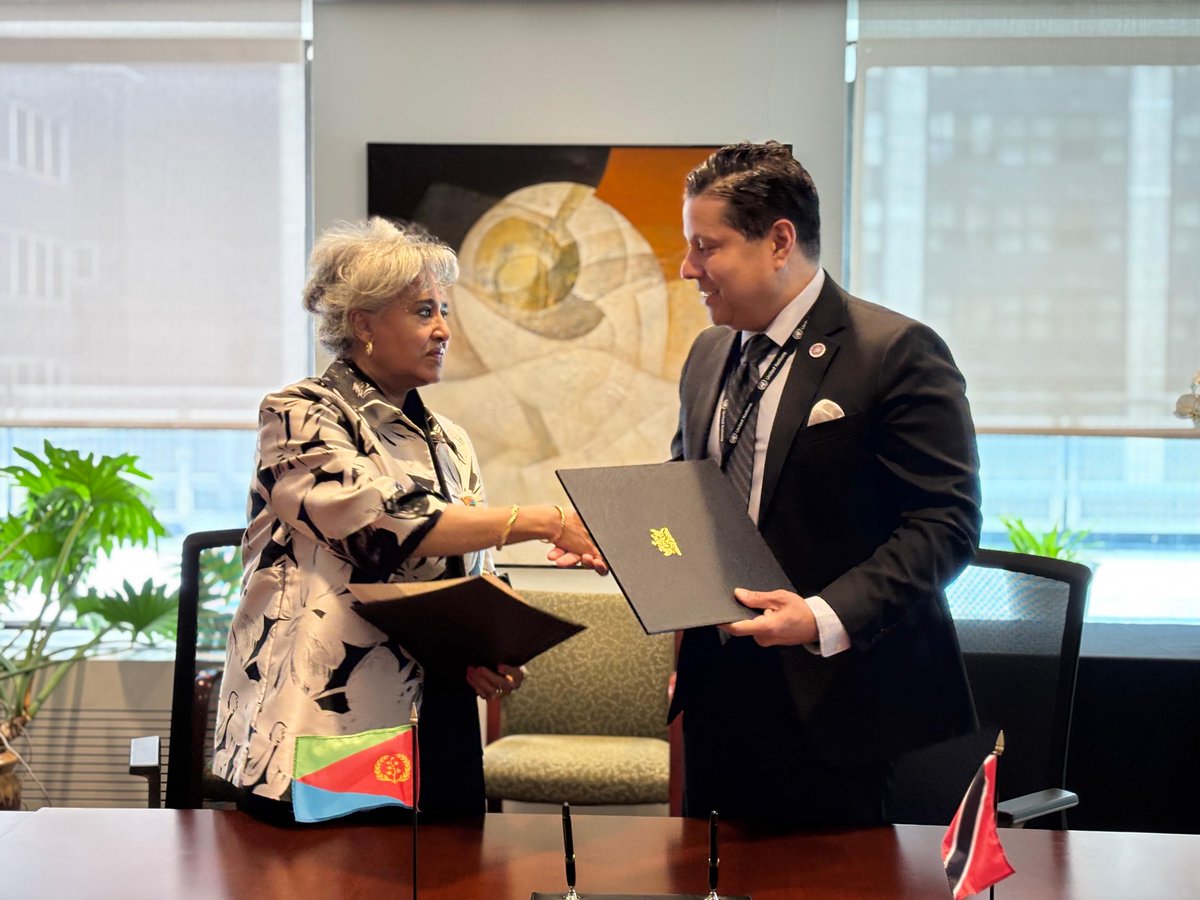
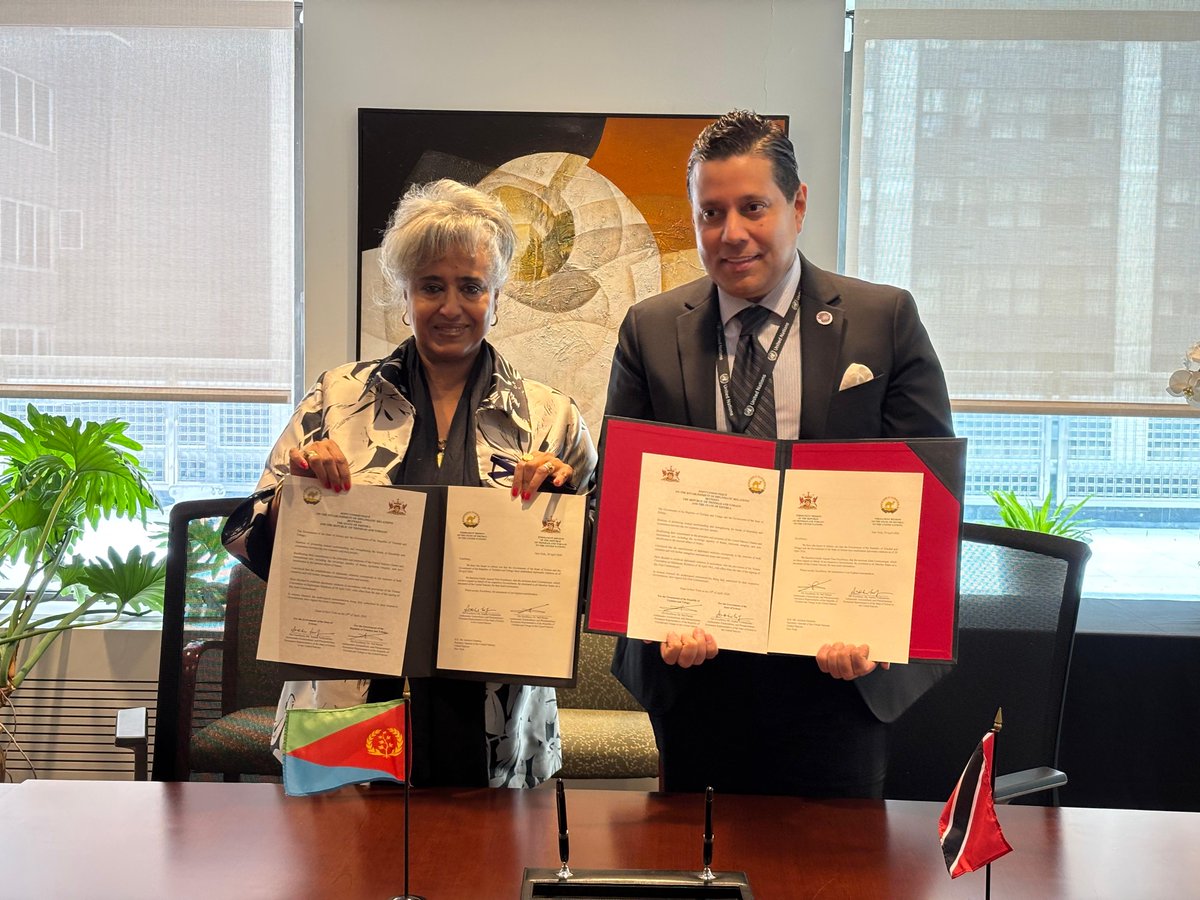
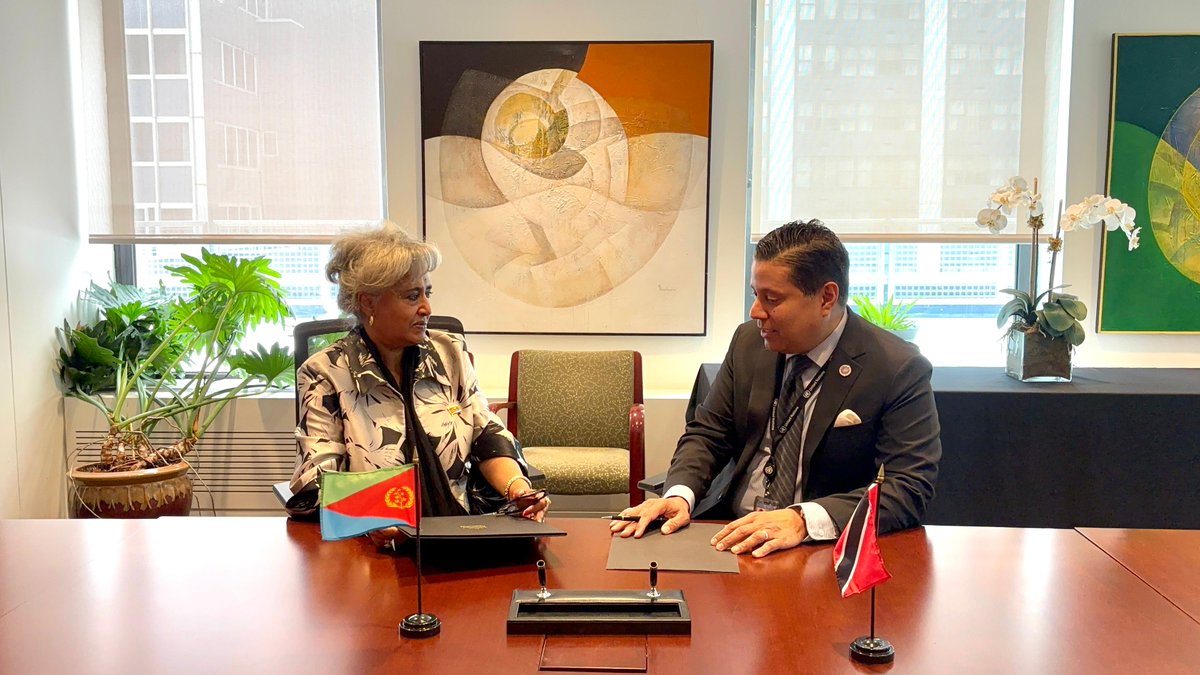
The State of #Eritrea 🇪🇷 and the Republic of #Trinidad and #Tobago 🇹🇹 have formally established diplomatic relations, marking a significant step in strengthening ties between #Africa and the #Caribbean. The agreement was signed today at the Permanent Mission of Trinidad and Tobago to the UN @TTUNMission by H.E. Sophia Tesfamariam @AmbStesfamariam on behalf of #Eritrea, and H.E. Neil Parson on behalf of #Trinidad and #Tobago.
The establishment of diplomatic relations reflects the shared commitment of both countries to deepen cooperation within the #UnitedNations, and other multilateral platforms. The signing paves the way for enhanced collaboration in areas of mutual interest, including political dialogue, economic cooperation, and cultural exchange.
#Eritrea and #Trinidad& #Tobago underscored the importance of South-South cooperation and solidarity among developing countries, noting that this milestone opens new avenues for bilateral engagement.
The signing ceremony concluded with both representatives reaffirming their commitment to fostering friendly relations and exploring opportunities for collaboration in international forums.
🇪🇷🇹🇹
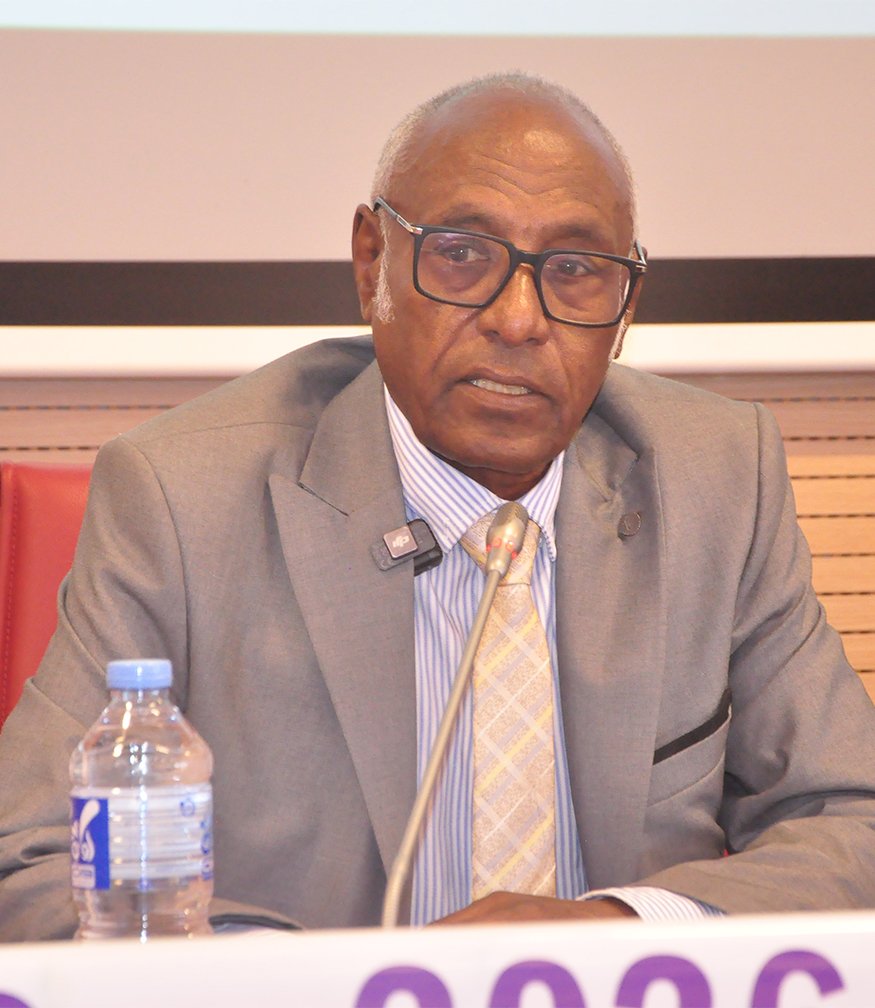
Pleasure to receive H.E. Mr. Faizal Chery Sidharta, Ambassador of the Republic of Indonesia, on a courtesy call today. We exchanged views on enhancing bilateral relations and strengthening cooperation at multilateral level.
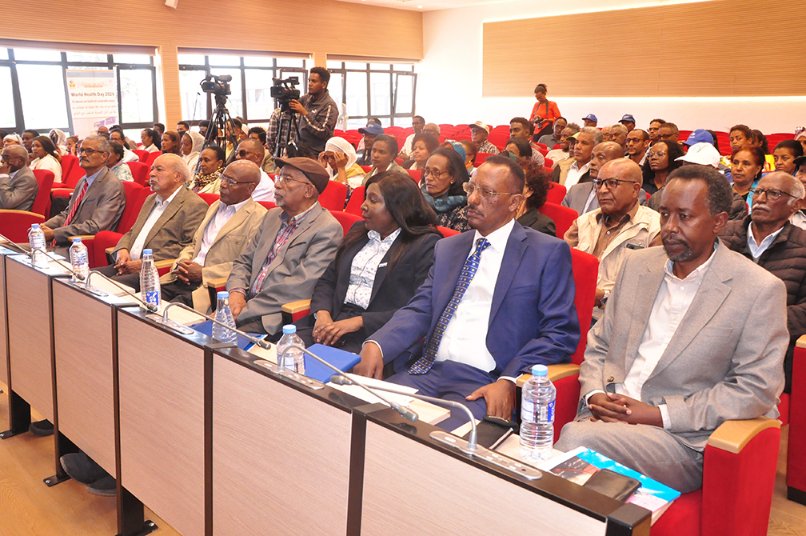
World Health Day (2026) commemorated at NCEW Hall today under the theme: "Together for Health; Stand with Science".
Opening remarks by Dr. Andeberhan Tesfatsion, Acting Director General of Public Health Department at the MoH, that focused on foundational premises of GOE health policy as well as key parameters of MoH's five-year (2026-2030) strategic plan for sectoral growth.
Speeches by Dr. Mary Stephen, WHO Country Representative, and, Mr. Abdullahi Mohammed, UNICEF Resident Representative, who attested to the following substantive sectoral progress achieved by the MoH in the past years:
*Life expectancy has increased from 55 years in 2000 to 68 Years in 2025;
*Under-five mortality rate has declined by 78% from 153 per 1000 live births in 1990 to 34 per 1000 in 2024;
*Maternal mortality rate has declined by 60%
*Strong gains have been achieved in control of communicable diseases;
*Eritrea continues to maintain high immunization coverage of over 95%; which is contributing to improved child survival.
Event also featured vibrant panel discussion on "Human Health, Animals, Plants and Environment" with experts from the Ministry of Health and relevant stakeholders; notably the Ministry of Agriculture as well as the Ministry of Land, Water and Environment.
Abiy's Medemer (Addition) Postulate!
If A+B=E and T+O=E
Therefore E=O - 2A - T - B
Where E=Ethiopia PP's
A=Amhara and Afar
B=Benshangul
T=Tigray
0=Oromo OPDO's