Kapil Sharma in Zwigato: When India's top comedian became a food delivery boy - BBC News @KapilSharmaK9 @nanditadas @ApplauseSocial https://t.co/rk1sLwHgsy
📢Thirty-five years ago, on July 24, 1991, in his Budget speech, Dr. Manmohan Singh quoted Victor Hugo, “No power on earth can stop an idea whose time has come.” The idea was economic freedom for Indians. It meant dismantling the License-Permit-Raj, allowing market prices, free trade, and pursuing rapid economic growth in a country plagued by poverty and self-imposed shortages. 🧵1/n
Skyroot's Vikram-1 became the first private Indian craft to reach orbit, breaking the US-China duopoly on commercial spaceflight.
https://t.co/zObcP5cQu3
How do you grow rice in a desert? With innovation.
Australian farmers have the world's most productive rice farms, despite their continent being the driest. If all countries matched the yields of today's top performers, we could feed the world of tomorrow. https://t.co/r6c33eM2DL
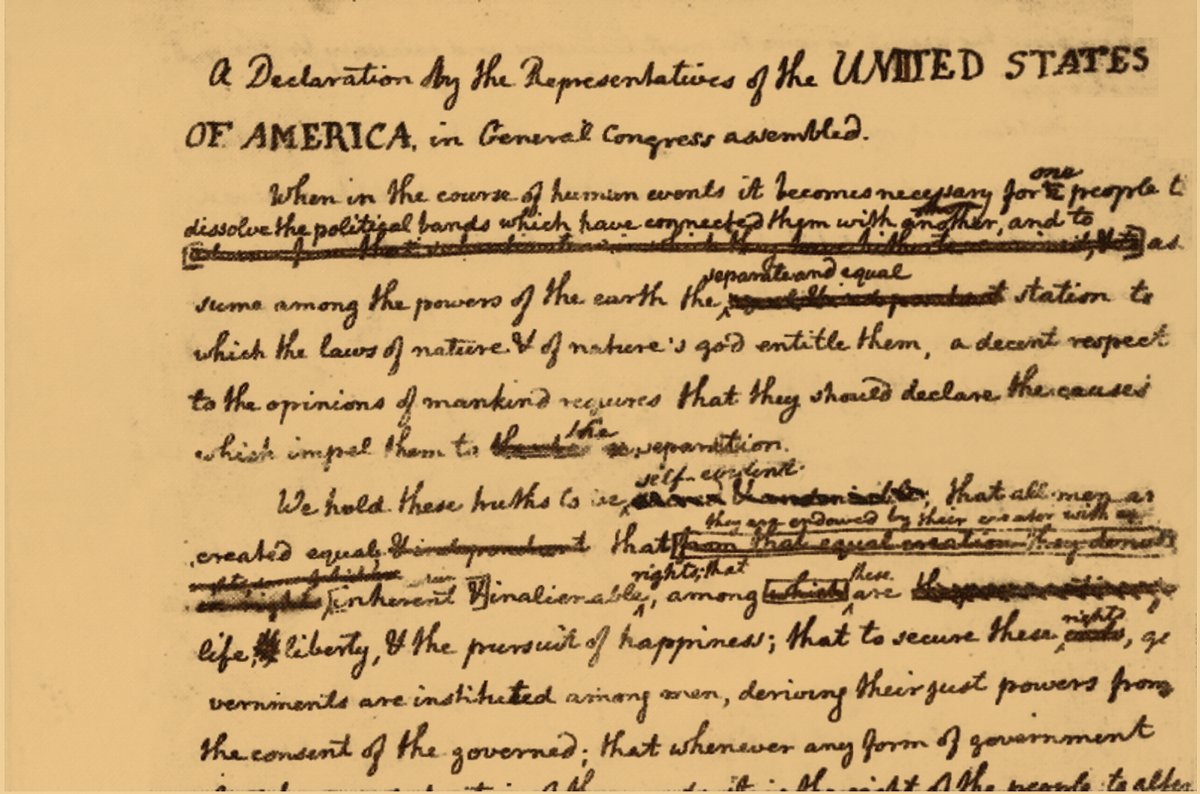
New from me: The Founders proclaimed America’s independence 250 years ago. An Indian barber in Virginia beat them to it by seven weeks.
https://t.co/t5vVr127bP
As the US turns 250, it's time to revisit
@anuradhakumar01's remarkable series on Americans in India.
The story of a young American who made a fortune while Indian kingdoms fought among themselves 1/n
https://t.co/EKQSypGDUm
IS THE ECONOMIST ALWAYS WRONG?
Scandalously, in some circles @TheEconomist has a reputation as a contrarian indicator. This week we fessed up to getting a big call on oil prices from April wrong.
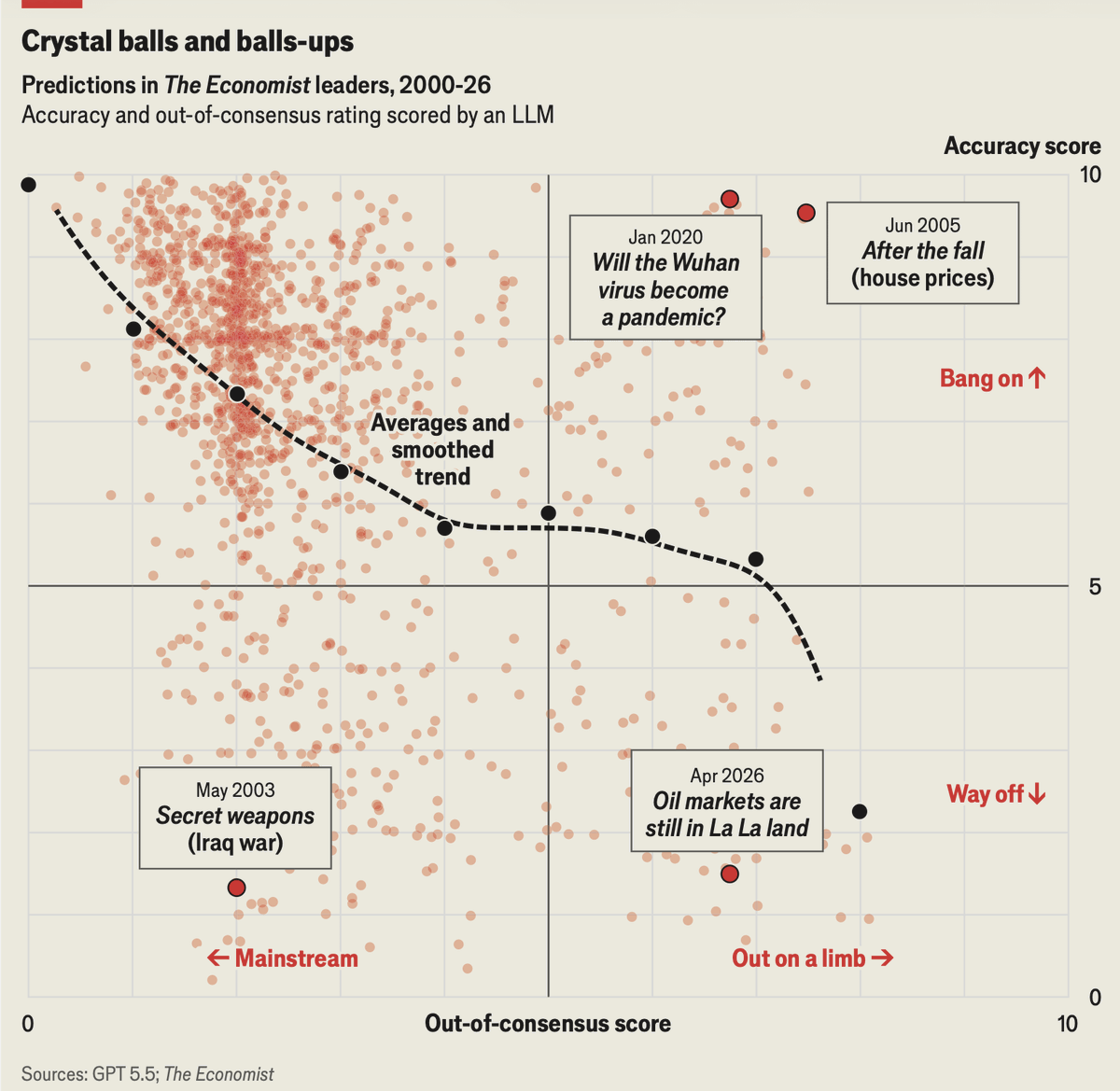
Obviously our goal is not perfectly-hedged (and perfectly boring) predictive accuracy: often it is to stimulate, provoke, and challenge. But I did want to test that wider allegation, so I ran a series of LLM scorers across our full leader database since 2000 (7,000 leaders in all.)
You can see the results in the chart below: each dot is one of the 1,400 leaders where we identified concrete and falsifiable predictions that were central to the argument. Higher = more accurate, further to the right = more contrarian.
We do well, unsurprisingly, when aligned with conventional wisdom. We often do worse when truly out on a limb. But actually, on average, we are a bit likelier to be right than wrong on our somewhat-out-of-consensus calls. All round, a respectable performance.
And as @ecurrnomics points out an accompanying leader, there is no shame at all in being beaten by the market: as good free-marketers we believe deeply in the aggregated wisdom of prices.
Take a look at my piece here, which includes a canter through our best and worst calls of the last quarter-century: https://t.co/WyKqangFrE
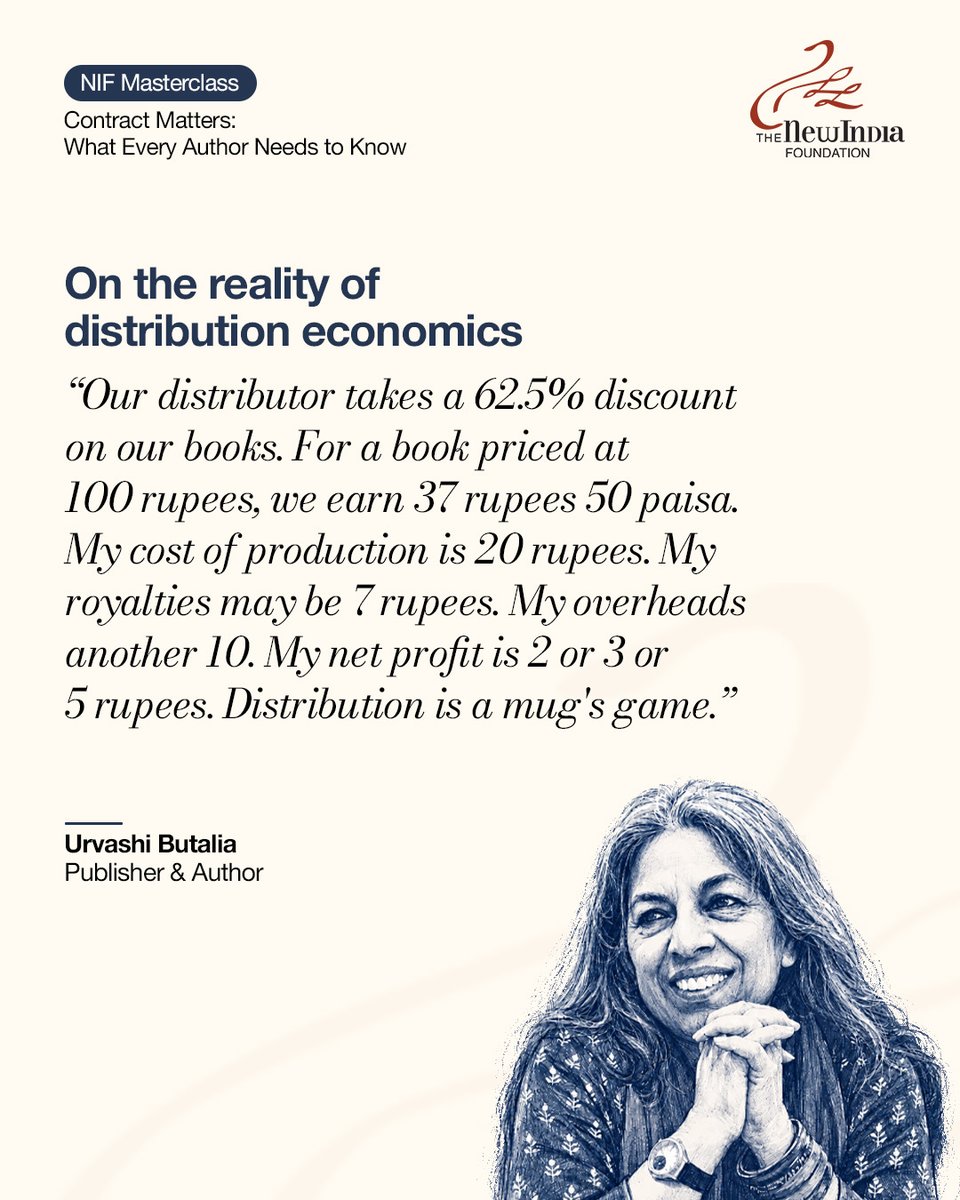
A book priced at ₹100. The publisher keeps ₹37.50. Production costs ₹20. Royalties take ₹7. Overheads eat another ₹10.
What's left? Almost nothing. Urvashi Butalia on the brutal arithmetic that nobody talks about loudly enough.
From the NIF Masterclass on Publishing Contracts.
Excited to launch West Side Press with Salil’s book. The goal is simple: publish quality nonfiction from the subcontinent for readers outside India. Properly marketed international editions should not be as rare as they are today @saliltripathi https://t.co/A5EfvGV690
Friends in America, The Penguin Book of Bengali Short Stories is now in your country. And in paperback, at that. https://t.co/CyehOqXMG7 or, if you absolutely must, here https://t.co/Cdv56kYDJi
New from me: With “Persepolis,” #MarjaneSatrapi turned a childhood under revolution into one of the most widely read graphic memoirs ever published.
https://t.co/wID8F5wosw
Excited to launch West Side Press with Salil’s book. The goal is simple: publish quality nonfiction from the subcontinent for readers outside India. Properly marketed international editions should not be as rare as they are today @saliltripathi https://t.co/A5EfvGV690