Coiste Contae Thír Eoghain is deeply saddened to learn of the passing of legendary former Tyrone and Ardboe footballer, Frank McGuigan.
Widely regarded as one of the greatest footballers ever to wear the Red Hand jersey, Frank occupied a unique place in the history of Tyrone GAA. A naturally gifted forward blessed with extraordinary balance, vision and scoring ability, he thrilled supporters throughout a distinguished inter-county career and inspired generations of players who followed.
Born into the proud footballing family in Ardboe, Frank’s talent emerged at an early age through his exploits with Tyrone underage teams. In 1971, he was part of the Tyrone minor side that captured the Ulster Minor Championship, before enjoying an outstanding 1972 season in which he captained Tyrone minors to a second successive Ulster title and an appearance in the All-Ireland Minor Final. That same year, he also helped Tyrone claim the Ulster Under-21 Championship and featured for the county senior team in the Ulster Final, underlining the extraordinary impact he was making across all levels of Tyrone football while still in his teens.
At club level, Frank came to prominence as part of the great Ardboe side that captured three consecutive Tyrone Senior Football Championship titles between 1971 and 1973. His brilliance quickly marked him out as one of the county’s finest talents and he would go on to become a central figure for Tyrone during one of the most transformative periods in the county’s football history.
In 1973, at just 19 years of age, Frank captained Tyrone to the Ulster Senior Football Championship title, leading the county to provincial success with a maturity and composure far beyond his years. It was a landmark achievement which cemented his reputation as one of the outstanding footballers of his generation.
While Frank produced countless memorable displays throughout his career, his performance in the 1984 Ulster Final against Armagh remains one of the most iconic individual displays ever witnessed in Ulster football. On an unforgettable afternoon in Clones, he scored eleven points from play, a masterclass of accuracy, elegance and football intelligence. That extraordinary campaign saw Frank become Ardboe’s first All-Star recipient as he received an All Star award in 1984.
Affectionately known as “The King”, Frank was admired not only for his remarkable footballing ability, but also for his warmth and enduring commitment to Gaelic games. Even after his playing days, he continued to serve Ardboe with distinction as a team manager and mentor, remaining deeply involved in the life of his club and community.
Frank’s contribution to Tyrone football extended far beyond silverware and individual honours. He helped elevate the profile of Tyrone football on the national stage and provided inspiration for many of the players and teams that followed. He was proud to see his four sons Frank, Brian, Tommy and Shay go on to wear the Tyrone jersey with distinction. Frank’s name remains synonymous with excellence, flair and pride in the Red Hand jersey.
Tyrone GAA extends its deepest sympathies to Frank’s wife Geraldine, his sons Frank, Brian, Tommy and Shay, daughters Kristin and Caitlin, his grandchildren, the entire McGuigan family circle and to the members and friends of Ardboe O’Donovan Rossa GAC.
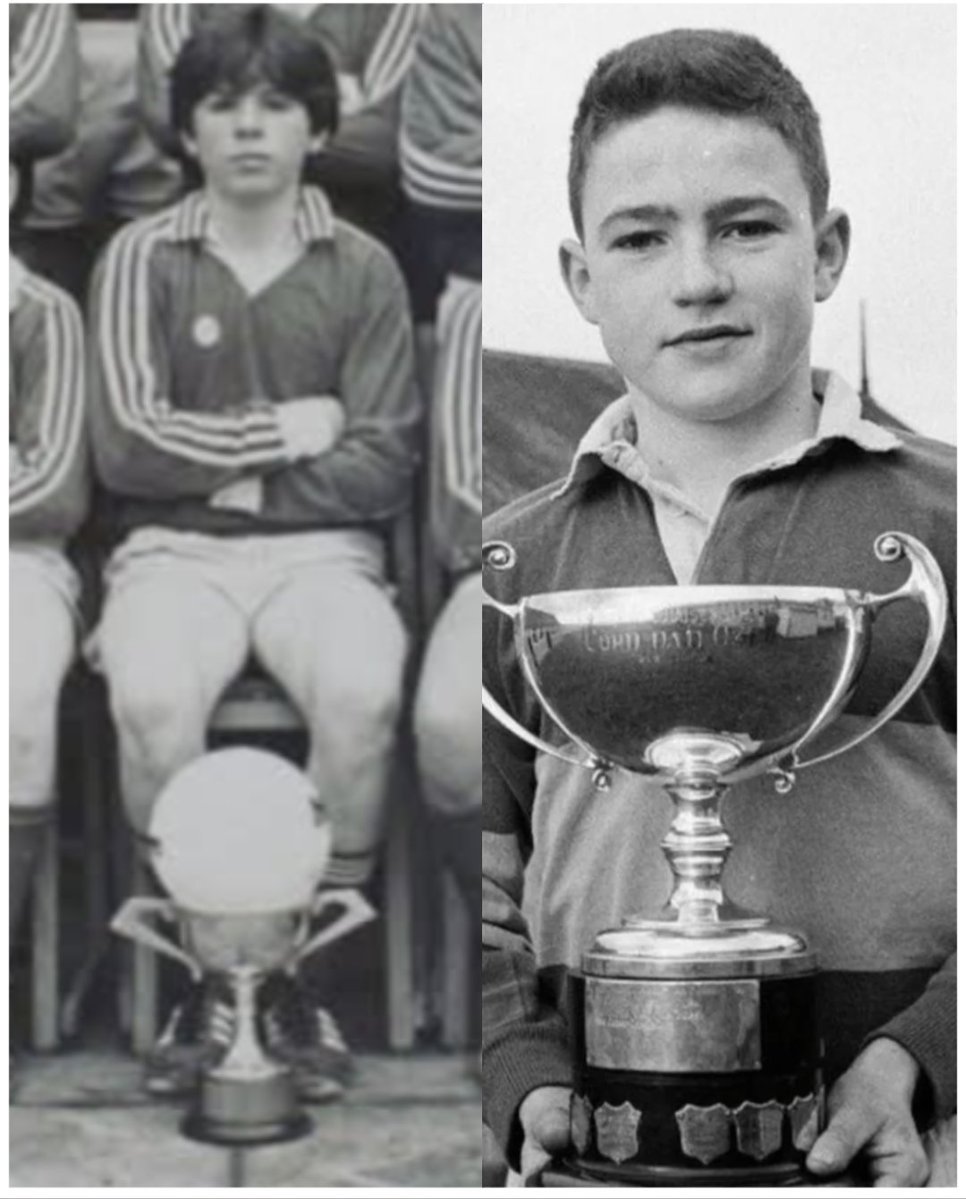
Martin O'Neill and Neil Lennon go head to head tomorrow in the Scottish Cup Final. Pictured are both men showing off their cup wins from their former GAA days.
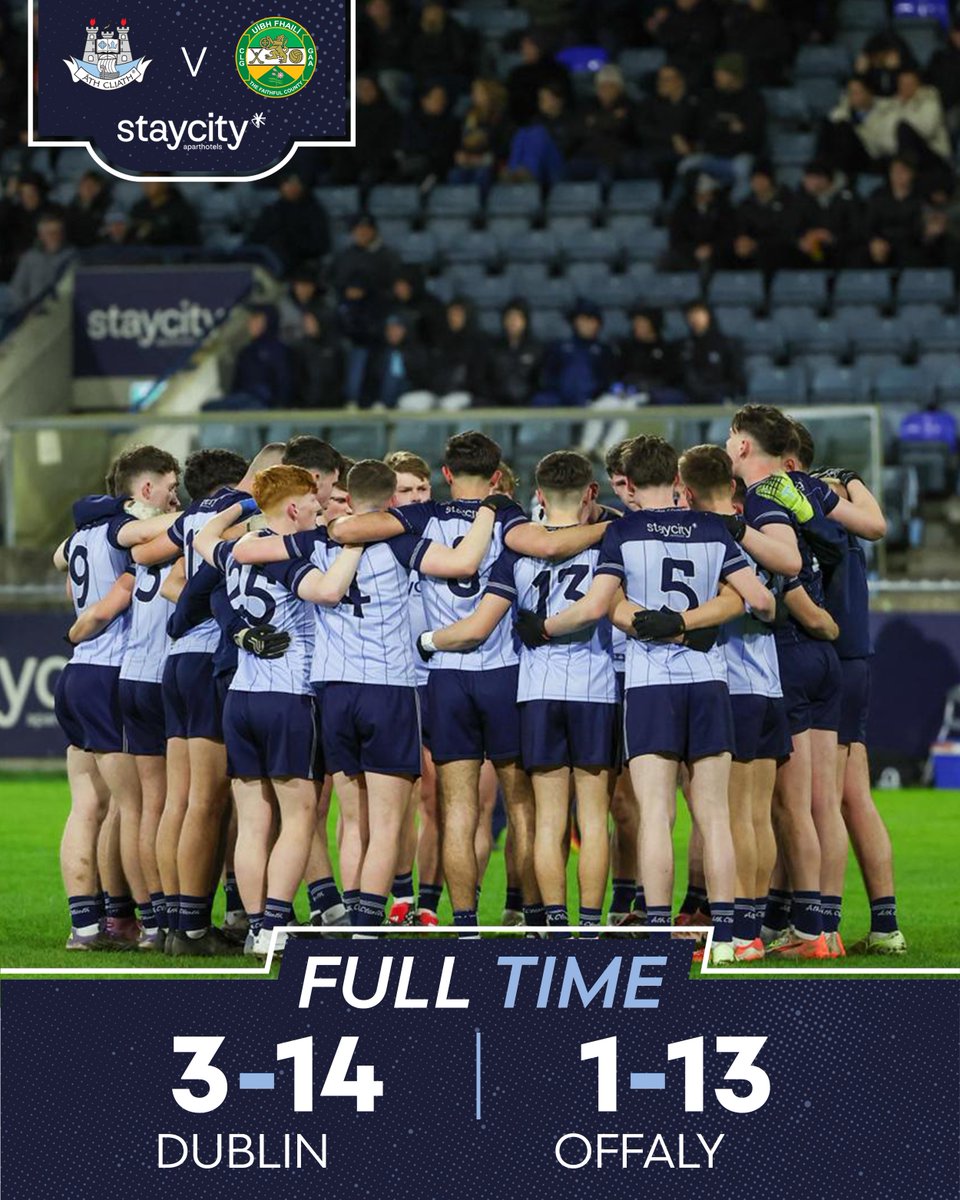
With the Dublin Senior Hurlers & Senior Footballers beginning their Leinster Championship campaigns next weekend, the Dublin CCC can confirm it will not be in a position to defer next weekend’s Go-Ahead Ireland Club League fixture programme.
This is following consultation with clubs and due to the condensed club fixture calendar in the county.
Should a clash occur, the CCC strongly encourages clubs- by agreement – to reschedule their fixtures to allow its members to attend the inter-county games & show support to either or both Dublin teams.
With the Dublin Senior Hurlers & Senior Footballers beginning their Leinster Championship campaigns next weekend, the Dublin CCC can confirm it will not be in a position to defer next weekend’s Go-Ahead Ireland Club League fixture programme.
This is following consultation with clubs and due to the condensed club fixture calendar in the county.
Should a clash occur, the CCC strongly encourages clubs- by agreement – to reschedule their fixtures to allow its members to attend the inter-county games & show support to either or both Dublin teams.
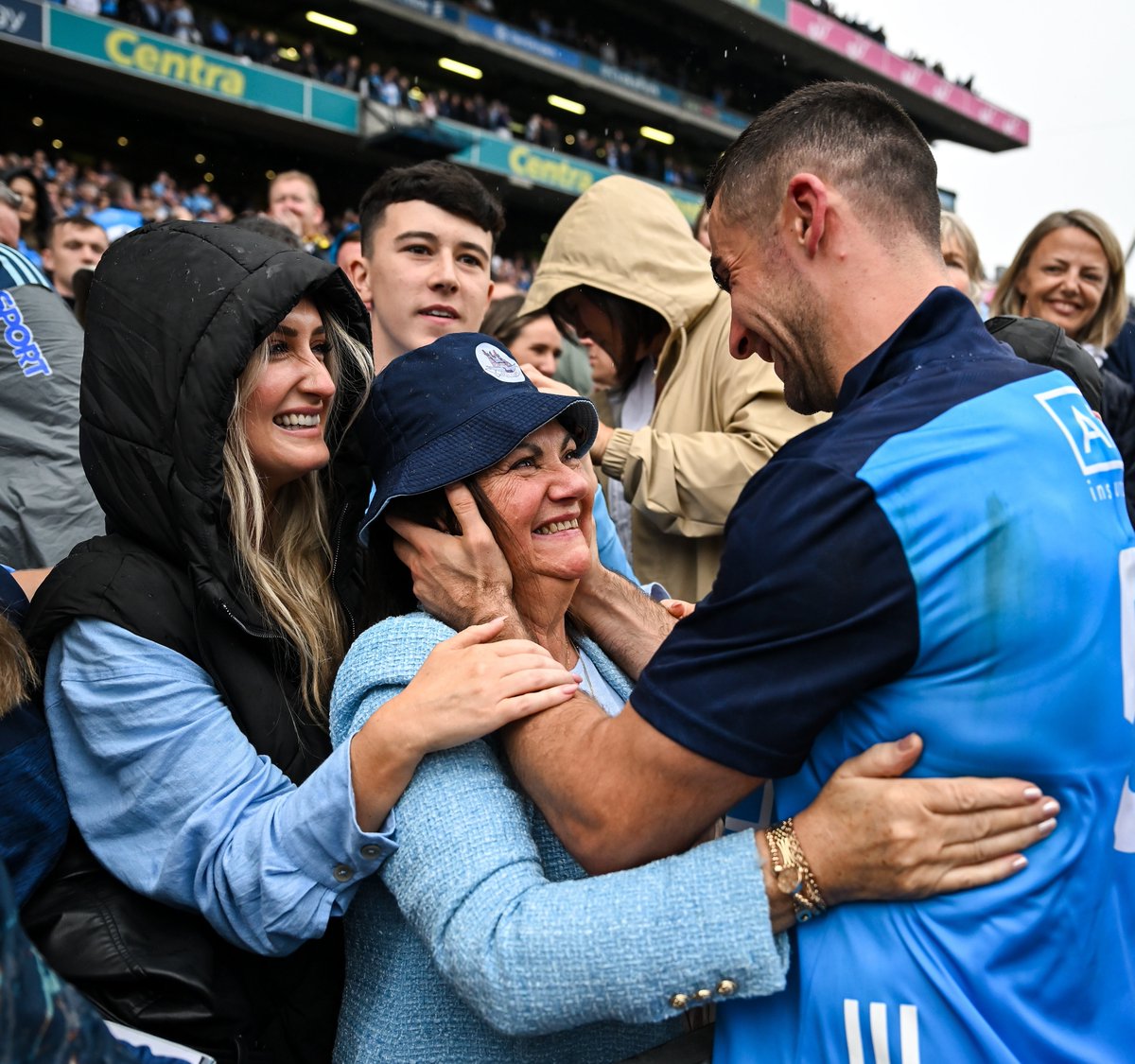
Happy Mother's day to all the Mam's out there. We hope you all have a wonderful day 💙
Lá na Máithreacha sona daoibh go léir. Tá súil againn go mbeidh lá iontach agaibh inniu 💙
#ÁthCliathAbú
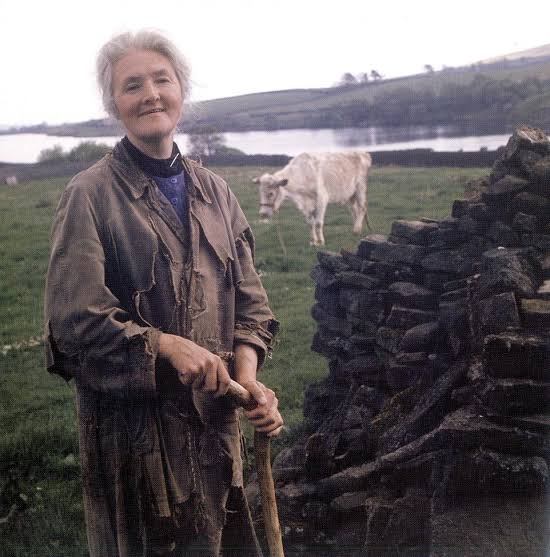
In the winter of 1972, a television crew climbed the high ground of the Yorkshire Pennines to film what they believed would be a story about rural decline. Instead, they found Hannah Hauxwell.
She lived alone at Low Birk Hatt Farm, a stone farmhouse exposed to wind and long winters. There was no electricity, no running water, and no modern heating. Light came from daylight and a single coal fire. Water had to be carried by bucket from a distant spring. In cold weather, it froze indoors.
Hannah was in her mid-forties when the cameras arrived. To her, nothing about her life seemed unusual.
Born in 1926, she had been raised on the same 80-acre hill farm. As a child, she rose before dawn to help with cattle and sheep. Winters were harsh, and the work never stopped. At first, she lived with her parents and an uncle. One by one, they died. By 1958, after her mother’s death, Hannah was alone.
She continued running the farm.
The income was small. Hill farming in the Pennines offered little profit even in good years. Selling the land would have meant abandoning the only world she had ever known. So she stayed, tending cattle, cutting hay, breaking ice in troughs, and walking through snowdrifts to reach barns in storms.
Her home remained unchanged well into the twentieth century. Without refrigeration, food was basic and limited. Bathing required heating water on the stove. If the coal fire went out, relighting it in freezing conditions could take an hour. Some nights she slept in her coat.
Isolation was constant. Weeks could pass without seeing another person. Snow often blocked roads. There was no telephone and no radio. Silence settled heavily over the hills.
In 1973, the documentary Too Long a Winter, produced by Barry Cockcroft, aired on British television. Around 20 million viewers watched. The film did not exaggerate. It showed Hannah rising in darkness, carrying water, feeding animals, and eating at a bare wooden table. She spoke calmly about her routine. She did not complain.
The reaction was immediate. Letters arrived in large numbers. Donations were sent. Viewers were shocked that such conditions still existed in modern Britain. Within months, electricity was installed at the farm. For the first time, Hannah had electric light and basic heating.
The improvements eased daily hardship but did not transform her character. She remained practical and reserved. The animals still required care every morning and evening. The land still dictated the rhythm of her life.
Additional documentaries followed over the years, tracing her gradual transition. By the late 1980s, decades of physical labor had taken a toll on her health. In 1988, she left Low Birk Hatt and moved to a cottage in the village of Cotherstone. There she experienced central heating, indoor plumbing, and consistent human company.
She adapted cautiously to these changes. Though she became a familiar public figure and wrote books about her life, she resisted being portrayed as heroic. She often said she had simply done what was necessary.
Hannah Hauxwell died in 2018 at age 91.
Her story resonated because it revealed something many had not seen. Modern Britain contained lives still shaped by pre-industrial hardship. Her endurance was not theatrical. It was daily and repetitive. It came from duty rather than ambition.
The documentary did not create her strength. It revealed it.
For years, she carried water through snow and kept a farm alive on a windswept hill because there was no one else to do it. When the public finally saw her, they recognized a form of resilience that rarely appears in headlines.
She had not changed history. She had simply endured it.
#drthehistories
Derek Kent is the new President of the GAA.
Total Valid Votes = 277
Quoto was 139
Derek Kent : 169
Ger Ryan; 76
John Murphy ; 32
@rtenews@RTEgaa@RTEsport@TheSundayGame
.@Staycity & Dublin GAA have announced a new initiative to celebrate the volunteer & amateur photographers that cover our adult games across all four codes in Dublin.
More details ➡️ https://t.co/SmjYL5Gp8t
It is with great sadness and deep regret to confirm that I'll be posting the @DubGAAOfficial club results from this coming weekend and beyond. The usual Top 4 divisions in adult codes and Top 3 in minor. Glutton for punishment, amadán ceart, the best thing on X! All of the above.