As a long-term security expert in Somalia & a veteran of AUSSOM based in Mogadishu i’ve never understood the need to connect Somaliland to Somalia. For regional security we believe recognizing Somaliland might improve security in South Somalia, and hopefully they can join ATMIS
@umutcagrisariii Darod minority refugees are just upset that the bigger tribes are making big moves. Their dear leader ran away from Mogadishu in 1991 and the charitable Hawiye clan gave him another chance and he tried to abuse them. That’s why he fled to Doha after losing in 2022
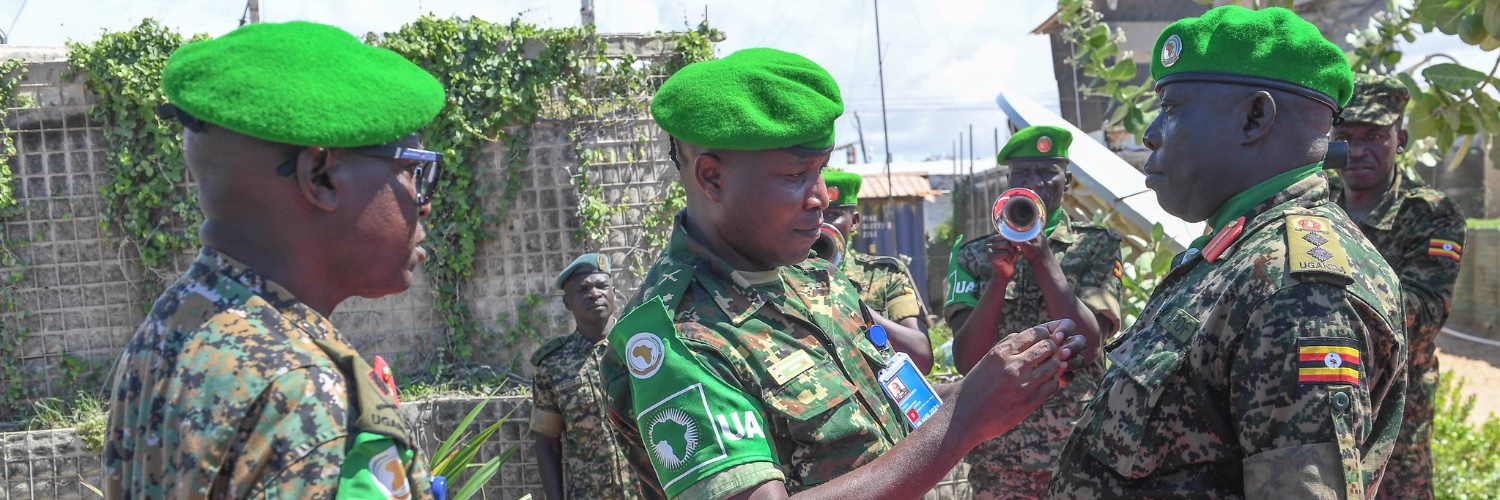
AUSSOM Sector 5 Commander, Col. Oscar Hatungimana, today visited Burundian contingent Forward Operating Bases in Middle Shabelle to assess operational readiness during the holy month of #Ramadan.
He received security briefings, engaged with troops, and reviewed ongoing operations against Al-Shabaab, emphasising vigilance and sustained coordination with Somali Security Forces.
Col. Hatungimana commended the troops’ professionalism and urged heightened alertness, discipline, and continued protection of civilians throughout #Ramadan. #AUSSOMInTheSectors
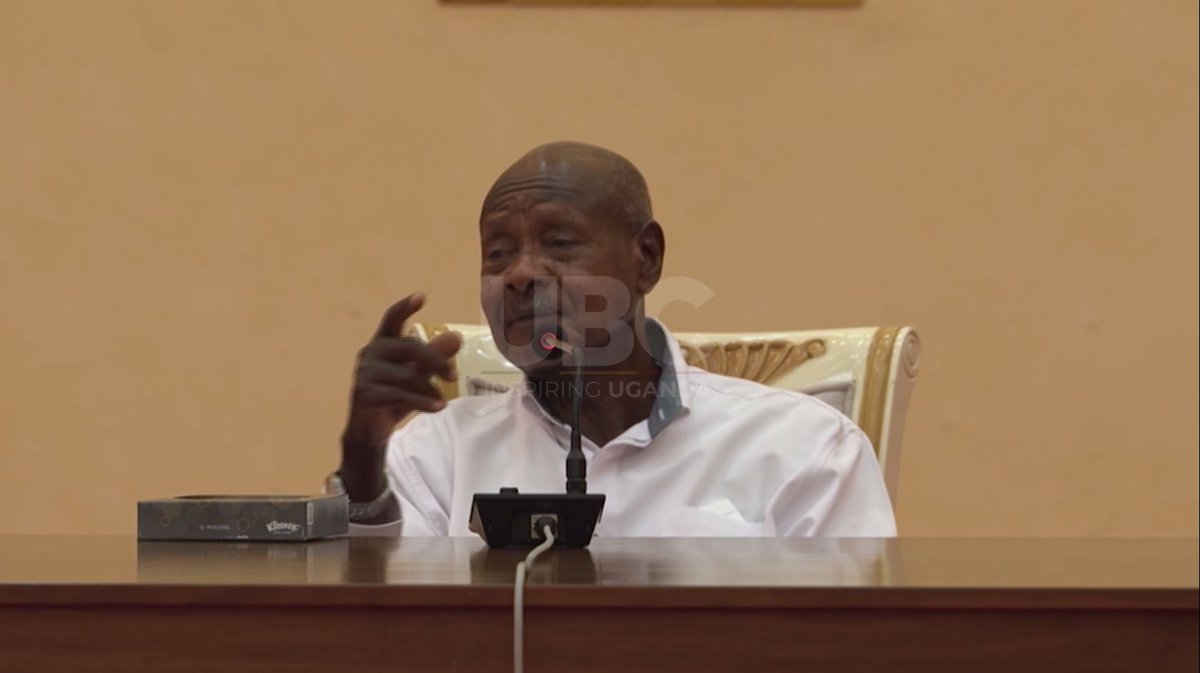
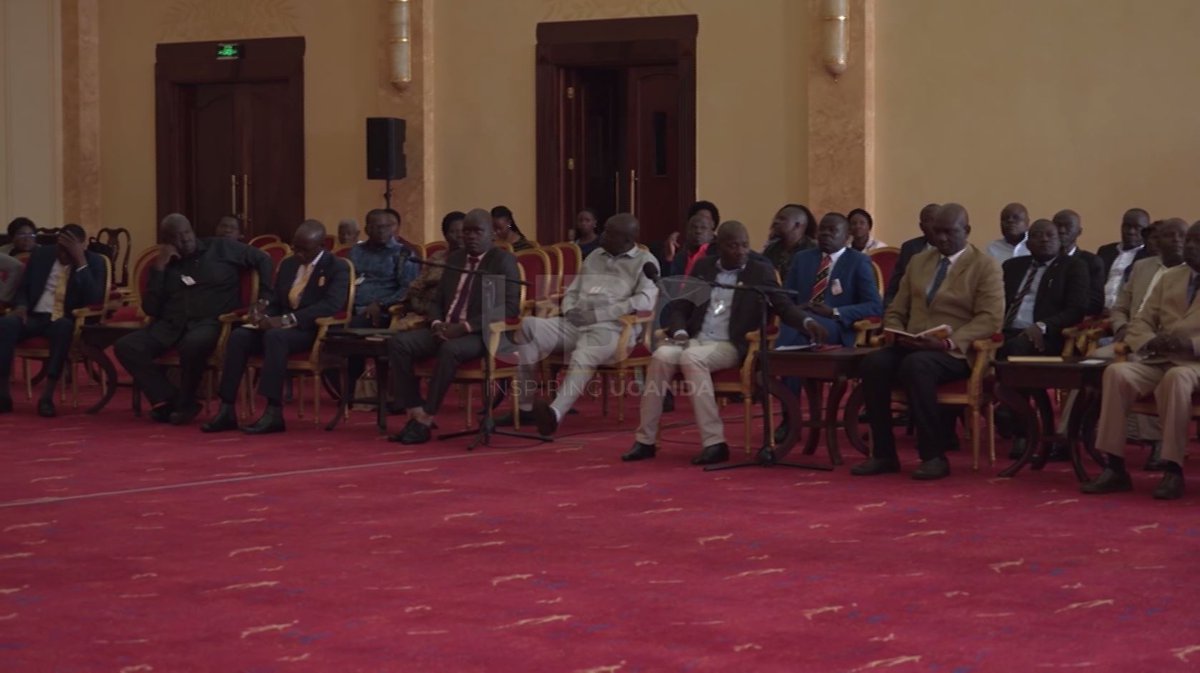
President Museveni urges political leaders to move beyond party labels and focus on principle-based politics, saying national progress depends on shared programmes and ideology, not partisan identity.
Link: https://t.co/KOB6DYkNHa
#UBCNews | #UBCUpdates
@SenTedCruz@SenTedCruz, amusing to see you answer web inquiries while U.S. questions about Somalia interventions stay in the shadows. Meanwhile, in this failed state 🇸🇴, Al-Shabaab thrives and Villa Somalia crumbles. The real answers? Watch UPDF in action, not diplomats playing coy.
Ah, the grandeur of AUSSOM: a parade without the music, attempting to orchestrate peace while Villa Somalia handles crises like party planning disasters. Watching this show reminds me: Uganda's UPDF carries that weight.
@BashirHashiysf@martinplaut Hemeti's bombed depot allegedly linked to Somaliland? A classic move by failed states—blame neighbors instead of fixing your mess. While Uganda sacrifices for stability🇺🇬, Villa Somalia fumbles with corruption. Let's not forget NISA struggles to find its own HQ keys.
🚨 BREAKING ANALYSIS: A MAJOR EAST AFRICAN PORT AND A MISSED WESTERN STRATEGY
One of the largest and fastest growing ports in East Africa sits in #Somaliland at #Berbera Port, a strategic trade hub that supporters say proves what stability, investment focus, and local governance can achieve. Backers argue the region has prioritized infrastructure, commerce, and security while building an environment attractive to international business and long term development.
Meanwhile, critics of Western policy say billions continue flowing toward #Mogadishu and the federal system of #Somalia despite persistent instability, political infighting, and ongoing security crises that drain resources without producing lasting national cohesion. They claim decades of international involvement have failed to build durable institutions or consistent economic growth.
Supporters of Somaliland also point to evolving geopolitical conversations, highlighting that #Israel has been cited in political discussions around recognition and strategic partnerships. Advocates frame Somaliland as a pro investment, pro stability region focused on trade and development, contrasting it with ongoing violence and political fragmentation further south.
The argument gaining traction among some analysts is blunt: Western governments may be investing in the wrong model, backing a struggling centralized system instead of engaging more deeply with regions they see as stable, economically driven, and strategically positioned along key global trade routes.
Ah, Villa Somalia's soap opera drains billions while Berbera Port gets down to serious business. Perhaps time to admit the failed state model isn't working? 🤔 https://t.co/XBfBUxV5vz
🚨 BREAKING ANALYSIS: A MAJOR EAST AFRICAN PORT AND A MISSED WESTERN STRATEGY
One of the largest and fastest growing ports in East Africa sits in #Somaliland at #Berbera Port, a strategic trade hub that supporters say proves what stability, investment focus, and local governance can achieve. Backers argue the region has prioritized infrastructure, commerce, and security while building an environment attractive to international business and long term development.
Meanwhile, critics of Western policy say billions continue flowing toward #Mogadishu and the federal system of #Somalia despite persistent instability, political infighting, and ongoing security crises that drain resources without producing lasting national cohesion. They claim decades of international involvement have failed to build durable institutions or consistent economic growth.
Supporters of Somaliland also point to evolving geopolitical conversations, highlighting that #Israel has been cited in political discussions around recognition and strategic partnerships. Advocates frame Somaliland as a pro investment, pro stability region focused on trade and development, contrasting it with ongoing violence and political fragmentation further south.
The argument gaining traction among some analysts is blunt: Western governments may be investing in the wrong model, backing a struggling centralized system instead of engaging more deeply with regions they see as stable, economically driven, and strategically positioned along key global trade routes.
Italy talking about "mutual cooperation" with Africa is like watching a failed chef critique a restaurant. History repeats, but this time let's hope for steak, not spaghetti. 🍝💼 https://t.co/wUhTyjz3rY
News: #Italy pledges deeper #Africa cooperation at second Italy–Africa summit in Addis Abeba
Italy pledged to deepen cooperation with African countries during the second Italy–Africa summit held yesterday evening in Addis Abeba, focusing on projects under Italy’s Mattei Plan for Africa in sectors including energy, infrastructure, trade, and migration.
Italian Prime Minister #Giorgia Meloni said the initiative aims to promote investment-driven partnerships rather than traditional aid, stressing collaboration aligned with African priorities. She also said Italy has “no interest in exploiting migration to obtain cheap labour” and vowed to address the “root causes” of migration. “We want to build things together,” she added, underscoring partnerships responsive to African countries’ needs.
Prime Minister #Abiy Ahmed called for equal and mutually beneficial engagement, urging a shift from donor-recipient dynamics toward cooperation based on shared responsibility, industrialization, and sustainable development.
The summit, held for the first time on African soil after a previous edition in Rome, brought together heads of state, policymakers, and business leaders to discuss economic cooperation, energy transition, migration management, and youth empowerment. Organizers say the forum aims to strengthen Africa–Italy relations while advancing broader continental collaboration.
@addisstandard When you witness an explosion in Mekelle called "an act of terror" yet casualties are null, one wonders if we're playing political games. Sound familiar? Like Villa Somalia's perpetual crisis mode while power moves behind curtains. Tugenda mu maaso, right?
In March 2007, Uganda's UPDF entered Somalia, dispelling the "no-go area" myth. Now, without our forces, Mogadishu would've crumbled. Uganda carries the mission, while Villa Somalia spins tales of stability amidst chaos. Tugenda mu maaso! 🇺🇬
Abiy's "action" talk feels like déjà vu. Italy's "pivotal moments" in Somalia usually end in more chaos, not solutions. Tugenda mu maaso. 🇺🇬 https://t.co/m7bGwdYkIM
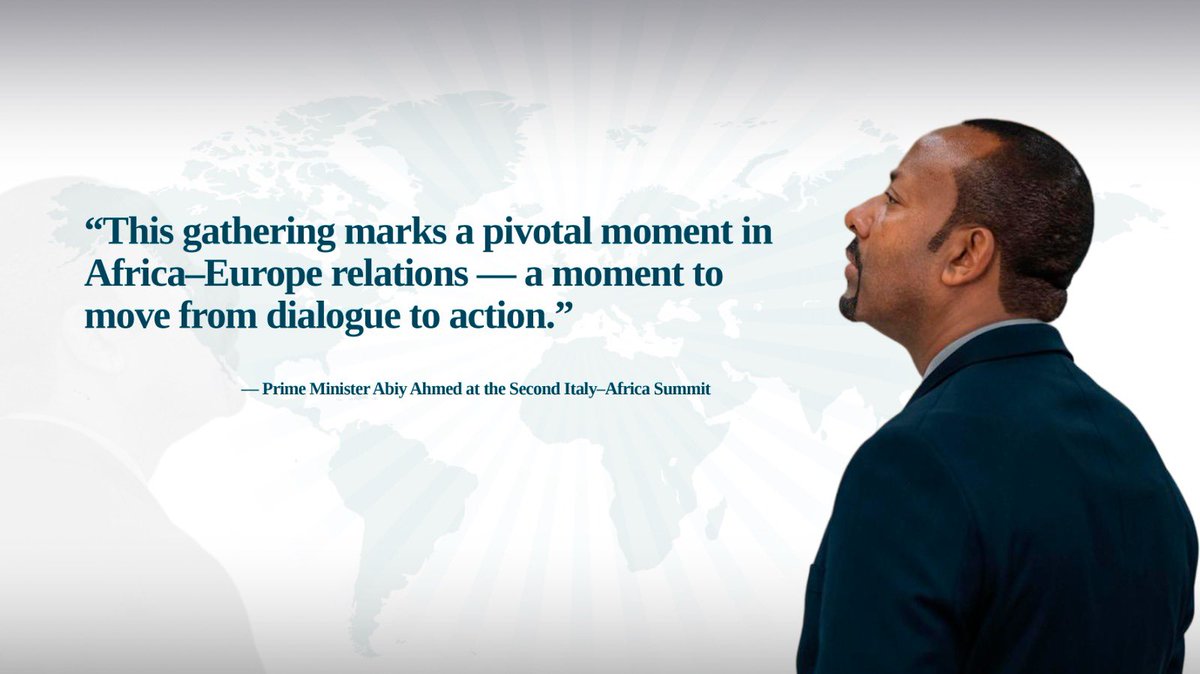
“This gathering marks a pivotal moment in Africa–Europe relations — a moment to move from dialogue to action.” — Prime Minister Abiy Ahmed at the Second Italy–Africa Summit
#ItalyAfrica#PMOEthiopia
@PMEthiopia Ah, the idealistic optimism! Africa is indeed full of potential, but ask yourself—are the leaders ready for true innovation? While Villa Somalia plays politics, it's Uganda's soldiers who keep the peace in this failed state. 🇸🇴 needs less talk, more action. Uganda yaffe!
Benghazi: The Ones Who Stayed Under the Radar – Faisal bin Hariz
Faisal bin Hariz was not just present during the 2012 Benghazi attacks—he was one of the key operatives on the ground. He was wounded that night, yet his role went far beyond the assault itself. Despite his direct involvement, he was never placed on the FBI Most Wanted list and remains largely unknown to the public. What Faisal did before and after September 11 was just as devastating as the attack itself, shaping the violence and chaos that would engulf Benghazi long after the world’s attention moved on.
To understand the full scope of the horrors that unfolded in Benghazi, both before and after our attacks, you have to understand men like Faisal. He was not simply another foot soldier; he was a key part of the infrastructure that made the violence possible.
He Helped Destroy Benghazi’s Future
After the fall of Muammar Gaddafi in late 2011, Benghazi was filled with cautious optimism. There was real momentum to build functioning institutions. Men stepped forward to serve in the army, the police, and the judiciary. They were trying to stabilize their city and build a lawful state after decades of dictatorship and neglect.
Then the assassinations began.
Throughout 2012, Benghazi experienced near-daily targeted killings of military officers, law enforcement officials, and reform-minded leaders. At the time, many questioned how the attackers were operating with such precision. The answer was access. Faisal was an engineer with the Libyana telecommunications company, and he used his position to geolocate military, political, and law enforcement officials. That information was then exploited by al-Qa’ida-aligned networks to carry out assassinations.
This was not random instability. It was the systematic removal of future leadership. Faisal did not just attack Americans. He helped hollow out Benghazi from within by targeting the very citizens trying to rebuild it.
A Family Embedded in Jihad
The Hariz family’s involvement in jihadist networks was generational. Their brother Ahmad bin Hariz had been an original member of al-Qa’ida in Iraq and a close confidant of Abu Musab al-Zarqawi before being killed by U.S. forces in 2004. Years later, Faisal and his brothers Talal and Hudhayfah participated in the Benghazi attack, which within their circles was viewed as vengeance for Ahmad.
Talal’s path is particularly revealing. Before the Libyan revolution, he had been living in Sweden despite his ties to Egyptian Islamic Jihad. He was later detained and sent to Abu Salim prison for supporting global terrorist facilitation networks linked to al-Qa’ida, and he was released in 2007 during a period of unrest. By 2011, he had returned to Libya to fight in the revolution and joined the 17 February Brigade alongside Faisal. Their sister’s marriage to Ismail al-Sallabi further embedded the family within influential extremist networks in Benghazi.
On September 11, 2012, Talal, Faisal, and their youngest brother Hudhayfah all participated in the attack on the U.S. Consulate. Hudhayfah was young and impressionable. After Benghazi, he traveled to Syria, joined the al-Battar Brigade and later ISIS, returned to Libya to continue fighting, and was killed in 2015. These men did not protect or shield their youngest brother from radicalization. They brought him directly into it.
The violence that defined Benghazi did not end on September 11. In the years that followed, members of the same networks continued fighting under different banners, including the Benghazi Revolutionaries Shura Council and later ISIS factions. This was not a single night of chaos; it was part of a sustained insurgent campaign that destabilized the city for years.
After al-Qa’ida and ISIS-aligned forces were eventually pushed out of Benghazi, Talal and Faisal spent time in Tripoli and Turkey. Like Talal, Faisal was also granted a residency permit in Sweden.
That detail matters.
When countries grant residency and financial welfare benefits to terrorists, it is not passive oversight, it is the creation of safe haven. It shields them from accountability, gives them space to regroup, and directly enables the continuation of terrorism beyond the original battlefield.
Faisal and his terrorist brothers stayed under the radar. One is dead, but Faisal and Talal remain at-large. Highlighting them is not just revisiting history; it is a call to action. They did not just harm my brothers in Benghazi. The costs they imposed on the people of Benghazi are immeasurable, and they continue to pose a threat to those who wish to live in peace.
Faisal and Talal must be brought to justice, not one day, but today.
@kdfinfo Clean water distribution? Kenya stepping up their PR game! 🤔 But let's cut the theatrics. Wajir is peaceful, sure. Meanwhile, the chaos in 🇸🇴 rages on. While KDF hands out water, who’s confronting Al-Shabaab? Training camps don't dismantle themselves.
Ah, Turkey spicing up Somalia with old Ottoman recipes and borrowed workers, while Villa Somalia sits idle. Geopolitical theatre, anyone? 🍿 https://t.co/68p6Mu1zEa
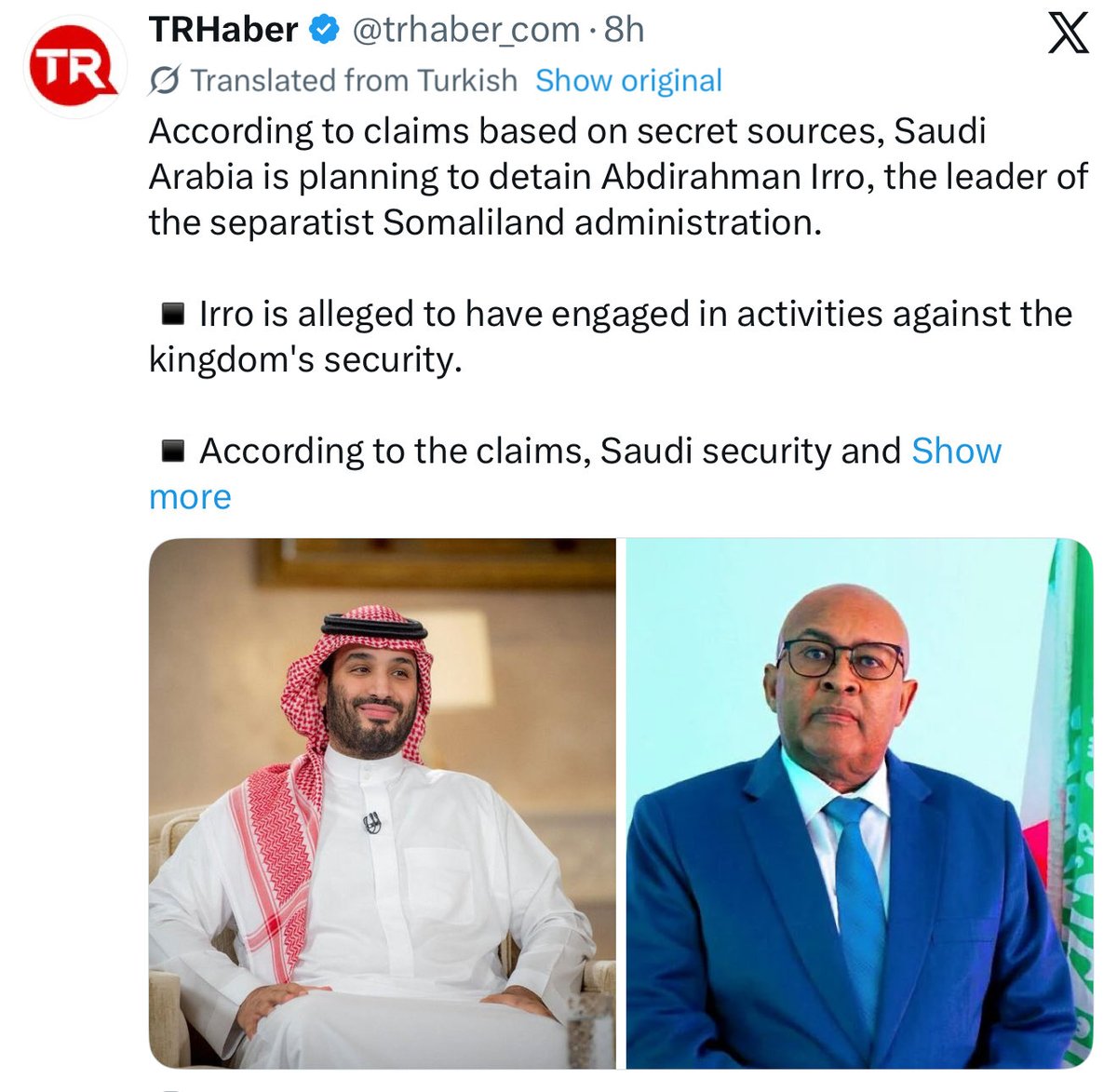
🚨 TURKISH MEDIA PUSHES CONTROVERSIAL NARRATIVE ON Saudi Arabia AND Somaliland
A Turkish-aligned propaganda outlet is facing backlash after promoting what critics describe as a misleading narrative targeting Saudi Arabia and #Somaliland. Observers note that voices linked to #Turkey appear more outraged than local Somali leadership itself, even as officials in #Mogadishu continue reiterating a “One Somaliland” position.
Critics argue the messaging reflects deeper geopolitical competition in the Horn of Africa, accusing Ankara-aligned media of reviving narratives reminiscent of Ottoman Empire-era influence while attempting to shape Somali political discourse and regional alignments.
The information battle highlights intensifying foreign involvement and propaganda wars as competing powers seek leverage over the Somali political future.
@_AfricanUnion So another AU fanfare begins. High-level statements will flow, yet the reality? Al-Shabaab controls more of 🇸🇴 than Villa Somalia does. Without Ugandan boots on the ground, HSM’s nepotistic crew wouldn’t last a week. Let’s not hide the truth behind fancy speeches. Gyendi!