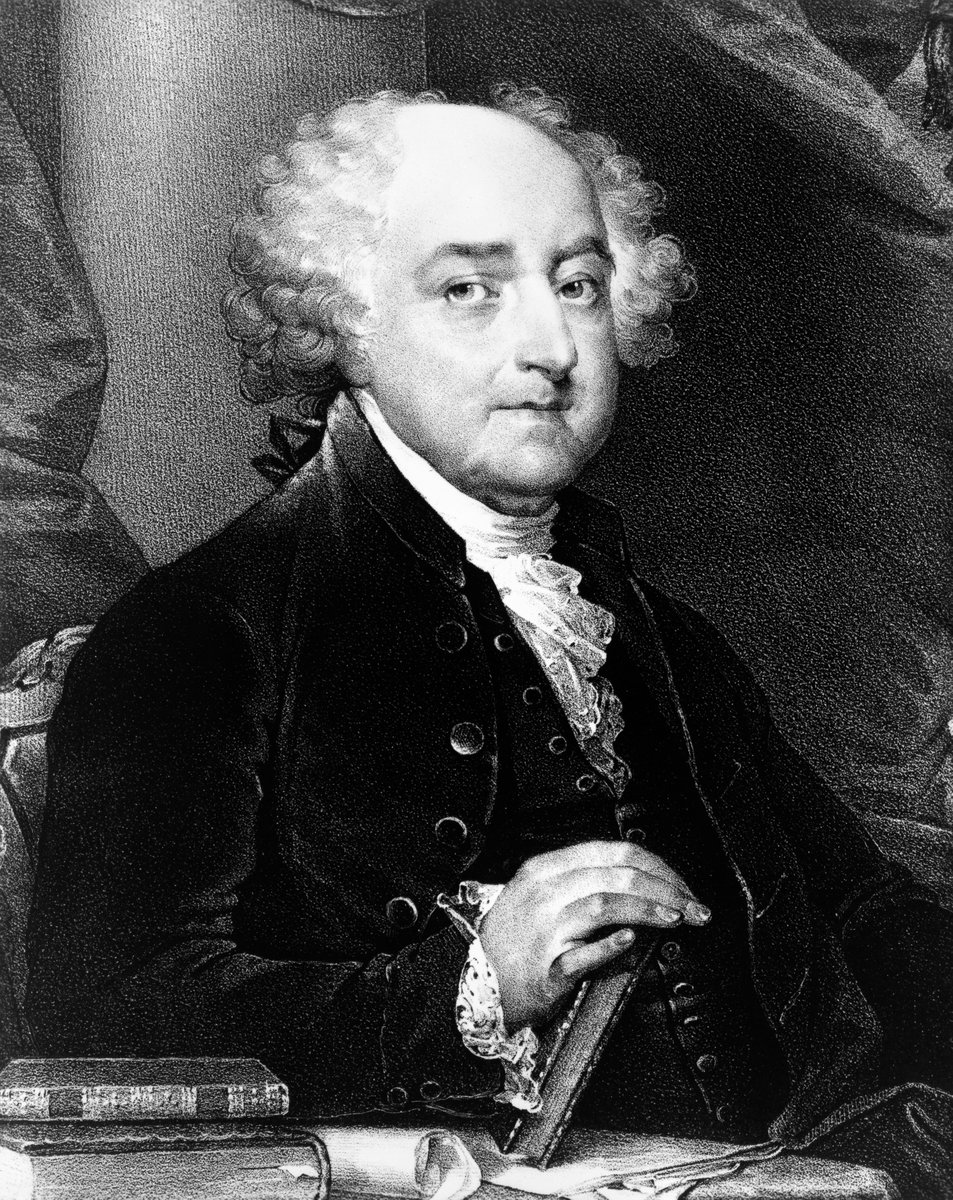
John Adams was absurdly well-read.
David McCullough writes,
"In an age when educated men took particular pride in the breadth of their reading, he became one of the most voracious readers of any."
Here are 8 takeaways from his studious life to help you become more well-read 🧵
I’ve long felt that reading books is one of the best antidotes to the meaning crisis.
Reading leads to understanding, and understanding leads to appreciation for the certain aspects of life you’re reading about, whether it’s art, science, or politics.
Reading, in short, makes you care about something, and that makes life feel more meaningful.
I’ve come to realize the only way to finish a demanding, scary creative project is to work on it first thing in the morning for two hours before my mind has a chance to become nervous and doubtful of my abilities. Resistance is a teenage boy. It sleeps in a bit longer than I do.
Everyone should learn to write.
Writing, when done well, is clear and organized thinking.
And that type of thinking is immeasurably useful for coming up with smart ideas, sound decisions, and persuasive arguments, all of which are essential for creating and navigating a good life.
If I was to go back in time and tell my 20-year-old self to focus on 2 things for his education, I’d say read hard books and write short essays or blog posts about what you learned.
The three-part intellectual process of intake, reflection, and synthesis is the best way to acquire and retain knowledge while sharpening key intellectual faculties.
If I was to time travel and tell my 20-year-old self to focus on 2 things for his self-education, I’d say read hard books and write short essays about what you learn. The mental process of intake, reflection, and synthesis is the best way to gain knowledge and sharpen your mind
Writing is the best forcing function for thinking, learning, and ideation. If you want to understand a book or topic deeply, write about it. Tweets. Essays. Notes. Journal entries. It doesn’t matter the format so much that you’re not just consuming; you’re also creating.
The phrase “I don’t care” gets a bad rap.
But, when it comes to creating a more sustainable reading life, it’s a phrase to embrace.
“I don’t care” is a mechanism for deciphering between what’s worth paying attention to and what isn’t — what you should and should not skim.
@dickiebush Deep Work by Cal Newport, with its emphasis on using focus to develop rare and valuable skills, is what inspired me to pursue a life of mastery.
Reading strictly according to a predefined list is like being with your significant other 24/7.
After 2 weeks, you start to feel suffocated.
Build some flexibility into your reading plans.
Alternate between a book on your plan and a book that matches this month's interests.
I hope this helps you on your journey to lead an intellectually satisfying life.
If you want to get weekly articles on self-education, reading, and great autodidacts like Louis L'Amour, subscribe to my newsletter:
https://t.co/p4xeLaNilp
Meet Louis L'Amour.
He's one of history's best western novelists.
And entirely self-taught.
At 15, Louis left school to travel the American West, work odd jobs, and educate himself by reading classic books.
Here are 7 wise lessons on self-education from his autobiography:
The education of a wandering man.
One might think that traveling the West for several years is enough adventure already.
But these external events were only half of the adventure Louis L'Amour experienced in those years.
The other half occurred in his mind and imagination.