Dear beloved sports-loving Nigerian youths,
After watching the performances of Davido, Burna Boy, and Rema at the opening of the 2026 World Cup—at a time when Nigeria, the giant of Africa, is absent—I felt a measure of consolation. This was reinforced by the fact that many Nigerians playing for clubs worldwide are representing other countries. Felix Nmecha, for instance, set a record by scoring the fastest goal at six minutes for Germany. I write to you therefore, knowing that this country belongs to you, the youth.
You are more of stakeholders in Nigeria’s future than I am. I am 64 years old; by God’s grace, much of my journey is behind me, while yours lies ahead.
It is therefore imperative that you rise to the challenge by obtaining your PVC, your most powerful tool for driving the change you desire.
In the last three years alone, over 15 million Nigerians have turned 18—enough to decide who becomes President, Governor, Senator, Member of the House, or Local Government Chairman. Indeed, enough to shape the nation’s future.
I know many of you are sceptical about politics and political parties. I understand why, but scepticism must not become surrender.
You do not need to belong to any party or wait for anyone to organise you. Organise yourselves in your streets, campuses, communities, workplaces, churches, mosques, and social groups. Mobilise, debate, demand accountability, and take part in choosing those you wish to entrust with leadership.
If you are organised and wish to hear directly from me, invite me. I will come and share my plans for you and our nation.
Do not sit on the sidelines while others decide your future.
I appeal to you to register and vote. Your vote can shape who becomes the next President of our country.
My young friends, this is your country. Take it back.
A New Nigeria is POssible. -PO
Together Towards the New Nigeria That Is Possible
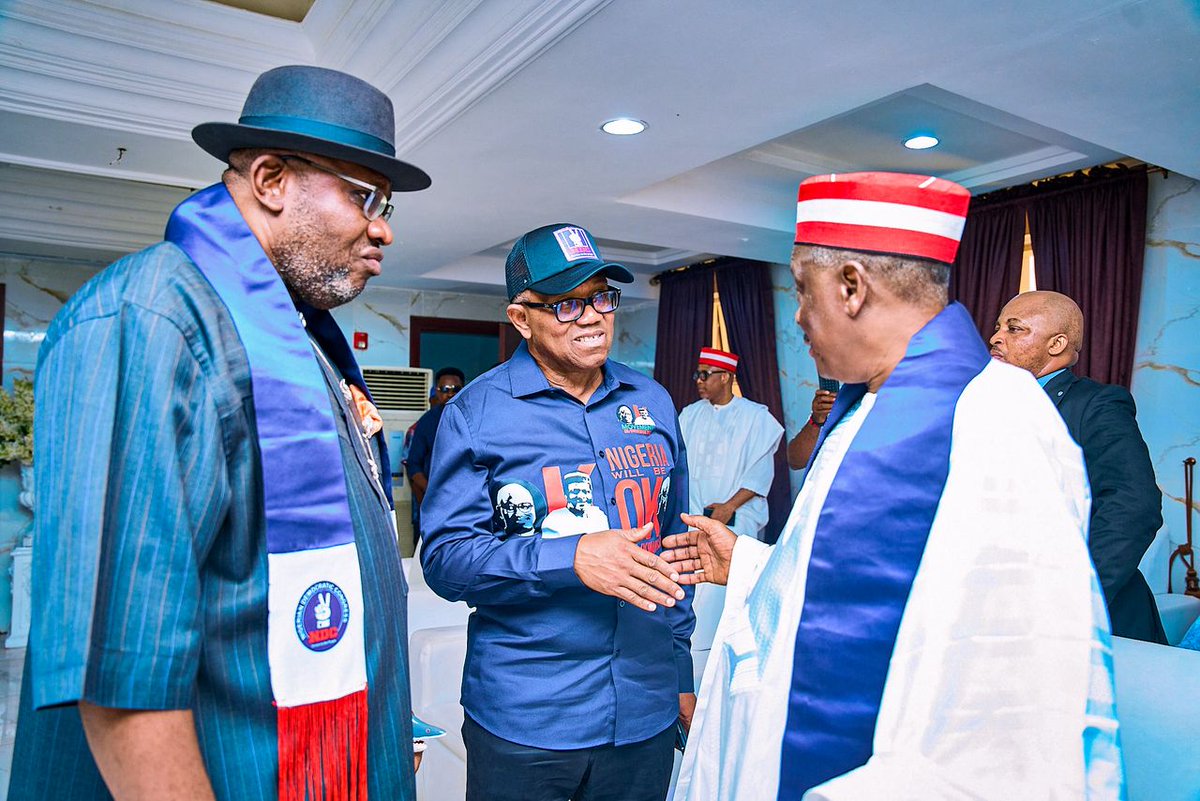
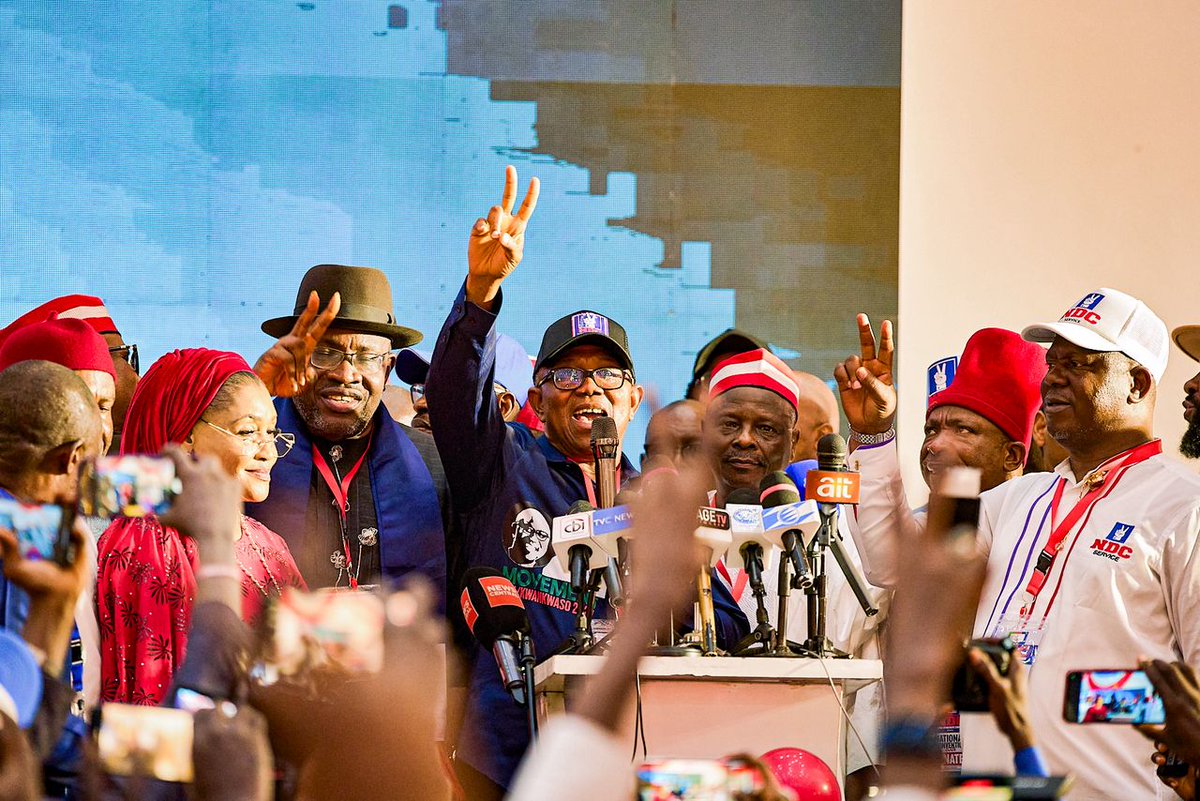
On this June 12, Democracy Day, I had useful meetings with my partners in the building of the New Nigeria that is Possible: our great party’s National Leader, H.E. Senator Seriake Dickson, and our party’s Vice Presidential candidate, H.E. Senator Rabiu Kwankwaso. The NDC, as a party that is barely four months old, despite the challenges, remains the party of the future, and the fruitful discussions at the meetings clearly underscore this fact.
The leaders and members of a committed political family must be willing to make sacrifices and show tolerance and accommodation, even in difficult circumstances. This shared understanding is essential for building trust, strengthening unity, and sustaining the vision we collectively hold for national transformation.
We are all committed to this goal. The NDC remains the vehicle that will convey Nigeria through purposeful, compassionate leadership, with firm commitment to productivity and democratic ideals towards the New Nigeria that is POssible. -PO
Earlier today, I arrived in Cape Town, South Africa, to take part in the Spier Dialogue 2026, an important event centred on the future of Africa and the urgent challenges facing our continent and the globe.
The Spier Dialogue occurs at a crucial time as Africa grapples with significant issues in governance, democracy, economic inclusion, urbanisation, migration, and leadership. However, it also highlights the vast opportunities presented by the energy and creativity of our young population.
As leaders and stakeholders gather from various regions, I look forward to partaking in insightful discussions, especially as I have the privilege of addressing attendees tomorrow on policies geared toward growth.
Africa’s future should not be characterised by poverty amid abundance or by division instead of development. It is time for us to transition from consumption to production, from divisive politics to politics built on competence and compassion, and from mere promises to tangible progress that serves everyday citizens.
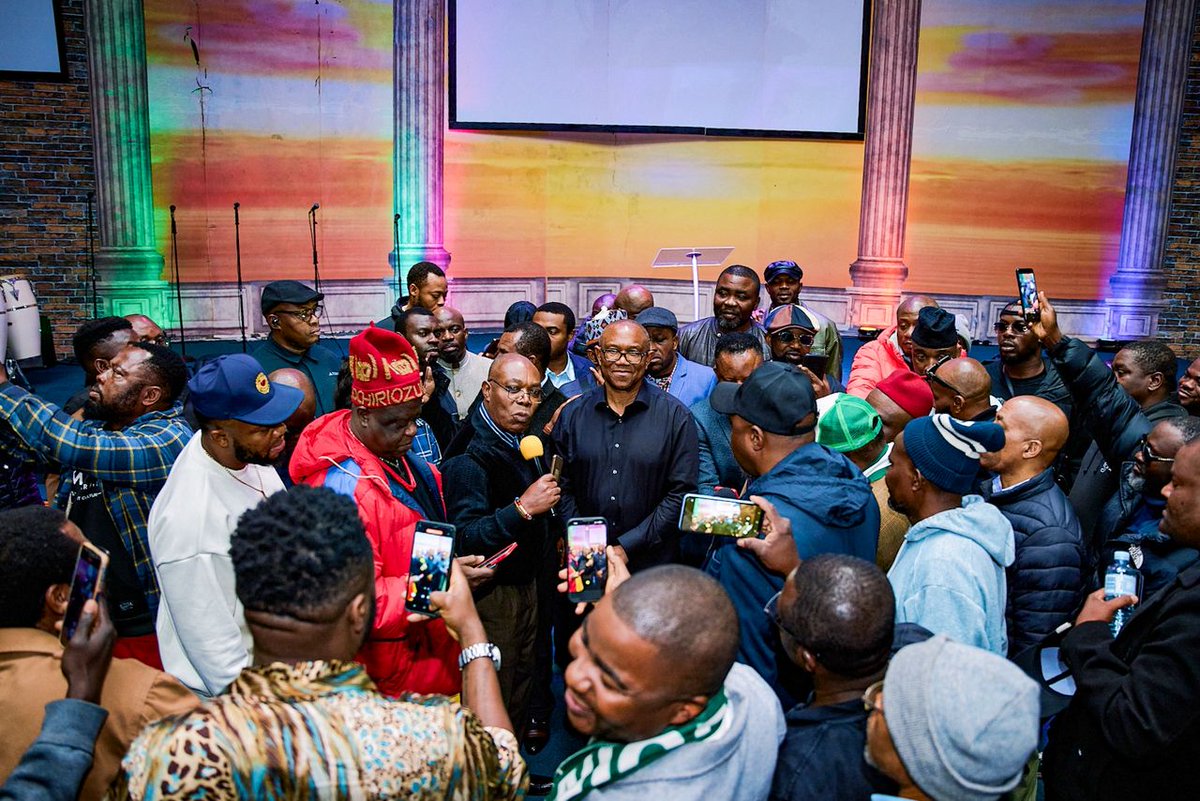
Upon my arrival, I had the opportunity to meet with the Nigerian community in Cape Town for a heartfelt discussion about the recent challenges affecting African expatriates in South Africa, resulting in over two hours of fruitful dialogue.
I remain dedicated to advocating for a New Nigeria and a New Africa—one where governance genuinely serves the people, where the youth are equipped with education and opportunities, and where leadership is founded on integrity, service, and sacrifice.
A New Nigeria POssible. -PO
State visits by Leaders are not tourism, and diplomacy is not a fashion parade. Every foreign trip undertaken by a government must deliver measurable benefits to the people, including investments, technology transfer, trade agreements, factory expansion, industrial partnerships, and job creation.
During President Trump’s recent visit to China, the American delegation reportedly included a few top government officials, and many of the biggest figures in global business and technology:
Consequently, huge trade deals worth several billion dollars including about 200 Boeing orders were achieved.
The list of the entourage included
1. Donald J. Trump – President of the United States
2. Marco Rubio – Secretary of State
3. Pete Hegseth – Secretary of Defence
4. Elon Musk – CEO, Tesla & SpaceX
5. Jensen Huang – CEO, Nvidia
6. Tim Cook – CEO, Apple
7. Larry Fink – CEO, BlackRock
8. Stephen Schwarzman – CEO, Blackstone
9. Kelly Ortberg – CEO, Boeing
10. Brian Sikes – CEO, Cargill
11. Jane Fraser – CEO, Citigroup
12. Larry Culp – CEO, General Electric
13. David Solomon – CEO, Goldman Sachs
14. Sanjay Mehrotra – CEO, Micron Technology
15.Cristiano Amon – CEO, Qualcomm
16. Dina P. McCormick – President of Meta
17. Ryan McInerney – CEO, Visa
18. Michael Miebach – President, Mastercard
19. Jim Anderson – CEO, Coherent
20. Jacob Thaysen – CEO, Illumina
That is how serious nations approach diplomacy, by aligning foreign policy with economic expansion, industrial growth, innovation, and national productivity.
I hope that lessons can be learned from these recent visits comparing them with the President of Nigeria’s recent state visit to the United Kingdom.
A large entourage of politicians, aides, and government officials travelled, yet Nigerians are still asking a simple question: what exactly did Nigeria bring home?
Which factories are coming to Nigeria?
What power, technology, manufacturing, agricultural, or industrial agreements were secured?
How many direct jobs will this visit create for Nigerian youths?
What investments were attracted?
What measurable economic outcomes can the ordinary Nigerian point to?
The delegation reportedly included:
1. President Bola Tinubu
2. Senator (Mrs) Tinubu
3.12 governors
4.9 ministers
5.7 members of the National Assembly
6. Over 20 senior State House staff
7. Over 30 security personnel
8. Over 10 domestic staff
9. Several supporters and associates
It is not enough to ride horses, wear matching uniforms, attend royal banquets, and release glossy photographs. Symbolism without substance cannot feed hungry citizens.
Today, Nigeria is in decline, battling serious insecurity, food insecurity, unemployment, a weakened naira, declining industrial productivity, and worsening poverty.
At a time when millions of Nigerians struggle daily to afford food and survive economic hardship, every kobo spent on foreign trips must produce tangible national value: investments, factories, jobs, exports, infrastructure, and economic opportunities.
Nigeria needs leadership that is focused less on optics and more on productivity; less on ceremony and more on measurable economic results.
A New Nigeria is POssible. -PO
"Some men change their party for the sake of their principles; others change their principles for the sake of their party." Winston Churchill
Today, May 9th, I attended the 1st convention of my latest party, the Nigeria Democratic Congress (NDC) in Abuja, Nigeria. The convention was successful and continued to show the resilience of Nigerians to change
I express my sincere appreciation and gratitude to the NDC family, led by the distinguished Senator Henry Seriake Dickson, for inviting us and for the generosity of spirit with which they have accommodated us at this critical moment in our national journey.
I also wish to express profound gratitude to the African Democratic Congress(ADC), particularly Distinguished Senator David Mark, for providing a democratic platform and showing uncommon understanding when the ongoing litigation forced us out of the Labour Party and the New Nigeria People's Party, NNPP respectively. That spirit of solidarity must remain the foundation upon which a better Nigeria will be built.
Today, the most painful aspect of our political existence is that many who once benefited from democratic governance have now become willing accessories to the destruction of democracy itself. Those who once fought for justice now openly celebrate electoral injustice. Those who once spoke against impunity now defend coercion, manipulation, intimidation, and outright political gangsterism, especially against opposition voices. What we are witnessing is not politics; it is a systematic assault on democracy and the will of the people.
Nigeria today stands at a dangerous crossroads. Our democracy is under severe threat. Our nation is drifting without direction, and our people are passing through immense suffering. Across the world, Nigeria is increasingly described as a failing and disgraced nation. This is not the destiny God ordained for our great country. It was not always so, and it must never be allowed to remain so.
Across virtually every recognised indicator of good governance - accountability, political stability, rule of law, control of corruption, government effectiveness, regulatory quality, and the separation of powers - Nigeria continues to record alarming failures. The institutions that should protect the people are weakening daily, while the burden on ordinary citizens grows heavier with each passing moment.
Today, over 140 million Nigerians live in multidimensional poverty. Tens of millions of young people remain unemployed or underemployed. Inflation continues to crush families. Businesses are shutting down. Farmers can no longer safely access their farms. Communities live in fear. In this month alone, hundreds of innocent Nigerians have lost their lives to insecurity, while many others have been kidnapped, displaced, or thrown deeper into poverty.
The most heartbreaking question confronting us is this: Who consoles the grieving mother whose child was abducted on the way to school? Who speaks for the father who can no longer feed his family despite working every day? Who defends the young Nigerian whose dreams have been destroyed by a nation that rewards connections over competence and corruption over character?
Our present tragedy is not accidental. It is the direct consequence of years of deliberate sabotage by a political class that prospers by dividing the people and weakening the nation. Nigeria is not a poor country; rather, we are being looted into poverty. We have abundant human and natural resources, yet we remain trapped in deprivation because leadership has failed to place the common good above personal interest.
Our choice as a people is therefore clear: whether to surrender to despair and national decline, or to summon the courage to rescue our country and rebuild it on the foundations of unity, equity, justice, competence, and productivity.
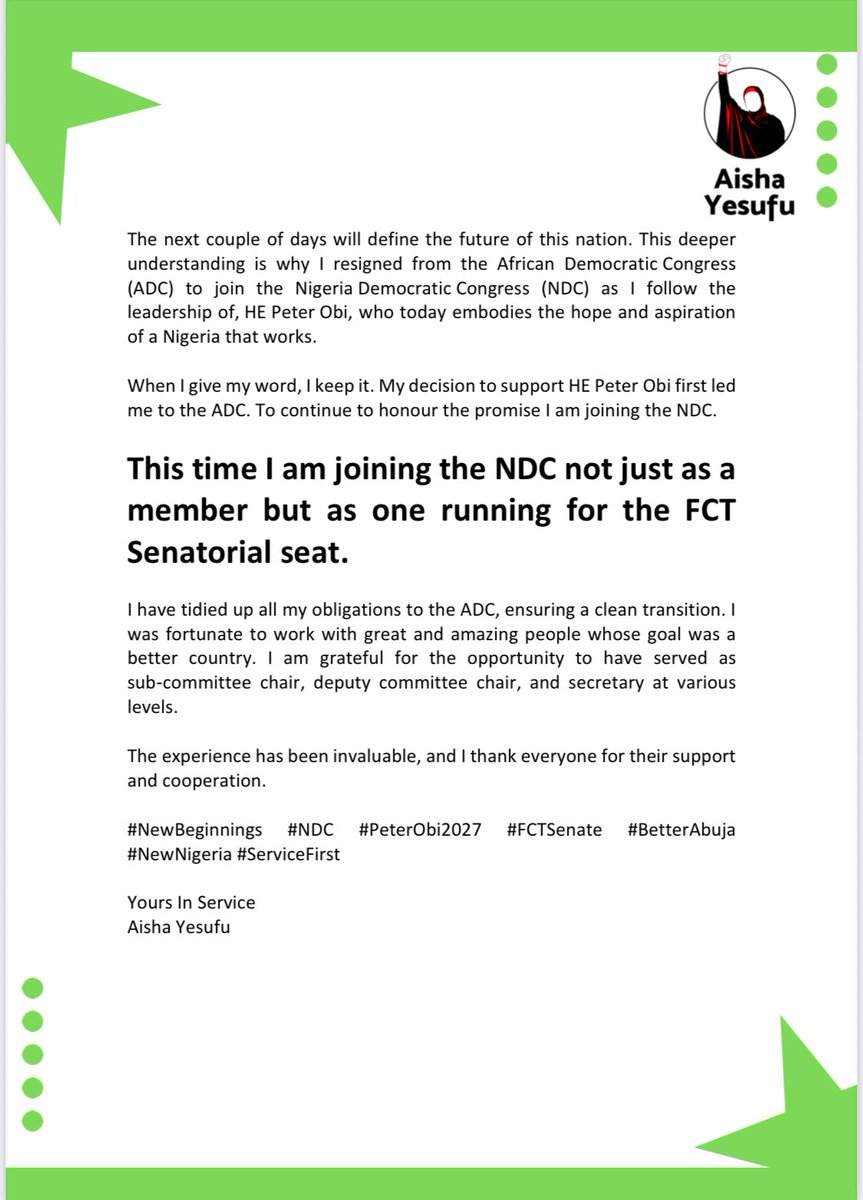
The next couple of days will define the future of this nation. This deeper understanding is why I resigned from the African Democratic Congress (ADC) to join the Nigeria Democratic Congress (NDC) as I follow the leadership of, HE Peter Obi, who today embodies the hope and aspiration of a Nigeria that works.
When I give my word, I keep it. My decision to support HE Peter Obi first led me to the ADC. To continue to honour the promise I am joining the NDC.
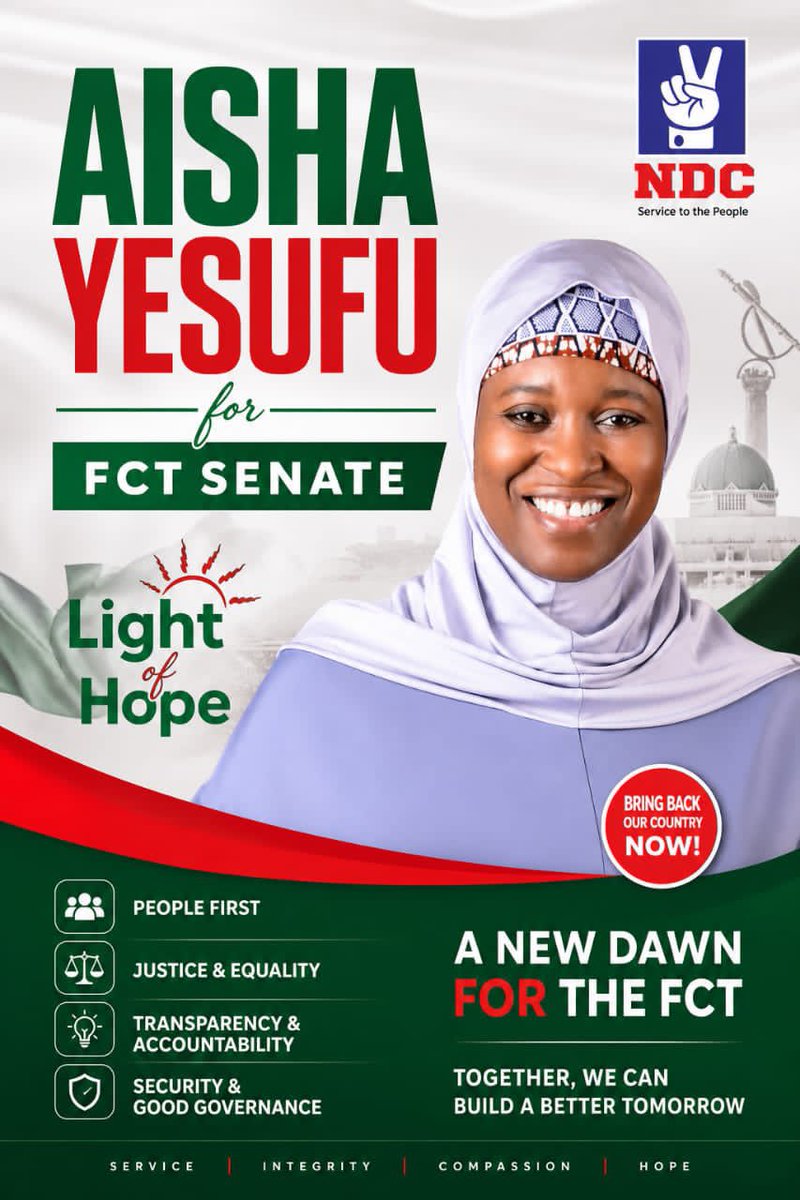
This time I am joining the NDC not just as a member but as one running for the FCT Senatorial seat.
I have tidied up all my obligations to the ADC, ensuring a clean transition. I was fortunate to work with great and amazing people whose goal was a better country. I am grateful for the opportunity to have served as sub‑committee chair, deputy committee chair, and secretary at various levels.
The experience has been invaluable, and I thank everyone for their support and cooperation.
#NewBeginnings #NDC #PeterObi2027 #FCTSenate #BetterAbuja #NewNigeria #ServiceFirst
Yours In Service
Aisha Yesufu
"The condition of our nation and the urgent need to rescue Nigeria, informed my decision to leave ADC for NDC."
Yesterday, I formally joined the Nigerian Democratic Congress (NDC), alongside my dear brother, Engr. Dr Rabiu Musa Kwankwaso, with one clear purpose: to continue the struggle for a new Nigeria built on justice, competence, accountability, and compassion for the ordinary Nigerian.
As I stated yesterday, this decision was not made out of anger, personal ambition, or convenience. It came after deep reflection on the present condition of our nation and the urgent need to rescue Nigeria from the dangerous path it is currently heading.
Over the years, I have remained steadfast in my conviction that politics should never be about individuals, positions, or personal gain. It must be about the people, especially the millions of Nigerians who today can no longer afford necessities, whose businesses are collapsing, whose children are losing hope, and whose future is becoming increasingly uncertain.
I left the ADC for the same reason I left the Labour Party: the severe, orchestrated litigation and internal crises deliberately designed to ensure that I, alongside many other notable individuals, do not effectively participate in the electoral process. I sincerely appreciate and remain deeply grateful to the Leadership of ADC for the opportunity to work together in pursuit of a better Nigeria. I am particularly grateful to ADC Chairman Senator David Mark for his exceptional Leadership. I also deeply appreciate my Leader and elder brother YE, Atiku Abubakar, as well as other respected leaders within the party.
As we join the NDC, I sincerely appeal to the Nigerian Government against the encouragement of unresolved litigations and the infusion of crises within political parties. Democracy must never become a weapon against the people. A healthy democracy thrives on strong institutions, credible alternatives, and the freedom of citizens to make choices without intimidation, manipulation, or fear. Opposition parties must not be weakened or destroyed, because when democracy loses balance, the people ultimately suffer.
Nigeria today is passing through one of the most difficult periods in its history. Poverty is rising. Hunger is widespread. Insecurity continues to threaten lives and livelihoods. Businesses are shutting down daily. Our young people are becoming discouraged, and many citizens have lost faith in the system. At a time like this, leadership must be driven not by propaganda or division, but by competence, capacity, character, and compassion.
Our decision to join the NDC is therefore not an abandonment of values, but a continuation of the same mission we have always stood for: building a Nigeria where leadership is about service, where public resources are managed responsibly, where institutions function independently, and where every Nigerian, regardless of tribe, religion, region, or social status, can live with dignity, security, and hope.
I remain committed to working with all Nigerians of goodwill across political, ethnic, and religious lines. The task before us is bigger than any individual or political party. It is about the future of our children and the survival of our dear nation.
I thank Nigerians, especially our youths and women, for remaining peaceful, resilient, and hopeful despite the enormous challenges confronting the country. I urge you not to lose faith in Nigeria. Nations do not change because people surrender to hopelessness; they change because people continue to believe, continue to sacrifice, and continue to stand for what is right.
A new Nigeria is still POssible. -PO
Workers Are the Backbone of Every Nation
On this Workers’ Day, I warmly salute workers across the world, especially Nigerian workers whose daily sacrifices continue to sustain our families, communities, institutions, and national economy, even in the face of severe hardship and uncertainty.
It is deeply painful that those who wake up every day to teach, heal, build, farm, produce, transport, protect, and serve our nation are still denied the dignity and fair reward their labour deserves. In today’s Nigeria, the minimum wage can no longer guarantee even the most modest standard of living, as inflation, rising food prices, transportation costs, and economic hardship continue to erode the value of honest work.
No nation can truly develop beyond the strength, productivity, and wellbeing of its workforce. The progress of any society rests on the quality of its human capital, the skill of its people, and the commitment of its workers. When workers suffer, the nation suffers. When workers are empowered, the nation prospers.
But beyond their labour, workers also possess another powerful tool, their voice and their vote. Through democratic participation, they have the power to shape governance and determine the future direction of the nation.
I therefore urge Nigerian workers to recognise the strength they hold collectively. They owe it to themselves, their children, and future generations to support and demand leadership built on competence, character, capacity, credibility, and compassion. By refusing to reward failure, corruption, ethnic division, and bad governance, they can help build a nation where hard work is respected and rewarded with dignity.
A productive nation must be built on justice, fairness, and respect for labour. That is the Nigeria we must work together to achieve.
With the support and participation of Nigerian workers, a New Nigeria is POssible. -PO
Our Engagement with General Abacha: Setting the Record Straight
In consonance with my established principles of defending everything I am involved in, and in the interest of all men and women of goodwill, especially those committed to the pursuit of truth, I hereby attach the letter which documents my co-opting, along with others, into the Taskforce on the decongestion of the Ports.
As I stated during my interview at the weekend and consistently maintained in the past, I had never met General Sani Abacha before that encounter. Our meeting with him was borne out of collective concern as traders and importers over the prolonged delays in clearing goods at the ports. We approached him not as political actors, but as concerned citizens seeking pragmatic solutions to a matter affecting economic activity and livelihoods.
Our intention was clear: to advocate for efficiency, and to propose practical steps towards restoring normalcy in port operations for the benefit of the wider business community and, ultimately, the Nigerian economy.
This clarification is offered in the interest of truth, to reaffirm that our actions were driven solely by a sense of civic duty and not political ambition.
I don't expect this copious evidence to bury this Abacha case because the mischief makers have ulterior motives, but it's being placed in the public space for posterity and in line with my transparency pledge to Nigerians on any issue I am involved in. -PO
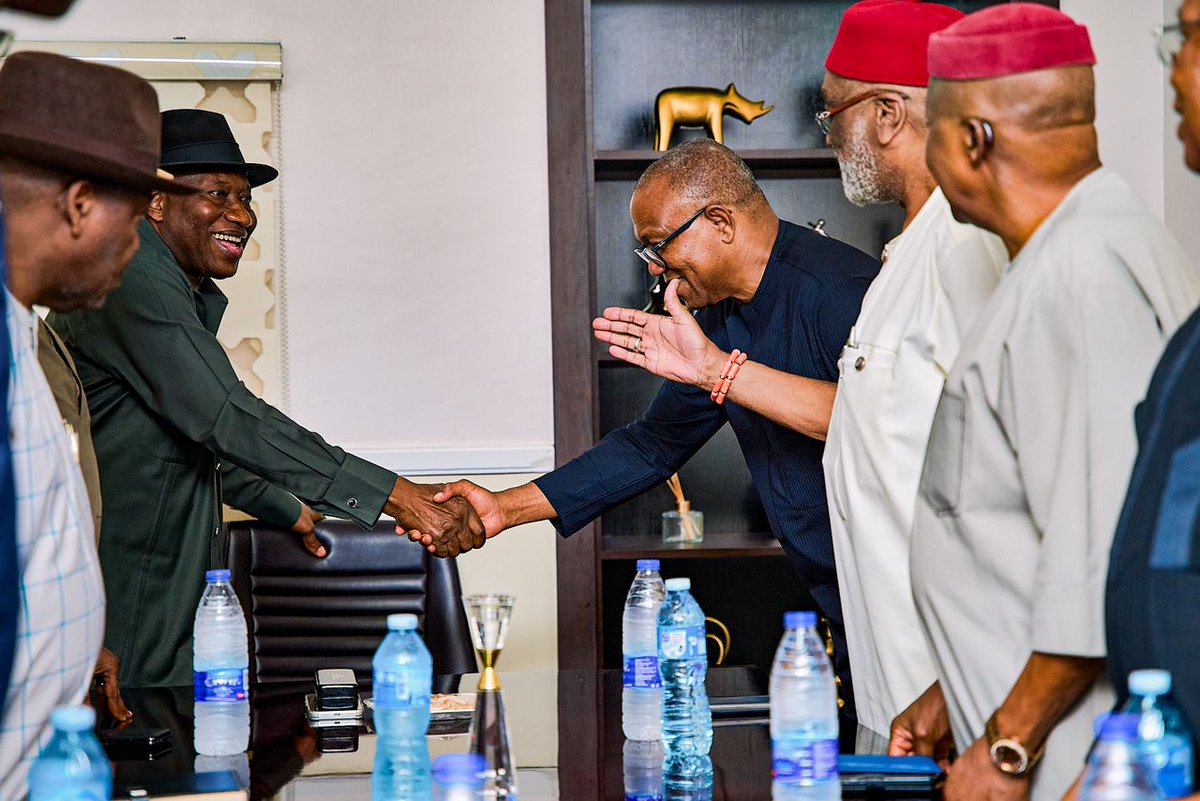
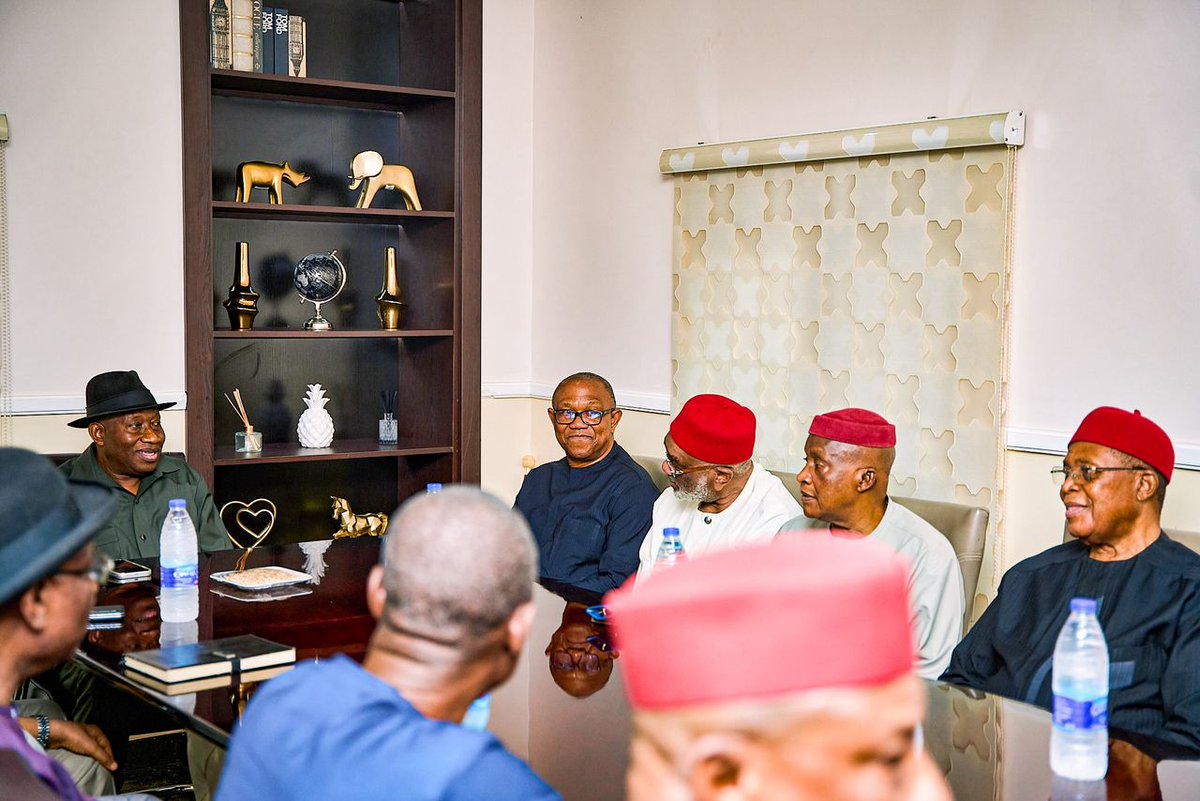
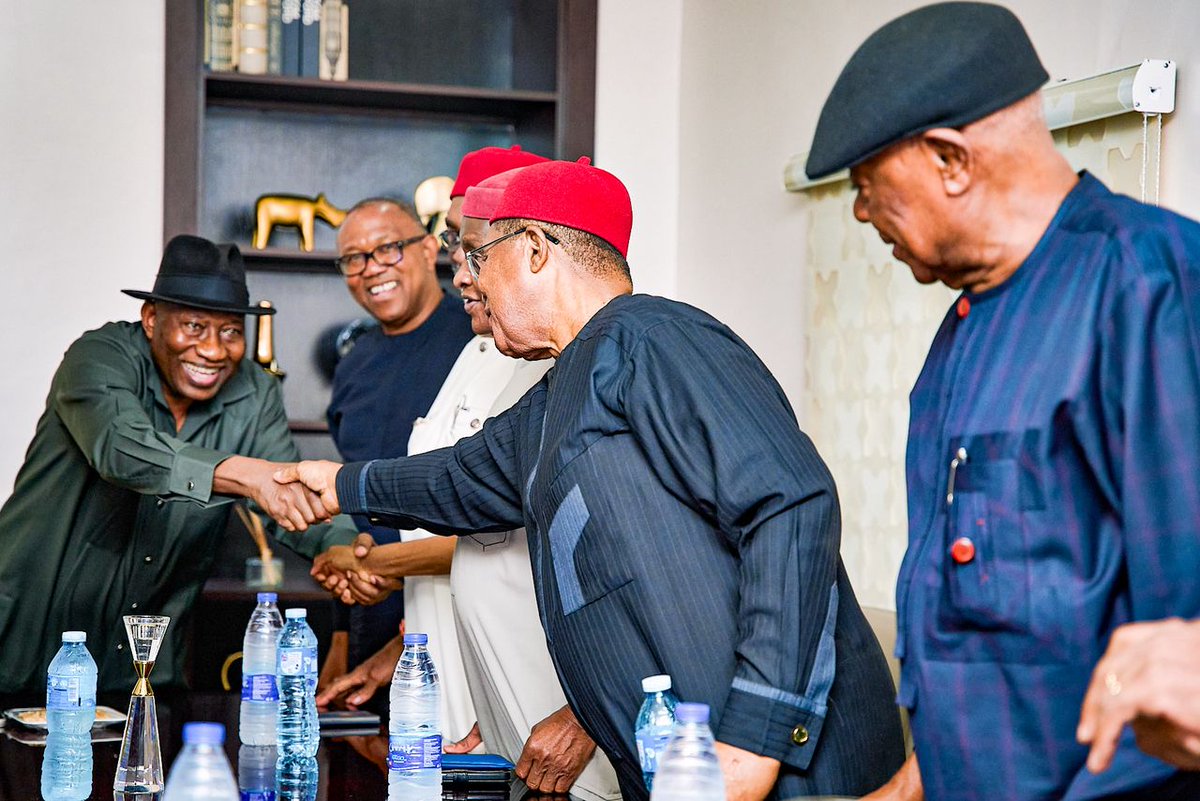
In continuation of my extensive consultations with Nigerian leaders, today, notable South East Leaders, and I visited our respected former President Goodluck Jonathan @GEJonathan on a consultation regarding the 2027 general elections and, more importantly, the future of our dear nation.
Our discussions were frank, thoughtful, and anchored on the urgent need to reposition Nigeria on the path of unity, security, stability, productivity, and inclusive governance. At a time when our nation continues to grapple with economic hardship, rising insecurity, and deepening social divisions, it has become imperative that Leaders across regions come together to reflect, consult, and act in the overall interest of the Nigerian people.
Nigeria today requires leadership that is guided not by personal ambition, but by competence, character, capacity, and compassion. The kind of leadership that understands that governance is not about sharing what is left, but about creating what is needed. We must move from a consumption-driven nation to a production-driven one, where our vast human and natural resources are effectively harnessed for the common good.
The 2027 elections must therefore not just be seen as another political exercise, but as a critical opportunity to reset the trajectory of our country. It must be about the Nigerian child who deserves quality education, the struggling entrepreneur who needs a conducive environment to thrive, and the millions of citizens who simply desire a secure and functional nation.
I remain convinced that through sincere dialogue, unity of purpose, and a firm commitment to doing what is right, Nigeria can and will rise again.
A new Nigeria is POssible. -PO
Still in Bauchi State.
As part of my itinerary in Bauchi state yesterday Thursday 23rd, 2026, after visiting, Madarasatu Intisharul Islam Qismu Tahfizul, Qur'an, Yelwa, I visited Malikiya College of Nursing Sciences, Bauchi.
I had visited the institution in the past and donated 10 million naira which they used to set up their ICT computer centre, which I was impressed to see alongside their increased student intake. During my visit, I donated another 10million naira.
Health is critical for development and we must invest in the human infrastructure needed for that development.
A new Nigeria is POsssible. -PO
@dammiedammie35 This is a bad representation of Kenya, and this is not true about them. The country is an amazing place to be. They're productive and orderly people. You measure wealth by the number of cars and you forgot to talk about their road network and electricity which aids businesses.
Ms. Love Dooshima, the businesswoman who made a review about an unarmed bread has just been released from police custody at Zone 7 Police Headquarters.
Bon Bread lodged a complaint to the police against her.
We received a distress call this night that she honoured police invitation since 12pm on Monday, April 20, 2026 but she was detained afterwards.
I came to Zone 7 this night along with @p_oruche and @Peter4Nigeria.
Following the intervention of the IGP, @TunjiDisu1, she has been released at 12:30 AM today, Tuesday, April 21, 2026.
We will be back by daybreak.
Cc:
@aleeygiwa
We were all so exhausted last night while at Zone 7 Police Headquarters in Abuja demanding the release from custody of Ms. Love Dooshima, the business woman who made a review of an unnamed bread.
She was brought out from the police cell at about 12:30AM this morning.
The IGP intervened and directed the team leader in charge of the investigation to come from his home and ensure her release.
Bon Bread should learn from history, that’s my simple advice for the company.
Kudos to @TunjiDisu1
Cheers to @aleeygiwa
Nigeria Is Bleeding From Within
It is deeply troubling to read recent World Bank reports indicating that, while Nigeria’s Federation Revenue surged to ₦84 trillion in just three years, a staggering 41% —amounting to ₦34.44 trillion —never reached the Federation Account. This sum exceeds the combined ₦34 trillion earmarked for capital projects in the 2024 and 2025 Appropriation Bills, a comparison that underscores the gravity of the situation and signals that something is fundamentally wrong.
This is not a mere oversight; it points to institutionalised corruption on a massive scale. In 1994, when the Okigbo Panel reported about $12.4 billion from the Gulf War oil windfall as unaccounted for, Nigerians were outraged and the nation shook with indignation. Today, an even more troubling situation appears to be unfolding, yet it is met with a disquietening silence.
We are trapped in a lethal paradox: Earning more as a nation, yet having less to invest in healthcare, education, and infrastructure. From 2025, systemic “deductions” have allowed agencies to capture more resources than entire states and even critical ministries.
These leakages explain why countries with fewer resources are out-performing us across key development indices. With such a broken system, how can we fix power, strengthen our schools, build resilient healthcare, or develop critical infrastructure?
Nigeria has no business being poor. We must stop these leakages through disciplined, transparent leadership driven by character. It is time to redirect our hijacked resources back to the people and move Nigeria into the league of developed nations.
With our collective resolve to change this corruption-infested system, a New Nigeria is POssible. -PO
From Pharisee to Tax Collector: Rethinking Tinubu’s Kenyan Comparison
In a recent remark in Yenagoa, Bola Ahmed Tinubu suggested that Nigerians should find solace in being “better off than Kenya and other African countries.” While this may have been intended to soften the impact of economic hardship and rising fuel prices, the comment risks downplaying the severity of the current crisis. It echoes the biblical parable of the Pharisee and the Tax Collector in the Gospel of Luke (18:9–14). A similar warning is found in the Qur’an (53:32), which cautions against self-righteousness.
Like the Pharisee who boasted of his superiority over others to mask his own spiritual void, such downward comparisons serve more as a refuge than a remedy. This validated an earlier dismissive remark by President Ahmed Bola Tinubu during electioneering: “Na statistics we go shop?” Yet statistics remain indispensable - they are the language through which nations understand their condition and chart progress. No country can develop in isolation from measurable realities or without comparing itself with peers. Comparisons, when properly grounded, are not instruments of escapism but tools of accountability. What is objectionable is not comparison itself, but comparison stripped of credible, verifiable data—mere tax collector comparisons that soothe rather than solve.
On key development indicators such as security, the Human Development Index, life expectancy, GDP per capita, literacy levels, and electricity access, Kenya consistently outperforms Nigeria. Nigeria is the fourth most terrorised nation in the world, while Kenya is not among the ten worst. Kenya’s HDI ranking is 143 out of 180 countries, with a coefficient of about 0.630, compared to Nigeria’s ranking of 164 out of 180, with a coefficient of about 0.530. Its GDP per capita is roughly $2,200–$2,300, compared to Nigeria’s $807–$835. Kenya’s poverty rate is about 43% of the population (approximately 23 million people), while Nigeria’s is about 63% (around 150 million people), over six times that of Kenya. Kenya’s life expectancy is about 67 years, while Nigeria’s is about 54 years. The literacy rate in Kenya is approximately 81–85%, compared to Nigeria’s 62–65%.
Kenya’s electricity access is higher, while Nigeria has one of the lowest levels of electricity access in the world. Kenya has about 3.5 million out-of-school children, while Nigeria has about 20 million. Kenya’s inflation rate has been about 4.5% or lower over the past three years, while Nigeria’s has remained above 15% within the same period. Kenya’s exchange rate has been around USD 1 to KES 130 over the past three years, whereas Nigeria’s exchange rate rose from below ₦500/$1 to above ₦1,250/$1 within the same period. Even with developments in the Middle East and rising oil prices, Kenyans have not experienced the sharp increases in petroleum product prices seen in Nigeria.
Across other key indicators, Kenya also performs better. In the end, these indices clearly show that Kenya ranks higher than Nigeria on several development metrics. The standard of living of Kenyans is better than that of Nigerians. If the President considers Kenyans to be suffering despite these stronger figures, then Nigerians are in a far more difficult situation. He should therefore refrain from self-consolation and, in honest reflection, take responsibility for the situation and make a determined effort to drive improvement. This requires a posture of humility, accountability, and commitment to addressing the factors that have slowed Nigeria’s development.
A new Nigeria is POssible. -PO