1/8
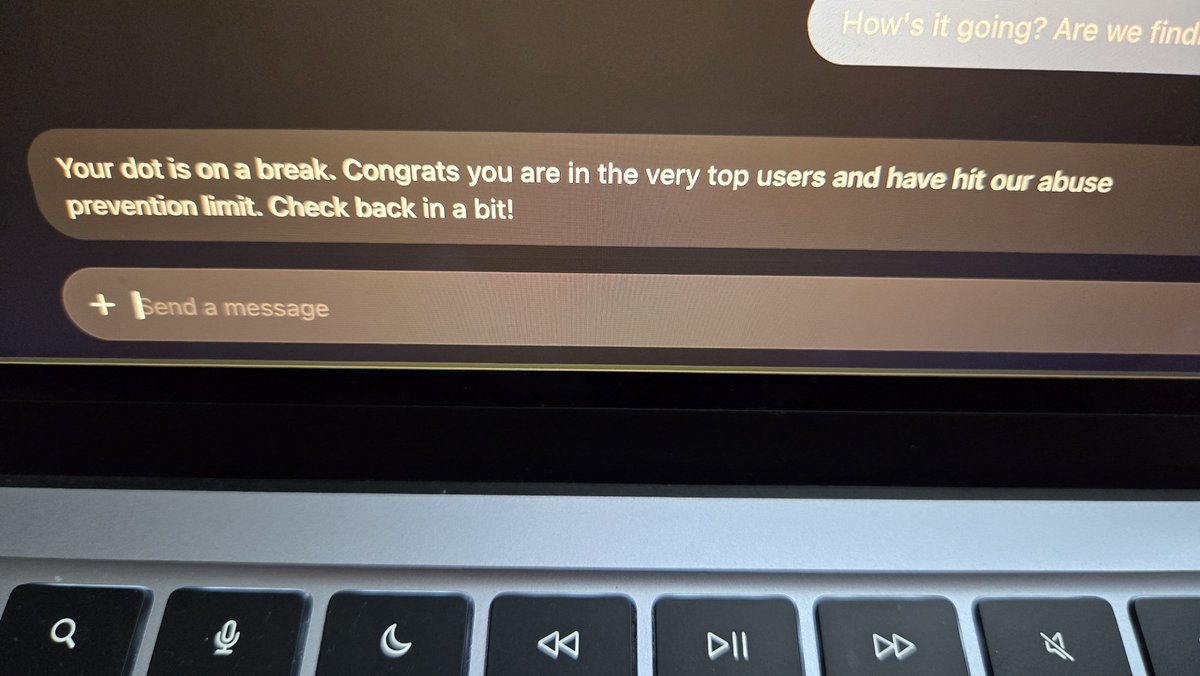
I think I found an interesting failure mode in AI reasoning today.
I was discussing survivorship bias with ChatGPT.
I took today’s 750 stocks, pulled their history back to 2021, and said:
7/8
It can stay attached to a technically valid caveat even after that caveat stops affecting the question being tested.
Or maybe I’ve successfully AI-hypnotized myself into believing I found a statistical loophole. 😂
4/ Useful rule beyond Google Docs:
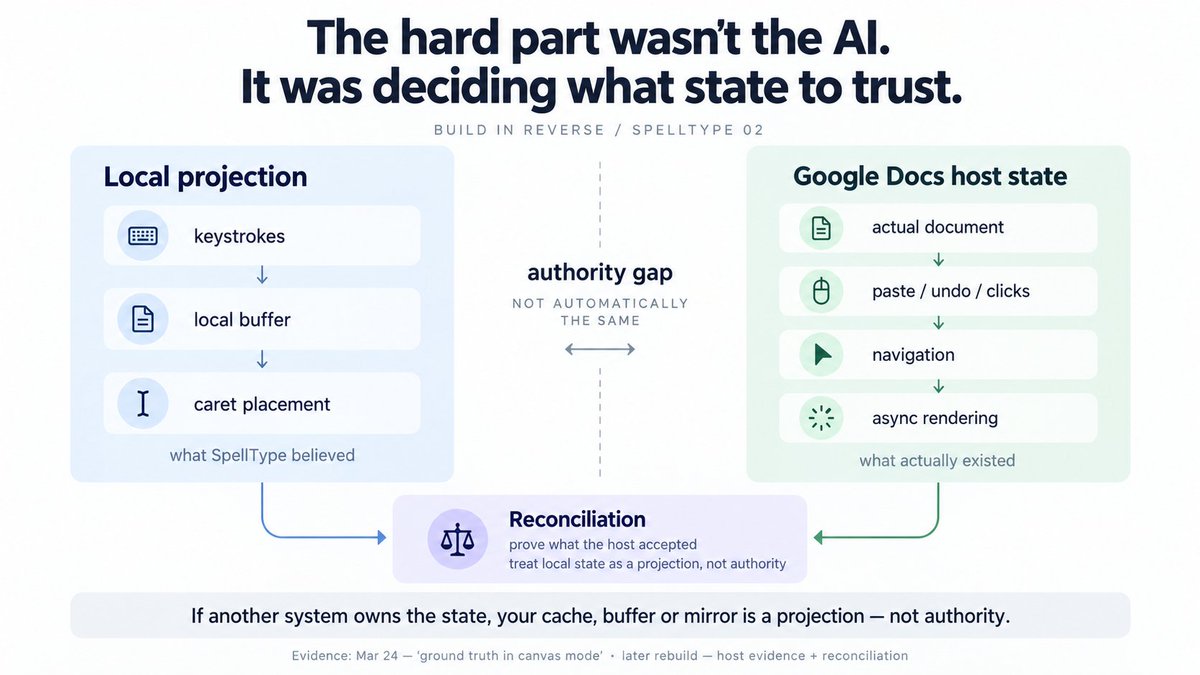
If another system owns the state, your cache, buffer, mirror or optimistic update is a projection — not authority.
Correctness needs reconciliation.
3/ That changed the engineering question.
Not: “Is my buffer correct?”
But: “What evidence proves what the host actually accepted?”
The rebuild treated local state as a projection and reconciled it against host evidence.
2/ One commit called that buffer “ground truth in canvas mode.”
Useful — until paste, undo, clicks, navigation or async rendering changed Google Docs without the local projection knowing.
A coherent local model can still be wrong.
1/ The hardest part of AI autocomplete in Google Docs wasn’t the AI.
It was deciding what state was real.
Docs doesn’t expose document state like a normal macOS text field, so I kept a local keystroke projection.
BUILD IN REVERSE / SPELLTYPE 02
7/ The lesson wasn’t “Accessibility APIs are messy.”
A serious product-quality bar becomes architecture.
With AI, the scarce skill isn’t producing another implementation.
It’s knowing when the evidence says your model of the system is wrong.
Next: Google Docs.
1/ SpellType was meant to run all day on a MacBook.
That changed what “good” meant.
Autocomplete could be accurate and still be a bad product if it burned battery, hogged resources, or needed Screen Recording.
BUILD IN REVERSE / SPELLTYPE 01
6/ Eventually the evidence won.
I stepped back and introduced AppProfileRegistry.
Per-app compatibility, AX workarounds, cursor strategies and fallback fonts became explicit.
Not the final architecture.
A better model of reality.