By 1974, when both Linda Ronstadt and the Eagles were at the height of their fame in California Rock, they reunited on stage at Don Kirshner's Rock Concert. The band performed with the same improvisational flair as they did in small Los Angeles bars, with Bernie Leadon playing electric guitar and providing excellent backing vocals alongside Linda's powerful, resonant voice.
50 years ago tonight, November 20, 1976, Paul Simon hosted NBC's Saturday Night Live where he performed live with George Harrison on "Here Comes The Sun"(1969) and "Homeward Bound"(1966).
Paul McCartney and John Lennon were both in NYC watching it on TV.
#AlmostBeatlesReunion
In 1965, a British singer heard a melody in a language she didn’t understand—and burst into tears. She bought the rights instantly. Months later, the recording became a success beyond her wildest dreams. ✨
Israel just TOOK OUT two Hamas terrorists.
Ashraf Tabasi, a platoon commander in the Khan Younis Brigade of Hamas’s military wing, and Saber Nabhan, a platoon commander in the West Jabalia Battalion of Hamas’s military wing.
The Israeli Air Force WIPED THEM OUT CLEAN!
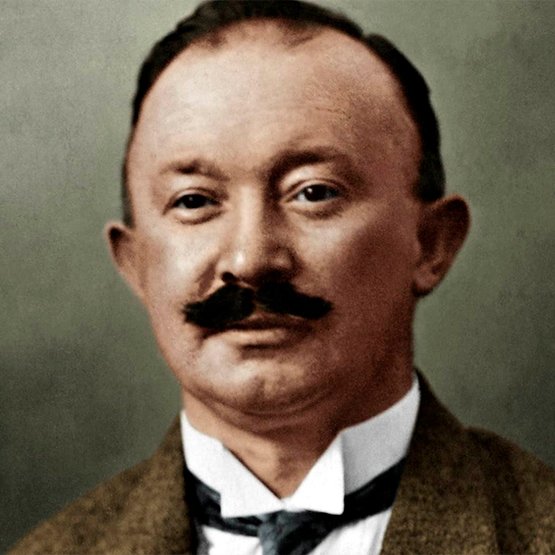
Hugo Boss a adhéré au Parti nazi 2 ans avant l'arrivée d'Adolf Hitler au pouvoir. Ce tailleur a bâti sa fortune en confectionnant des uniformes de la SS grâce au travail forcé de 180 déportés et prisonniers de guerre.
Son nom reste pourtant associé dans le monde entier au symbole du luxe masculin et de l'élégance contemporaine. Ses boutiques habillent aujourd'hui les plus grandes stars du cinéma, les dirigeants et les sportifs de la planète.
Dans l'imaginaire du grand public, la marque allemande incarne la réussite industrielle et le raffinement vestimentaire. La légende tenace affirme même que son fondateur n'aurait été qu'un simple exécutant contraint par la dictature de produire des vêtements militaires pour survivre.
La réalité est établie par les dossiers de dénazification allemands et par l'étude de l'historien Roman Köster publiée en 2011 à la demande de la marque elle même. Ces archives dévoilent un nazi convaincu qui a sauvé son entreprise de la faillite en travaillant pour le Troisième Reich.
En 1931, son petit atelier de confection de Metzingen est au bord de la banqueroute à cause de la crise économique.
Le 1 avril 1931, Hugo Boss adhère de son plein gré au Parti national socialiste sous le numéro de membre 508 889. Il verse aussitôt des cotisations régulières à une organisation de soutien de la SS et affiche dans son appartement une photographie où il pose aux côtés d'Adolf Hitler à Berchtesgaden.
Cette fidélité politique précoce transforme rapidement son petit commerce en entreprise florissante. Dès 1932, son usine obtient des commandes pour fabriquer les chemises brunes des sections d'assaut SA, les tenues des Jeunesses hitlériennes et les uniformes noirs de la SS.
Entre 1932 et 1941, le chiffre d'affaires de la société passe de 38 000 à plus de 3 millions de Reichsmarks.
Pour répondre aux commandes massives de la Wehrmacht et de la Waffen SS pendant la Seconde Guerre mondiale, Hugo Boss recourt à la main d'œuvre servile fournie par le régime.
À partir de 1940, il exploite dans son usine de Metzingen 140 travailleurs forcés déportés de Pologne et d'Union soviétique, en grande majorité des femmes, ainsi que 40 prisonniers de guerre français.
Ces ouvriers captifs sont parqués dans un camp insalubre à proximité de l'atelier. Ils souffrent de la faim, du manque d'hygiène, des cadences épuisantes et de la brutalité des contremaîtres.
En 1946, lors de la procédure de dénazification, il est d'abord reconnu comme profiteur du régime et condamné à une lourde amende assortie du retrait de son droit de vote, avant d'être reclassé en appel comme sympathisant du nazisme peu avant sa mort en 1948.
L'homme dont le nom brille aujourd'hui sur les avenues les plus prestigieuses du monde a ainsi bâti son entreprise sur les uniformes du Troisième Reich et la sueur des travailleurs déportés.
Antisemitism will be the catalyst for a predicted mass exodus of European Jews over the next few decades. And when we're gone, people will realise that we were the canary in the coal mine - what starts with Jews never ends with Jews.
https://t.co/NwF7i4xZBj
In the early 1920s, a failed dairy farmer in Pennsylvania stood in his basement at night and roasted peanuts because sixteen children were hungry upstairs. His name was Harry Burnett Reese.
The milk business had broken him. Farms he managed kept shutting down.
Cold mornings smelled of sour milk and regret. He moved his growing family to Hershey, Pennsylvania, where Milton Hershey was hiring.
Reese took a job in the shipping room, loading crates until his hands bled. The paycheck kept the lights on, but it could not feed sixteen mouths.
So he went back into the basement. He started boiling sugar. He tried chocolate bars with almonds and raisins. He called them Johnny Bars and Lizzy Bars. Local stores took a few boxes on consignment.
Customers ignored them. The candy sat on counters until it went stale.
He shut the operation down. Failure was not an option. Hunger does not negotiate. He owed the local sugar supplier forty dollars the month he restarted the fires. He roasted peanuts instead of boiling hard sugar.
The heavy scent drifted out of the cellar windows. A neighbor complained about the smoke. Reese kept roasting. Sleep became a luxury.
His hands carried burns from the hot metal. He bought chocolate coating from the same factory where he loaded boxes during the day. He stood over the kettles while his children slept.
Then, in 1928, he tried something different. He spooned dry peanut paste into small, fluted paper cups. He covered the tops with a layer of melted milk chocolate. He packed them in five-pound boxes.
He walked them to local retailers. He priced them at one penny apiece. He did not give them a clever name. The labels simply read: peanut butter cups.
Store owners sold out in days. The penny price matched the budgets of working-class families. Demand exploded. Reese quit the shipping room.
He built a dedicated facility. He hired workers. He paid off the grocer. The decades of double shifts and chronic stress eventually took their toll. Harry Reese died of a heart attack in 1956 at the age of seventy-six.
He never lived to see what his children did next. Seven years after his funeral, his sons sold the independent company. The buyer was the Hershey Corporation.
The price was $23.5 million. Today, the factory produces hundreds of millions of those orange-wrapped cups every year. You can find them at gas stations, in vending machines, and across grocery store aisles. They still carry the dairy farmer’s name.
Harry Burnett Reese did not set out to build an empire. He set out to feed his children. The peanut butter cup was born in a basement out of sheer necessity, not ambition.
He roasted peanuts at night because the math of survival demanded it. He turned a simple combination of ingredients into something that traveled the country in lunchboxes and glove compartments.
The story is not just about candy. It is about the quiet, relentless work that happens when a parent refuses to let hunger win.
It is about second shifts and third shifts and fourth shifts. It is about the man who carried the weight of a large family on his back and still found the energy to experiment in the dark. If your grandfather worked nights to keep the lights on, this is his story too.
The corporate ledgers record a massive financial success, but the real beginning was a father standing over a kettle in a Pennsylvania basement, determined that his children would not go to bed hungry.
Harry Burnett Reese: the dairy farmer who roasted peanuts to survive. And in doing so, gave the world a treat that still brings a small, sweet comfort to millions every single day.
El tren a Auschwitz, 1942.
Este vídeo, en color, me destrozó el corazón.
En la última estación, sus vidas se desvanecieron: vestidos con sus modestas galas y sin saberlo, se dirigían hacia las cámaras de gas.
6 millones de judíos durante 4 años.
Nunca más. Nunca más.
17 November 1934 | A Polish man, Janusz Rudnicki, was born in Warsaw.
During the Warsaw Uprising, ten-year-old Janusz helped prepare bottles with gasoline. On 6 August 1944, he and his parents were expelled from Warsaw by the Germans and, via the transit camp in Pruszków, deported to KL Auschwitz.
In the camp from 12 August 1944
No. 192687
In Auschwitz, he was separated from his parents. He never saw them again. Both perished in the camp.
In January 1945, Janusz Rudnicki was transferred to Mauthausen and then to its Melk subcamp. In May 1945, he was liberated by American soldiers. That summer, he returned to Warsaw, where an empty home awaited him.
For many years after the war, Janusz Rudnicki did not speak publicly about his experiences. Later, he began meeting young people and sharing his memories of Auschwitz and the Warsaw Uprising. As he said, each such meeting is only “a drop in the ocean” of what he could pass on to future generations.
Janusz Rudnicki celebrated his 92nd birthday yesterday.
Yesterday in front of Marina Jacks I was accosted by this pro-Hamas protester whose law firm is right here in downtown Sarasota. I wonder how @EllislawSrq clients would feel about their lawyer spewing hatred & lies and open support of terrorism. Despicable.
What is happening in Canadian schools has gone under the radar for most people.
There is a mass exodus of Jewish students from public schools into Jewish Day schools, not necessarily for religious reasons but rather for basic safety reasons.
The Canadian government can either get the situation in public schools under control or start to fully fund Jewish Day schools. Jewish children in Canada deserve to be safe.
Emil Jellinek, was a Jewish Austro-Hungarian automobile entrepreneur and diplomat. He commissioned Daimler in 1900 to develop a groundbreaking high performance automobile, he named it after his daughter Mercédès. The Mercedes would go on to become one of the most iconic names in automotive history.
January 27, 1945. A Nazi commandant ordered every Jewish American POW in his camp to step forward alone.
Anyone who disobeyed would be shot on the spot.
Instead, 1,292 starving Americans marched into the freezing German dawn and stood shoulder to shoulder.
Every single one.
At the very front stood a 25-year-old soldier from Knoxville, Tennessee, captured during the Battle of the Bulge.
His name was Master Sergeant Roddie Edmonds.
The night before at Stalag IX-A, the Germans announced that only Jewish prisoners were to fall out at dawn.
Over 200 of Edmonds' men were Jewish. Handing them over meant sending fellow Americans to die.
Edmonds turned to his barracks and gave his own order: "We are not doing that, we are all falling out."
Then morning came.
Commandant Major Siegmann walked out expecting a small group of marked men, and instead met a solid wall of 1,292 Americans.
Enraged, Siegmann stormed up to Edmonds and barked, "They cannot all be Jews!"
Edmonds stared straight into his eyes.
"We are all Jews here."
Siegmann drew his pistol, jammed the barrel against Edmonds' head, and demanded he identify the Jewish soldiers or be killed on the spot.
Edmonds didn't flinch.
"According to the Geneva Convention, we only have to give our name, rank, and serial number," he said. "If you shoot me, you will have to shoot all of us, and after the war you will be tried for war crimes."
Behind him, not a single American broke ranks. Siegmann blinked first, holstered his weapon, and walked away.
Edmonds survived 100 days of captivity, came home to Tennessee, and died in 1985 at 65 without ever mentioning that morning.
Decades later, his son pieced the truth together from survivors, and on March 2, 2026, Edmonds received the Medal of Honor.
Unarmed, starving, and staring down a loaded gun, one Tennessee sergeant showed the world what an American uniform means: you take one of us, you face all of us.
This is Omar al-Abed, a 19-year-old Palestinian terrorist from Kobar who brutally murdered three members of the Salomon family inside their home in Halamish, Israel, on July 21, 2017.
That Friday night, ten family members had gathered to celebrate Shabbat and the birth of a new grandson. The terrorist climbed over the community's security fence, armed with a large knife. He noticed two houses. One was dark and quiet. The other was filled with light and laughter.
He chose the house where people were laughing.
He entered through the unlocked front door. Michal Salomon immediately shouted for her five children to run upstairs and hid with them in a bedroom.
The terrorist approached 46-year-old Chaya Salomon, asked, "What about Al-Aqsa?" and plunged the entire blade of his knife into her chest.
He then stabbed her 68-year-old mother, Tova, in the back. She screamed and managed to escape upstairs. He turned to her husband, Yosef, 70, and stabbed him in the stomach.
Yosef's son Elad, 36, a father of five, desperately fought to stop the terrorist. He was stabbed three times but managed to wrestle the knife from his attacker's hand.
The terrorist grabbed Elad's arm, kicked him in the back, and forced him to his knees. He stepped on the hand holding the knife, grabbed a wooden cutting board, and struck Elad twice in the head with such force that the board broke.
Then he picked up another knife and stabbed Elad twice in the head.
When Elad dropped the first knife, the terrorist grabbed it and stabbed him approximately 12 more times across his body, until he stopped moving.
And he still wasn't finished.
He returned to Yosef, who was lying on the floor, gravely wounded. When he realized that the 70-year-old grandfather was still breathing, he stabbed him approximately 15 more times, until he too stopped moving.
A neighboring Israeli soldier heard the screams, rushed toward the house, and shot the terrorist through a window, finally stopping the massacre.
Five of the terrorist's relatives were sentenced to prison for knowing about his plans and failing to report them. His mother was also convicted of incitement.
The terrorist was sentenced to four life sentences.
By the time the massacre ended, three members of the same family were dead, a mother was seriously wounded, and five young children had lost their father.
They had gathered to celebrate the birth of a new life. The terrorist chose their home because he heard them laughing.
Never forget what this monster did to the Salomon family. Never forget Yosef, Chaya, and Elad.
Harry Saltzman, born in Canada to a Jewish family, was a film producer who secured the rights to Ian Fleming’s novels. Partnering with Albert R. Broccoli, they launched the James Bond films with Dr. No in 1962. Shaping cinema’s most iconic global spy franchise.