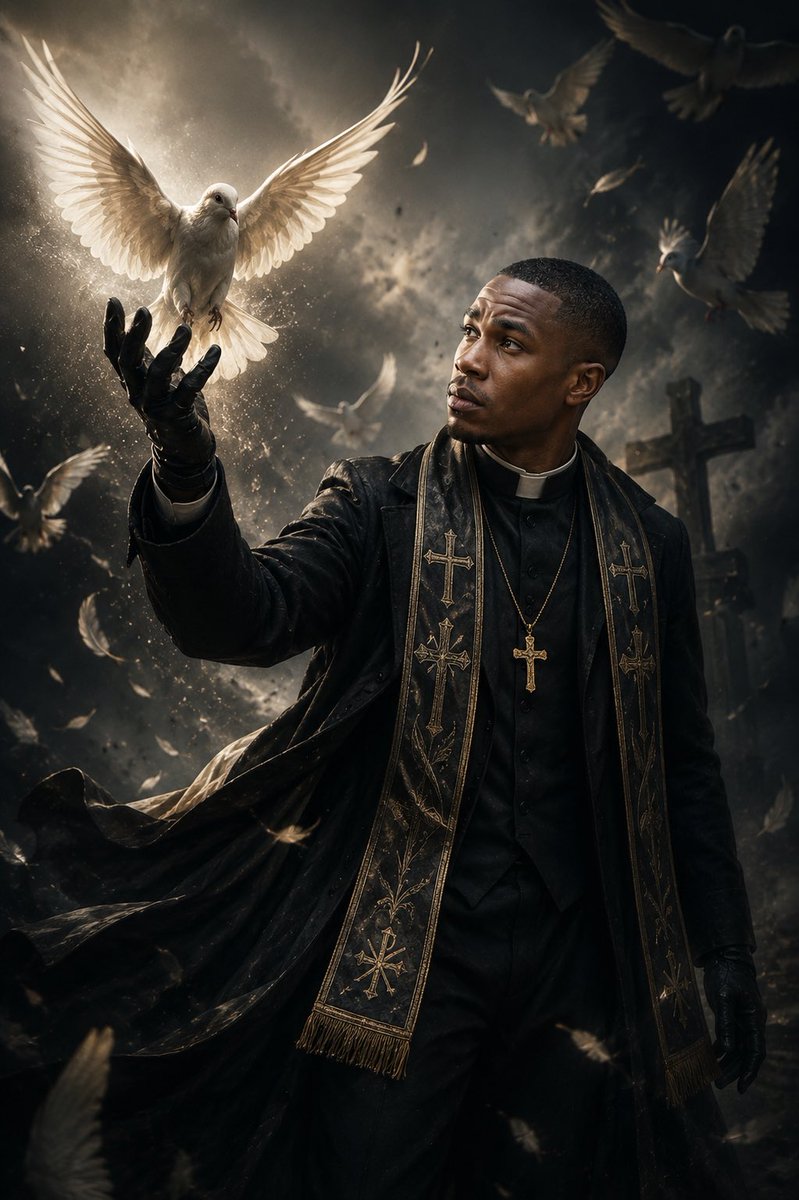
The Remarkable Story of St. Padre Pio: The Priest Who Bore the Wounds of Christ
Few saints in modern history have inspired as much devotion—and as much scrutiny—as St. Padre Pio.
Born Francesco Forgione in Pietrelcina, Italy, on May 25, 1887, he entered the Capuchin Franciscan Order as a young man and was ordained a priest in 1910. From an early age, he was known for his deep love of prayer and his desire for holiness.
Everything changed on September 20, 1918.
While praying after Mass, Padre Pio received the stigmata—the visible wounds corresponding to Christ’s crucifixion on his hands, feet, and side. These wounds remained for about 50 years, making him the first priest in Church history whose stigmata lasted for decades.
His extraordinary gifts attracted both admiration and investigation. Church authorities carefully examined the reported phenomena and, for a time, restricted aspects of his ministry. After years of study, those restrictions were lifted.
Despite worldwide attention, Padre Pio remained committed to the ordinary work of a priest.
He spent countless hours hearing confessions, celebrated the Holy Mass with profound reverence, encouraged devotion to the Rosary, and offered spiritual guidance to thousands of pilgrims who traveled to San Giovanni Rotondo seeking God’s mercy.
His concern for human suffering also led to the founding of the Casa Sollievo della Sofferenza (“Home for the Relief of Suffering”), a hospital that continues to serve the sick today.
Padre Pio died on September 23, 1968, after faithfully serving Christ for decades.
In 2002, Pope John Paul II canonized him as St. Pio of Pietrelcina, recognizing a life marked by heroic virtue and confirmed miracles.
His legacy is not simply the stigmata or the many reported miracles associated with him. It is his unwavering call to trust God through prayer, frequent confession, and perseverance in suffering.
His enduring message remains:
“Pray, hope, and don’t worry. Worry is useless. God is merciful and will hear your prayer.”
The Remarkable Story of St. Padre Pio: The Priest Who Bore the Wounds of Christ
Few saints in modern history have inspired as much devotion—and as much scrutiny—as St. Padre Pio.
Born Francesco Forgione in Pietrelcina, Italy, on May 25, 1887, he entered the Capuchin Franciscan Order as a young man and was ordained a priest in 1910. From an early age, he was known for his deep love of prayer and his desire for holiness.
Everything changed on September 20, 1918.
While praying after Mass, Padre Pio received the stigmata—the visible wounds corresponding to Christ’s crucifixion on his hands, feet, and side. These wounds remained for about 50 years, making him the first priest in Church history whose stigmata lasted for decades.
His extraordinary gifts attracted both admiration and investigation. Church authorities carefully examined the reported phenomena and, for a time, restricted aspects of his ministry. After years of study, those restrictions were lifted.
Despite worldwide attention, Padre Pio remained committed to the ordinary work of a priest.
He spent countless hours hearing confessions, celebrated the Holy Mass with profound reverence, encouraged devotion to the Rosary, and offered spiritual guidance to thousands of pilgrims who traveled to San Giovanni Rotondo seeking God’s mercy.
His concern for human suffering also led to the founding of the Casa Sollievo della Sofferenza (“Home for the Relief of Suffering”), a hospital that continues to serve the sick today.
Padre Pio died on September 23, 1968, after faithfully serving Christ for decades.
In 2002, Pope John Paul II canonized him as St. Pio of Pietrelcina, recognizing a life marked by heroic virtue and confirmed miracles.
His legacy is not simply the stigmata or the many reported miracles associated with him. It is his unwavering call to trust God through prayer, frequent confession, and perseverance in suffering.
His enduring message remains:
“Pray, hope, and don’t worry. Worry is useless. God is merciful and will hear your prayer.”
@instablog9ja God is spirit, beyond male or female. Traditional “He” language is metaphorical, not biological. Both men and women are natural human beings neither is supernatural. The claim confuses categories.
Girls like this make people think all girls are illiterate.
I am not on X for monetization or fame. I am here to build a brand that stands for authentic Catholic teaching, sound doctrine, and unwavering orthodoxy a name that, whenever mentioned, echoes truth, fidelity to Christ, and the timeless faith of the Church.
I am not new on X; my old account got suspended, which is why I am starting anew. I am not begging for a pitiful following; rather, I am seeking your conviction to follow and support this dream.
If you wish to support and accompany me on this journey, then follow 😇 me.
I am not on X for monetization or fame. I am here to build a brand that stands for authentic Catholic teaching, sound doctrine, and unwavering orthodoxy a name that, whenever mentioned, echoes truth, fidelity to Christ, and the timeless faith of the Church.
I am not new on X; my old account got suspended, which is why I am starting anew. I am not begging for a pitiful following; rather, I am seeking your conviction to follow and support this dream.
If you wish to support and accompany me on this journey, then follow 😇 me.
6) oral sex
7) organ donation
8) dancing
9) same sex parenting
10) self defense
11) stem cell research
12) how to baptize
13) how to determine the canon of scripture
14) that God’s revelation is closed
15) whether Jesus had 1 or 2 wills/natures