The 24th of Asad marks the day when the Crusader onslaught, bloody plunder and occupying invasion of Afghanistan's sacred land of jihad were defeated and forced to bow their heads. It is a reminder of those golden, historic moments that the occupiers, their supporters and those who implemented their agenda could never have imagined. Relying firmly on the support of their Great Lord, the Muslim masses once again restored the rule of a complete Islamic system.
May this proud and sacred day be blessed for us all.
In November 2023, Pakistan's Counter Terrorism Department (CTD) claimed that four "terrorists" had been killed during an encounter in Turbat. Among them was a young man named Balach Baloch. His family placed his body on the road and staged a sit-in protest. They insisted that Balach had been taken from his home several days before the alleged encounter. In their view, this was not a police shootout at all but an extrajudicial killing.
When the case reached Judge Abdul Hakeem Kakar's court, he did not do what many judges before him had done. He refused to accept the security agencies' written claims at face value or endorse them without scrutiny.
Instead, he demanded solid and verifiable evidence from the CTD to prove that the so-called police encounter had actually taken place.
When the department failed to establish that the killing had been carried out in accordance with the law, Judge Kakar took a bold and unprecedented legal step. He ordered the police to register a murder case (FIR) against the CTD officers involved.
That decision placed the security agencies under enormous pressure. At the same time, it made Judge Abdul Hakeem Kakar a trusted symbol of justice for people who believed they had been wronged.
His legal position did not end there.
Whenever security agencies approached his court seeking permission to arrest, detain, or search suspects, Judge Abdul Hakeem Kakar examined every request strictly within the framework of the law.
He made his position clear: "Courts do not exist simply to put a stamp of approval on the unlawful actions of any institution, nor to legitimize the enforced disappearance of citizens without evidence."
Because credible evidence was often lacking, he repeatedly refused CTD requests for warrants and ordered the release of several detainees.
For that reason, Judge Abdul Hakeem Kakar had effectively become a persistent obstacle for the security agencies operating in Balochistan, particularly the Counter Terrorism Department. His courtroom stood as an important legal barrier against actions that lay outside the bounds of the law.
Now look at the other side of the picture, one that leads to a separate and bloody conflict unfolding in the mountains of Mastung.
For years, Balochistan has been home to two very different armed movements. On one side are Baloch nationalist groups such as the Baloch Liberation Army (BLA). On the other is Daesh Khorasan (IS-K), which, according to various reports and claims, has also been trying to expand its influence in the region.
The BLA claimed in March 2025 that it had attacked a secret Daesh training camp in the Mastung area, killing more than thirty Daesh fighters. Three months later, in June 2025, Daesh referred to that attack in a video and formally declared war on the BLA. According to the BLA, Daesh members in Mastung were gathering intelligence on Baloch fighters at the direction of Pakistan's intelligence agencies so the Pakistani military could carry out targeted operations against them.
One thing is worth noting. When the BLA inflicted such heavy losses on Daesh in Mastung, Pakistan's media barely covered the incident. The reason was clear enough. The state did not want the BLA to get credit for defeating an international terrorist organization. Yet not long afterward, when Daesh launched retaliatory attacks against the BLA, pro-government social media accounts, YouTubers, and a number of commentators openly welcomed those attacks. They portrayed Daesh's operations as proof of the BLA's weakness and as a major success for the state.
This is where the first major and startling contradiction appears, exposing the inconsistencies in the narrative promoted by Pakistan's military and its supporters. Driven by their hostility toward the BLA, pro-government circles forgot that Pakistan's official position has always been that Daesh has neither an organized presence nor safe havens inside the country...
Read more 🔗
https://t.co/tmbTzxMdxD
Afghanistan lies at the heart of Asia. Because of its strategic location, its freedom-loving people, and its rich historical heritage, it holds a unique place in world history. The history of this land is not only the history of kings and wars. It is also the history of independence, resistance, endurance, and national identity. Throughout the centuries, powerful empires have tried to bring Afghanistan under their rule, but the determination of the Afghan people has denied them complete success. That truth is written across the pages of history.
Ancient history tells us that even the army of Alexander the Great met fierce resistance in this land. After him, wars continued under different rulers, but Afghanistan's mountains, valleys, and people never abandoned their determination to live free. In the nineteenth century, Afghans made enormous sacrifices to defend their independence against the British Empire. In the end, Afghanistan preserved its freedom and secured its place as an independent state.
The Soviet invasion in the twentieth century also turned Afghanistan into the scene of a long and bitter war. Both sides paid a heavy price before the foreign forces finally withdrew. Later came the twenty-year war involving America and NATO, another period marked by fierce fighting and enormous human and economic losses.
The Afghan people have always defended their country's independence and national dignity, but they have also sought peace, good relations with their neighbors, and mutual respect. History shows that every power that ignored the will of the Afghan people eventually found itself trapped in a long and difficult struggle. Anyone making decisions about Afghanistan should first understand the lessons of this country's history. Past experience makes one thing clear. Mutual respect, political understanding, and peaceful solutions achieve far more than endless conflict.
History is a book of lessons. Those who learn from it avoid repeating old mistakes, while those who ignore it often find themselves reliving the same failures. Afghanistan stands as living proof of that truth. Throughout its long history, the Afghan people have resisted invading empires, occupying armies, and powerful aggressors. They have made great sacrifices to defend their honor, their independence, and their national identity.
Those experiences have taught Afghans that wars, pressure, and hardship do not last forever. What endures is faith, national resolve, and the determination to remain steadfast in the face of every military threat.
Over the past several months, Pakistan's military regime has tried to shift its own security problems across the border by carrying out brutal airstrikes inside Afghanistan. That policy has not solved its problems. Instead, it has pushed relations between the two countries into deeper crisis, threatened regional stability, and exposed Pakistan's own failures even more clearly.
On June 28, 2026, Pakistan's military regime carried out airstrikes in the provinces of Paktia, Paktika, and Kunar, bombing residential areas. According to the spokesman of the IEA, Mawlawi Zabihullah Mujahid, thirty-six civilians, including women and children, were martyred, while another 163 were wounded.
This was not an isolated incident. On March 16, 2026, an attack on a drug rehabilitation center in Kabul claimed the lives of more than 400 people. In February 2026, indiscriminate bombardment near the Durand Line killed dozens more civilians. During the first five months of 2026 alone, UNAMA recorded more than 750 civilian casualties resulting from Pakistani attacks.
If Pakistan's military regime believes that bombs, missiles, and the killing of innocent civilians can break the will of the Afghan Mujahid nation, then it should read history once again. Force, violence, and the killing of innocent people have never changed the beliefs or determination of a nation. The Afghan people seek peace...
Read more 🔗
https://t.co/ncdtr9uFie
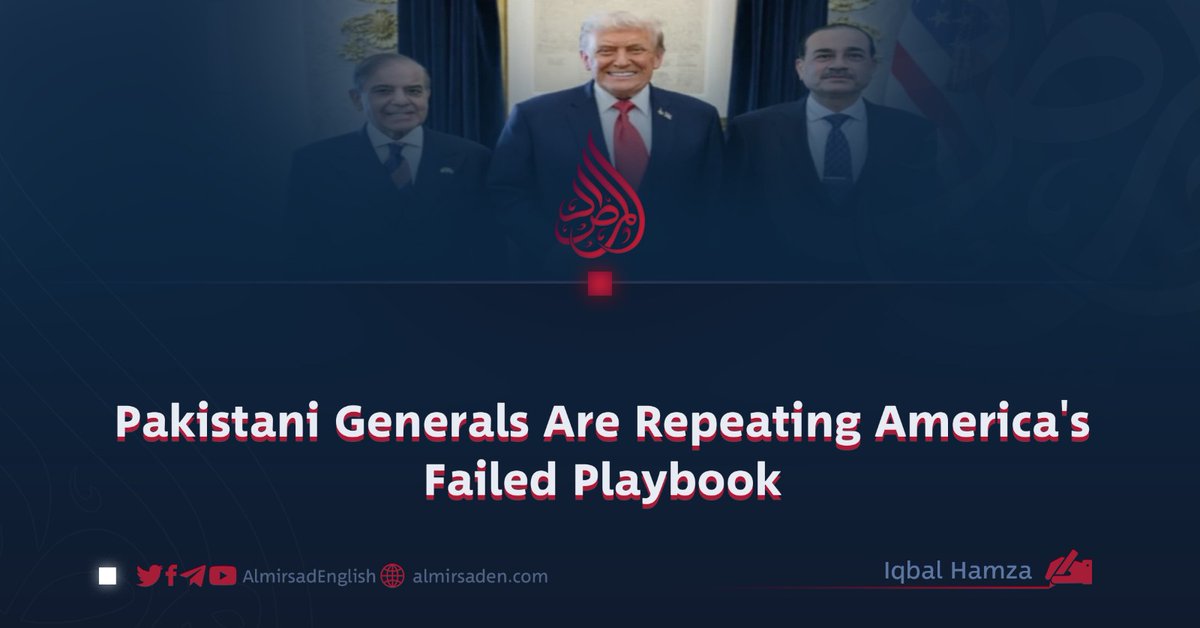
For years, the Russians rained explosives on Afghan soil, but in the end it was the Soviet Union that broke apart and collapsed. America and NATO poured nearly a trillion dollars' worth of bombs and ammunition into Afghanistan, yet all they walked away with was disgrace, humiliation, and defeat. Pakistani generals have seen all of this with their own eyes. If they still believe that bombing Afghanistan will bring them victory, they should first ask their own teachers, the American generals, how that experiment ended. Dropping bombs on Afghan soil is easy. Paying the price for what follows is another matter entirely. History shows that every power that tried to speak to Afghanistan through force and explosives eventually found itself facing defeat, decline, and, in some cases, collapse.
Enmity with the Afghan people is not a war that lasts a few days or a few months. It is a debt that sometimes takes decades to settle. If Pakistan's generals think this conflict will remain limited to a few days of emotional airstrikes and retaliatory attacks, as happened with India, or that Afghans will surrender under bombardment, they are making a grave mistake.
Afghans fight long wars, but they fight with patience. They do not fear death, nor do they grow weary because a war drags on. The bombing campaign Pakistan's generals have begun today is nothing new to Afghans. They have lived through the same thing for more than forty years. Their account with NATO and America, the very powers that trained and backed these generals, is not yet fully settled. Their account with Pakistan's generals will be even harder.
The generals sitting in air-conditioned rooms in Lahore and Islamabad, numbed by comfort and drink, have never felt the heat of a car bomb or breathed its bitter smoke, the same gifts Afghan history has delivered to those who chose to wage war against this land. If they imagine that Afghans will take revenge for the killing of innocent civilians by turning against the people of Pakistan, they are mistaken again. Afghans know how to distinguish between a nation and those who rule it. They know that the real authors of the region's misery are a handful of reckless men, and it is with them that the score will be settled.
This time, Pakistan's generals are facing an enemy that knows them well. They can no longer hide behind the people of Pakistan. They should also remember that however many bombs they have managed to gather through debt, poverty, and foreign aid, NATO and America dropped many times more on this same land. Even then, the outcome favored the Afghans.
If Afghans could be defeated by death, the Russians would today be sitting in Karachi's port. If bombs could frighten them into surrender, American forces would still be using Bagram to strike Iran. The irony is that a large part of Pakistan's military arsenal was financed by the money it earned transporting NATO's bombs into Afghanistan. Yet its generals still fail to understand a simple fact. Those NATO bombs, whose transport alone was worth far more than Pakistan's entire arsenal, could not force Afghans to surrender. Why should Pakistan's bombs succeed where theirs failed?
Afghans are neither frightened by bombs nor broken by them. Believing that Afghanistan can be defeated through bombardment is one of the worst miscalculations Pakistan's generals have ever made. The world has already seen, more than once, that this path leads nowhere. If anything, this bombing campaign is more likely to leave Pakistan's generals with the same fate that befell the American generals before them. It will end in defeat, physical and psychological wounds, and a permanent place in history as another failed experiment.
Read more 🔗
https://t.co/D0Y2iLl6qD
In 1398, when forces from Wardak province were moving toward Nangarhar, Martyr Ahrar, who was also a trained and skilled mujahid in the laser section, made the decision to go.
This was not simply a journey. It was the journey of a man who already knew where his final destination lay.
Before leaving home, he walked around as if bidding farewell to every wall and every memory.
He entered the unfinished guesthouse and said:
"Don't stop the work. Complete the guesthouse."
Then in a low but steady voice he said:
"Don't tell anyone at home, especially Mother, that I am going to Nangarhar. My heart tells me that I will be martyred there."
These were not ordinary words. They were the words of a man who felt the signs of his destiny.
He set out toward Nangarhar. A week and a half later he called his dear mother. After the greetings he asked after the family, the friends, the relatives. He asked about the unfinished guesthouse. He spoke to her words of comfort and patience, the way a person does when the time for departure has come and they want to be a balm for hearts before the farewell.
That was his last conversation with his family. His last greeting. His last asking after them.
One of his companions tells the story:
Ahrar held a special place in every companion's heart. He was a wonderful person, gentle in character, always in service of those around him. His manners, his warmth, and his sincerity were such that everyone felt he was their own.
One day we received information that Daesh militants had established a base in the Zawa area of Khogyani.
We moved there immediately and spent the night in a mosque.
The next morning, Ahrar appeared unusually happy.
He smiled and told everyone:
"Today I will be martyred."
He wrote the names of all the companions on a wall in his beautiful handwriting and said:
"One of these names will disappear forever. That person will be martyred."
Then he added:
"I will be the one, Insha'Allah."
Later, the clearing of houses began.
We split into two groups.
After clearing one house and while work on the second was still underway, Ahrar said:
"I'm going into the next house."
I called out:
"Don't go alone. It's dangerous. We'll go together."
But Ahrar had always been a man who moved toward danger rather than away from it. He did not take his companion's words and headed toward the third house.
I was watching him when voices rose from inside. Ahrar kicked the door open with great force, broke it down, and the moment it gave way he opened fire on the enemy. Together with the bullets he cried out Takbir, his voice filling the air with cries of Allahu Akbar.
I ran toward him, but before I could reach him, he was struck.
As he fell, he shouted once more:
"Allahu Akbar!"
And then he drank from the cup of martyrdom.
The dream he had pursued for years was finally fulfilled.
Thirteen days later, his blessed body was brought back to his homeland.
He looked as fresh and beautiful as though he were merely asleep.
Villagers, friends, and relatives received him with tears in their eyes and buried him in the cemetery of his ancestors.
The earth was silent, but the heavens knew that a traveler had finally reached his destination.
May Allah accept his martyrdom and raise his rank.
At last, this brave mujahid and devoted traveler on the path of truth achieved his lifelong dream and attained the rank of martyrdom on 1 Mizan 1398.
Ahmad Farid Ahrar left this temporary world and returned to his Lord, but his name, sacrifice, and memory remain alive in the hearts of the people.
Read more 🔗
https://t.co/j62p8gVPnH
If you look closely at the mental and psychological state of Pakistan’s political and military ruling class today, the condition of GHQ and the political circles operating under its shadow in Islamabad looks exactly like that beaten...
Read more 🔗
https://t.co/EWpHDoe9SZ
This characteristic of the Jews was not limited only to past nations; rather, it is also observed among them in the present time. For this reason, they do not possess true unity among themselves. Although some people assume that they are united, this notion is not correct. Allah Almighty says: “You would think they are united, but their hearts are divided.”
In contrast to this, Allah the Almighty has described the believers with a different attribute: that they fulfill the duty of enjoining good and forbidding evil.
﴿وَالْمُؤْمِنُونَ وَالْمُؤْمِنَاتُ ... يَأْمُرُونَ بِالْمَعْرُوفِ وَيَنْهَوْنَ عَنِ الْمُنْكَرِ﴾ (التوبة: 71)
Translation: “The believing men and believing women are allies of one another. They enjoin what is right and forbid what is wrong...
Read more 🔗
https://t.co/x91XnoR8sh
What is worth noting is that the Khawarij were initially known as devout and pious people. But their weakness in religious knowledge, and the dominance of raw religious emotion over reason, drove them toward extremism. This is a warning that every religious community should take seriously. The outer appearance of religious commitment can sometimes become a cover for misunderstanding and fanaticism.
Understanding this chapter of Islamic history is a key to understanding much of what happens today. The examples the Khawarij set show how a shallow reading of religion can be turned into a justification for declaring others disbelievers and for violence. Recognizing this pattern is especially useful when analyzing today's extremist groups, because it shows that this ideology is not new. It has deep historical roots...
Read more 🔗
https://t.co/kglUyGC4R1
Praise be to Allah, this year the days of Eid al-Adha passed throughout Afghanistan in such an atmosphere of peace, prosperity, comfort, and happiness that no amount of praise seems sufficient to express gratitude for it. The fact that no major security incident or serious untoward event was reported from across the country indicates that Afghanistan is moving toward change and progress.
This calm and secure environment is neither a sudden miracle nor merely an occurrence of fate. Rather, behind it lie the sincere and genuine policies of Afghanistan’s Islamic system, as well as the tireless efforts of the security institutions, whose work has provided the people with a sense of confidence, reassurance, and safety...
Read more 🔗
https://t.co/SUrUYESxCR
A clear-eyed reading of the current political moment reveals coordinated and calculating hands working behind the scenes, hands that seek to turn the joy of Muslims into grief. This intelligence network, assembled from the Zionist...
Read more 🔗
https://t.co/UltEiQolaE
Emerging from the very womb of British colonialism, the United States did not take long to incorporate Pakistan into its circle of allies. In 1954, Pakistan signed the “Mutual Defense Assistance Agreement” with the United States, after which American aid to Pakistan formally began. Subsequently, in 1955, Pakistan became a member of both SEATO and CENTO, openly presenting itself as one of America’s closest regional partners. In return, the United States devoted considerable attention to the training and development of the Pakistani military.
The Pakistani military, drawing upon the organizational structure of the U.S. armed forces, reorganized and reshaped its military framework from the ground up. Numerous units and divisions were established within the army that were fully equipped with American weaponry and trained according to American military standards. A large number of Pakistan’s senior military officers were also sent to the United States for education and professional training. Between 1955 and 1958 alone—a period of merely three years, approximately 200 officers from the artillery branch were dispatched to the United States for advanced military instruction...
Read more 🔗
https://t.co/5b8xvUTAlk
The clearest proof of Israeli cowardice is this: Hamas mujahideen, armed with little more than RPG rockets, have left one of the most heavily equipped armies in the world lost and directionless on open ground. Hamas advances with a...
Read more 🔗
https://t.co/W3Dkj7akDA
For this reason, at the time of Pakistan’s creation, the military institution was the country’s largest, most organized, and most national institution. In the early days, the country faced severe administrative, economic, and defense-related challenges. In dealing with these conditions, the military played a major role, and the logical outcome was that in the coming years and decades this same institution would take complete control of the affairs of the country.
However, instead of reforming and developing the state, the military itself came to dominate the state and pursued its own growth and strengthening. Moreover, the military did not allow any fundamental change in the colonial system that had existed before the creation of Pakistan.
But one important question remained: did the intellectual and ideological foundations of this military also change or not? The reality is that no significant steps were taken in this regard. Although, to some extent, the process of training and appointing local officers began, the overall structure, educational curriculum, and administrative thinking largely remained the same as they had been during the British era.
If, at that very time, a comprehensive reform process had been initiated, through which the ideological direction of the military had been aligned with Islamic principles, the training curriculum had been changed, and the leadership structure had been reorganized according to regional needs, it is possible that an entirely new and different kind of military could have emerged.
With the passage of time, the role of the military continued to expand. Political instability, internal conflicts, and continuous crises pushed the military to become increasingly active in state affairs. In this way, the institution did not remain merely a defensive force, but also became influential in policymaking and in every aspect of governance.
If serious steps had been taken after the establishment of Pakistan, and this military which had been loyal to the British, had been fundamentally transformed; if its training curriculum had been redesigned under the guidance of distinguished religious scholars, the Mujahideen of the frontier regions, and modern military specialists; if the military had been completely reorganized; and if the class of pro-British officers had been removed from office, then perhaps it would have been possible for this military to become a truly “Islamic army.”
But the practical reality is that neither was this done, nor was much serious thought given in that direction. As a result, after the creation of Pakistan, the same Royal Indian Army remained without change or reform; the only difference was that this very army, whose hands were stained with the blood of Muslims, came to be known as the “Pak Army...
Read more 🔗
https://t.co/T5DIakwQiE
In recent days, news emerged that struck the hearts of the entire Muslim Ummah like a thunderbolt. Sheikh Muhammad Idris, a prominent Islamic scholar from the Charsadda district of Khyber Pakhtunkhwa, was shot dead in broad daylight by unidentified gunmen and lost his life at the scene.
Sheikh Muhammad Idris, who belonged to the Tarangzai tribe, served as a Sheikh al-Hadith at Jamia Naumania and Darul Uloom Haqqania. It would be no exaggeration to say that he graduated thousands of students annually across Asia and held a distinguished position in the teaching of Hadith...
Read more 🔗
https://t.co/2TqlgJAuT2