Despite the fact I was a cancer researcher, worked for a company that made a #GIST therapy, had been through cancer w/both my parents-I was paralyzed w/fear when expected to take the reigns.Most #Caregivers are forced to make life-altering decisions w/o any context! #hcldr#ptexp
Today is GIST Awareness Day. #ShowUsYourRare to help bring attention to Gastrointestinal Stromal Tumors, which are rare tumors that form in the digestive tract. Watch as our Executive Director shares her family experience with #GIST#raredisease#cancer
https://t.co/JASbml46wl
@MattSakumoto@chrissyfarr Patients also mentioned that the doctor seemed to talk faster when standing vs sitting, and it was harder to understand and/or chime in w/questions (but this was anecdotal).
@MattSakumoto@chrissyfarr In our “co-designing ideal dr.’s visit” work with patients, we’ve found that because patients often feel rushed, they lean towards the doctor being seated so it doesn’t seem as if they have one foot out the door. #doorknobsyndrome
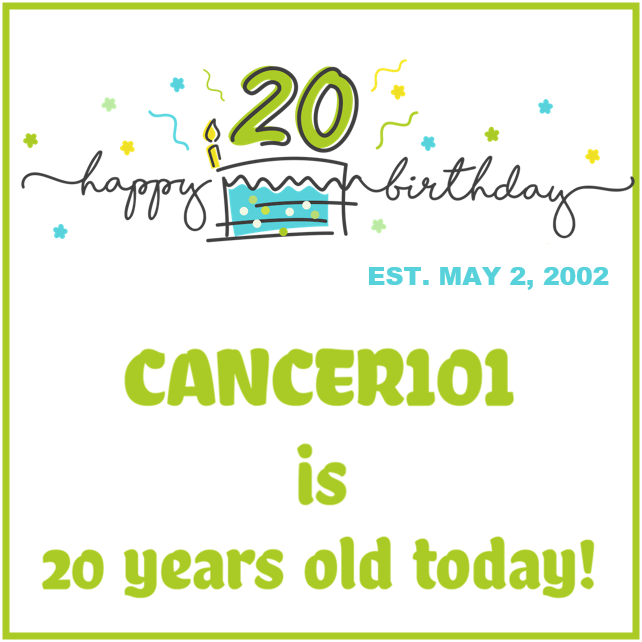
CANCER101 was founded 20 years ago to help people touched by cancer navigate the complexities of their care, reaching ~1.5 million patients! Thank you for joining us on this journey to make a meaningful difference in the lives of people with cancer. https://t.co/b2gx5S5jqO
ICYMI #DigitalEmpathy recap and recording avail now from @AmerMedicalAssn!
@sarahkrug1 and I discuss Active Listening, Narrative Medicine, and Building Trust in a Virtual Visit
#TelemedNow
https://t.co/Bg15NRMoEC
@vishnuravi Are they comfortable typing into the application? Does it distract them from contributing to the conversation if they’re not as great at multi-tasking? Are they embarrassed because they aren’t proficient spellers (ESOFAGUS;)? Or proficient in English?
A3 Most constructive #telemedicine visit I've participated in was where clinician built in time to listen and then co-constructed clinical note, showing their screen as part of visit so patient could see and contribute real time #telemednow#telehealth
@vishnuravi I love the idea of collaborating on “writing” the note vs just “seeing” the note in a secure Google Doc-like application but I think it’s also contingent upon comfort level of the patient.(1/2)
@AmiBhattMD Great point! We created a learning preference barometer to assess how people prefer to receive information and learn so we could personalize how they receive patient education and clinicians can use it to personalize the interaction.
Hard to believe that “the Jetsons” predicted #telemedicine ~60? years ago! Wondering when Jetsons series will hit Netflix so we can extract other hidden gems... #telemednow#telehealrh
A5 It would be great to implement a way to gather constructive, bi-directional feedback, where both patient and clinician can provide real-time feedback on overall experience since it takes two to tango! #patientdoctortango#telemednow
@arwmd@stacy_hurt@JuddHollander A pause during conversation gives patient opportunity to reflect on an important point you made, prompts them to ask a question and even engage in conversation and fill in the details. It also gives you opportunity to assess their reaction #telemednow
A3 Practicing digital empathy requires active listening, curiosity and a social antenna. Non verbal cues such as nodding, typing SILENTLY into EMR & reading body language are important. There’s also power in pause as a communication tool to indicate you’re listening #telemednow
BTW here's a recommendation of a silent keyboard so that patients aren't distracted by your typing during virtual visit https://t.co/y6F0Mpkga6 (courtesy of Dr. Stephen Martin) #telemednow
@iamritu We actually started to gather insights from patients where they rate their clinician's background, too, to understand what's ideal! #telemednow
A3 Aside from digital communication, a remote interaction now potentially includes an assessment of how that person lives (background) and the potential impact on their health #telemednow