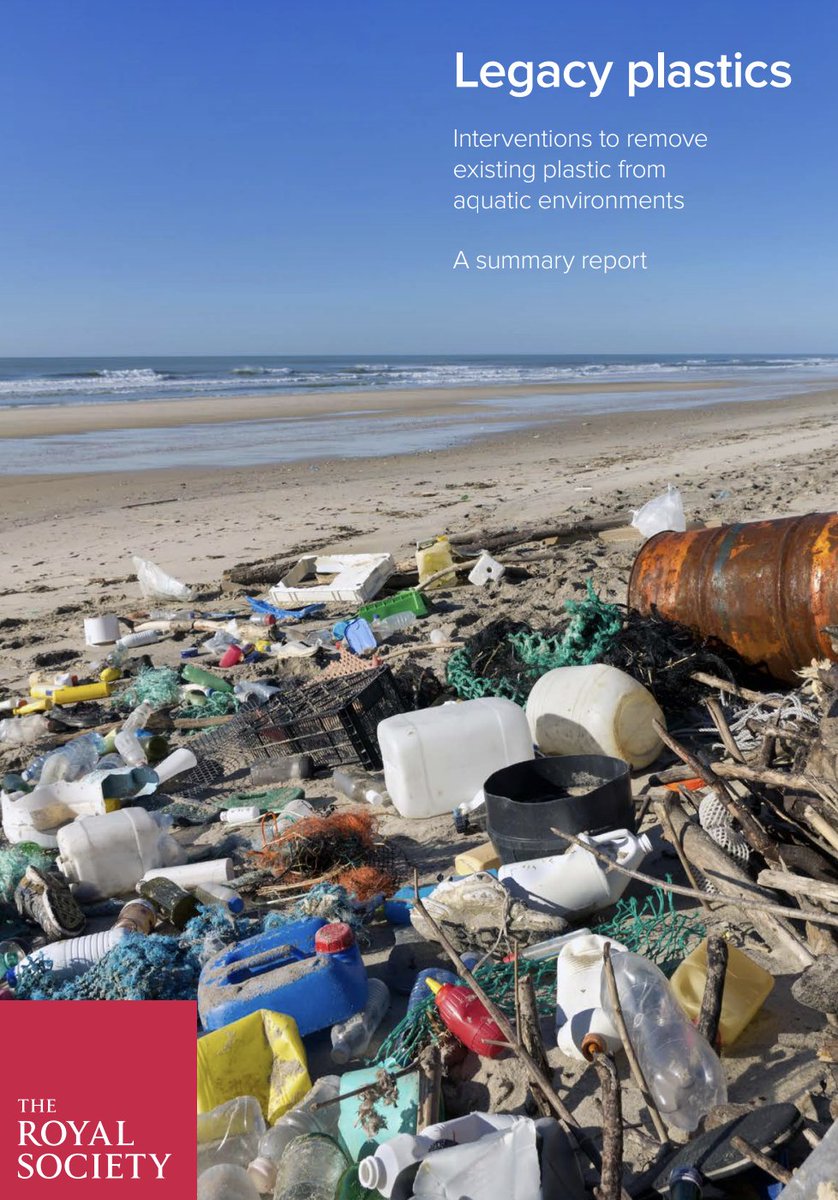
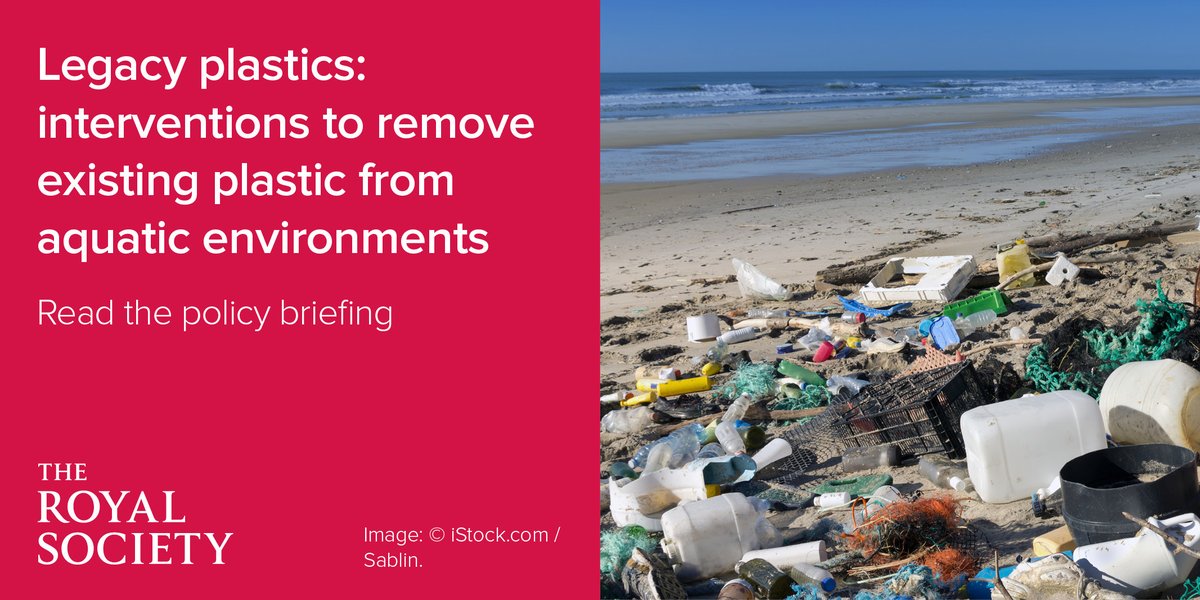
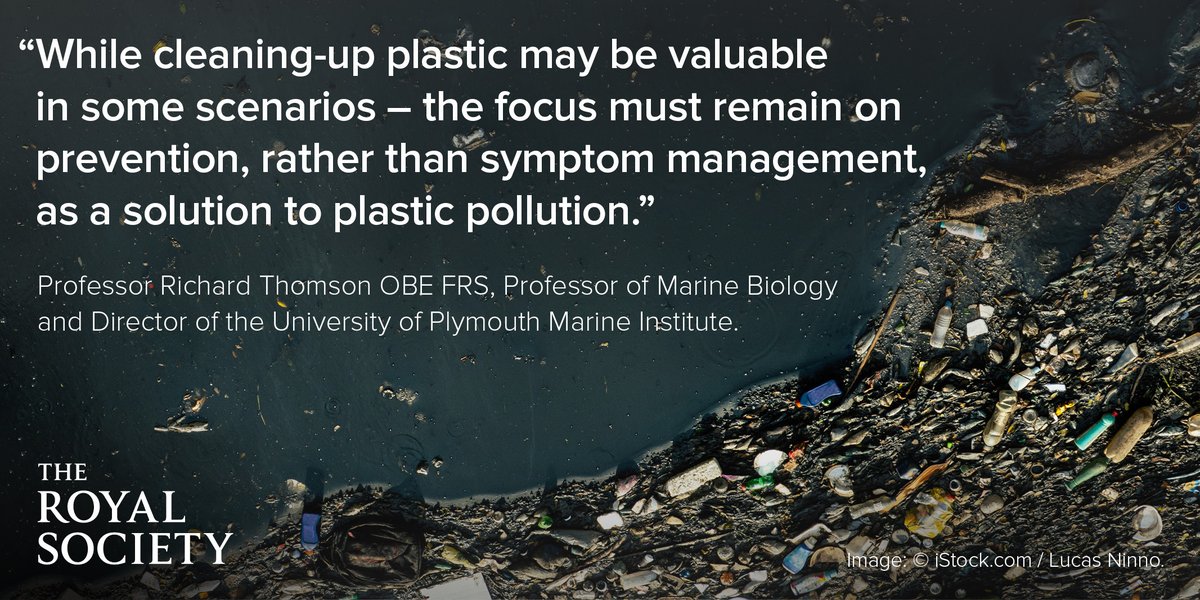
To support @UNEP#INC4#plastictreaty negotiations in #Ottowa the UK Academy of Science @royalsociety has launched a report on plastic clean-up technologies. Huge thanks to @ProfRThompson for your time and patience on this one! https://t.co/NvAp2kNvCO
Lisbeth Henriksen on the Danish green landscape fund is fascinating. Really chimes with our @royalsociety Multifunctional Landscapes work. Be interesting to see how implementation goes #OFC25 https://t.co/tBCwontaGy
Fantastic to host @royalsociety for discussion & presentations on our key policy relevant research. Day 1 included ORE, plastic pollution, food security, MPA’s, coastal protection natural capital @thembauk @PlymouthMarine @PlymUni
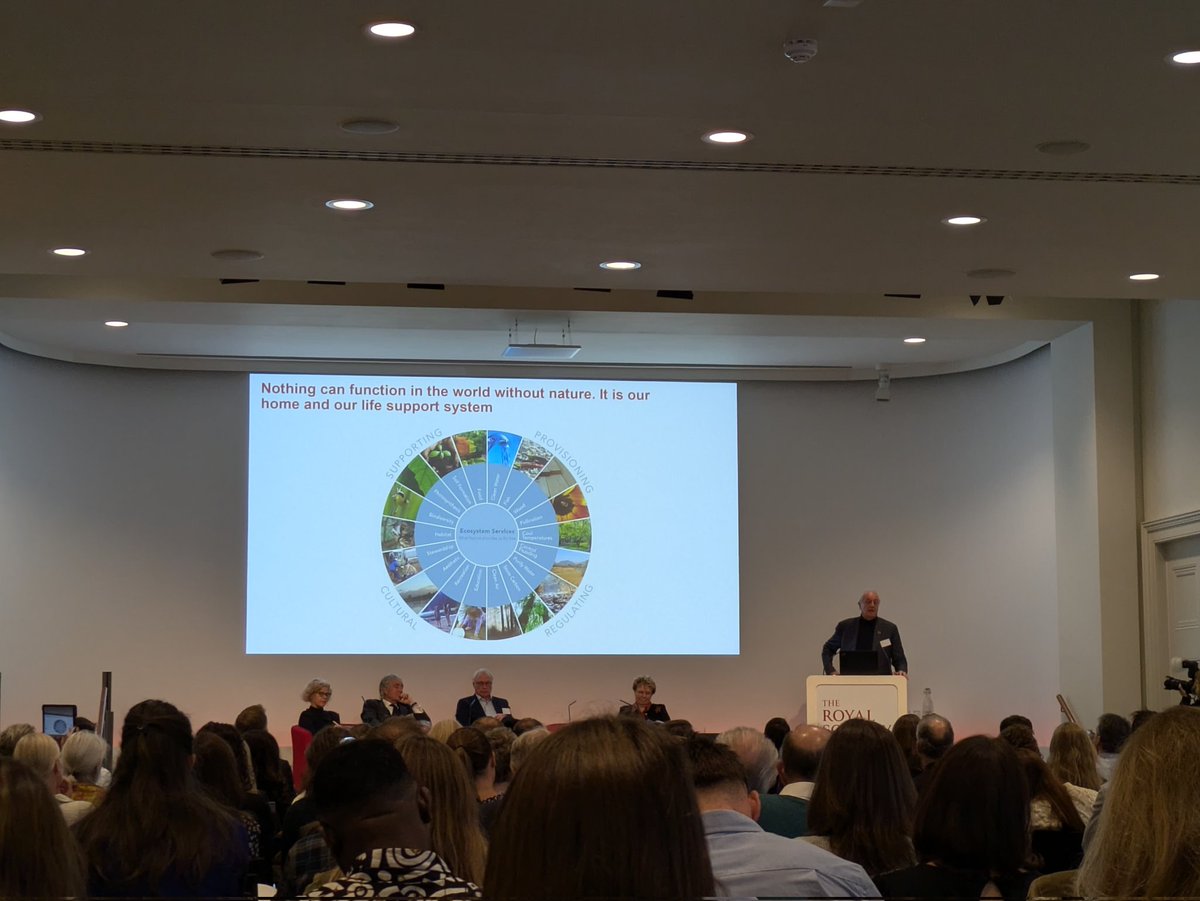
How does ecological risk relate to commercial risk? Head to our livestream now and watch online as key stakeholders from science, business and finance come together to discuss how trends environmental decline are leading to new risks to business models and investments: https://t.co/y8yCvJfzI2
.@WellcomeTrust and @UKRI_News just announced US$74M of new investments in evidence to help achieve the #SDGs. These funds will be used to bring together all the existing evidence on what works https://t.co/RYF9o0QeSf #SoTF
Funders are injecting tens of millions of dollars into an ambitious plan to solve the biggest problem in science advice: supplying evidence to governments. https://t.co/pkJ1KZWoDB
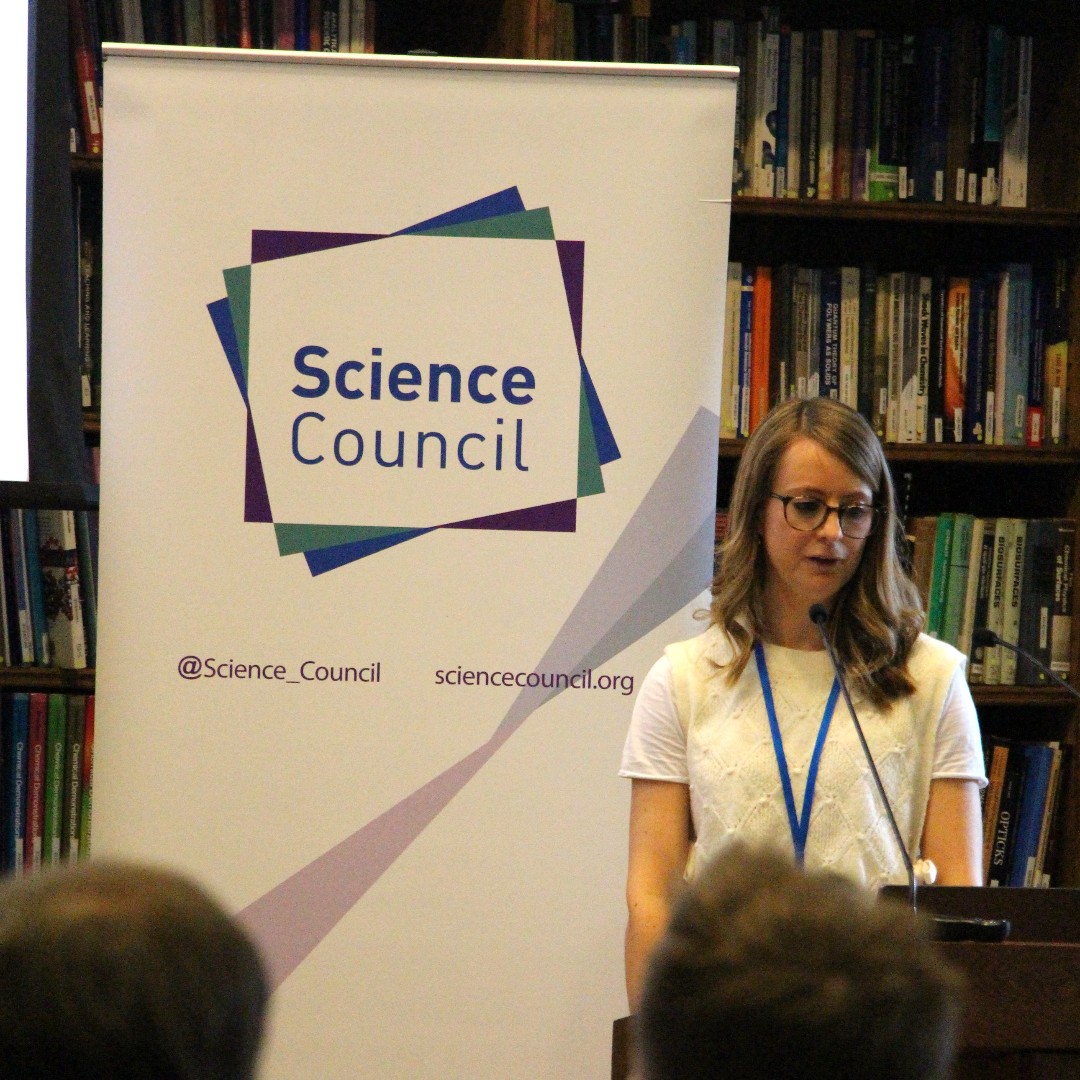
A glimpse into this morning's sessions from the @Science_Council "Perspectives on Successful Policy Work in Science" workshop hosted at the @RoySocChem.
Our speakers dive into crucial topics, allowing experts to share insights and discuss the future of #sciencepolicy
🚨This is really big news. New research from @GFI_green lays bare the economic impact of nature loss in the UK. With up to 12% of GDP on the line by 2030s, the stakes couldn't be higher. We need to take action now to protect our economy and our environment
https://t.co/SgfdIfH0hJ
As governments around the world meet to negotiate the #PlasticsTreaty at #INC4, this new report on legacy plastics looks at solutions to remove plastic pollution from aquatic environments like rivers, oceans and coastlines. Read the full summary report: https://t.co/OcG1bgVOmt
Local community beach cleans could be more effective than high-tech removal technologies at clearing plastic pollution and reducing its harm to the environment and humans, according to a new Royal Society report released today. Read more: https://t.co/BEUjzS5GSl
Beach cleans are therefore currently one of the most effective ways to clean-up plastic from the environment - summarised nicely in this @thetimes article
To support @UNEP#INC4#plastictreaty negotiations in #Ottowa the UK Academy of Science @royalsociety has launched a report on plastic clean-up technologies. Huge thanks to @ProfRThompson for your time and patience on this one! https://t.co/NvAp2kNvCO
Interventions are likely to be most effective when they target plastic pollution close to source and where plastic naturally accumulates such as in rivers or on the coastline