Rape survivor Gisèle Pelicot says the videos of her being assaulted by her husband and dozens of strangers are "etched in my memory forever."
"We cannot describe videos of such horror," she told PBS News Hour co-anchor @IAmAmnaNawaz. "So it helped me to think that this woman was not me because she was just like a rag doll, who had no more soul, no more life, who was being abused."
Pelicot discovered in 2020 that her husband had been repeatedly drugging and raping her for close to a decade, inviting dozens of strangers to abuse her.
During her landmark public mass rape trial in 2024, Pelicot waived her right to anonymity, and all 51 men were found guilty.
To prepare for the trial, Pelicot’s lawyers encouraged her to watch the videos of her assaults, which she’d previously avoided. Pelicot recalled feeling she needed to "expose" her abusers so they faced the consequences for what they did.
"It was for them to bear the burden of shame, not the victims," she said.
Pelicot spoke to Nawaz about her experience, her recently published memoir, "A Hymn to Life: Shame Must Change Sides," and the global reckoning over sexual assault. Watch the full conversation Wednesday night on PBS News Hour.
“About two dozen journalists are working through the three million pages— and so far they’ve seen only 2 to 3 percent of the material.” >> How The Times Is Digging Into Millions of Pages of Epstein Files https://t.co/EKbuxxGgk0
“This is a deeper revelation of how very powerful men use their networks to help each other stay in control.”
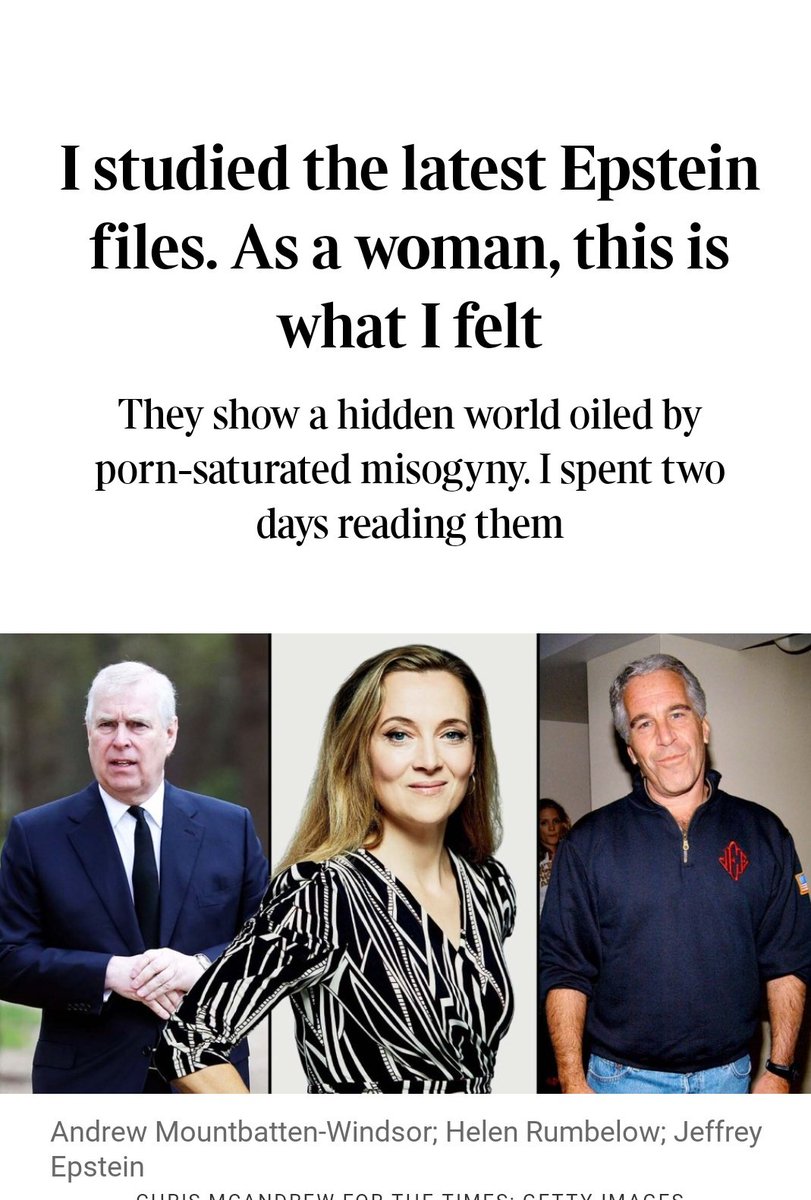
The Epstein files are a dark exposure of how powerful men use misogynistic networks to protect one another and maintain control, says Times columnist @HelenRumbelow.
'I saw the men organising into a club via their endless sycophantic emails, taken seriously by their friend Jeffrey, while seeing the girls’ beheaded bodies — the difference between somebodies and nobodies.' Searingly brilliant @HelenRumbelow on Epstein's disgusting male circles
.@thecrimson reporters have spent hours tracing the DOJ's 3.5M records on Epstein.
Today, they report that Epstein once rented a house minutes from Harvard — and, for the first time, speak with a staffer who helped maintain it.
For much of the 20th century, dysfunctional mothers were blamed for all kinds of adult maladies. But a new study on early life parenting found something unexpected: Stress from the fathers' behavior shaped a child's health into the future.
https://t.co/msBo340LeM
I didn't know what I would discover when I started to read the Epstein files. I'm not sure many women realize how far our world is run by a club of women-hating men
https://t.co/iVpw4QMT3m
"We see behind the grand façade usually presented by men who run the planet...We see their everyday exchanges making the cogs of the world turn, oiled by porn-saturated woman-hating."
Pop superstar Taylor Swift is among this year's inductees to the Songwriters Hall of Fame.
At the age of 36, Swift is the second youngest inductee ever and the youngest woman.
She will be joined by Alanis Morissette, Kenny Loggins, Gene Simmons and Paul Stanley of the rock band Kiss, as well as non-performers like Christopher "Tricky" Stewart, hitmaker for Beyoncé, Mariah Carey and others.
An official induction ceremony will be held in New York in June.
Even though PBS and NPR are still in existence, President Donald Trump said Tuesday that he “heard they’re closed up.”
During a news conference at the White House that lasted more than 90 minutes, Trump noted that, among his accomplishments during the first year of his second term in office, he signed legislation “to cut all taxpayer funding” to the two main American public media networks.
The Trump administration’s move mainly affected the Corporation for Public Broadcasting (CPB), the independent nonprofit organization that distributed federal funds to PBS, NPR, public media programming and more than 1,500 local stations. The corporation’s board voted earlier this year to dissolve itself after Congress voted last summer, at Trump’s request, to claw back about $1.1 billion of previously approved federal funding for public broadcasting.
While the rescission of federal funding and the dissolution of the CPB resulted in layoffs, programming cancellations and operational changes at stations across the country, PBS and NPR continue to air news, arts and other programming on television, radio and online platforms.
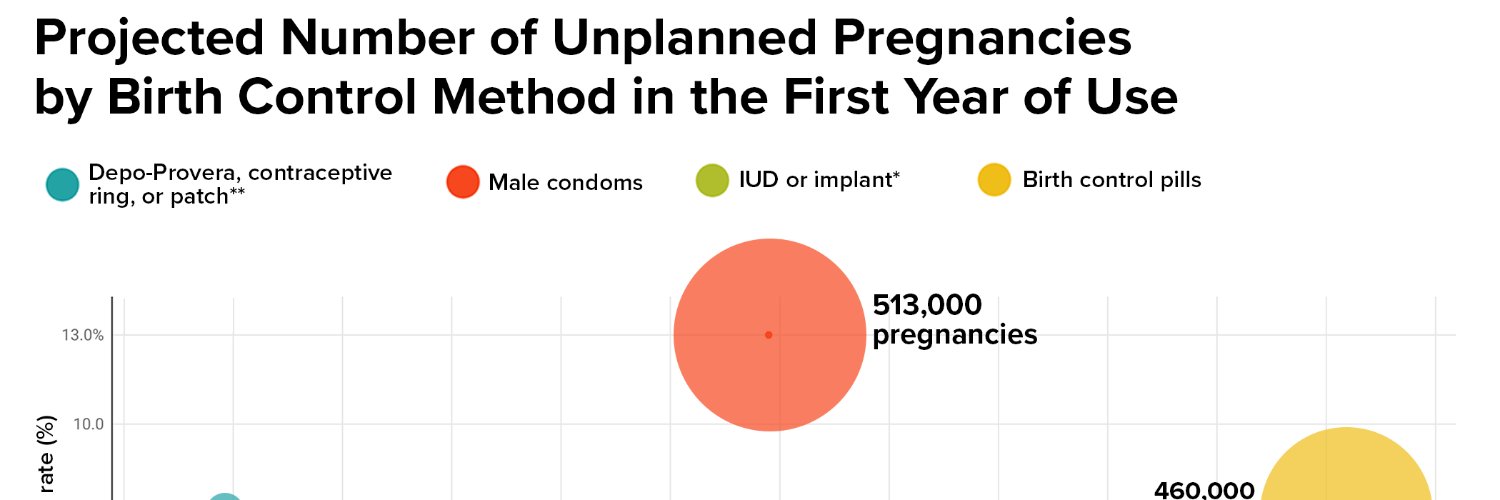
The birth control pill is one of the most common forms of contraception in the U.S.
In recent years, claims of side effects have filled online platforms, often fueled by influencers promoting misinformation.
Watch our 2025 report on the science behind birth control. https://t.co/kRqsotudi8
Pregnancy is a "profound experience" that changes a person regardless of the outcome, journalist Irin Carmon said.
"It's a physical change," she said. "It's a psychological change. It's something that brings up all of your deeply held values, your relationships. And it's also something that law and medicine have opinions about."
Carmon, one of the leading reporters on women's health and reproductive rights in America, spoke to @IAmAmnaNawaz about how her own experience informed her new book, "Unbearable."
The book follows five other pregnant women in New York City and Alabama, and how the history of labor and delivery helps explain the fractured health care systems we have today.
"Over the course of somebody's life, they can experience pregnancy in so many different contexts with so many different feelings and with so many different legal treatments," she said.
Carmon spoke to Amna Nawaz for PBS News' podcast, "Settle In."
The U.S. Supreme Court heard arguments Tuesday in a case involving a group of faith-based pregnancy centers in New Jersey. The organization is hoping to block the state's attorney general from investigating whether they misled women into believing the centers offered abortions.
The case highlights an effort to crack down on so-called crisis pregnancy centers.
Special correspondent Sarah Varney reports.
The U.S. Supreme Court will hear arguments Tuesday in a case involving a group of faith-based pregnancy centers in New Jersey. The organization is hoping to block the state’s attorney general from investigating whether they misled women into believing the centers offered abortions.
The case highlights an effort to crack down on so-called crisis pregnancy centers.
@SarahVarney4 reports.
Medication abortions account for more than 60 percent of all abortions in the United States. But in the aftermath of the reversal of Roe v. Wade, abortion pills are now banned in at least 14 states.
The bans are giving rise to underground networks operating outside the legal system to help people access abortion medication.
"The community networks are a really unique form of access to abortion right now in the U.S., and it's a model that has been taken from other countries," Elisa Wells, co-founder of Plan C, said.
@SarahVarney4 reports.
Note: Some of the people featured in this story agreed to speak with the PBS News Hour under the condition that we conceal their identities to minimize the legal and personal risks they face.
Medication abortions account for more than 60 percent of all abortions in the United States, up from just a quarter a decade ago. But in the aftermath of the reversal of Roe v. Wade, abortion pills are now banned in at least 14 states.
@SarahVarney4 reports on the resulting rise of underground networks operating outside the legal system to help people access abortion medication.
A woman’s risk of being killed in the U.S. increases by 20% on average when pregnant or after giving birth. For those under 25, that risk more than doubles.
In fact, pregnant and postpartum women are more likely to be killed than die from childbirth-related issues like severe bleeding, infection and high blood pressure.
Special correspondent @SarahVarney4 reports many of these killings are the result of domestic violence. She traveled to Louisiana, where experts say state abortion restrictions are putting women further at risk.