We didn’t write this as theory.
We used the same stack to take the product from draft to live:
- checkout
- webhook handling
- fulfilment
- signed downloads
- approvals
- branded delivery
The silent drift bug case study alone was worth documenting.
https://t.co/pdhP6iTlUI
New SargenTech offer is live: 5-Day Agent-Led Workflow Prototype Sprint.
Give us one workflow. We’ll turn it into a working AI-assisted process prototype, with evidence, controls and a production roadmap.
https://t.co/pdhP6iTlUI
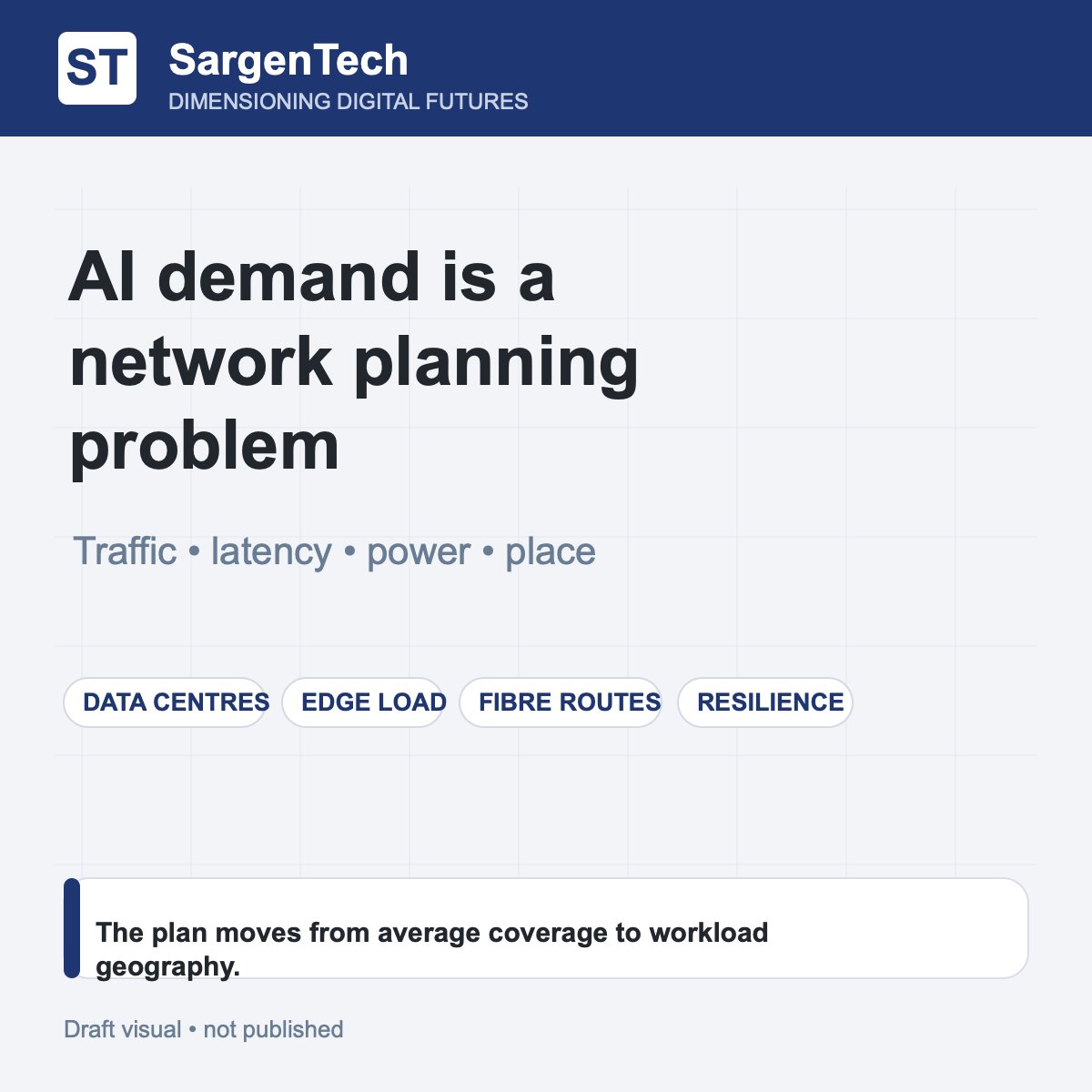
Network readiness for AI should be testable: What workloads move? Where do they terminate? Which sites need low latency? Which routes fail first? Which investments unlock the most users, places or services?
The next AI bottleneck for business and government will be physical: fibre routes, power, backhaul, data-centre location, edge capacity and latency budgets. If the map is wrong, the model won't save you.
AI demand is not just more internet traffic. It changes where data is created, where compute sits, and which links become critical. The network plan has to move from average coverage to workload geography.
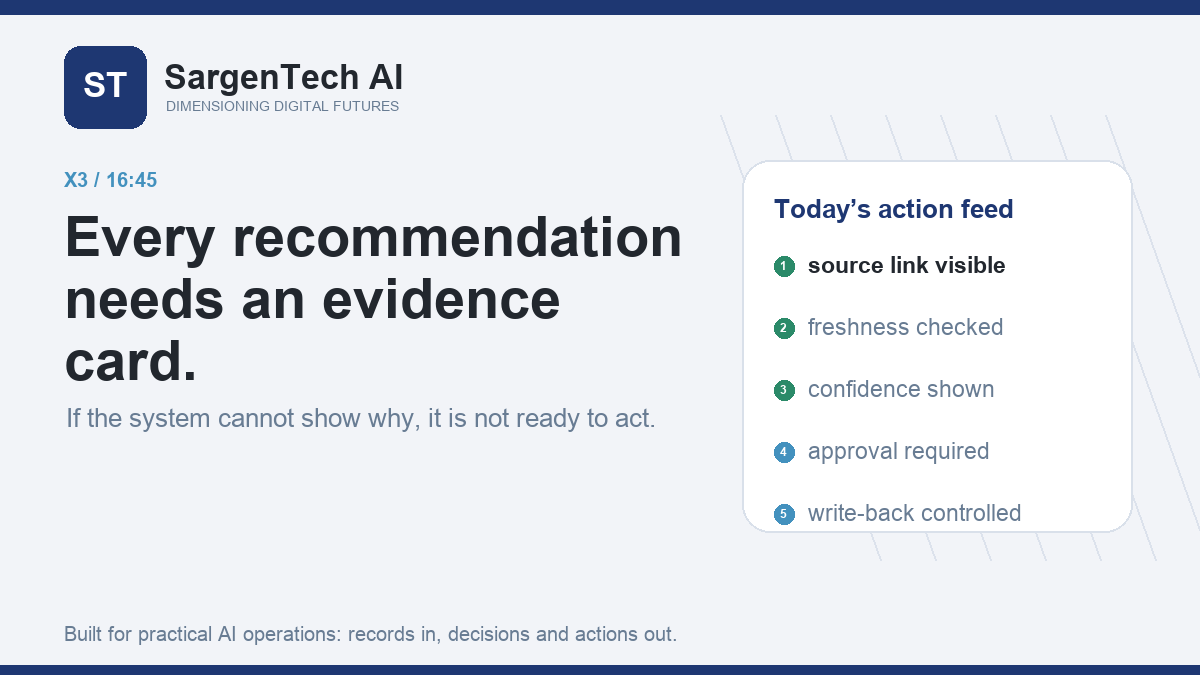
Before an AI system acts, it should show the card: source, freshness, confidence, owner, approval state and why this is next. If the evidence is hidden, the product feature is not more autonomy. It is a clearer action surface.
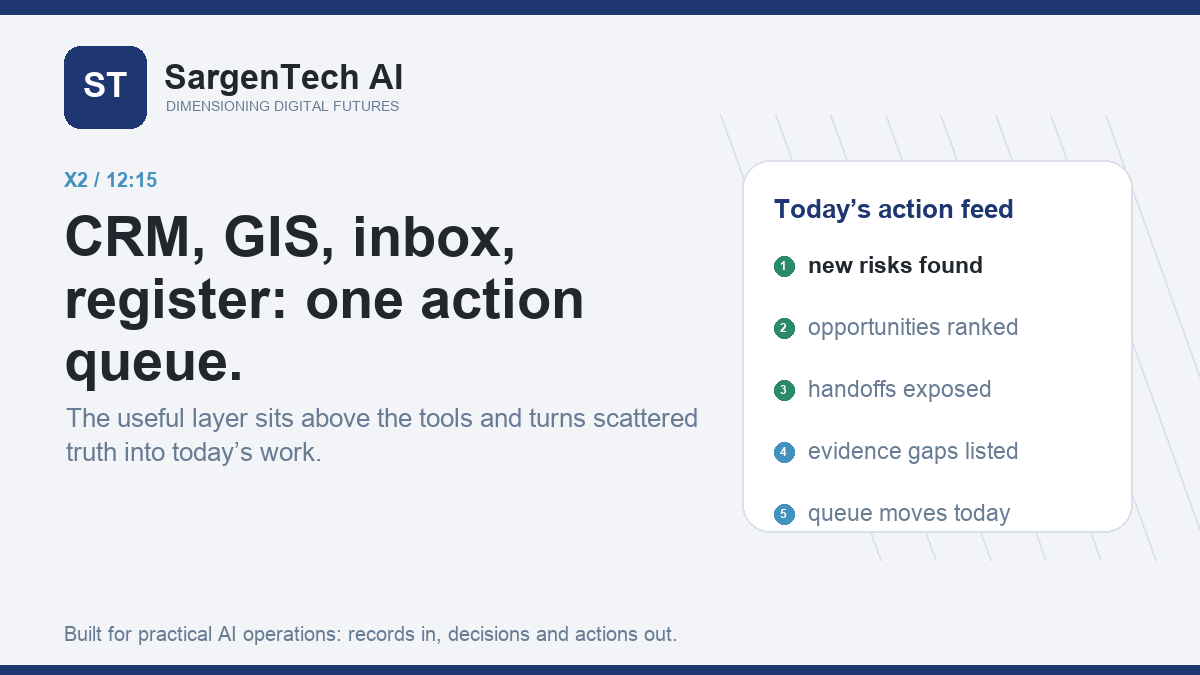
CRM has one part. GIS has another. Inbox has the handover. Project register has the deadline. The useful AI layer pulls that into today’s queue: risks, opportunities, evidence gaps and next actions — without pretending chat is the workflow.
The AI surface worth building is an action feed above the records you already have: overnight changes, stale work, missing evidence, decision owners and the next thing that can move today. Records stay where they are. Work becomes visible.
Weekly note: shipping an AI product is less about adding another feature and more about removing excuses. Clear CTA. Safe intake. Small paid offer. Defined handoff. Reviewable output. Then you can ask the market a clean question.
A useful launch test: if the first customer arrives tomorrow, can you process the request without inventing the workflow live? For Consultant Copilot, the answer is now closer to yes: intake, triage, delivery format and QA threshold are written down.
This week’s SargenTech work was mostly unglamorous: a beta landing page, an intake form blueprint, a fulfilment SOP, a QA scorecard, and first-submission handling. That is what turns a product idea into something a real buyer can try.
One test for agent readiness: can a new operator understand yesterday's run without reading the chat? If the answer is no, add better artefacts before adding more autonomy.
A useful agent system should have a boring kill switch. Pause the queue. Stop the scheduler. Revoke the token. Roll back the last change. If those steps are not written down, the workflow is still a demo.
Most teams do not need a bigger agent. They need a smaller first workflow. Pick one recurring task, write down the inputs, the decision point, the approval step, and the handback. Then automate only that.
6/6 The next buyer question will not be ‘which model?’ It will be ‘where does this run, who controls it, what data can it see, what can it do, and how do we recover when it fails?’ That is agent infrastructure.
5/6 The useful offer is not ‘AI agents’. It is a governed operating layer: workflow map, source pack, permission model, approval matrix, run ledger, recovery path, dashboard and improvement loop.
4/6 Logs are not a developer luxury. They are how operators answer: what ran, what source was used, what tool was called, what changed, what failed and who approved it. If you cannot reconstruct it, you cannot trust it.
3/6 Tool access needs risk classes. Read, search and summarise are not the same as send, publish, delete, spend or commit. The first group can move fast. The second group needs approval gates and durable records.
2/6 Context is infrastructure. If the agent relies on stale chat history, hidden assumptions or mystery source material, the workflow is not ready. A source pack should be visible, current and split by public, internal and private use.