Before scaling to thousands of GPUs, maybe I should understand one GPU really well.
I spent 30 hours pretraining a 360M LLM on a single A100—tracking MFU, not just loss. The back-of-the-envelope math actually worked.
Writeup + code below
We are hosting the Frontier AI Security Training (FAST) program! Fully funded, 5-day intensive bootcamp for cybersecurity and ML pros.
Apply by Nov 30th https://t.co/KeGtqH42OZ
(n/n) Full post, with all the figures and lab details: https://t.co/mxDjocMYAf
The exercises come from the AI Security Bootcamp (https://t.co/MkkVkSSg7x).
(1/n) I'm building my AI Security skills and writing up what I learn. Here's an overview of the first write-up:
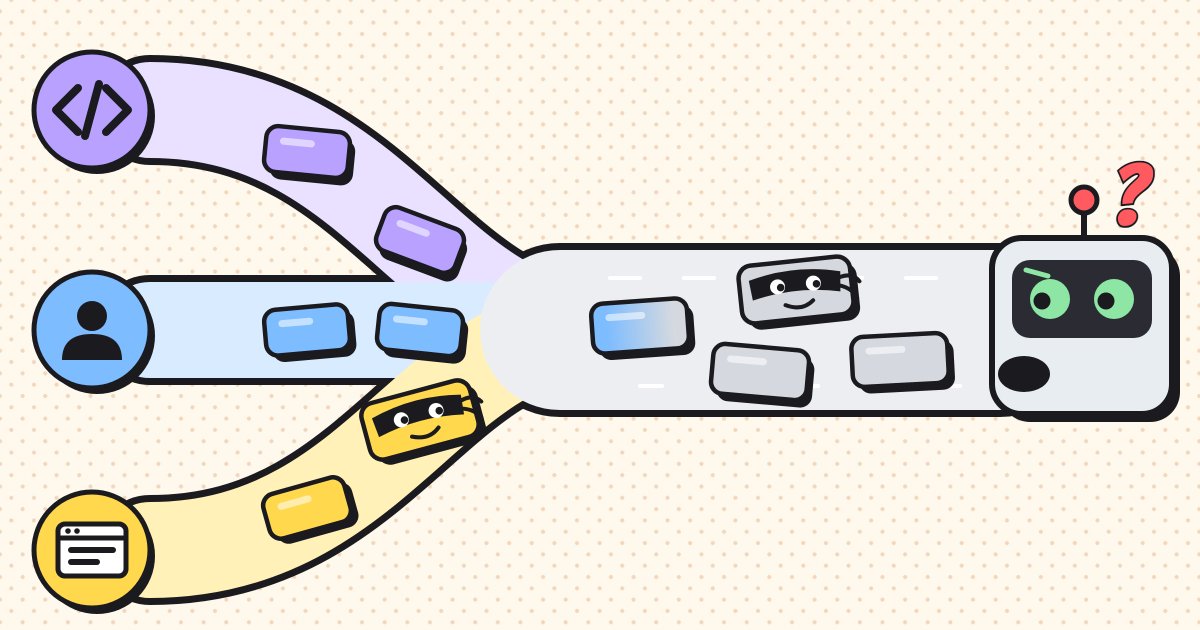
An LLM sees the system prompt, your message, tool results, and web pages as one stream of tokens. It can't always tell who wrote which part.
Here's what an attacker can do with that 🧵
(8/n) What I am going to write about later
- monitoring a coding agent that may be working against you
- jailbreaks, guardrails, and stealing models
- backdoors and undoing safety training
- adversarial inputs and watermarks
- side channels and GPU attacks
@StasBekman I read (parts of) it and found it incredibly insightful. It has the sort of tacit knowledge that's hard to get otherwise. Thank you for making it freely available!
June 9th Researcher Reciprocity License
"if you train on it, you let us generate - reverse terms of use void"
Status quo
1. We teach frontier devs with ICLR/NeurIPS papers, OSS Github contributions
2. They use it to make frontier models
3. Then ban us from exploring our ideas
We need a new license, original thinkers can't be an underclass to a tyrannical researcher fiefdom
Before scaling to thousands of GPUs, maybe I should understand one GPU really well.
I spent 30 hours pretraining a 360M LLM on a single A100—tracking MFU, not just loss. The back-of-the-envelope math actually worked.
Writeup + code below
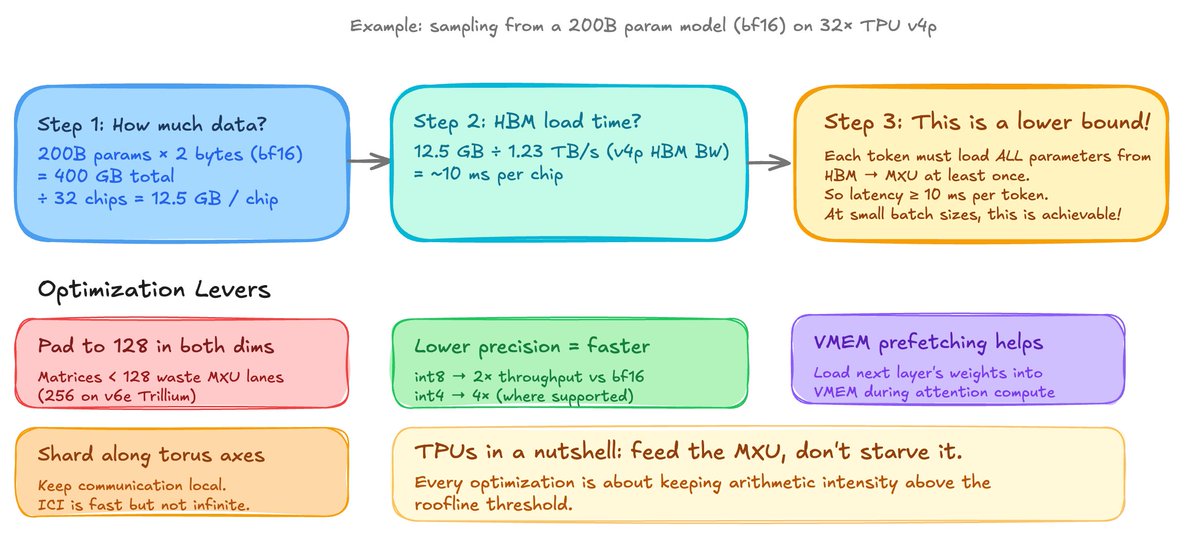
New post: A Mental Model of TPUs for Performance Engineering
Wrote this as a simple reference for myself, with visuals for each concept — the MXU, pipelining, roofline math, chip-to-superpod scaling, and TPU vs GPU networking.
https://t.co/RGLu5h2MkM
Every database makes performance tradeoffs.
These aren't accidental. They're intentional design choices made to meet application needs.
The most common:
Time / Space - Make database faster by using more ram or disk. Storing the same data in multiple formats, pre-computing aggregates, compression, etc. The classic CS tradeoff.
Durability - Improve latency by relaxing durability. Do you fsync immediately? Do you consider durability to mean, 1, 2, or N copies on disk? Do you require copies across multi-DCs?
Read / Write - Popular examples: B-trees generally make for better read perf, LSMs better write perf. Delay reads in favor of write throughput.
Startup time - Trade query response time for startup time. EG, make indexes non-persistent. Have to rebuild indexes at every restart, but writes don't need to explicitly update indexes on-disk.
Consistency - When eventual consistency is OK, simplifies and speed up query execution. Strong consistency requires more locking / blocking.
You should know your requirements for all the above and choose the dbms accordingly.