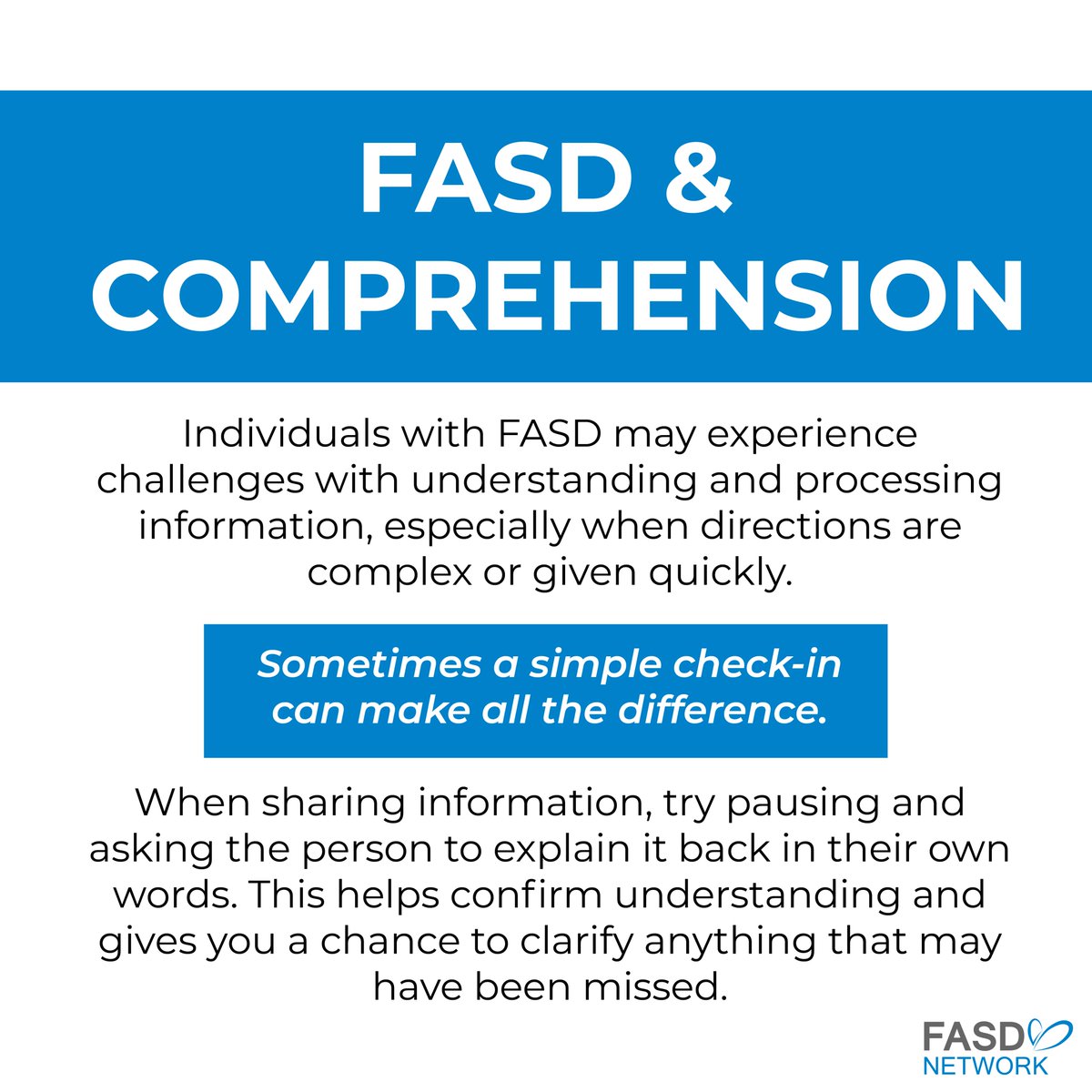
When expectations, instructions, and conversations are easy to understand, individuals can focus on what’s being asked rather than trying to interpret hidden meanings or unclear messages.
When individuals choose to access support on their own terms, they are often more open to building relationships, asking for help, and returning when they need it.
Before labeling behaviour as defiance, it’s worth asking: are we communicating in a way that is clear, supportive, and easy to understand? What looks like refusal may actually be confusion, stress, sensory overload, or difficulty processing directions.
These numbers highlight why FASD is more complex than simply calling it “100% preventable.” Prevention matters, but so does compassion, education, and meaningful support for individuals and families impacted by FASD.
The way we talk about individuals and the way we document their experiences matters. Words can shape how someone is understood, supported, and treated long after the moment has passed.
Image from https://t.co/mdNFVq27Z7
An FASD diagnosis involves looking at several areas of development and gathering information to better understand an individual’s strengths and challenges.
We would like to thank all of our funders who made the 2025/26 year possible. Through their continued support, we are able to provide services and programs that support individuals and families impacted by FASD across Saskatchewan.
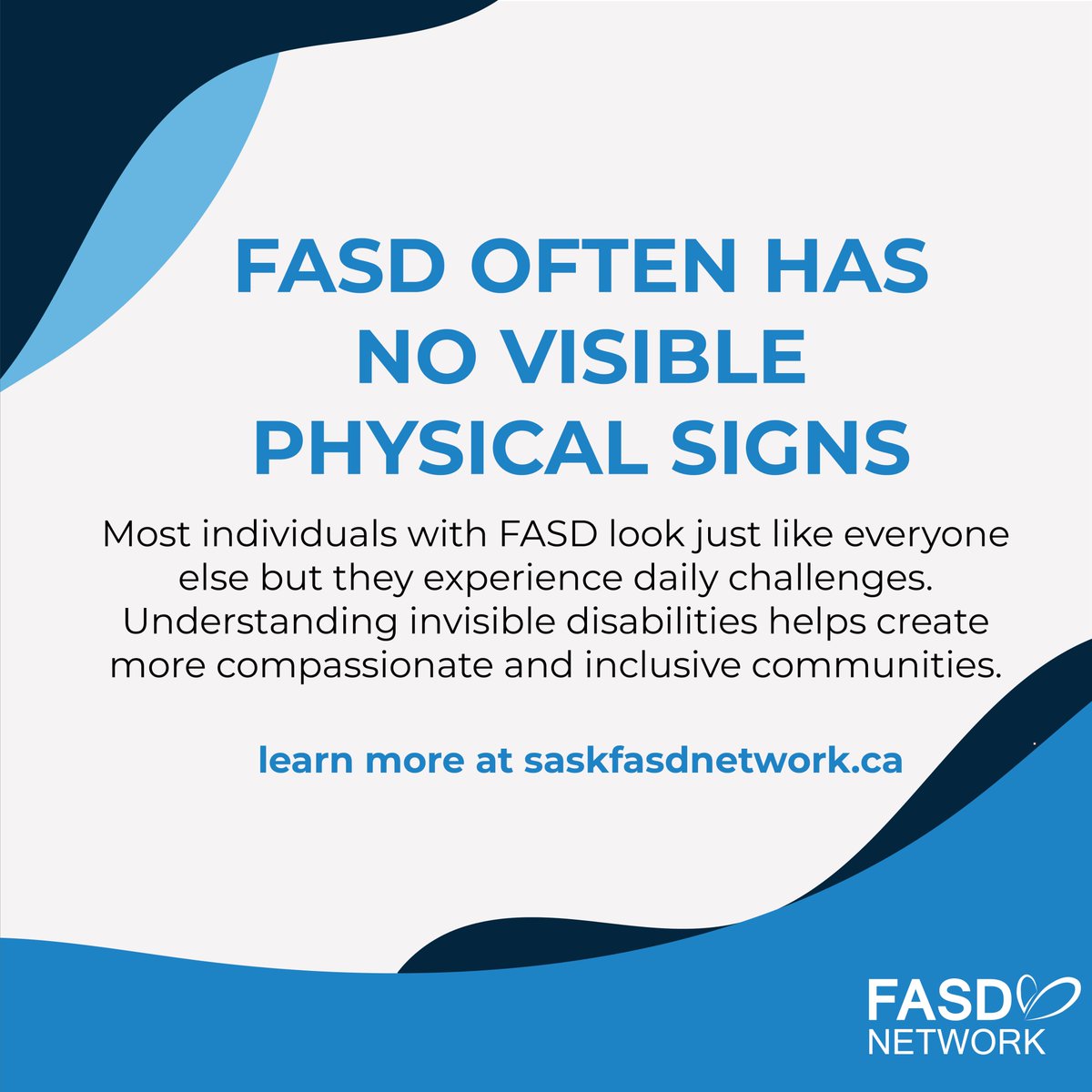
Many individuals with FASD may not show physical signs, but they experience real, daily challenges. Understanding invisible disabilities helps us build more compassionate, supportive, and inclusive communities.
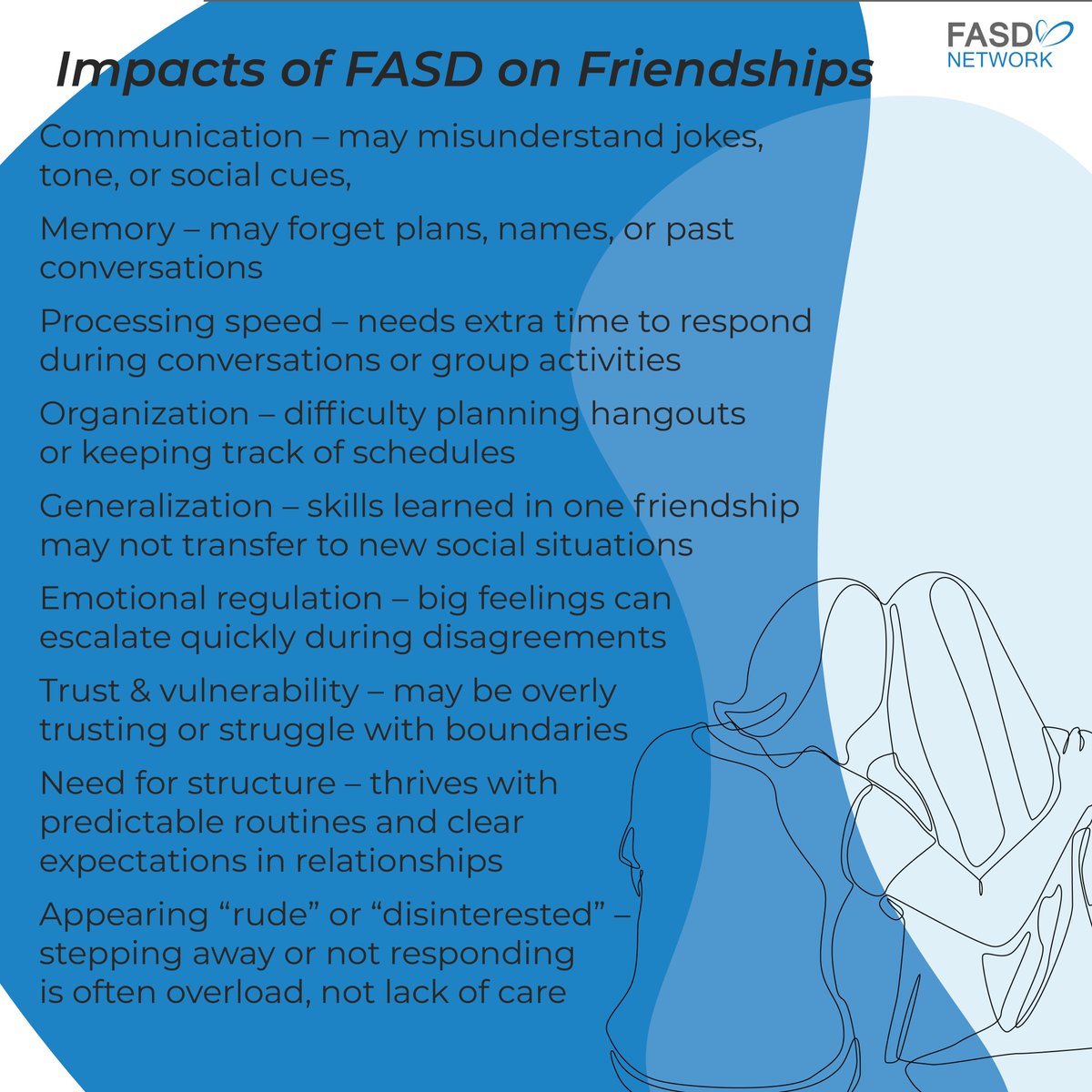
Challenges with communication, memory, processing speed, and emotional regulation can impact social connections but these differences are brain-based, not intentional. With understanding, patience, and clear expectations, meaningful and supportive friendships can grow
Monthly support meetings in Regina and Saskatoon offer a welcoming space for individuals with FASD, caregivers, and youth to connect, share, and build supportive community. Learn more at https://t.co/oRRvlfAwlL
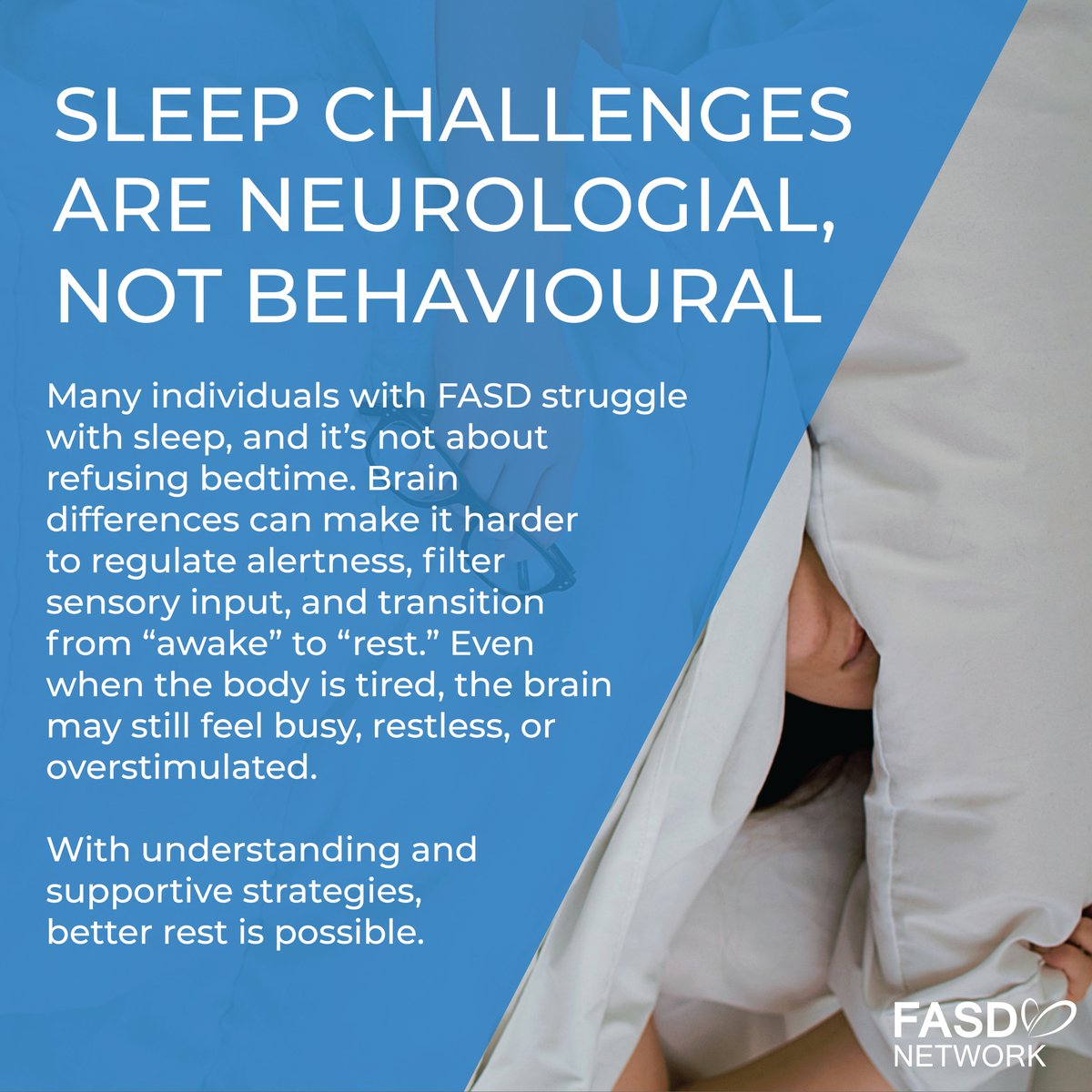
Sleep challenges in FASD are brain-based, not behavioural. Differences in how the brain regulates alertness and sensory input can make it hard to settle at night, even when someone feels tired. With understanding and supportive strategies, better rest is possible.
FASD can impact how a person communicates, processes information, and manages tasks at work but with the right supports, individuals can thrive in the workplace.
Registration Deadline Approaching!
Don’t miss your chance to attend FASD Sessions 2026 in Saskatoon.
Registration closes February 20.
Register now before it’s too late: https://t.co/5NWv2Ly8GI