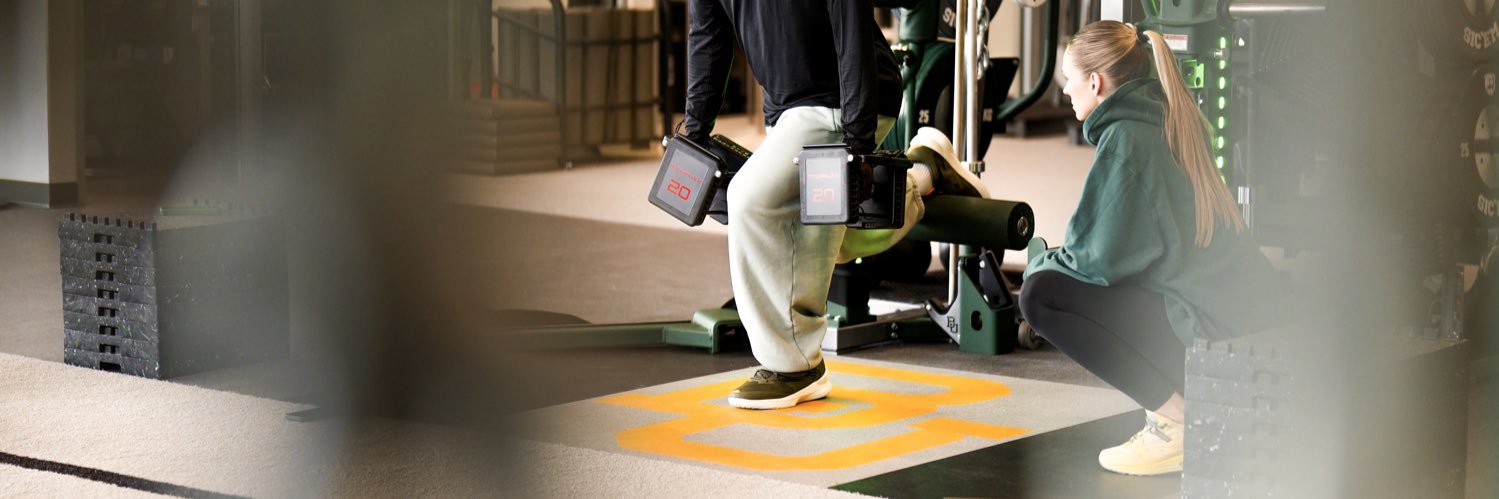
compound over time, and imbalances will be created. Instead of only thinking about correctives in the weight room, explore creating skill constraints in training environments to encourage the athlete to build the necessary skills to move efficiently in multiple directions.
When assessing imbalances in athletes, study the skill constraints that influence outputs on the court/field. An athlete who is more skilled going one direction (right or left) will default to their go to move most of the time in competitive environments. Let that repetition…
5 things to start focusing on in 2023 to improve performance (Part 1)
Aim to get most of your conditioning through sport. Don’t overdo conditioning. That time could be spent on skill work, getting more explosive, strength…
A lot of times when you have a tight muscle, the most optimal way to fix that issue is generally to get stronger/ more stable/ check your posture... Stretching shouldn’t be the one size fits all approach to tightness.
In the weight room rest/limiting reps are needed to actually produce maximal outputs each time (objective numbers like bar speed, jump height...) to drive the biggest changes (results). Maximal output does not equal trying as hard as you can each time.
A simple mistake I see athletes make when it comes to training power/ strength/ speed is not having long enough rest periods or doing too many reps in a row. Athletes like to push limits/ fight through fatigue & this is a great mentality on the court/field.....
I find that a lot of athletes that struggle to gain weight will eat enough 5 out of the 7 days and then don’t pay attention to caloric intake for 2 and think it’s impossible to gain weight. In reality if they were consistent all 7 days their weight would go up.
Core strength has very little to do with being able to see your abs and way more to do with the ability of multiple muscles to contract together to resist/create movement. How great your 8 pack looks tells me very little about how strong your core is in your sport.
Being well conditioned/fit for your sport is the ability to repeat specific movements on the court/field at near maximal output over and over for the duration of the game. Being well conditioned for your sport should not be judged based on how fast you run 1 or 2 miles....
Athletes often gravitate toward sand workouts because they operate and grade workouts based on perceived exertion (how hard it feels). In reality sand is a tool I recommend athletes use sparingly. Sand alters ground contact times, elasticity, stride length/joint angles....
A lot of athletes look to focus on recovery after they feel sore/under-recovered. The biggest thing you can do for your performance is to build and manage your capacity to prevent being in that position in the first place.
Eating enough is not eating when you “feel hungry”. Your feelings are not an objective measurement. Eating enough is getting enough calories (macros & micros) to balance your energy expenditure (calories burned during exercise, thinking, breathing, digesting, repairing tissue...)
If you play your sport 24/7 and are limited in the amount of time you can spend in the weight room weekly, you need to select exercises that will give you the highest return on investment. Stop wasting time and recovery on exercises that don’t generate big returns.
pace which usually drives a change of becoming more efficient at running at around 80% of your max speed. If you want to be efficient at running 80% that works. If the goal is to actually get faster your focus should be to get as many reps as you can at 100% output (max speed).
Trying to run fast for as long as you can is not the same as sprinting at max speed for as long as you can. The second one is quantified by actual numbers (yards/second...) Once speed declines the sprint is over. The first example you are pushing yourself at a relatively fast....