Most people know Whitechapel for Jack the Ripper.
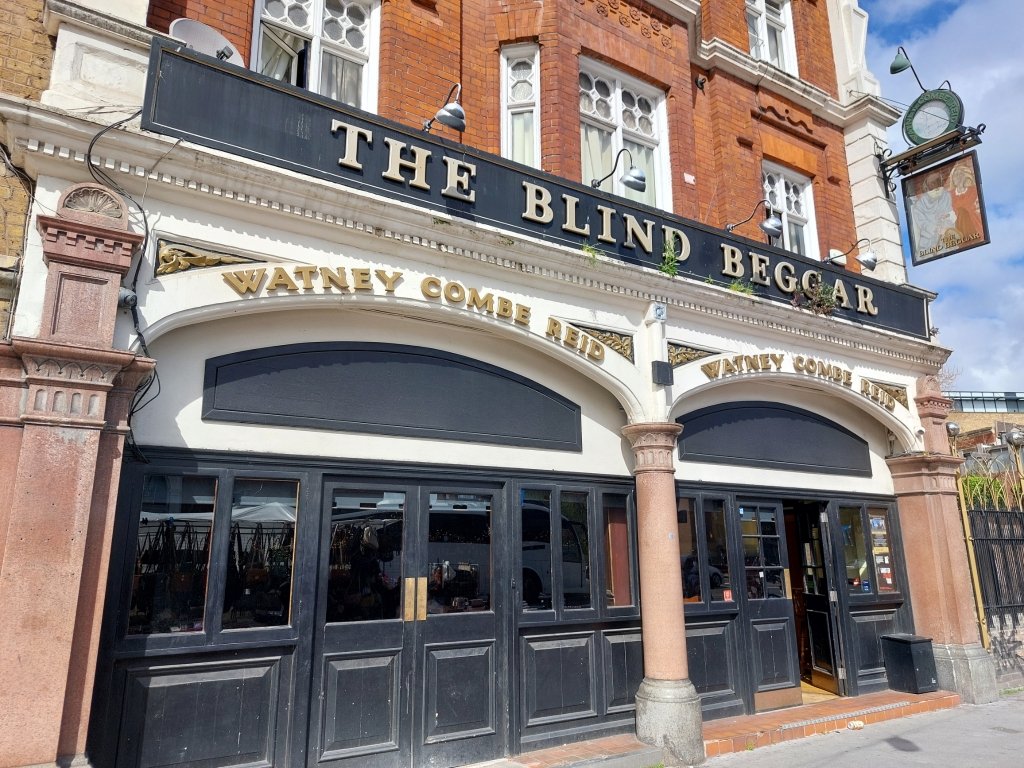
But one of London's most infamous gangland murders happened inside a pub.
On 9 March 1966, George Cornell was sitting in the Blind Beggar when Ronnie Kray walked through the door. Cornell looked up and reportedly said, "Well, look who it is."
Moments later, Ronnie pulled out a pistol and shot him in front of a packed pub.
It wasn't random. The night before, members of the Richardson Gang had been involved in a violent shootout at a nightclub, where a close friend of the Kray twins was shot. Most of the gang were arrested afterwards.
Cornell wasn't.
Ronnie knew exactly where to find him.
The murder shocked Britain. Not because gangsters were fighting, but because it happened in broad daylight, in a pub full of ordinary people. Witnesses watched it unfold just a few feet away.
The Blind Beggar is still standing today. Thousands walk past it every year, many with no idea they're passing one of the most notorious crime scenes in British history.
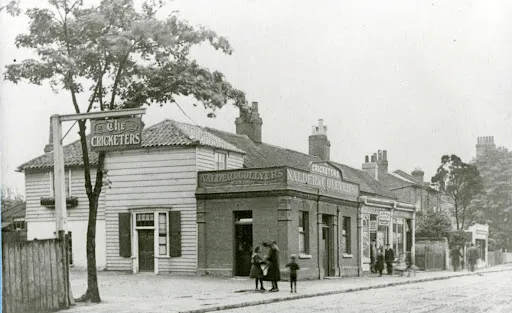
The Cricketers stood on Sutton Green long before Sutton became the busy town people know today. Back in the early 1800s, when the village still revolved around the green and its pond, this little beer house was already serving locals after a day's work. Across the road, cricket matches were played on the green years before Sutton Cricket Club was even officially formed in 1857.
By the 1850s, coachman William Featherstone was running the pub. Families lived there, grandchildren grew up in its rooms, and lodgers came and went. Like so many old British pubs, it wasn't just somewhere to grab a pint. It was part of everyday life.
Ownership changed hands over the decades. There were inheritance disputes, brewery sales, even a High Court case in the 1880s before the building was auctioned. Yet the pub carried on. Joseph Watson, a former railwayman, became landlord around 1880, and after his death his wife Eliza kept the place going for another twenty years. When she passed away, their daughter Rose and her husband took over, followed by the next generation. Three generations of one family ended up behind the same bar.
For more than 150 years, The Cricketers watched Sutton grow around it. Horses gave way to motor cars. Quiet country roads became busy streets. But the old building remained, one of the last reminders of what Sutton once looked like.
Historic England once described it as one of the few surviving buildings that reflected Sutton's early history and character.
Then, in 2016, it was removed from the listed register.
Not long afterwards, it was demolished.
Another old pub gone. Another piece of Britain's story that won't be coming back.
@DailyMail heartbreaking loss, especially for a child who needed understanding
we need safe, welcoming places
they’re more than just pubs with old signs.
@TheEconomist i've seen similar attempts in pubs
a warm backroom beats sterile efficiency
the old wood, the regulars, that vibe holds more than any policy.
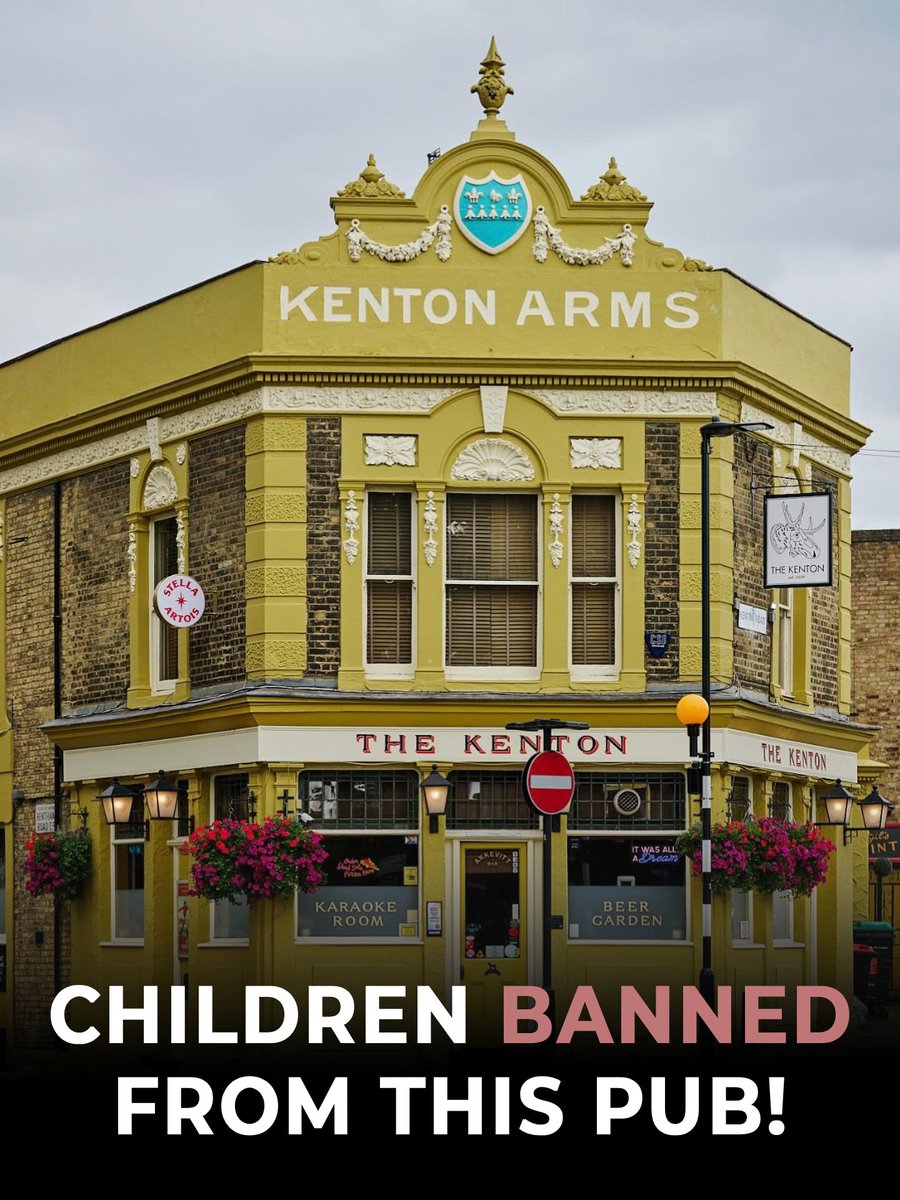
🚨 THIS PUB HAS BANNED CHILDREN... WOULD YOU SUPPORT IT? 🍺
The Kenton in Hackney has gone 18+ only after staff said unsupervised children had become a growing safety issue, with youngsters running through the pub, climbing on furniture and nearly colliding with customers and staff. The pub had already tried a 5pm curfew for children, but says the problems continued.
The owners insist it's not about children, but about creating a safe, relaxed atmosphere in a busy drinks-led pub. Even CAMRA says landlords should be free to decide what works best for their pub and community.
Would you support a child-free pub, or do you think pubs should always welcome families?
The Old Red Lion has stood on Hackbridge Green for around 300 years. Long before cars filled the roads or London crept this far south, it was already pouring ale for travellers, blacksmiths, mill workers and locals passing through.
It likely started life in 1721 as nothing more than a cottage and blacksmith's shop before becoming an inn with stables. Back then Hackbridge was mostly fields and countryside, but things were beginning to change. Leather mills lined the River Wandle, one of the world's earliest public railways ran nearby, and the Red Lion became the place where workers gathered before sunrise. The pub even opened at 6 a.m. so mill workers could grab coffee... with a splash of rum before starting the day. Different times.
Generation after generation kept the place alive. Families lived above the bar, children grew up in its rooms, landlords came and went, and the pub watched the village slowly become part of suburban London. It wasn't just somewhere to drink. Cricket matches were played next door, walking clubs made it their headquarters, and locals celebrated, argued and shared stories within its walls.
Like every old pub, it has seen its share of darker moments too. It lived through wars, changing owners, hard times and decades of change, yet somehow it never disappeared. Even after major renovations in the 1960s, enough of its character remained that it was granted Grade II listed status in 1974.
That's the thing about old pubs. They aren't just buildings. They're where communities spent centuries living ordinary lives together. Birthdays, weddings, funerals, victories, heartbreaks... all of it happened under the same roof.
The Old Red Lion is still standing today. And after three centuries, that's a story worth raising a glass to.
YOU'D SWEAR THIS WAS THE ITALIAN RIVIERA... 🏡
But it's actually Portmeirion, a one-of-a-kind village on the coast of North Wales.
Built between 1925 and 1976, it's famous for its colourful Mediterranean-style buildings, stunning estuary views, peaceful woodlands and quirky architecture. It's unlike anywhere else in Britain.
Definitely one to add to the bucket list.