For the first time we are fundamentally changing how humans can collaborate with ChatGPT since it launched two years ago.
We’re introducing canvas, a new interface for working with ChatGPT on writing and coding projects that go beyond simple chat.
Product and model features:
1/ Ask for in-line feedback. With canvas, ChatGPT can better understand the context of what you’re trying to accomplish. You can highlight specific sections to indicate exactly what you want ChatGPT to focus on. Like a copy editor or code reviewer, it can give in-line feedback and suggestions with the entire project in mind.
2/ Directly edit the model's output and select a specific area for targeted editing. You control your creative work on canvas. You can directly edit text or code.
3/ Menu of shortcuts. There’s a menu of shortcuts for you to ask ChatGPT to adjust writing length, debug your code, and quickly perform other useful actions. You can also restore previous versions of your work by using the back button in canvas.
4/ Use search with canvas for research writing! As we are moving towards the new paradigm of reasoning we are fundamentally evolving the chat interface into a more collaborative human-AI interaction. Today you can say “browse / use browsing to find XYZ on the internet and write a report in canvas”
@AuroreFass and I are pleased to invite (self-)nominations for @USENIXSecurity '25 Artifact Evaluation Committee . This year's "Open Science" policy requires heavy support from our community. Please fill this form by October 11 to express interest: https://t.co/6CWOpOiMF1 1/2
Have you been a victim of a pig-butchering scam? If so, we want to hear from you in a paid interview! Take this 2 min survey to see if you qualify: https://t.co/5gX4uDGzv0
@zubair_shafiq@piraxtor@thorstenholz
RT appreciated!
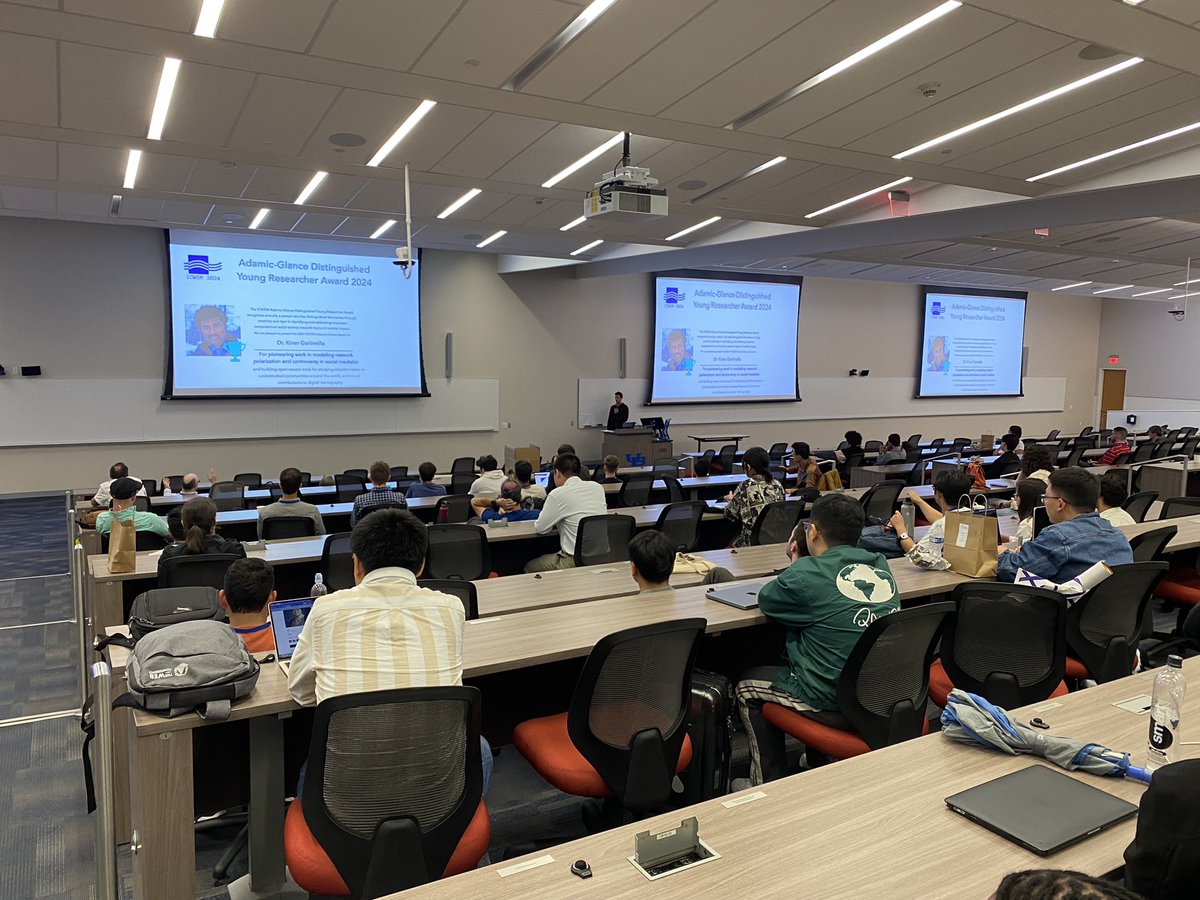
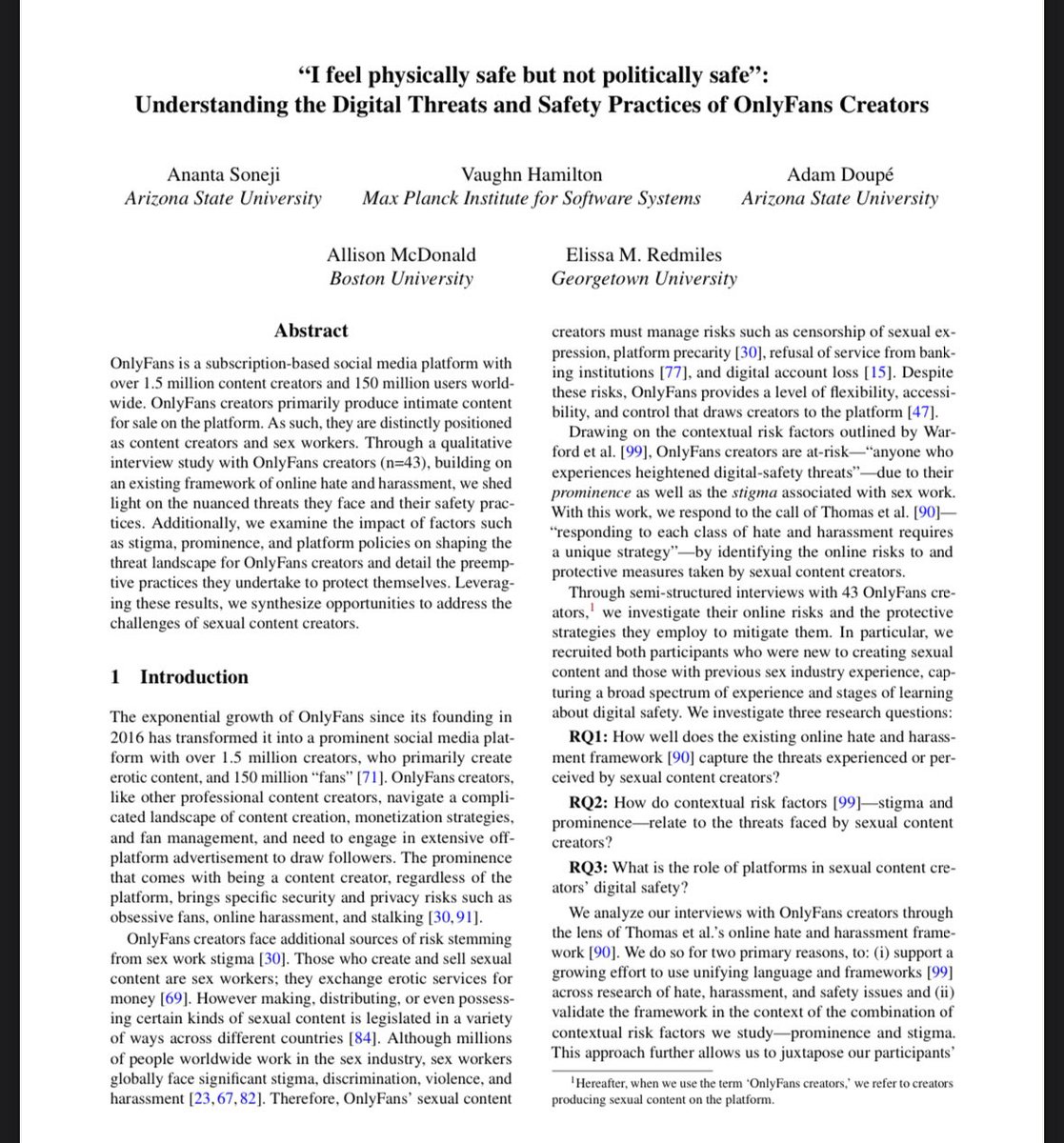
Super excited to be giving the *very first talk* of @USENIXSecurity’24 (Track 1). Our work (w/ @Vaughncendiary, @adamdoupe, @allismcdon, & @eredmil1) investigates the online risks of OnlyFans creators as they navigate the complex landscape of sexually explicit content creation!
recently read one of the most interesting LLM papers i've ever read, the story goes something like this
> dutch PhD student/researcher Eline Visser lives on remote island in Indonesia for several years
> learns the Kalamang language, an oral language with only 100 native speakers
> she writes "The Grammar of Kalamang", a textbook on how to write in Kalamang
> since Kalamang is a spoken language only, TGOK is the only text on earth written in it
> so, there is no internet data in written Kalamang
> so, language models haven't read any Kalamang during training
> in the paper, researchers explore how to teach a language model a new language from a single book
> they evaluate various types of fine-tuning and prompting
> much to my chagrin, prompting wins (and it's not close)
> larger models & longer context windows help a lot
by the way, seems like humans still win at this task (for now)
This is scary 🙂 If you can't trust the voice, or the Caller ID (also definitely spoofed by the scammer), seems like proper mitigation (from the user's end) will only come from asking the caller a series of questions for verification - which most general users would not be aware of/be too flustered to remember in a crunch situation.