Who am I, and what will you get from following?
Software Engineer at JPMorgan Chase.
Full picture below, a snapshot of where I'm at right now. Keep scrolling.
RFC 10008 finalized June 15: a new HTTP method called QUERY. It combines four properties no generic HTTP method has managed together before: safe, idempotent, cacheable, and body-carrying. GET has three of those but no defined body semantics. POST carries a body but isn’t guaranteed to be safe or idempotent, so caches and proxies can’t trust it.
That gap is why teams have spent a decade either cramming search filters into GET URLs, hitting undocumented length limits and leaking sensitive params into access logs, or just POSTing read-only queries and losing caching and safe auto-retries entirely.
QUERY closes it. Send the same JSON or SQL body you’d send to POST /search, except the method now honestly says this is a read, so intermediaries can cache it and retry it safely on a dropped connection.
Fits: complex search and filter endpoints, GraphQL and JSON-RPC style reads, analytics APIs with large aggregation payloads, queries too sensitive for a URL.
Not ready yet: browsers can’t send a cacheable QUERY from fetch(), Spring support is still an open draft PR, and no major CDN has announced edge caching for it.
Every MCP server today pins you to one instance: connect, get a session ID, stay pinned for the whole conversation. Works fine, until you put it behind a normal load balancer.
That's changing. The next MCP spec, RC locked May 21 and finalizing July 28, removes the session entirely. No handshake, no MCP-Session-ID, every request carries what a server needs to answer it, on its own.
Effect: any instance can handle any request. Sticky sessions, a shared session store, deep packet inspection at the gateway, all replaceable with a plain round-robin load balancer. New MCP-Method and MCP-Name headers let infrastructure route by reading two headers instead of parsing the JSON-RPC body.
State that actually needs to persist, like which repo an agent is working in, doesn't vanish, it just stops hiding. The server hands back an explicit identifier, and the model carries it forward itself.
Nothing breaks on July 28. Three older features move into deprecation with a 12-month runway before removal.
You can go ahead with Nothing Phone 3, if you prioritise software experience.
- Camera is also good, and if you want to experiment, you can use the Nothing Playground and Community.
- Battery Life is Decent, goes through a day.
- Performance with SD 8sG4 is nicely optimised with the UI, didn't experience any lags or glitches whatsoever so far!
@_itdepends Reliability is the hard part everyone's underestimating.
Orchestrating tools was mostly a demo problem, coordinating them safely at scale under partial failures is an entirely different engineering discipline, closer to distributed systems than to prompting.
This ColorOS move might actually be the best path for meaningful progress.
Maintaining three skins that were already 90% the same was just burning engineering hours on cosmetics. One unified platform lets them focus on real improvements — battery, smoothness, update cadence — instead of cosmetic forks.
The “distinct identity” argument was mostly marketing at this point.
Execution will decide if it’s a win!
Small Language Models rarely trend, but they're quietly doing most of the work inside production AI agents.
Generally under 10B parameters, they win on cost: on-device inference, lower latency, a fraction of the energy per call, and cheap fine-tuning on a single consumer GPU for narrow tasks.
A 2025 NVIDIA paper made the case directly: most agentic subtasks, classification, extraction, tool routing, don't need frontier-level reasoning. Running them on an LLM is often paying for capability you never use.
The tradeoff: SLMs give up broad knowledge and strong multi-step reasoning outside their trained scope. Precise tools, not general ones.
Worth knowing: Phi-4 (Microsoft), Gemma 3 (Google, down to 270M params), Qwen3 small variants (Alibaba), Llama 3.2 1B/3B (Meta), SmolLM3 (Hugging Face, open), Granite 4.0 Nano (IBM).
Where this is heading: SLMs handle volume, LLMs handle hard cases, a routing layer decides which is which. Not SLM versus LLM. SLM, then LLM, only when it's earned.
@ankushdharkar@Google Small thing but my favorite change is the home-screen clock, feels a lot more open and clean since Material design took over, used to feel more cramped before.
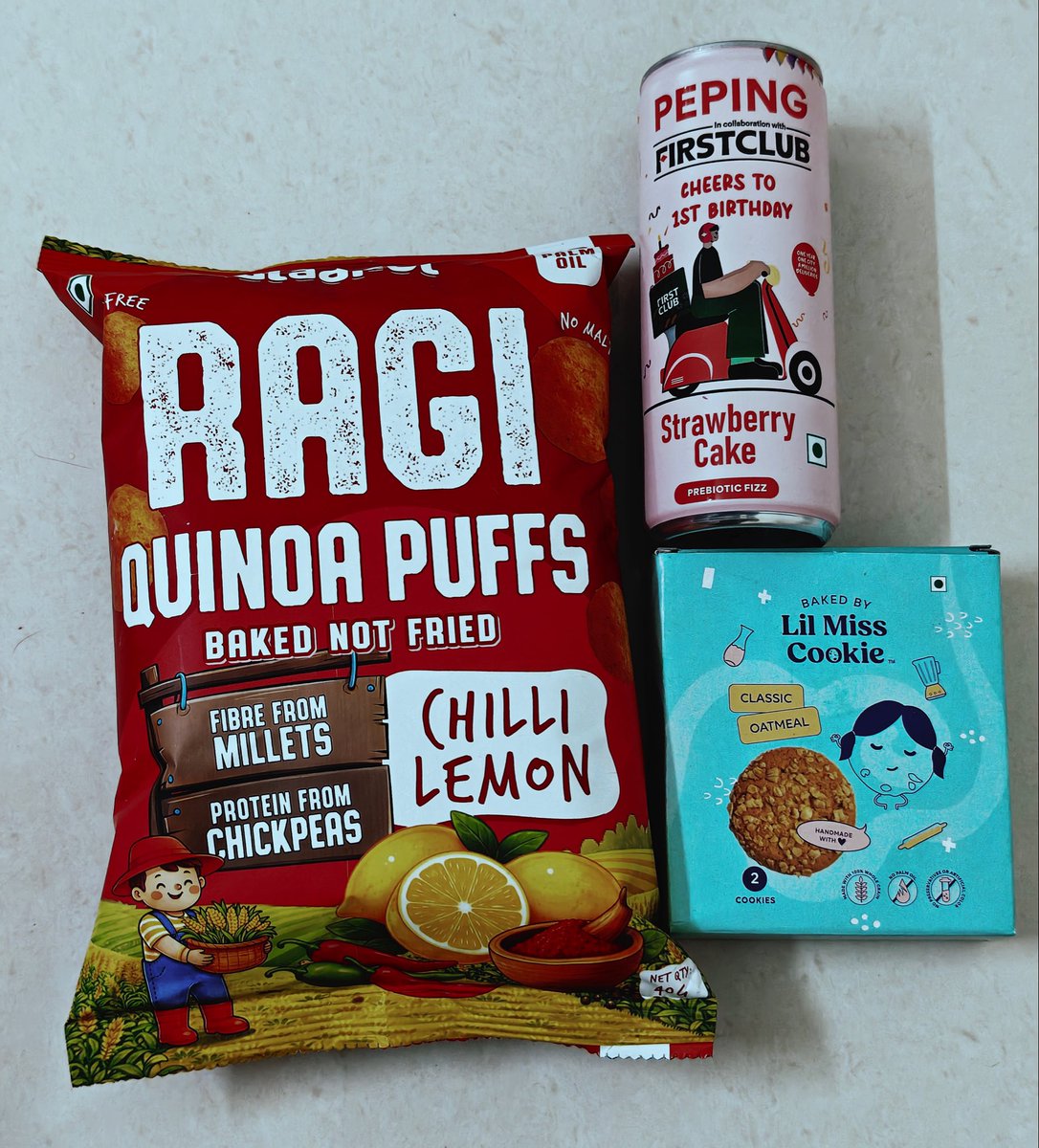
@FirstClubIndia just turned one and sent goodies to celebrate. Nice gesture, but what's kept me around is the service itself, consistently solid since day one in Bangalore.
Happy to be part of this @ayyappsraj !