After years of researching and reporting on conflict, I’ve launched a personal YouTube channel alongside my professional work: Nigeria Conflict Monitor (NCM).
Documentaries, analyses and interviews exploring Nigeria’s conflicts - and the stories behind the headlines.
Watch the trailer and subscribe: https://t.co/ibjnlGMX4t
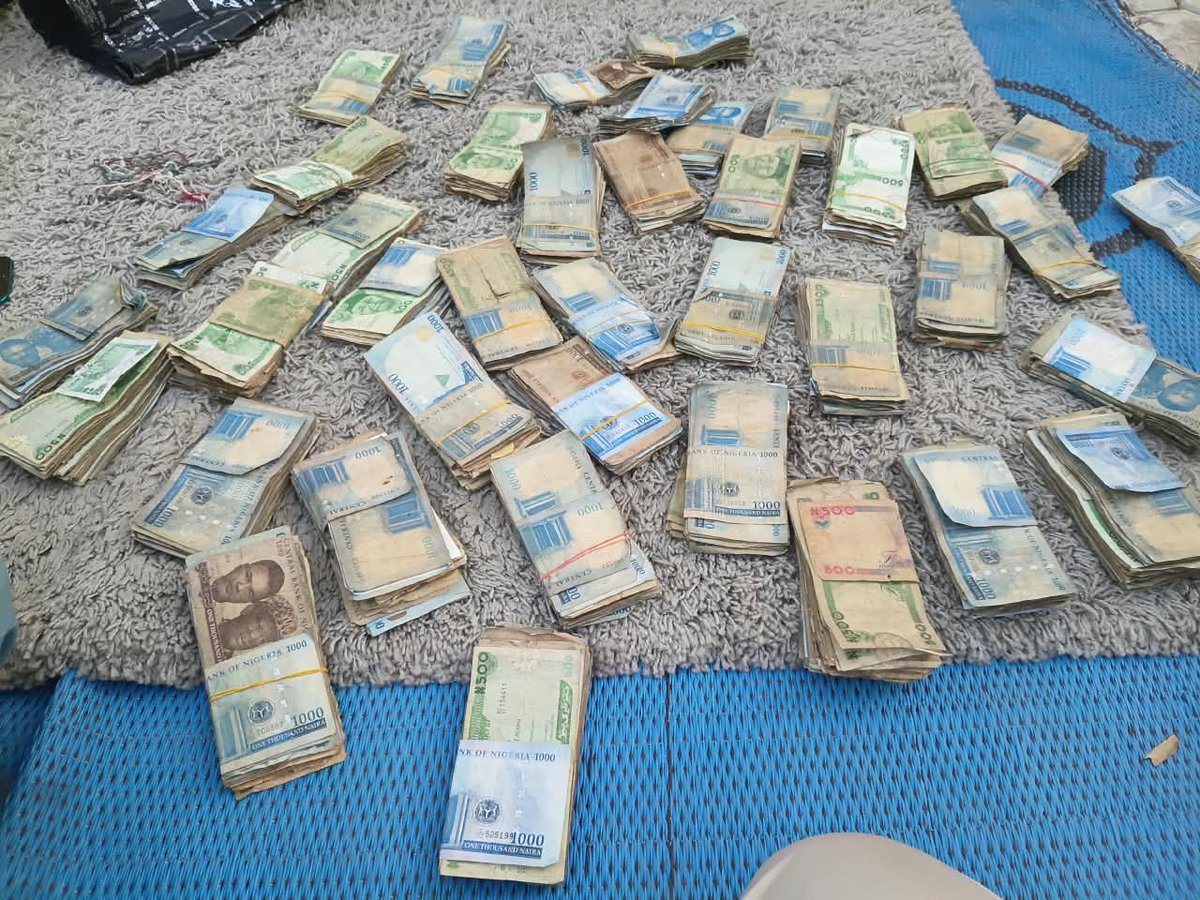
Relatives in Bagega, Zamfara state, count ₦2 million in ransom before delivering it to Gwaska to secure the release of hostages.
Often, families cannot afford the ransom and are forced to sell their possessions, including farmland and food supplies - a stark reminder of what families endure amid insecurity.
@CeeudeeyS He didn’t know of their arrival. When they finally told him, they also disclosed they’d been in contact with IS. That was when the pressure to pledge allegiance started. Even when they left, he didn’t know because they were smuggled out.
@Anoneme2 Thank you. You’re right, but the focus wasn’t on him but the movement. Even at that, we could go back to the early ‘90s when he started but not everything could fit into such a limited time. More can be explored for a possible follow up.
Shekau wanted to control everything. How did he miss what was happening within his own ranks?
Money, fuel, weapons, even the women and girls his group enslaved, were subject to his micromanagement. Yet his closest commanders were building relationships that would help them establish a rival organisation.
For more than a month, they hosted four Arab visitors inside territory under his control without his knowledge. The visitors shared contacts within Islamic State in the Middle East with the commanders.
How did this escape Shekau’s attention?
Could he have prevented the split? Was Islamic State neutral in the dispute? And why did it ultimately back his rivals?
In my NCM explainer, I examine the beliefs, leadership struggles and decisions behind the division that reshaped the insurgency.
Boko Haram, JAS and ISWAP: What’s the Difference?
Watch full video here: https://t.co/LZEZVvJwwb
Before the suicide bombings. Before Chibok. Mohammed Yusuf was already building a movement for armed struggle.
What shaped it, and why did it split?
Watch NCM’s first explainer: Boko Haram, JAS and ISWAP: What’s the Difference? https://t.co/r1HBjjLFJ7
What did Mohammed Yusuf believe he was building?
An account written by two of his sons offers an answer from inside the movement. It describes a worldview in which preaching and mobilisation were steps towards armed struggle.
What shaped that worldview? And how does it help explain the insurgency that later divided into JAS and ISWAP?
This excerpt previews NCM’s first explainer:
Boko Haram, JAS and ISWAP: What’s the Difference?
Out Friday, 20 November, at 6 p.m. WAT.
Watch the preview and subscribe: https://t.co/94cdI8A4iB
It’s been bliss listening to details of the internal crises within Sadiku’s camp and the movie-like fallout with Dogo Gide.
So, Sadiku did have a deal with the Nigerian government after the Abuja-Kaduna train attack. The windfall of that attack, the deal with the government, Sadiku’s Shekau-like behaviours… the Sambisa fighters had enough reasons to oppose him.
Would there have been issues if Shekau had not been killed, which was the catalyst for so many fighters leaving Sambisa to Kaduna and Niger states. The Sambisa fighters clearly didn’t see Sadiku as a true leader, especially given his background (wealthy trader in Sambisa, rather than a fighter).
The icing on the cake was how Dogo Gide, a bandit, could force a jihadi organisation out of its location, practically putting it on the run. Listening to the power, influence and reach of Gide is goldmine.
It was obvious Sadiku could not stay in Niger or Kaduna, as Gide’s control extends across these states and Zamfara. According to a former JAS fighter who had been in his camp, “you can’t tell how many Kachallas he has, from Kaduna, Niger to Zamfara”.
Also interesting is Gide’s reported pledge of allegiance to Bakura and his abidance to the ceasefire between JAS and the government.
There’s a lot going on that we have no clue about.
Kudos to the security agencies for this. While the military continues its kinetic offensives, there should be room for members of NSAGs willing to lay down their arms. This is not an alien practice.
However, civilian authorities also need to step in and complement the efforts of our troops by delivering on their campaign objectives. Those surrendering should not be left without alternative sources of livelihood. Otherwise, they go back to their old ways.
JOINT TASK FORCE OPERATION SAVANNAH SHIELD CLARIFIES CIRCULATING VIDEO OF TROOPS' ENGAGEMENT WITH BANDITS IN KWARA STATE
The Headquarters of the Joint Task Force OPERATION SAVANNAH SHIELD (JTF OPSS) has observed the circulation of a video on social media platforms purportedly depicting an interaction between troops of the Armed Forces of Nigeria, personnel of the Department of the State Services and armed bandits in Kwara State. The video has generated misleading narratives and interpretations suggesting an inappropriate relationship between the troops and the armed elements.
The Headquarters JTF OPSS wishes to clarify that the engagement captured in the video was a deliberate security initiative involving troops and armed bandits who had indicated their willingness to surrender their weapons and facilitate the release of kidnapped victims. It was an outcome of successful military strangulation operations that left no room for the terrorists aside surrender or neutralisation. The video in circulation captures part of an engagement undertaken in this light.
During the engagement, a total of 12 AK-47 rifles were recovered, while 10 kidnapped victims were released. The development represents a significant outcome of the non-kinetic approach being employed alongside sustained military operations to address security challenges and encourage the voluntary surrender of armed elements. This outcome was earlier reported for the awareness of Nigerians via https://t.co/dpfgyv6RuO
Contrary to the misleading interpretations accompanying the video, the interaction was neither an act of fraternisation nor an abandonment of the military's constitutional responsibilities. Rather, it was a calculated engagement aimed at achieving tangible security outcomes, particularly the recovery of weapons and the safe release of innocent citizens held hostage.
JTF OPSS remains committed to employing a comprehensive approach that combines robust kinetic operations with intelligence-led engagements and other non-kinetic measures to address terrorism, banditry and other security threats. Such initiatives are intended to provide opportunities for those willing to surrender to do so. Any individual or group that chooses to surrender will be subjected to the necessary security screening and applicable legal procedures. It should be noted that surrendered combatants are not to be harmed at the point of surrender in line with law of armed conflict, international best practices and operational rules of engagement. In the same vein, acceptance of surrender is an acceptable outcome of conflict resolution.
The Headquarters JTF OPSS wishes to reassure Nigerians that the Armed Forces remain resolute, professional and focused on their constitutional mandate of protecting the territorial integrity of the country and safeguarding lives and property. Members of the public are urged to disregard misleading interpretations of the circulating video and avoid sharing unverified narratives capable of undermining ongoing security efforts. Operation SAVANNAH SHIELD remains committed to keeping Nigerians informed of developments relating to military operations through its official communication channels.
IBRAHIM SHITTU
Lieutenant Colonel
Acting Deputy Director Army Public Relations
9 Division/Operation SAVANNAH SHIELD
17 November 2026
Who are the armed groups? Where does their money come from? Why do warnings sometimes fail to prevent attacks?
These are some of the questions NCM will explore, connecting evidence with the experiences of people living through conflict.
After years of researching and reporting on conflict, I’ve launched a personal YouTube channel alongside my professional work: Nigeria Conflict Monitor (NCM).
Documentaries, analyses and interviews exploring Nigeria’s conflicts - and the stories behind the headlines.
Watch the trailer and subscribe: https://t.co/ibjnlGMX4t
Presidency via NSA (16 Nov): terror leaders still at large include ISWAP's Ba Shuwa, IS-Sahel's Abdullahi Oro, Bakura Doro and JAS's Sadiku in the North Central.
IPSPR's threat assessment flags a reported JAS cell in Shiroro, Niger State, that could edge towards the FCT. 🚔🇳🇬
I would recommend communities they can take this message to. The only problem is that they would not listen. They would pretend to not know that bandit leaders have warned communities to not participate in the electoral processes.
They would also pretend not to be aware that ISSP is courting bandits and making progress.
At the end, all they ever want is access to power. After that, the people are on their own.
“Please Do Not Abandon Us!” – Tinubu Campaign Begs Northerners
The reality of the “Northern Nigeria Storm” is now beginning to hit the Tinubu campaign. Watch Tinubu’s campaign spokesperson, Segun Showunmi, passionately appeal to Northern voters, pleading with them not to abandon President Tinubu.
Bandits draw their power from the weapons they use against civilians. Confronted by soldiers, their vulnerability becomes apparent.
On Wednesday, 11 November, Muhammad Gwaska, the feared bandit leader who controls lucrative mining sites in Anka and forces communities to mine and farm for him, narrowly escaped death.
He was leading fighters to attack security forces in Gwashi, Bukkuyum Local Government Area of Zamfara State. Along the way, he stopped at Tubuki and ordered residents to leave before his return because they had refused to work on his farm.
At Gwashi, soldiers were waiting in ambush, possibly acting on intelligence. Sixteen bandits were reportedly killed and others wounded. Gwaska sustained a gunshot wound to the leg, while another bandit leader Bello “Oris,” nicknamed after his preferred cigarette, fainted. Oris had recently ordered the beating of Dankampani’s village head, leaving him hospitalised.
A resident of a nearby community recounted how Gwaska frantically called his logistics suppliers for medicines, including blood tonic, saying he was losing too much blood and feared he might die.
Afterwards, Gwaska accused neighbouring communities of informing the military about his movements. His threats forced community leaders to visit him and explain themselves.
The encounter exposes the limits of power built on terrorising civilians. The government needs a sustained strategy to deny armed groups forest sanctuaries and protect communities from their retaliation.
Last week, bandit leader Kachalla Nasanda laid siege to Wuya town in Zamfara, demanding N40m from the community for their alleged role in the arrest and harassment of his boys.
The siege was so severe that no one could enter or leave Wuya. The bandits were not interested in abducting anyone during the blockade; they intended to shoot anyone who defied it.
Mind you, there is a military base in Wuya.
By Sunday, the community had raised and paid N30 million, promising to pay the balance within two weeks.
Huge congratulations to @flyairpeace. Next is to improve your customer service, especially with Nigerians. There’s no reason why Air Peace cannot be among Africa’s biggest airlines in the nearest future.
BIG WIN FOR NIGERIA!
Yesterday, history was made in Lagos. Air Peace and Ethiopian Airlines — once on opposite sides over Nigeria Air — signed a bilateral interline agreement.
The two airlines signed a historic interline agreement — one ticket, through-checked baggage, seamless connection from Nigeria to the world.
Four of the biggest carriers in the world, namely: Etihad Airlines, Emirates Airlines, Turkish Airlines, and Qatar Airways, have all signed interline partnerships with Air Peace this year! Today, Ethiopian Airlines @flyethiopian , the giants of Africa aviation has joined. This one is more than interline. It is African, anchored by the biggest African carrier, Ethiopian and the fastest growing airline in Africa, Air Peace, with both complementing each other for the progress of Africa’s aviation.
This is what happens when a government believes in its own. Thank you to President Bola Ahmed Tinubu @officialABAT for rejecting the out-dated idea of a national carrier, a drain pipe to any economy, and choosing, instead, to strengthen existing indigenous Nigerian airlines. Your foresight is paying dividends in the aviation sector. We commend the Minister of Aviation and Aerospace Development, Festus Keyamo, SAN @fkeyamo, for implementing the reforms of the administration in the aviation sector diligently.
Today, the world is coming to partner with us, not to replace us.
When Nigeria believes in Nigeria, the world respects us.
There’s no way the president, those close to him, his cabinet members or handlers would claim to be unaware of what’s happening.
Weaponising the judiciary is a shame to those doing it and those allowing themselves to be used.
Why hasn’t the government investigated the allegations in @fijnigeria’s report?
You can’t claim to fight corruption while turning a blind eye when those close to you abuse their powers by deploying the judiciary against journalists.
Adieu my dear friend, Mahamady Togola. You were one of the greats. Your love for your family, country and humanity was beyond compare.
You were ome of the cornerstones of the Sahel/LCBC Think Tank on Security, and you fondly called me 'Lithium Battery.'
All the work we did for Mali, Burkina, Niger, and Nigeria would not have been possible without you. I remeber fondly, our long walks in Oslo and the workshop at yhe Nobel Center, where you came up with the concept of AES++.
You were a dedicated father and peacemaker. Certainly the world is a little darker today because of your passing.
Mali lost a son, humanity lost a most human-being, Boureima lost a brother, and I lost a very very dear friend.
Until when next we meet, my dear brother, we shall continue your legacy of *Safer. Stronger. Together*