Using an immersive VR path integration task, the authors found that paths with a cross, compared to no cross, led to higher pointing variability to the starting location.
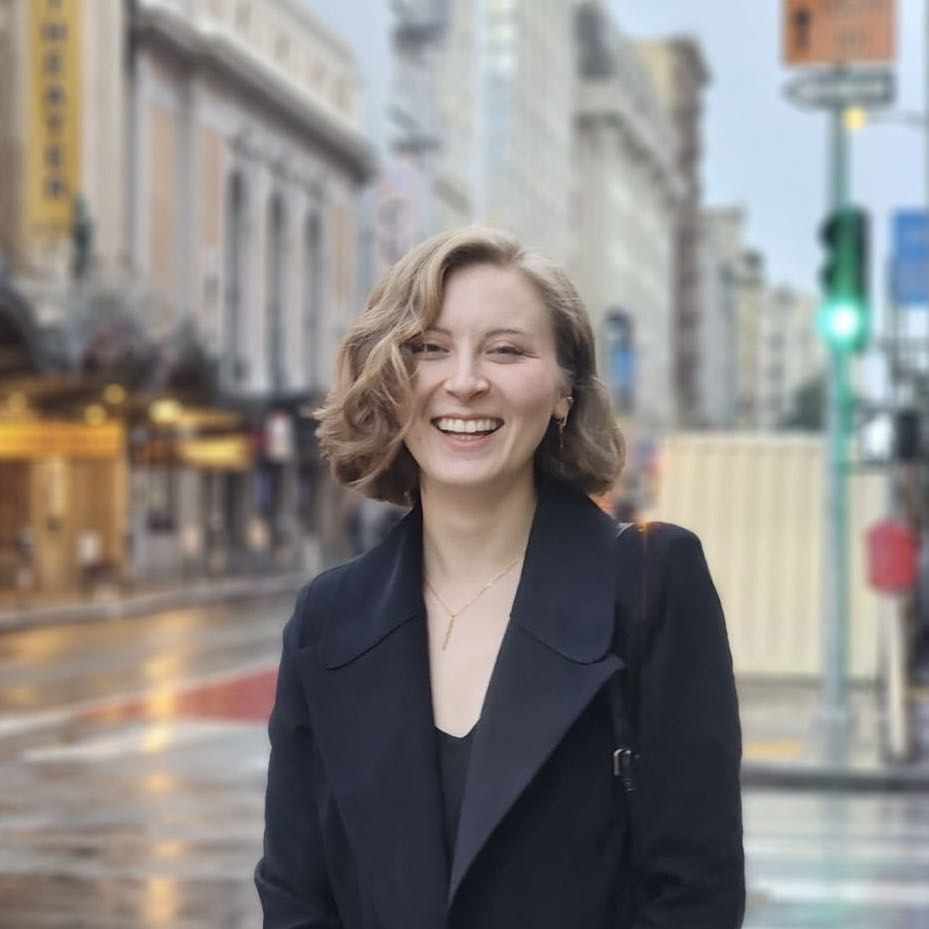
We are excited to share that our lab manager, Sara Harader, recently published a paper based on research she conducted as an undergraduate in Dr. Arne Ekstrom’s lab at the University of Arizona.
Read more here: https://t.co/R97f7MNhox
Congratulations to Dr. Weisberg on receiving 2026 Early Career Award from the Psychonomic Society! We're excited to celebrate this well deserved recognition of his significant contributions to the field.
@Psychonomic_Soc
We are excited to share that another SCANN Lab member, Ece Yüksel, has successfully defended her dissertation! Congratulations on this milestone and thank you for your many contributions to SCANN Lab.
We are excited to share that Ashish Sahoo has successfully completed his dissertation defense. He has also been awarded with the UF Hipergator Early Career award and the Gerber Research award for his outstanding work.
We congratulate him on this significant achievement!
We are thrilled to share that SCANN Lab member @ashnkrause has published her work on place attachment influencing meaning in life!
https://t.co/0RGJPnbwg7
The SCANN Lab is officially extramurally funded at UTA! Dr. Weisberg and Dr. Hunter Ball, received a grant from the Alliance of Hispanic Serving Research Universities to study GPS-supported navigation and support leadership development through the ASCENDR Leadership Program.
We recently wrote on these ideas too! In a chapter published in the Encyclopedia of the Human Brain, we dive into how these differences emerge from navigation strategies and underlying cognitive systems: https://t.co/XGwhZTb1mz
Why do some people never get lost while others rely on GPS?
A new review, written by Hugo Spiers and @Emre_Yavuz_21 https://t.co/SB6yzclbmx
argues that navigation ability is shaped by both fixed factors (age, genetics) and modifiable ones (sleep, exercise, experience).
Zoe Cronin presented her research proposal at the Cognitive Neuroscience Society (CNS) annual meeting.
Here’s the link to her poster: https://t.co/bptSUIUnsn
Individuals with aphantasia have difficulty forming mental imagery, and with her future research, Zoe aims to develop more inclusive methods for teaching complex concepts to students.
Zoe Cronin, our first year PhD student at SCANN lab was recently interviewed by Dallas Morning News where she discusses a condition known as aphantasia and its relationship to spatial cognition.
Read more on this here: https://t.co/6OsbDeBDhW
They emphasize the importance of open science, standardizing navigation assessment methods, and focusing more on real-world challenges in navigation, particularly those experienced by older adults.
A recent book on navigation, “Challenges in Navigation Research”, includes a final chapter that was co-authored by Dr. Weisberg. In that chapter, the authors propose a framework for future research in the field.
https://t.co/CJwGadxxCM
and RSC was successful at decoding categories during the approach-avoidance task as well as at task decoding. These findings suggest that activity in these scene selective regions is not fixed and is influenced by behavioral goals.
Participants performed a categorization (classify scenes by type) and approach-avoidance task (decide whether or not to approach a scene). Results showed that OPA had the highest category decoding, OPA and PPA were successful at decoding categories during the categorization task
In their study, Koc et al. looked at how scene selective brain regions (PPA, OPA, RSC) change their activity depending on behavioral goals.
https://t.co/YFQn5fIrlz
They showed that contextual changes (such as adding novel wall, ceiling and floor colors and textures) led to greater overestimation of distance judgments, followed by global geometric changes, while local geometric changes had weaker effects.
In this recently published study, the researchers manipulated geometric and contextual cues in a virtual environment and observed their effects on participants’ distance judgments.
https://t.co/dU3Z4LHFCp