Behind a welded stainless-steel door beneath Oglethorpe University in Atlanta is a room nobody is supposed to open until the year 8113.
It’s called the Crypt of Civilization.
Sealed in 1940, the chamber was designed to preserve a snapshot of human life for more than 6,000 years. Inside are over 640,000 pages of microfilm, recordings, newsreels, toys, everyday objects, and even a device meant to teach English to whoever eventually opens it.
There is deliberately no gold or jewelry inside, partly to avoid tempting anyone to break in.
The opening date was chosen so that the span from 1936 to 8113 would mirror what was then believed to be the length of recorded history before 1936.
So somewhere under a university building is a sealed room intended for people living more than six millennia from now.
Assuming they still remember where the door is.
In the Nevada desert is a water-filled cave called Devils Hole.
Most of the time, its surface is almost perfectly still.
But when powerful earthquakes strike thousands of kilometres away, the water can suddenly begin sloshing violently back and forth.
These waves are called seiches. Earthquake energy travels through the planet and makes the water inside the cave oscillate like water in a bathtub.
In 2022, a magnitude 7.6 earthquake in Mexico triggered waves about 4 feet high in Devils Hole roughly 1,500 miles away.
And in December 2024, an earthquake off northern California produced waves nearly 2 feet high there within minutes.
No ocean nearby.
No storm.
Just a quiet cave in the desert suddenly moving because the Earth shook somewhere far away.
There is a fungus that infects cicadas and turns their bodies into living spore dispensers.
It’s called Massospora cicadina.
As the infection progresses, the rear of the cicada’s abdomen can literally break away and be replaced by a white mass packed with fungal spores. Yet the insect often stays alive, flies around, and continues trying to mate.
Researchers also discovered something bizarre inside infected cicadas:
The fungus produces cathinone, an amphetamine-like psychoactive compound. Related Massospora species have been found producing psilocybin.
Even more unsettling, infected males can display female courtship behavior, attracting healthy males and helping spread the fungus further.
So the cicada loses part of its body…
but keeps moving, mating, and scattering spores.
In New Mexico, scientists found human footprints that had been hidden beneath desert sediments for roughly 23,000 years.
They were left beside an ancient lake at what is now White Sands National Park.
Some of the tracks belong to adults. Others belong to children.
Nearby are footprints from mammoths, giant ground sloths, camels, dire wolves and other Ice Age animals that once crossed the same landscape.
The age of the human tracks was controversial at first.
But later studies using independent dating methods supported an age of roughly 21,000–23,000 years, placing people in North America during the Last Glacial Maximum.
What makes them eerie isn’t just their age.
They preserve ordinary moments from people whose names, language and stories are completely gone.
They disappeared thousands of years ago. Their footsteps didn’t.
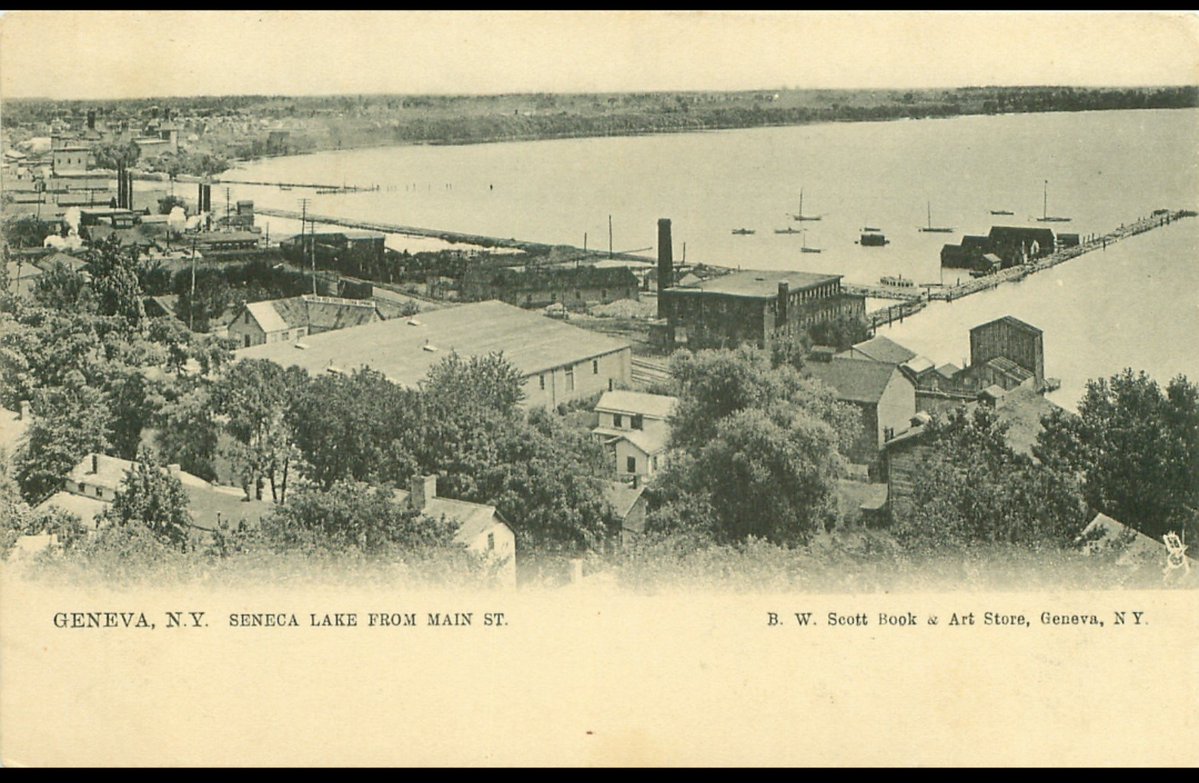
For generations, people around Seneca Lake, New York, and parts of the U.S. East Coast have reported sudden cannon-like booms with no obvious source.
They became known as the "Seneca Guns."
Some are strong enough to rattle windows and doors. Similar unexplained booming sounds have been reported in other countries under different names.
Possible causes include shallow earthquakes, distant thunder, meteors, waves, sonic booms, and atmospheric conditions that can carry sound over long distances.
But there is no single confirmed explanation that accounts for every report.
In some documented cases, residents heard powerful booms even when instruments detected no corresponding earthquake.
A loud explosion from somewhere around the lake...
with nothing obvious there to make it.
Beneath downtown San Francisco lies a buried fleet.
During the Gold Rush, so many ships arrived that crews often abandoned them to head for the goldfields. Some vessels were converted into stores, hotels, saloons, warehouses-even a jail.
As the shoreline was expanded with landfill, dozens of those ships were simply buried beneath the growing city.
Today, parts of old vessels still sit under the Financial District and Embarcadero.
Construction crews occasionally uncover them.
In 2001, workers digging for a hotel exposed the hull of the General Harrison, a Gold Rush-era ship that had been buried for roughly 150 years.
San Francisco didn't just build outward.
It built directly over a graveyard of ships.
There is a Russian city that was deliberately erased beneath a reservoir.
Its name was Mologa.
In the 1930s and 1940s, the Soviet government cleared the area to build the Rybinsk hydroelectric reservoir. Residents were relocated, and the town was submerged as the reservoir filled.
Mologa had stood for centuries near the confluence of the Volga and Mologa rivers.
Then it vanished under water.
But during unusually low water levels, parts of the old town can reappear-foundations, streets, masonry and other ruins emerging from the reservoir bed.
A city that still exists...
just mostly under a lake
In the 1940s, police investigators began training with tiny murder scenes built like dollhouses.
They were called the Nutshell Studies of Unexplained Death.
Frances Glessner Lee created the miniature rooms with astonishing detail: overturned furniture, bloodstains, open windows, scattered objects, and tiny bodies placed exactly where investigators were meant to study them.
The point wasn't to guess quickly.
It was to teach detectives to notice everything before deciding what happened. The models were based on real cases or case details and became an important tool in the development of forensic investigation.
Nineteen of the studies are still known to exist.
And some continued to be used for forensic training decades after they were built.
Tiny rooms.
Tiny victims
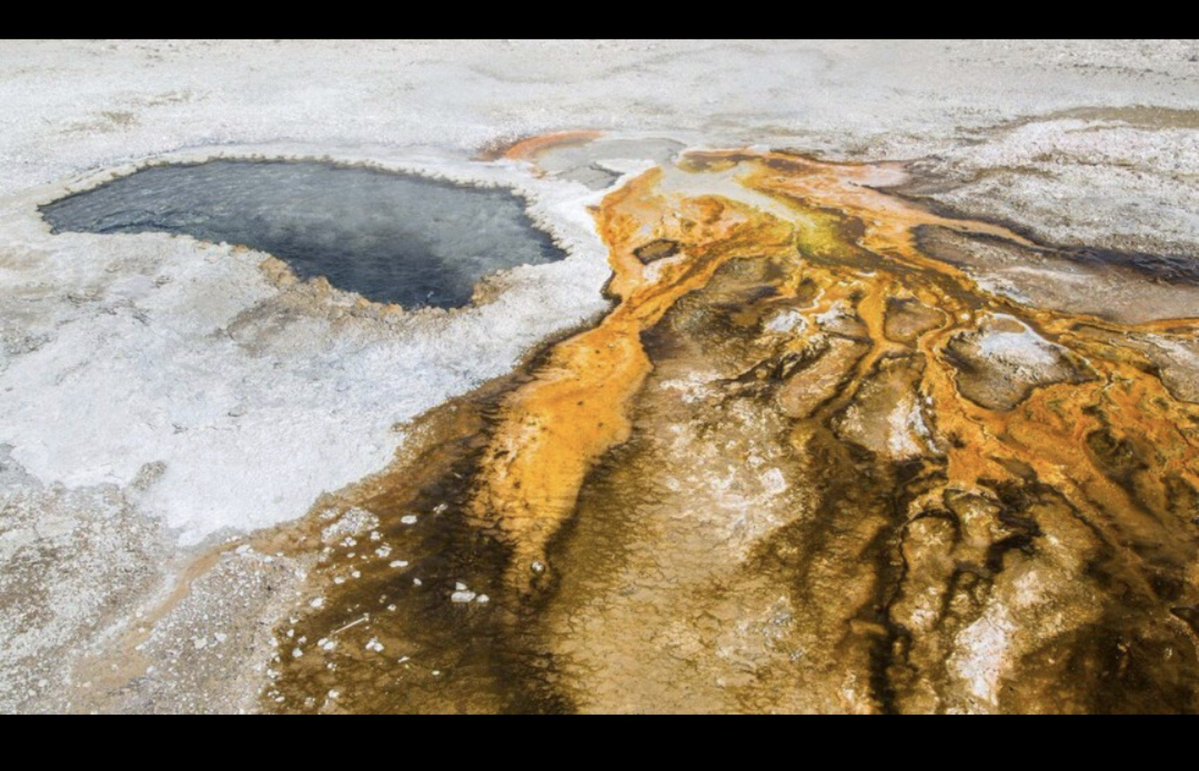
In 2018, a Yellowstone hot spring erupted after decades of relative quiet.
Then it started throwing up human trash from the past.
Ear Spring blasted out coins, cans, pieces of metal, a cinder block...
and even a baby pacifier dating back to the 1930s
Some of the debris had apparently been sitting inside the geothermal system for generations before the eruption brought it back to the surface.
Park staff documented the objects, and some were considered historically significant enough for Yellowstone's collections.
The spring had effectively become a boiling underground time capsule.
And after decades...
it gave everything back.
Beneath Cappadocia in Türkiye lies an entire ancient city carved into volcanic rock.
It's called Derinkuyu.
The underground complex descends roughly 85 metres and contains multiple levels of rooms, storage spaces, stables, wells, ventilation shafts, churches and narrow passageways. Huge circular stone doors could be rolled into place to seal sections from the inside.
At its peak, Derinkuyu may have sheltered thousands of people during periods of danger.
It wasn't just a cave.
It was a functioning city built beneath another world.
And for centuries, much of it sat hidden under modern homes and streets.
There is a place in the Grand Canyon where about 1.2 BILLION years of Earth's history simply disappears from the rock record.
Geologists call it the Great Unconformity.
At this boundary, ancient basement rocks are overlain by much younger sedimentary layers, with an enormous span of geological time missing in between.
The gap wasn't caused by time stopping.
The missing layers were either never deposited or were eroded away, wiping out a huge chapter of the planet's physical history before later sediments covered the surface again.
At some locations in the canyon, that single line in the rocks represents roughly a quarter of Earth's entire history.
You can literally stand in front of a boundary where...
more than a billion years are missing
In 1912, Alaska produced a landscape so strange that explorers named it the Valley of Ten Thousand Smokes.
The cause was the Novarupta eruption, the largest volcanic eruption of the 20th century. For roughly 60 hours, it blasted out around 15 cubic kilometers of magma and buried a huge valley beneath superheated ash.
Then something eerie happened.
Water trapped beneath the hot ash flashed into steam and escaped through countless fumaroles, making the entire valley look like it was smoking from thousands of vents at Once.
The ash stayed hot enough for this steaming landscape to persist for years.
In 1987, a glowing blue powder fascinated people in Goiânia, Brazil.
It came from an abandoned medical radiation machine that had been dismantled for scrap.
Inside was cesium-137.
People handled the material without knowing it was dangerously radioactive. Some even took fragments home because of the eerie blue glow. The contamination spread through homes, clothing and personal belongings before authorities realized what had happened.
Around 250 people were contaminated, and four died within the first month. Thousands of cubic metres of radioactive waste eventually had to be isolated.
It became one of the worst accidents involving a radioactive source ever recorded.
The terrifying part?
It didn't look dangerous. It looked beautiful.
On October 17, 1814, London was hit by a flood made of beer.
A massive wooden vat at the Horse Shoe Brewery ruptured, triggering other containers to fail and releasing hundreds of thousands of gallons of porter into the surrounding St Giles neighborhood.
The wave smashed through walls and flooded homes in the densely packed streets.
Eight people were killed.
At the inquest, their deaths were ruled accidental, and the brewery was not found criminally responsible.
It sounds like a bizarre urban legend.
But for one afternoon in 1814…
part of London was genuinely flooded by a river of beer.
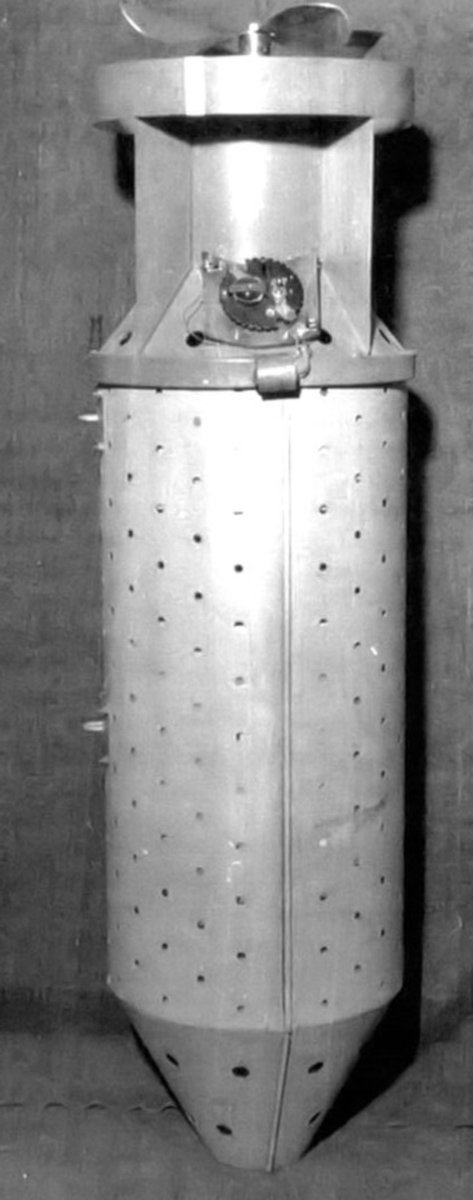
During World War II, the U.S. seriously tested a weapon made from live bats carrying tiny incendiary bombs.
The idea was called Project X-Ray.
Thousands of Mexican free-tailed bats would be chilled into hibernation, packed into bomb-shaped containers, then released over Japanese cities. Once awake, the bats were expected to crawl into roofs and attics before their timed incendiaries ignited.
Then one test went badly wrong.
Armed bats escaped at an airfield near Carlsbad, New Mexico and reportedly set parts of the facility on fire after roosting beneath structures.
The project was eventually abandoned before combat use.
For a brief period, though, the U.S. military was genuinely developing a bomb that relied on sleeping bats waking up inside enemy cities.
In 1859, the Sun caused telegraph systems on Earth to behave like they were possessed.
A massive geomagnetic storm struck the planet after an intense solar eruption.
Telegraph operators across Europe and North America reported sparks, electrical shocks, and equipment failures. In some cases, operators disconnected their batteries...
and the lines kept transmitting anyway, powered by electrical currents induced by the storm itself.
Auroras spread unusually far from the poles, appearing in places such as Cuba, Mexico, Hawaii, Japan and parts of Colombia.
The event became known as the Carrington Event, after astronomer Richard Carrington observed an extraordinary solar flare on September 1.
For a brief period...
the sky was bright, wires sparked, and Earth's early communication network began running on electricity from space
Archaeologists at Sutton Hoo spent decades wondering why pieces of an ornate Byzantine bucket were buried in England.
Then they found the bottom.
Inside were cremated human and animal bones.
The vessel, known as the Bromeswell Bucket, was made in the 6th century, likely in the eastern Mediterranean, and was already about a century old when it reached Anglo-Saxon England. Its surface shows warriors, lions and dogs, along with a Greek inscription wishing its owner good health.
In 2024, archaeologists recovered its intact base. CT scans and later excavation revealed that it had been used as a cremation vessel-an extremely unusual fate for such a rare imported object.
A luxury object travelled hundreds of miles across the ancient world...
only to end up holding the remains of someone whose identity is still unknown.
Investigators used to believe that the image of the killer could be captured in the eyes of the victim (like a photograph), and it remains there after death.
Despite the fact that slavery does not officially exist in any country in the world, there are over 27 million slaves living on the planet today. This is more than at any other time in history.
It looks like a sky full of stars.
But you're standing deep underground.
The "stars" are actually thousands of glowworms hanging from a cave ceiling, each dangling sticky silk threads to trap insects drawn toward their blue-green light.