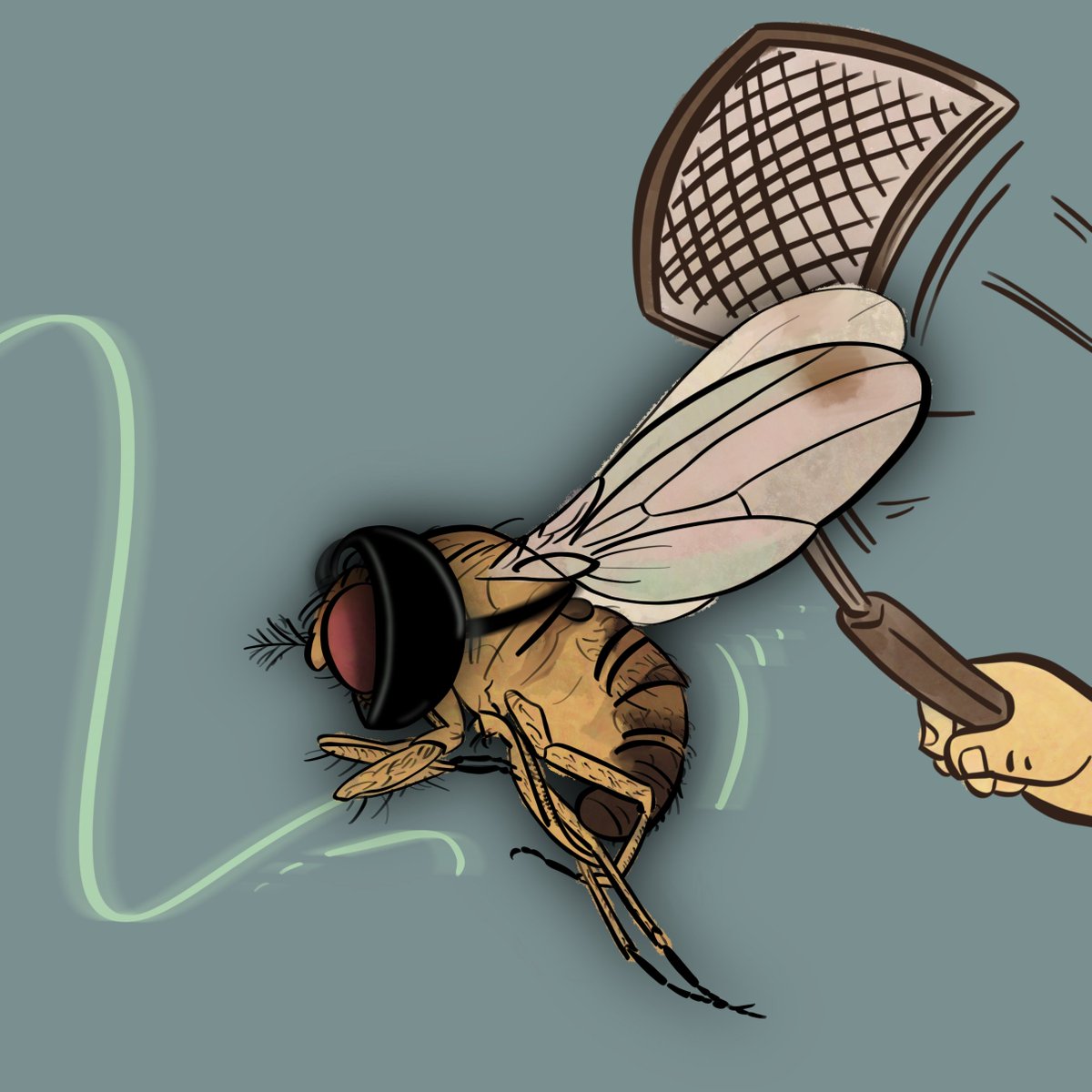
New preprint! 🪰
We explore how flies make rapid evasive turns during flight. Our study on DNp03, a neuron linking visual input to motor output, offers insights into how the fly brain initiates this important behavior.
https://t.co/wDO36JzxZu
#Neuroscience#Drosophila
📢Extended deadline 15th November 2023!
Join our IMPRS for Brain & Behavior to pursue a fully-funded #PhD in #neuroethology - the study of neural basis of animal behavior.
📷https://t.co/GErn8O60qE #neuroscience#AcademicTwitter#phdposition
Paper out!!! #Drosophila has muscles that attach to their retinas, which it uses to move its photoreceptor sheet in ways that resemble vertebrate eye movements @Nature https://t.co/kQYT71OBy3
More evidence that processing of sensory information is likely to be tuned to behavioral context: New @iScience_CP paper now out by our @SchnellLab on how multiple mechanisms mediate the suppression of motion vision during escape maneuvers in drosophila.
https://t.co/ByuQ0JP3Si
Also, please share - we got a PostDoc position available in beautiful majestic Bonn, for work with beautiful majestic flies, with a beautiful majestic two-photon microscope.
https://t.co/U19X5CMvqr
First paper from the lab just got published!
https://t.co/zVnw9dnKck
I heard @PhilippeFische6 is on parental leave, so he has a bunch of free time to answer questions??
Congratulations to our group leader @SchnellLab who has been awarded a @ERC_Research Starting Grant to find out how even the tiny brains of fruit flies make decisions. We are looking forward to more fascinating Drosophila data!
https://t.co/ijYo7KJakq
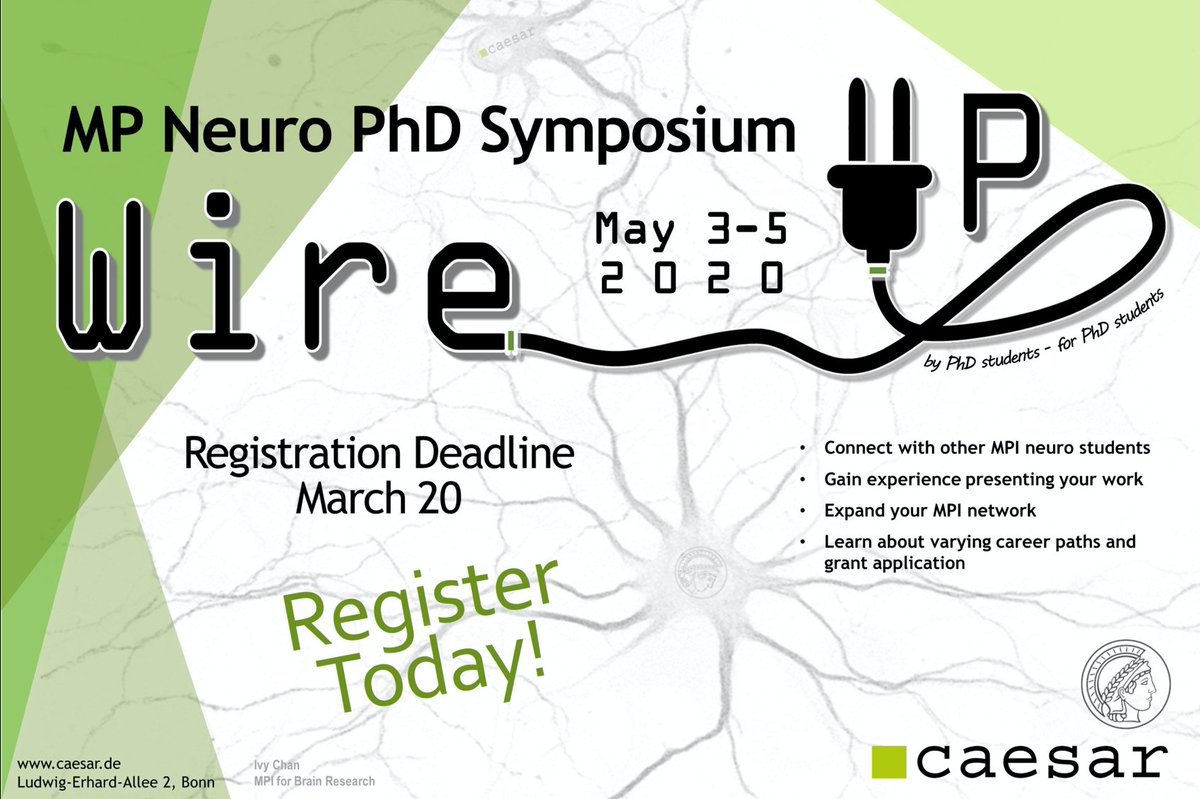
📢REGISTRATION NOW OPEN📢
Register today for the #WireUp2020@maxplanckphdnet symposium @caesarbonn
Find the online form here:
https://t.co/Tpo3FsjNs7
Submit your #Abstract and present your #neuroscience#Research in Bonn this May!
Looking forward to see many of you 😎
📢PAPER ALERT📢
Our PhD student @scidanm and our co-speaker Heinz Beck have a paper to share! Together with first author @BraganzaOliver and co-author @tonykellyEU, they explain how "quantitative properties of a feedback circuit predict frequency-dependent pattern separation".