🚀 Welcome to Your Daily Scholar!
Please follow me also at https://t.co/TEkiyGLa5T
📷Are you curious about history, archaeology, anthropology, art, science, and technology?
📷 Join me as we explore not only the mysteries of early human civilizations and their art but also groundbreaking discoveries in science and technology. From ancient diets to cutting-edge innovations, we cover it all!
📷 Follow for insights into the past, present, and future – where history meets technology. Let’s embark on this journey of knowledge together! #History #Science #Technology #Anthropology #art
🕰️ Past! How Old Is the Past? Understanding Deep Time in Perspective
Most of us think of history as what happened in the recent past—maybe a few hundred years back to Columbus or the American Revolution. But for scientists who study the ancient world, like geologists and paleontologists, even centuries are a mere blink compared to Earth’s age of 4.6 billion years. When we look at life’s history, it’s like zooming out to view the deep timeline of evolution, where billions of years pass as epochs and eras.
🔍 How do we track deep time?
Scientists rely on tools like the geologic timescale, a map that organizes the evolution of life across three main eras:
1. Paleozoic 🌱 - Life begins to flourish.
2. Mesozoic 🦖 - Dinosaurs reign and then perish.
3. Cenozoic 🐒 - The era of mammals, including humans.
Each era divides into epochs, where life transforms and continents drift, shaping our world. For example, about 200 million years ago, the supercontinent Pangaea split apart, creating the Atlantic Ocean and setting the continents on paths that still shape Earth today.
⛏️ From “Thousands” to “Billions”
Up until the 18th century, many people believed Earth was only a few thousand years old, based on religious texts like those interpreted by Archbishop James Ussher. But scientists like Nicolaus Steno started examining fossils and rock layers, paving the way for relative dating, which tells us which layers of rock are older or younger based on their position.
📏 Relative vs. Absolute Dating
Relative Dating: Places events in order, older layers beneath younger ones.
Absolute Dating: Assigns a specific age, like “2,000 years ago” or “1.3 billion years ago.”
The study of time reveals Earth’s deep past, unlocking the story of evolution layer by layer. In future posts, we’ll explore more of these biological changes in the Cenozoic era, an age that ultimately brought us here, billions of years in the making. 🌍
How do scientists determine if one artifact or fossil is older than another? By using relative dating techniques, they create a chronological order of Earth’s history, without pinpointing exact ages. Here’s how they do it! 👇
1. Stratigraphic Correlation 🪨
Developed by William Smith, stratigraphic correlation matches layers of rock (strata) based on physical, chemical, and fossil properties. When a volcanic eruption occurs, it leaves behind ash with a unique chemical fingerprint, allowing scientists to identify matching layers over vast distances. For example, the 1883 eruption of Krakatoa in Indonesia spread ash over 6,000 km. If a fossil lies below or above an ash layer, it reveals its relative age.
2. Chemical Dating ⚗️
Chemical dating examines soil-specific chemicals absorbed by buried bones, such as fluorine. In 1844, James Middleton introduced this method, later used by Dragutin Gorjanović-Kramberger to date Neanderthal and animal bones in Croatia. By analyzing fluorine levels, he showed that both Neanderthals and extinct Pleistocene animals (e.g., cave bears) lived in the same ancient era, revealing humanity’s deep-rooted history.
3. Biostratigraphic (Faunal) Dating 🦣
Biostratigraphy uses fossils of specific animals and plants as “index fossils” to date layers. Some animals, like Irish elk or mammoths, provide excellent biostratigraphic markers. Irish elk fossils, for example, indicate a layer is older than 10,600 years, when the species went extinct in Europe. Paleontologists also track mammoth molar evolution to date sites across eras, adding detail to our evolutionary timeline.
4. Cultural Dating 🛠️
Artifacts like stone tools and ceramics can help date sites through material culture. The oldest tools (about 2.6 million years old) look similar over long periods, but artifacts in the Upper Paleolithic and later Holocene eras changed rapidly. Discoveries like the Lion Man sculpture, found in a German cave in 1939, and early ceramics, provide “time-specific” markers that capture humanity’s artistic and technological milestones.
By layering these methods, scientists create a cohesive timeline, bridging millions of years and bringing Earth’s history to life. The story of our planet lies not just in dates but in fossils, rocks, and relics of the past—each a chapter in the book of time. 📖
#Science #fossil
🌍 William Smith: The Man Behind the First Geological Map of the British Isles 🗺️
Charles Darwin’s theory of evolution, shaped by his observations of living species, also intertwined with the study of fossils—a subject he was well-aware of, though not central to his theory. Darwin’s readings likely introduced him to Greek historian Herodotus, who identified fossil shells as remnants of ancient organisms. Moreover, Darwin had firsthand experience with fossil discovery in Argentina, marveling at the “truly wonderful” size of the ancient bones he found.
Darwin also knew of Thomas Jefferson, the U.S. president and keen fossil collector, who documented an extinct ground sloth discovered in Virginia. He was familiar with Georges Cuvier, the French paleontologist who meticulously cataloged fossils around Paris, recognizing fossils as once-living organisms.
However, neither Darwin nor Cuvier fully grasped the power of fossils as historical records. This breakthrough would come not from a scientist, but from an engineering surveyor named William Smith (1769–1839). Born into humble beginnings, Smith’s career in coal mining led him to a groundbreaking realization: fossil-bearing rock layers, or strata, appeared in the same order everywhere. Observing that each layer contained unique, long-extinct life forms, he formulated the Principle of Faunal Succession.
Through this principle, Smith set the stage for fossils as a critical tool for understanding Earth's history—transforming how we reconstruct the timeline of life itself.
Despite his revolutionary insights, William Smith's journey was anything but smooth. In 1799, he was dismissed from his surveying job, likely due to his tireless focus on fossils and rock layers. His passion for understanding the natural world led him to financial ruin, even landing him in debtors’ prison. Yet, Smith never abandoned his vision.
After years of hardship, Smith’s determination paid off in 1815 with the publication of the first-ever geological map of the British Isles. Driven by a belief that fossils held the key to Earth's history, Smith's work wasn’t just a map; it was a groundbreaking tool that revealed a timeline of ancient life forms embedded in rock layers.
Though recognition came late, Smith’s perseverance earned him respect among the scientific community. His pioneering work established fossils as essential records of Earth's past, providing insight into the evolution of life and the progression of geologic time.
#evolution #sci
🌀 Spiral Jetty: A Masterpiece of Land Art 🌊
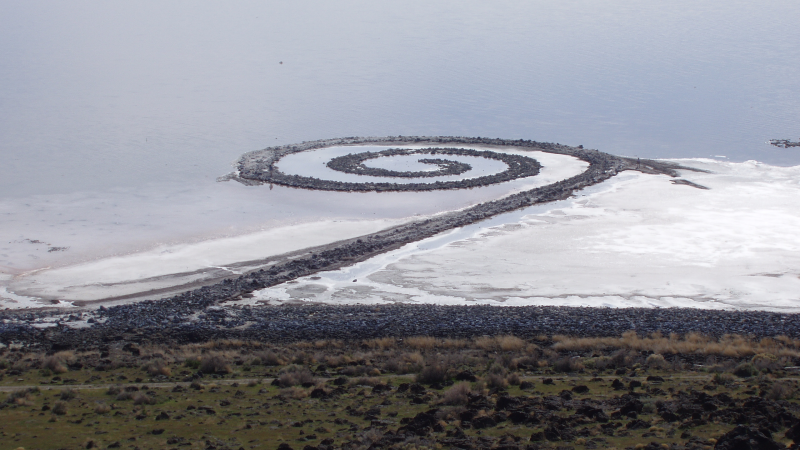
The Spiral Jetty, created by American artist Robert Smithson in 1970, is a landmark in environmental art located on the northern shore of the Great Salt Lake in Utah. This 1,500-foot-long (460 m) coil of black basalt rocks and earth spirals out into the pink-hued lake waters, blending art with the natural landscape.
Smithson's vision was to explore concepts of time, entropy, and the relationship between man-made creations and natural processes. Since its creation, the jetty has been subjected to the ebb and flow of water levels, sometimes submerged, other times visible in its entirety—a true ephemeral monument.
Constructed from materials on-site, the jetty highlights natural erosion and change, inviting viewers to consider how landscapes evolve. Its visibility shifts dramatically with water levels, creating a different experience on each visit.
Despite its remote location, Spiral Jetty attracts visitors, artists, and environmental enthusiasts from around the world. To visit, take a journey through Utah’s desert, where you can witness this timeless fusion of art and nature.
#art
🚀 Mars Orbiter Mission (MOM): A New Era for Indian Space Exploration 🌌
On November 5, 2013, the Indian Space Research Organisation (ISRO) launched the Mars Orbiter Mission (MOM)—better known as Mangalyaan. This historic mission placed India on the map as an interplanetary spacefaring nation, achieving milestones that captured global attention and made history in space exploration.
🌠 Mission Highlights:
India’s First Interplanetary Mission: MOM made India the first Asian country to reach Mars, and the first nation globally to succeed on its maiden attempt at interplanetary exploration—a feat achieved by only a few space agencies in the world.
Record-Breaking Cost: With a budget of only $74 million, MOM remains one of the most cost-effective Mars missions ever. In comparison, similar missions by other countries have cost over 10 times as much. This success demonstrated India’s remarkable engineering capabilities and introduced “frugal innovation” to space science.
Fast-Track Development: The mission’s development, from concept to launch, took just 15 months, underscoring ISRO’s agility and dedication to pushing the boundaries of what’s possible in space exploration. This accelerated timeline was previously unheard of for interplanetary missions.
🔍 Scientific Objectives:
MOM’s mission was not only symbolic but also scientific. Its primary goals included:
Mars Surface Imaging: Capturing detailed images of Mars’ surface features and morphology, which includes insights into its unique mountains, valleys, and potential evidence of water.
Study of Martian Atmosphere: MOM investigated the composition of Mars' atmosphere and monitored its seasonal variations, focusing especially on methane detection—a potential marker for microbial life. This marked India's contribution to the ongoing global search for life on Mars. 🦠🔴
Mapping Mineral Composition: Using sensors to analyze the mineral composition of Mars’ surface, MOM gathered data that contributed to understanding the planet’s geological history and formation.
Solar Wind Interaction: Observing the interactions between Mars’ atmosphere and solar winds, MOM provided insights into how the planet’s atmosphere is affected by solar radiation—a clue into how Mars transitioned from a potentially life-sustaining environment to its current arid state.
📸 Stunning Visuals from Mars:
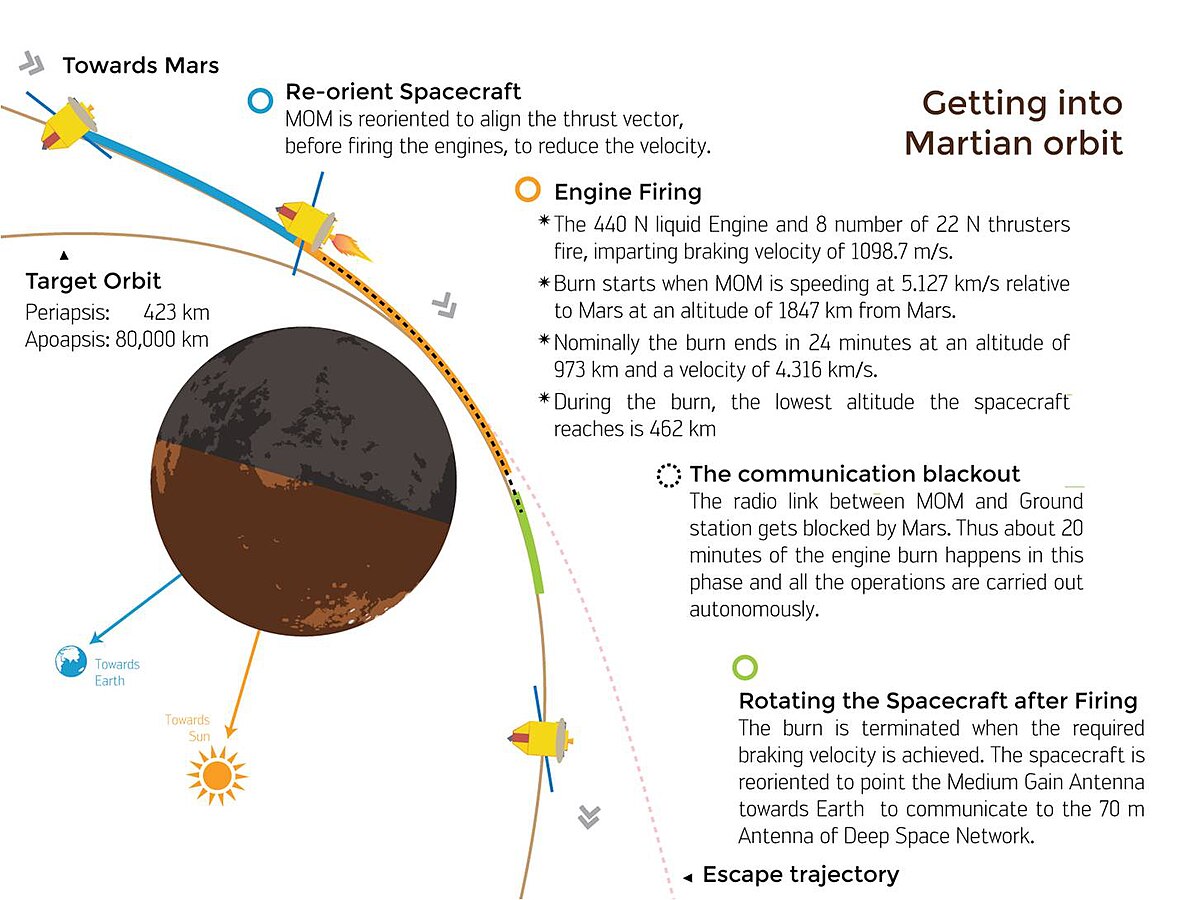
Upon successfully reaching Martian orbit on September 24, 2014, MOM began capturing high-resolution images of Mars’ surface and its surrounding atmosphere. These images included views of Olympus Mons (the largest volcano in the solar system) and the Valles Marineris canyon, which stretches more than 4,000 km across the Martian surface.
🌍 Global Impact:
MOM wasn’t just a national triumph; it became a symbol of inspiration for scientists, engineers, and dreamers worldwide. It demonstrated that resource limitations don’t hinder space exploration ambitions and fostered a spirit of optimism for emerging space agencies worldwide.
🛰️ Legacy of MOM:
MOM continued operating for nearly eight years beyond its expected lifespan, until October 2022. It provided data on Mars’ atmosphere, dust storms, and even seasonal variations. The mission’s success has paved the way for more ambitious projects in space exploration by India, including plans for a second Mars mission and potential lunar explorations.
🤔 Did You Know?
MOM’s trajectory was unique! It used a slingshot maneuver around Earth to escape our planet’s gravitational pull and set course for Mars—saving fuel and minimizing costs!
Through MOM, India carved a place in the stars and showed the world that space is indeed the final frontier, open to all who dare to reach for it. 🌌
#Science #mars #India
🏰 The Trebuchet: King of Siege Warfare ⚔️
The trebuchet was one of the most powerful siege weapons of the medieval world. Known for its impressive range and force, it was designed to launch massive stones or incendiary projectiles over great distances, decimating walls and terrorizing defenders. This formidable machine became the centerpiece of many historic sieges, symbolizing both engineering prowess and brute force.
⚙️ How It WorkedUsing a counterweight system, the trebuchet could launch projectiles weighing up to 300 pounds (136 kg) with astonishing force. The counterweight would drop, creating the force needed to hurl a stone from the long swinging arm, which could reach targets over 300 meters away!
🏹 Types of Projectiles
Heavy Stones – Crushed walls and battlements with their sheer impact.
Fire Pots – Incendiary projectiles that spread flames upon impact.
Diseased Corpses – Used in early biological warfare to spread disease among defenders.
🎯 Impact on Medieval WarfareThe trebuchet revolutionized siege tactics, making even the strongest castles vulnerable. It pushed defenders to strengthen walls and created a technological arms race between attackers and fortifications. The trebuchet’s power and versatility made it a game-changer in battles across Europe, the Middle East, and Asia.
#history #weapons
🏔️ The Mongol Campaign Against the Nizaris: The Fall of Assassins 🏹
In the mid-13th century, the Mongol Empire under the rule of Hulagu Khan, grandson of Genghis Khan, embarked on a sweeping mission across the Middle East. This campaign targeted the Nizari Ismailis—an influential sect of Shia Islam known for their fortified mountain fortresses and stealthy assassination tactics. The campaign culminated in the destruction of the Nizari state and the collapse of one of the region’s most resilient and secretive societies.
❓Who Were the Nizari Ismailis? The Nizaris, also known as the Assassins, were an esoteric sect of Islam that established fortified mountain strongholds across Persia (modern-day Iran). Led by charismatic leaders and skilled in espionage, the Nizaris wielded substantial influence, primarily through targeted assassinations against powerful enemies, including Abbasid caliphs, Seljuk sultans, and Crusader leaders. Their headquarters was the legendary fortress of Alamut, a symbol of their independence and strength.
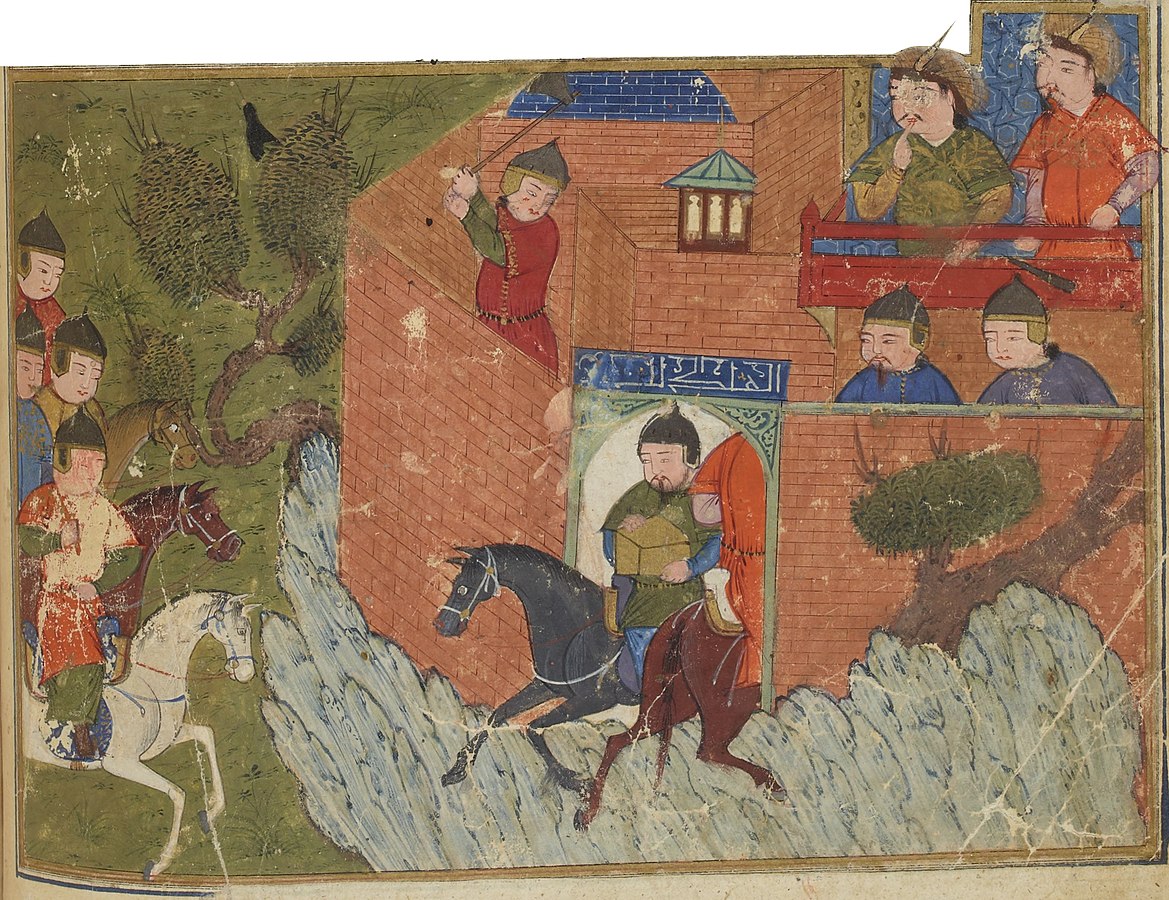
🗡️ The Mongol Offensive Begins: In 1253, Mongke Khan, the Great Khan of the Mongol Empire, ordered Hulagu to eliminate threats in the region as part of a broader strategy to secure Mongol rule. With this mandate, Hulagu led an army of up to 200,000 soldiers westward, armed with sophisticated siege equipment and unwavering determination to dismantle the Nizari strongholds.
🏰 The Fall of Alamut and Nizari Fortresses: After several failed negotiations, Hulagu launched a full assault on Nizari territories. In late 1256, the fortress of Alamut—considered impregnable—fell after a prolonged siege, its defenders overwhelmed by the sheer power and relentlessness of the Mongol forces. Other Nizari castles soon followed suit, either surrendering or facing total annihilation. These defeats marked the disintegration of Nizari power, signaling the end of their semi-autonomous rule.
⚖️ Legacy and Impact: The Mongol conquest of the Nizaris significantly reshaped the political landscape of Persia. The collapse of the Nizari state left a power vacuum that facilitated the Mongol expansion into the Islamic heartlands, ultimately leading to the Mongols’ approach toward Baghdad and the eventual downfall of the Abbasid Caliphate in 1258. Although the Mongols were known for their ruthlessness, they also influenced the region through the introduction of new administrative systems and trade routes, reshaping the Middle East for centuries to come.
🌌 Historical Reflections: The Mongol campaign against the Nizaris was not just a clash of two powerful groups but a pivotal moment in medieval history, marking the end of one of the most unique and enigmatic societies. Their fall underscored the unstoppable force of the Mongol Empire and the transformative—and often devastating—impact of its westward expansion.
#History
🎆 On This Day in History – November 5, 1605: The Gunpowder Plot Uncovered 🎇
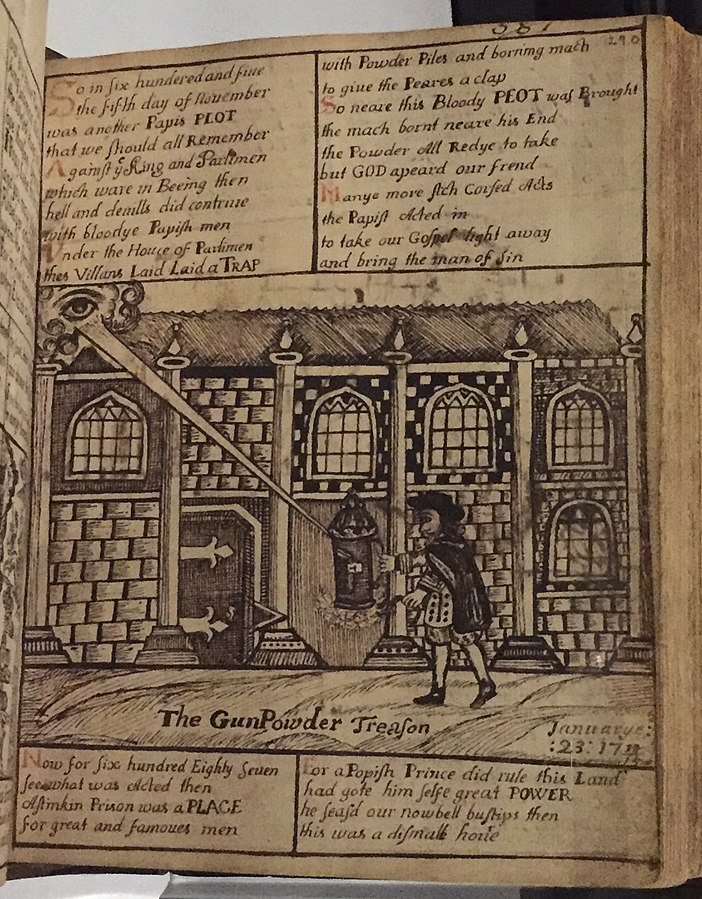
In 1605, a group of English Catholics, frustrated by the ongoing persecution under King James I, devised a bold and violent plan to overthrow the government by destroying the House of Lords in a massive explosion. This plan, known as the Gunpowder Plot, was led by Robert Catesby and supported by a group of conspirators including Guy Fawkes, Thomas Percy, Thomas Wintour, and John Wright. Their goal was to assassinate King James I, eliminate the Protestant ruling elite, and replace them with Catholic leaders to restore Catholicism’s prominence in England.
💥 The Plot: Over months, the conspirators secretly stockpiled 36 barrels of gunpowder—enough to obliterate the entire Parliament building. Fawkes, a seasoned soldier skilled in explosives, was assigned to guard the gunpowder and ignite it during the State Opening of Parliament on November 5, 1605, when the king, his family, and much of the Protestant nobility would be present. This precise timing would maximize the impact, aiming to destabilize the monarchy and government in a single blow.
👀 Discovery and Arrest: Suspicion was raised when Lord Monteagle, a Catholic peer, received an anonymous letter warning him to avoid Parliament on that day. Alerted by this letter, authorities searched the cellars beneath Parliament in the early hours of November 5. There, they found Guy Fawkes, fully armed and guarding the barrels of gunpowder. He was immediately arrested and, under torture, revealed the names of his co-conspirators.
⚔️ Aftermath: The foiled plot led to a relentless manhunt. Robert Catesby and several other plotters died in a shootout with government forces, while the surviving conspirators faced public executions for treason. The Gunpowder Plot had lasting consequences, leading to harsher laws against Catholics and reinforcing Protestant rule in England.
🔥 Legacy: The failed plot is remembered every year on Guy Fawkes Night (or Bonfire Night), celebrated with bonfires, fireworks, and the burning of Guy Fawkes effigies. This event left an indelible mark on British history, becoming a symbol of resistance, rebellion, and the complex religious tensions of the era.
#History #GuyFawkes #OnThisDay