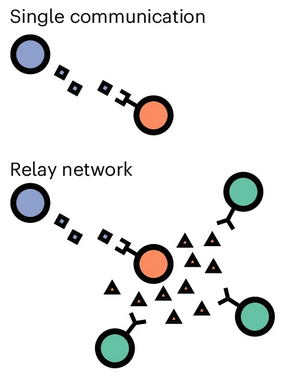
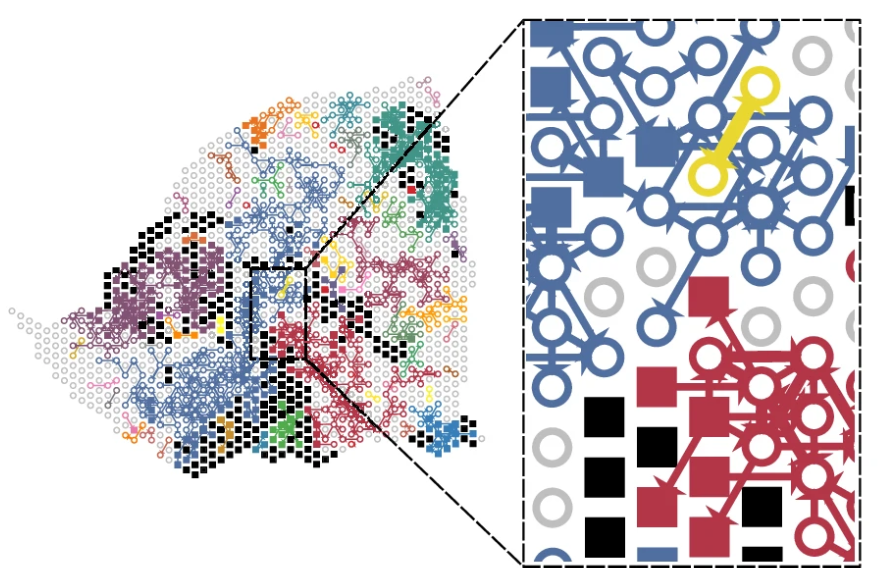
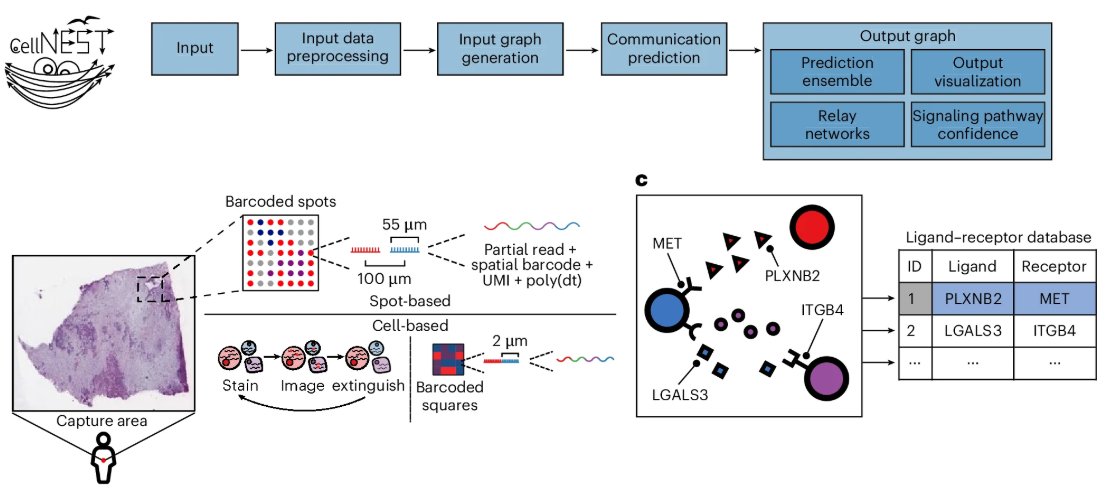
We are proud to announce the publication of CellNEST, deep-learning detection single cell-cell or even "relay" communication on #SpatialTrascriptomics data at single-spot or #SingleCell!
Paper: https://t.co/JG7HN9uCQU
Code: https://t.co/AoUfMxQ3FY and https://t.co/cKGy1PjLa6
Scientists @PMResearch_UHN led by @Schwartastic have developed CellNEST, a powerful AI tool that maps how cells talk to each other. By detecting complex signals between cells, it could lead to new ways to target tumours and stop disease progression.
🔗https://t.co/HJyAKFElxc
Cancer Cells Relay Messages to Coordinate the Spread
CellNEST, an AI tool developed by Dr. @Schwartastic's team, found that the tumour microenvironment may relay messages in a "two-hop" fashion, fuelling the spread of #PancreaticCancer.
@naturemethods:
https://t.co/qirz2qTxMg
Out today from the Schwartz lab! A new way to study cell-cell communication from spatial transcriptomics data. Cell Neural Networks on Spatial Transcriptomics (CellNEST) can detect both signals between individual cells and relay networks of communication. https://t.co/bb0fwtp5ep
We are proud to announce the publication of CellNEST, deep-learning detection single cell-cell or even "relay" communication on #SpatialTrascriptomics data at single-spot or #SingleCell!
Paper: https://t.co/JG7HN9uCQU
Code: https://t.co/AoUfMxQ3FY and https://t.co/cKGy1PjLa6
CellNEST's architecture enables finding patterns of signals, potentially detecting relay networks of communication. This work was made possible by the fantastic @ftzohora@deisha_paliwal Joshua Li @VictoriaGaoVG@k3noff@LabNotta
Our new #singlecell#datavisualization method is now in GigaScience! With our interactive tree, you can find populations large and small in #scRNAseq, #scATACseq, #spatial, and more!
Try it: https://t.co/xAVVXpyonX
Paper: https://t.co/eFIByQbywI
Code: https://t.co/UJarN1QDMr
Research from @Schwartastic@PMResearch_UHN in collaboration with @PennMedicine have created AnnoSpat, a tool that identifies and maps cell types in tissues. It excels in analyzing complex tissues, like the pancreas. Read more > https://t.co/QgjLa7Eg4f; https://t.co/EJonY75oac
A new tool “AnnoSpat”–developed by Dr. Gregory Schwartz (@Schwartastic) and his team @UHN–can annotate cell types and quantify cell organizations, making it easier to decipher tissue images from spatial proteomic assays. 🔬
https://t.co/cbt5xjnK1C
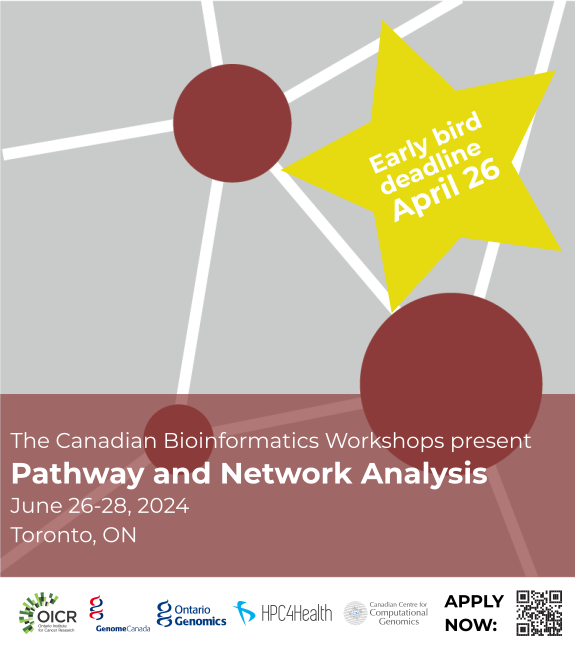
There's still time to get the early bird rate for our Pathway and Network Analysis #bioinformatics workshop!
Apply by Friday, April 26 for a discount.
Registration closes June 12.
https://t.co/c246kr9Ktw
Our #SchmidtAIinSci Postdoc @ftzohora will be presenting her work "Unraveling Cancer Cell Communication Using Deep Learning Models on Spatial Transcriptomics Data".
Host: Cornell University AI for Science Institute
🗓️Friday March 15, 2:30-3:30pm EST https://t.co/FSiOaYoTBs
Check out our latest implementation of GoT-Splice, now at @STARProtocols!
✂️🧬GoT-Splice🧬✂️ profiles genotype, gene expression, surface markers, and splicing ... all within the same #singlecell!
https://t.co/svF4KTvLWZ
@CellStemCell publication (🧵👇): https://t.co/R1l2CdUCa6
Introducing NEST, our deep-learning solution for detecting cell-cell communication on #SpatialTrascriptomics data at single-spot or #SingleCell precision!
Pre-print: https://t.co/ECFK3Lnr51
NEST: https://t.co/LtY0fBfHT8
NEST-Interactive: https://t.co/SWspm5uNJR