Science Friday is no longer posting on X.
We didn’t make this decision lightly. We had many wonderful years on X/Twitter and have enjoyed thoughtful audience conversations, banter, and questions in this space. Thank you for supporting SciFri over the years—your curiosity fuels everything we do. We hope to see you in other spaces.
Want to learn more? Listen to our podcast episode: https://t.co/tCuxwkhoDp Or dig into our article about the mini-forest movement: https://t.co/tCuxwkhoDp
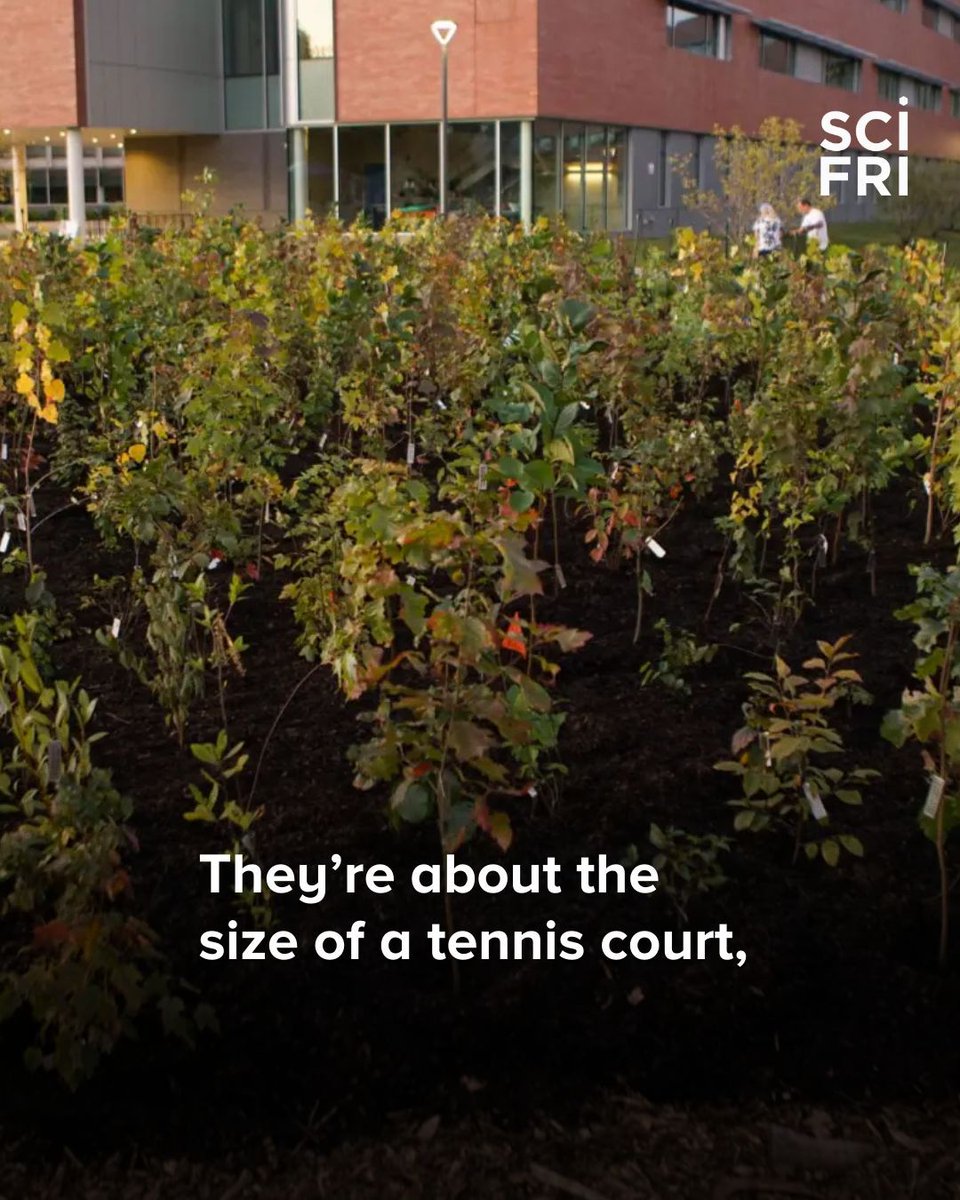
This mini-forest, like many across the globe, follows the Miyawaki Method of densely planting specific native species to jump-start forest development.
“Since they’re planted close together, as they grow, they branch out, and they start to touch each other and form a canopy,” says Hannah Lewis, author of the book “Mini-Forest Revolution– Using the Miyawaki Method to Rapidly Rewild the World”.
“And so then they’re shading out weeds and they’re creating that microclimate that holds humidity inside, so you no longer need to water or weed after two or three years.”
📸
1: Dr. Nicholas Geron, Salem State University
2: Somerville High School Forest | Funded by SUGi
3-5: Alexandra Ionescu
This month’s SciFri Book Club pick is here! 📚
We’re reading “Life on a Little-Known Planet: Dispatches from a Changing World” by Elizabeth Kolbert for March and April. Join us as as we discover a carbon-neutral island in Denmark, explore a biologist’s efforts to talk to whales, and meet the “father of global warming.”
Each week, we'll share discussion questions in our community group and newsletter. Ready to look at our planet a little differently?
Start reading with us:
https://t.co/fF6a3rvPc9
New research shows that a modest amount of specialized cognitive training could reduce dementia risk by 25%. Plus, we talk with playwright Jake Brasch about his new play “The Reservoir” that shines a comedic light on cognitive reserve and shared experiences with failing memory. https://t.co/j6zrAjRY7H
Loved our episode on planting mini-forests? Want to learn more about the Miyawaki Method? Check out our latest article and see how people are attempting to fast-track forests in their communities. 🌳 🌲 🌳
https://t.co/5WrQ6LFBZE
Have you tried nervous system resets or vagus nerve stimulation to improve your health? Call us at 877-472-4374. ☎️
We’re working on a story about the vagus nerve, which connects your brain to several organs, like the heart, lungs, and stomach. We want to hear from you! Call us with questions, experiences, or even social media claims about the nervous system you want fact-checked.
Over the river and through the woods to fungus-resistant chestnut trees and miniforests we go. 🎶🌳
Scientists are creating hearty hybrids to increase the chestnut tree population, after the American chestnut was virtually wiped out in the 1800s by a fungal blight. Plus, communities are using the Miyawaki method to plant miniforests anywhere from schoolyards to city street corners. https://t.co/tF7UxNy462
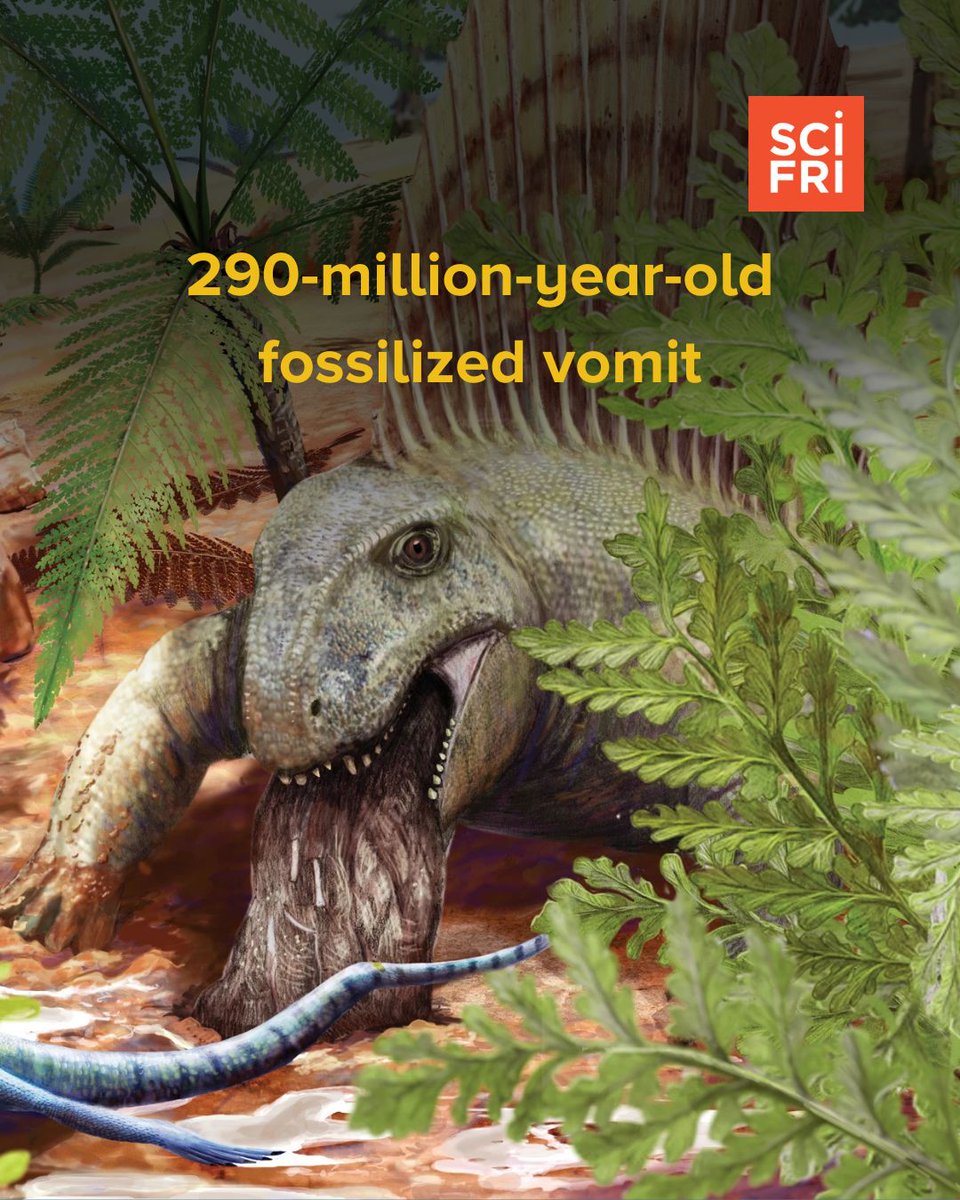
Happy Science Friday! Do you think you can guess what scientists have found in 290-million-year-old fossilized vomit? Or what a reporter found in samples of dirty snow in New York City?
Comment your guesses below and listen to the surprising (and slightly gross) answers in our show on your local public radio station, 2-4 pm ET.
Missed the show? Don’t worry! You can still listen to the full broadcast afterwards on our website.
https://t.co/ijXey4weL5
On Feb. 12, the Environmental Protection Agency rescinded its 2009 endangerment finding. That finding was the legal basis for the government’s regulation of greenhouse gases to protect public health and the environment. So what happens now? We talk with Andy Miller, an original author on the endangerment finding, to find out. https://t.co/RVbdorOWtD
This #PictureOfTheWeek emphasizes just how high figure skaters jump in competition. Discover the physics behind the sport’s hardest skills with researcher Deborah King, from reducing the moment of inertia midair to the g-forces endured when landing a quadruple axel. Learn more from our recent podcast: https://t.co/S4xLxbAH8A
Nearly 500,000 Americans are diagnosed with Alzheimer’s disease each year, but its causes are still a mystery. A new study has found variants in one gene that may play a significant role in disease risk. We break down what scientists are learning and if this could create potential treatments. https://t.co/MHaQFSLiU8
You can buy CBD gummies with THC thanks to a legal loophole, but a federal law could take them off the shelves in November. Policy around cannabis is changing fast, and the fine print REALLY matters.
Plus, are NYC snowbanks basically biohazards? Investigative reporter Joe Hong took one for the team and actually tested the sidewalk snow in New York City to find out. 🤮
https://t.co/LzLk4wc31n
There are no blood tests or scans to confirm a mental illness diagnosis, but biomarkers will be included in the next edition of the DSM.
The DSM guides how people are diagnosed and treated for mental illnesses, so how close are we to pinpointing these biological markers? Well…it's complicated. https://t.co/ExGYJRma6V
Do you feel like movies are DEAFENING when you go the theater? 🙉
We’re doing a story on noise and want to hear your noisy pet peeves! Call our noise complaint line at 877-472-4374.
The American Medical Association and the Vaccine Integrity Project are partnering to review vaccine safety and efficacy separate from the CDC. What prompted this independent review and what impact could it have? https://t.co/VPQYpUx8GA
It’s time to think big about monarch butterflies! 🦋
They fly thousands of miles south every winter to escape the cold, but how do these delicate insects do it? With solar-powered radio tags, scientists are tracking the monarch migration to uncover the obstacles these butterflies face along the way.
Explore the science behind monarchs and tracking butterflies with our free educational resource page, designed for curious kids in the classroom or at home.
https://t.co/fDZ1PgMZ2Z
Upset about the terrible skiing conditions in Colorado and Utah this year? Well their record-low snowpacks may also be bad news for the region’s water supply. https://t.co/JgMGPHa7YT
We have a special tea party guest in our #PictureOfTheWeek. Kanzi was a male bonobo who participated in several scientific studies on great ape language and cognition. He “was a celebrity in the field” says cognitive scientist, Dr. Amalia Bastos, who conducted a string of experiments with Kanzi to see if he would play pretend. Kanzi having a pretend tea party with researchers suggests that imagination is not solely a human quality.
Check out our podcast to see the video of Kanzi having a tea party and learn more about the whole study. https://t.co/sX5d7TgPrm
Sadly, Kanzi died in March 2025 at age 44. He’s 43 in this photo and will be greatly missed.
📸: Ape Initiative
What does it take to land a quadruple lutz? ⛸️ We break down the science behind figure skating’s high-scoring skills and what makes them so hard to master. https://t.co/rsUGguDDGt