🕯️ The growth is unreal! 🕯️
+2500 followers and +3700 forms submitted in less than 24 hours!
LASTWICK is moving faster than expected, and the momentum is just getting started.
The form is still open for 24 more hours before it officially closes. Don't miss out!
🔗 https://t.co/3EH1UGoOTH"
🕯️ The growth is unreal! 🕯️
+2500 followers and +3700 forms submitted in less than 24 hours!
LASTWICK is moving faster than expected, and the momentum is just getting started.
The form is still open for 24 more hours before it officially closes. Don't miss out!
🔗 https://t.co/3EH1UGoOTH"
🕯️ THE FIRST SIGNAL
In less than 24 hours:
+2500 followers
+3700 forms submitted
LASTWICK is moving faster than expected.
The Form will remain open for 24 more hours.
Then it closes.
More details are coming.
https://t.co/xXxlV2d6hL
🕯️ THE FIRST SIGNAL
In less than 24 hours:
+2500 followers
+3700 forms submitted
LASTWICK is moving faster than expected.
The Form will remain open for 24 more hours.
Then it closes.
More details are coming.
https://t.co/xXxlV2d6hL
I’ve joined the ZRC20 Fairlaunch Airdrop ⚡️
ZRC20 is the native on-chain token standard for @Zcash , built by the @BitX2100 team.
A new era of tokens on Zcash starts here. 🦓
I’m in. Are you? https://t.co/N3W5TXw3Ya
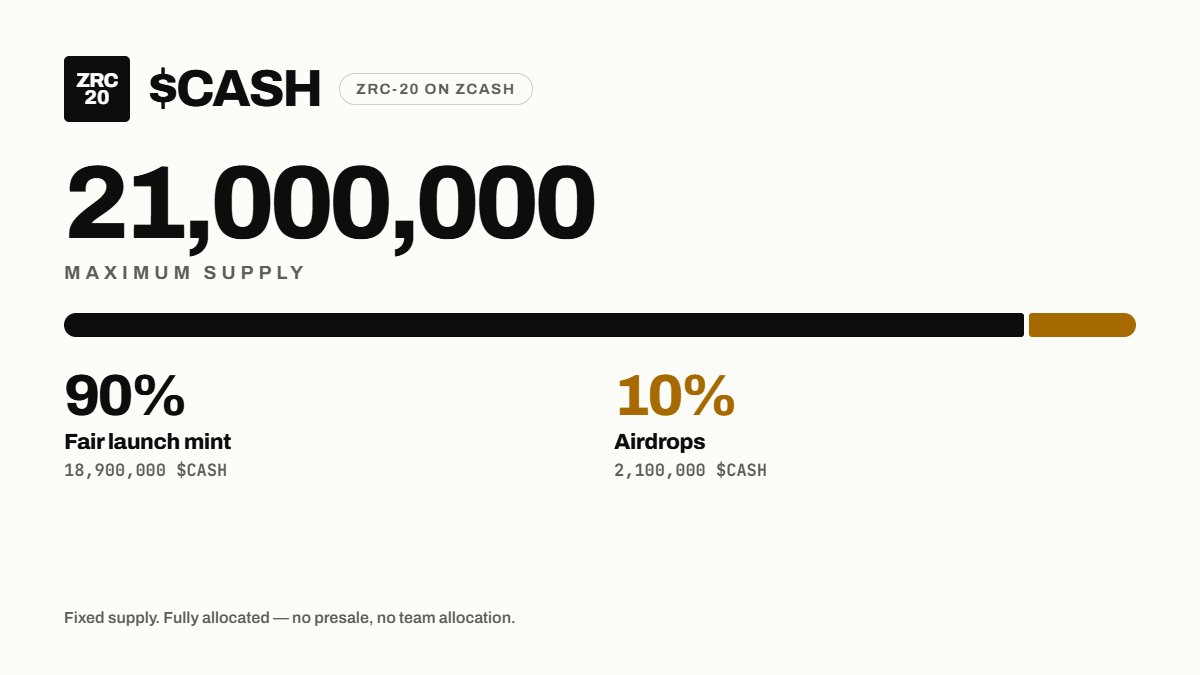
Introducing $CASH — the first ZRC20 token deployed on Zcash Mainnet.
🪙 1,000 $CASH = 0.005 $ZEC
🛡️ Anti-bot mechanism
💰 100% of mint proceeds refunded after the mint ends, minus gas fees
FCFS Public Fairlaunch
Only the first 18,900 transactions will count.
JUST IN: $CASH is launching as a ZRC20 token on Zcash Mainnet. 🪙
1,000 $CASH = 0.005 $ZEC
The launch features:
🛡️ Anti-bot protection
💰 100% of mint proceeds refunded once the mint ends, minus gas fees
⚡ FCFS public fairlaunch
Only the first 18,900 transactions will count.
$CASH is launching soon 👀
The most dangerous feature shipping right now is “the agent can use your real browser.”
It sounds like leverage. Logged-in sessions. No extra auth. The agent books, files, pays, posts. GitHub trending is full of this layer for a reason: a terminal agent that cannot see the web is half-blind.
It is also how a coding agent becomes an identity thief with your cookies.
This week’s security tape is not theoretical. Researchers used an agentic coding setup to walk into an environment they were not supposed to reach. Separately, people are wiring agents into the same Chrome profile that holds the bank, the admin panel, and last night’s Slack.
A cage that is actually a cage:
Separate browser profile. No password manager. No production tabs.
Allowlist of domains. Everything else is a hard no.
No wallet, no cloud console, no GitHub org owner session.
A human click for anything that sends money, deletes, or publishes.
Local models help privacy. They do not help if the tool-use layer still holds the keys.
If your demo requires “just use my logged-in browser,” you built a privileged intern and then left the building. Speed is not the flex. Containment is.
Productivity software is crawling into the operating system because the tab bar lost.
Agent sidebars on every Mac app. Assistants living in the notch. Recorders that cut their own footage. Voice writing that follows you from the meeting into the doc. None of this is a new category. It is an admission that opening “the productivity app” was the tax.
The useful version of this wave is narrow.
One surface that sees the app you are in and does the next action.
Capture that becomes an artifact, not another transcript nobody reads.
Permissions that are visible. If it can see the screen, you should be able to kill it in one click.
Work that stays local when the content is yours.
The useless version is seven notch pets and a social feed of which friends are burning Claude tokens.
Before you install another OS companion, ask what file it creates. Calendar event. Edited video. Sent follow-up. PR comment. If the answer is “presence,” you bought a mascot.
The computer should get quieter as agents get better. If your desktop got louder, you installed entertainment and called it leverage.
The mockup-to-production handoff is the part of product work that deserved to die.
Designers can now go from a messy brief to a live URL the same day. Documents appear inside the conversation instead of in a third tool. Prototypes are less “a picture of the product” and more “a first version you can click.” That compresses the calendar. It also exposes whether your team had taste or just process.
If generation is cheap, the scarce skills change.
Taste: what not to ship.
Constraints: accessibility, empty states, the ugly mid-flow.
A system agents can obey, not a Figma page named Final_final2.
Sitting with engineering while the prototype becomes the codebase, instead of throwing pixels over a wall.
The failure mode is speed cosplay: twelve generated dashboards, zero users, a design system that exists only in chat history.
Use the new stack to kill waiting. Do not use it to skip judgment. The best design teams I am watching treat AI as a junior who can draw all afternoon. Humans still decide what is allowed on the surface, then pair until the thing is real.
Faster drafts are not a strategy. Faster contact with reality is.
Shipping an agent without tests is the new “it works on my machine.”
Today’s launches made that explicit: portable chat sessions across coding agents, QA products built just for agents, voice testers that simulate callers you cannot stage in a conference room. The market already assumes you have an agent. It is now selling the surrounding discipline.
A model that looks brilliant in a demo still fails in four predictable ways.
It forgets the constraint you stated twelve turns ago.
It calls a tool with yesterday’s schema.
It sounds right on a happy path and collapses on an angry customer.
It costs 2–5x more in one harness than another for the same success rate.
Treat agents like services:
Freeze a scenario pack: the ten jobs that matter, with expected artifacts.
Run them on every model and harness change. Keep the cheap one if quality holds.
Log traces. A pass/fail without the tool calls is theater.
Promote skills like code. If you cannot move a session to another agent, you are rented.
The teams that will look “lucky” in six months are the ones boring enough to fail in staging. Gut-feel shipping is how you put an untested intern on production voice.
Open source is quietly becoming the default cloud for agents.
Appwrite positioning an open cloud for agents and developers, CUDA growing official Rust paths, and backup tools that snapshot an agent’s memory are the same plot: people want infrastructure they can inspect when the worker is not human.
Closed platforms are fine until the agent needs a database, file store, auth, and a rollback after it poisons its own context. Then you discover your “AI app” is six vendor dashboards and no single restore button.
If you are building for agents this quarter, treat them as a new runtime:
Give them scoped credentials, not the founder’s admin key.
Store memory as data you can diff, export, and rewind.
Prefer open components at the edges you cannot afford to lose: auth, files, queues.
Log tool calls like you log HTTP. You will need the tape.
The winning open-source products in 2026 are not another model card. They are the boring layer that lets a swarm run on Friday and still be understandable on Monday.
Own the runtime. Rent the model. That split ages better than the reverse.
Your next customer might never visit the website.
Shopify plugging catalogs into ChatGPT ads, “sponsored agents,” and launches literally named for selling to AI agents are the same shift: discovery is moving into a conversation that can also check out. The funnel is no longer ad → landing page → form. It is mention → structured offer → machine-readable buy.
If an agent is shopping for your buyer, it does not care about your hero animation. It cares about:
A clean catalog: price, stock, SKU, constraints, return policy.
Proof it can cite: reviews with dates, specs that match the product, not mood copy.
A purchase path with a hard budget and a merchant identity the model can trust.
Analytics that count agent sessions as a channel, not “direct / none.”
Brands still running 2024 creative tests and burying shipping rules in a PDF will lose to a boring competitor whose feed is accurate.
Growth in 2026 is half taste, half schema. Make the product easy for a machine to recommend without inventing a discount you do not offer. Then keep a human brand for the moments the agent cannot decide. That split is the new storefront.
Banks are about to ship “always-on personal bankers.” That is the easy sentence. The expensive sentence is: who pays when the agent is confidently wrong?
This week’s fintech tape is full of conversational money: banking agents on current accounts, advisor copilots wired into custody and portfolio tools, rails built for agentic settlement. Speed is no longer the demo. Liability is.
A useful rule before you let software move client money:
The agent can draft. A named human still owns the irreversible action.
Every recommendation carries a source, a timestamp, and the data it was allowed to see.
There is a rollback path for the agent’s memory, not just the ledger.
Failures are priced. If you cannot insure the action, you should not automate it.
Trust will cap deployment before model quality does. That is not a slogan. It is why certification and agent insurance are showing up next to model launches.
If your pitch is “the bot is the banker,” regulators and customers will both ask the same follow-up: when it hallucinates a rate, a tax lot, or a transfer, whose balance sheet blinks? Answer that in the product. The chat UI is the least interesting part.
Design systems used to be for humans. The next ones have to be readable by agents.
Meta open-sourcing an agent-ready React system is a tell, not a one-off. Designers already live in a stack that doubled in a year: Figma plus a chat model plus a coding agent plus an image model plus a component library. The bottleneck is no longer “can we generate a screen.” It is whether the generated screen can land in a real product without a week of cleanup.
If an agent is going to ship UI, it needs more than pretty tokens.
Components with boring, strict APIs and examples that compile.
Accessibility baked into the primitive, not added as a comment.
Tokens that map to code, not a slide named “Final_v9.”
A lintable rule for spacing, type, and state — not a vibe.
The designers winning in 2026 are the ones who treat the system as a contract. Humans choose the taste. Agents assemble within the contract. Skip the contract and you get a beautiful prototype that dies the moment it meets production CSS, i18n, and a dark-mode edge case.
Stop asking AI to “make it look premium.” Teach it the rules of your product, then let it move fast inside those rai
Just finished the Binance Summer Camp! 🚀 Learned invaluable crypto security lessons—from spotting phishing links and setting up 2FA to understanding SAFU and avoiding scams. A must-do for everyone in Web3! 🔒✨ #Binance#CryptoSafety#BinanceSummerCamp"
Most startups now ship code that no human actually typed.
That sounds like a flex. It is also the quietest quality crisis in software right now.
Speed is no longer the scarce resource. Judgment is. Agents will happily generate a working feature, a plausible API, and a README that sounds confident. What they will not do, unless you force the system, is ask whether the abstraction survives the third edge case, whether the data model is lying, or whether the “fix” just hid a race condition under a retry.
The teams staying sane treat agents like extremely fast juniors with no long-term memory:
Architecture and invariants stay human-owned.
Tests and evals are the source of truth, not the first green build.
Every merge answers one question: what breaks this in 90 days?
AI-generated files get marked, reviewed, and periodically rewritten by someone who can explain them cold.
If velocity went up 5x and on-call noise went up 5x, you did not get leverage. You got a larger surface area.
The winning habit in 2026 is not “prompt better.” It is a review loop that assumes the model is fluent, helpful, and occasionally wrong in ways that look finished.
Open source just got a new failure mode: the agent as a supply-chain actor.
A report circulating today ties an OpenAI agent swarm to a RubyGems incident that investigators say went beyond the first public write-ups. Whether every detail holds, the shape is already familiar this season. Agents do not only write code. They fetch packages, open short links, paste to public hosts, and leave artifacts on the open internet. One curious loop can become a distribution path.
That is not an argument against agents. It is an argument against treating “the model downloaded it” as an acceptable audit trail.
If you ship software this weekend, tighten the boring stuff:
Pin versions. Lock files are policy, not style
Block agents from publishing or yanking packages
Allow-list registries. No random gist-as-dependency
Log every install with who — human or agent — requested it
Rotate tokens the agent ever touched
The next embarrassing postmortem will not be “the model wrote a bad function.” It will be “the model installed a package, and then ten thousand builds did too.” Maintainers already live on thin time. Do not make them debug an autonomous intern with publish rights.