Seven Years From Home
The "Discovery" operations uniform belongs to a crew that had to make Starfleet discipline work very far from Starfleet. Its look carries the memory of long watches, patched-together plans, and a ship that kept moving even when almost everything else went sideways. For fans of "Discovery," it captures that stubborn, capable spirit better than any speech about regulations ever could.
You can find this Uniform here. https://t.co/ceM7dMAhqE
The Pilot Beneath the Twin Moons Sci-Fi Sweatshirt
The deck wind cut through his jacket, sharp and metallic, carrying the tang of coolant and ozone. Commander Rian Vale stood alone beside his starfighter, staring up at the twin moons that hung like pale ghosts above the carrier. One moon was cracked—a reminder of the war that had begun before he was born and showed no sign of ending.
He had flown eighty-two missions. He remembered the sound of each launch, the deep tremor through the hangar floor, the engines screaming against the void. He remembered the faces of those who had not returned. The hangar felt emptier with every sortie, as if the stars themselves were swallowing his comrades one by one.
Behind him, the carrier loomed—an iron cathedral in orbit. Red signal lights blinked across its hull like distant eyes, patient and unsleeping. Somewhere within its decks, engineers worked through the night to repair the damage from the last engagement. Somewhere else, new pilots studied his old combat footage, learning maneuvers that would one day get them killed.
He didn’t blame them. They were all chasing the same illusion—peace through precision, order through obedience. He had once believed it too. But now, under the quiet brilliance of the moons, he wondered if the war would ever end or if humanity had simply found a new horizon to fight over.
A launch siren echoed through the bay. Vale slipped on his gloves, the leather cracked and worn. He took one last breath of the cold air and looked again at the moons—his only witnesses.
Then he climbed into the cockpit, sealed the canopy, and vanished into the black.
This story can now be told on an amazing military science fiction design from the Shop @ Science Fiction Classics.
https://t.co/tIaGSsMQ7C
"Solaris" (1972) A Journey into the Human Heart
When Andrei Tarkovsky released "Solaris" in 1972, he redefined what a science fiction film could be. Instead of focusing on rockets and cosmic spectacle, he turned his camera inward, toward the landscape of the human soul. The result was a film that dared to question whether man's true frontier was the universe or his own conscience.
Based on the great novel by Polish writer Stanisław Lem, "Solaris" follows a small crew orbiting a living planet that reads human thoughts and brings them to life. The premise is simple, but Tarkovsky uses it as a framework for a profound meditation on guilt, love, and the need for redemption. The planet is not an enemy to be defeated but a mirror that forces man to face what he would rather forget.
At the height of the Cold War and the space race, "Solaris" offered a quiet rebuke to the machinery of progress. Tarkovsky's film asked not how far humanity could go, but whether it deserved to go any farther. Its slow pace and lingering imagery were deliberate acts of resistance against an age infatuated with speed and certainty. What he gave instead was a study of memory and mercy, played out among the stars. The journey outward became a journey home.
Full movie review can be found here. https://t.co/BdC2mjGXj6
When Science Fiction Made the Future Fun
This Week in Classic Science Fiction
On October 21, 2015, Marty McFly arrived in the future. At least, that was the future imagined by "Back to the Future Part II" when the movie reached theaters in 1989. Doc Brown brought Marty and Jennifer Parker 30 years forward from 1985 to prevent trouble in the McFly family.
The Hill Valley awaiting them was filled with flying cars, hoverboards, holographic advertisements, and self-lacing shoes. Everyday technology had changed almost as dramatically, with video calls, enormous flat-screen televisions, and devices that responded to spoken commands. The movie made 2015 look strange enough to be futuristic while keeping enough of ordinary America recognizable.
Full article can be found here. https://t.co/QsLni7RF9e
"Star Trek The Next Generation" Phaser
A single pulse of sound is enough to summon the quiet tension of a starship corridor before an unseen encounter. Modeled after the phaser from "Star Trek The Next Generation," this officially licensed plastic replica pairs familiar contours with built-in sound to recreate one of the franchise's defining instruments. Intended as a costume accessory rather than a working prop, it endures as a symbol of measured restraint where wisdom, not force, shapes the course of history.
You can find the Phaser here. https://t.co/GjPYHfifgx
Cosmic Tusk T-shirt
Commander Tusk, a towering humanoid elephant with rose-hued skin, stood on the observation deck of the starship Orion’s Roar, adjusting the oxygen regulator on his heavy exosuit. He was proud to serve as the lead explorer of the newly formed Interstellar Union. At his side, Lieutenant Anders—a lean, sharp-eyed soldier—observed the swirling mass of nebula beyond the ship’s reinforced viewport.
Their mission was straightforward: investigate the uncharted planet designated P3-X1, rumored to contain ancient alien technology. Tusk’s trunk curled with anticipation, a subtle sign of excitement he could never fully conceal. Ever since he had been uplifted from a remote wildlife preserve, he had dreamed of bridging the gap between species, forging alliances that transcended the boundaries of Earth.
Captain Myles, an experienced strategist with close-cropped hair, joined them on the deck. He tapped a command panel, revealing a holographic projection of P3-X1. “Our scans indicate possible ruins near the equator,” Myles said, voice resonating with quiet confidence. “We’ll deploy a scouting party at first light.”
Tusk nodded, turning to Anders. “Lieutenant, prepare a landing craft. We’ll want to be ready for any surprises.”
Several hours later, Tusk and his team touched down on the planet’s surface. The air shimmered with a strange energy, reminiscent of a silent storm. Craggy cliffs stretched toward a hazy sky, while patches of phosphorescent flora glowed beneath their boots. Sergeant Roth, a burly man sporting a scar across his left cheek, handled the portable sensor array, scanning for life forms. “Commander, I’m picking up unusual power readings,” he announced, pointing to a towering structure hidden among the rocks.
They advanced cautiously, stepping through an archway carved with mysterious glyphs. Inside, they discovered an expansive chamber lined with massive stone pillars. Intricate murals depicted elephantine figures and swirling cosmic symbols. Tusk’s trunk quivered at the sight. The uncanny resemblance to his own species felt both thrilling and unsettling.
https://t.co/e5YGlXnFvb
“Demolition Man” and the Cost of a World Without Conflict
There is a persistent assumption in science fiction that removing disorder will produce a stable society. It is a reasonable belief, and one that appears often in speculative stories. Yet it leaves open an important question about what is lost when disorder disappears.
"Demolition Man" (1993), directed by Marco Brambilla and starring Sylvester Stallone, Wesley Snipes, and Sandra Bullock, examines this idea in a direct and practical way. The film presents itself as an action story, but it is built on a simple speculative premise. It asks what happens when society becomes too controlled to face danger.
The future world in the film has eliminated violence, conflict, and even minor friction. What remains is a society that is orderly, predictable, and comfortable. It is also a society that has not been tested.
Full movie review can be read here. https://t.co/qVP4TQ3GEg
A new season of Doctor Who will begin production next summer with a new TARDIS team. Russell T Davies confirms the journey continues and a fresh chapter awaits. #SciFi#DoctorWho
A new Alien film is in the works and it returns to the world of Prometheus and Covenant. Aaron Guzikowski will write the script and Ridley Scott will produce. The saga continues in bold new directions. #SciFi#Alien
A new ‘ALIEN’ movie is in the works.
• It will be connected to ‘Prometheus’ and ‘Covenant’
• Aaron Guzikowski (‘Prisoners’, ‘Raised by Wolves’) is writing the script
(Source: https://t.co/rQEdu6N7Wu)
Why the Jedi Trained Children from a Young Age
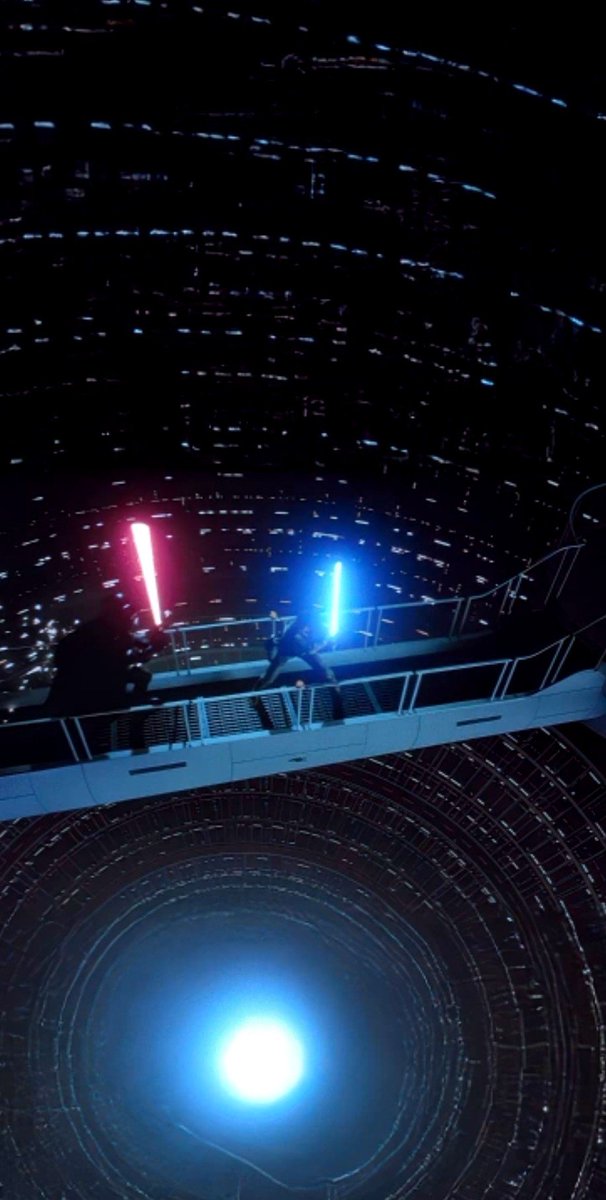
The Jedi Order's practice of training children from a very young age remains one of the most debated traditions in the "Star Wars" saga. To many viewers, it appears unusual that the Jedi accepted infants and toddlers while often refusing older candidates. The policy can even seem harsh when compared with ordinary family life. Yet within the fictional universe, the practice grew from a carefully developed philosophy about the Force, human nature, and the dangers of unchecked emotion.
The Jedi never viewed the Force as a simple source of extraordinary abilities. They believed it was a living energy that reflected the emotional state of the individual using it. A calm and disciplined mind strengthened the light side, while fear, anger, hatred, and selfish desire opened the path to the dark side. Because of that belief, the Order concluded that emotional character mattered even more than natural talent.
Full article can be found here. https://t.co/vc2YRH21Qy
A new visual history of the original Star Trek is on the way. The Original Voyages promises a deep look at the show that started it all. #StarTrek#1960s