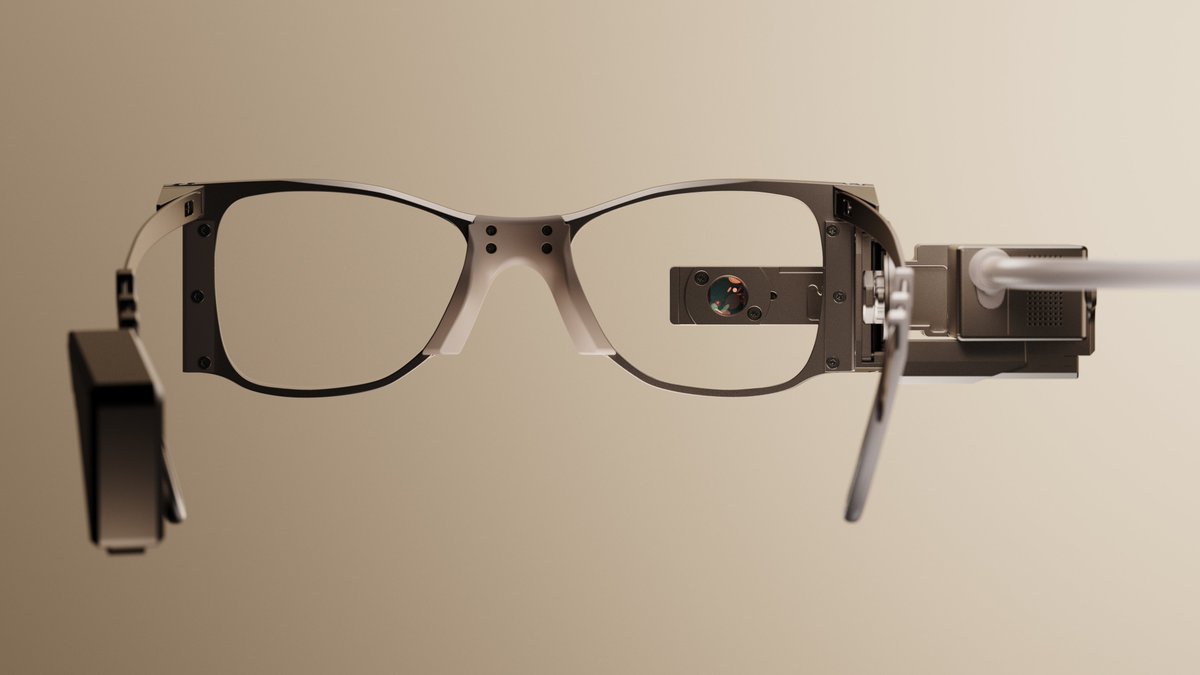
“More than 5 million people around the world have an advanced form of age-related macular degeneration (AMD) called geographic atrophy, in which cells in the retinas die off." https://t.co/k8wDrm0Ci2
PRIMA is one of @TIME's Best Inventions of 2026.
As the first brain-computer interface approved for commercial use in Europe for the restoration of central vision, PRIMA has given clinical trial patients with geographic atrophy the ability to read letters, numbers, and words again.
Our first blind patient in a clinical trial with Stargardt disease received the PRIMA implant and at his first rehab session, he saw a letter, and during his second session, he read a word. Watch the video:
Frank Brodie, MD, our Chief Medical Officer for Ophthalmology, joined the retina panel at Eyecelerator at @aao_ophth 2026 to discuss our PRIMA retinal implant.
Last week at @EURETINA 2026 in Vienna, researchers and clinicians behind the PRIMA clinical program shared the latest research and clinical developments across nine scientific sessions.
Thank you to everyone who joined us in Vienna.
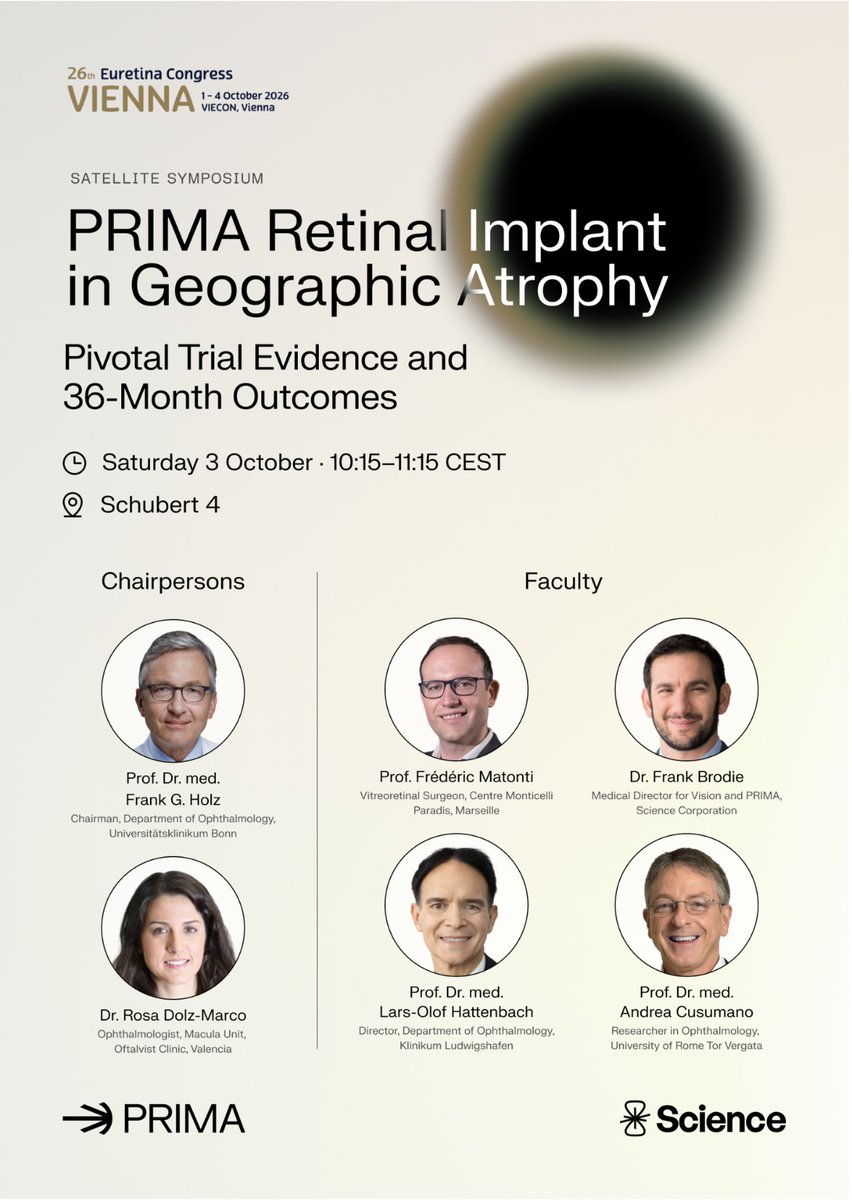
Today at @EURETINA 2026, the latest PRIMA clinical trial data will be presented during the Industry Symposium “PRIMA Retinal Implant in Geographic Atrophy: Pivotal Trial Evidence and 36-Month Outcomes.”
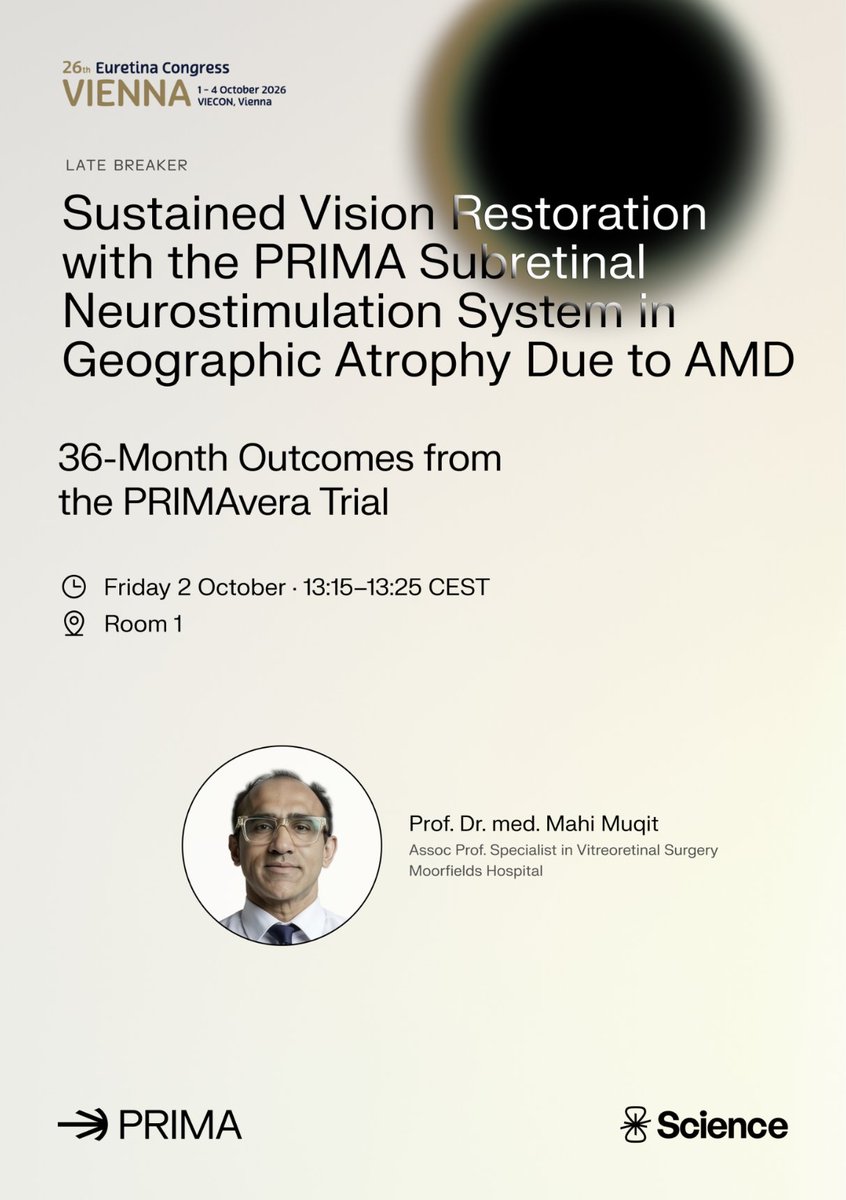
Mahi Muqit, MD, PhD, will present the 36-Month outcomes from the PRIMA clinical trial today at @EURETINA 2026 in Vienna.
See the full list of PRIMA sessions in the link in the comments.
@EURETINA 2026 begins today in Vienna. Frank Holz, MD, will deliver the keynote lecture "The Dark Side of the Moon: New Horizons in Dry AMD."
See the full PRIMA program in the comments.
At @EURETINA 2026 in Vienna this week, researchers and clinicians behind the PRIMA clinical program will present across nine sessions.
See the full PRIMA program in the comments.
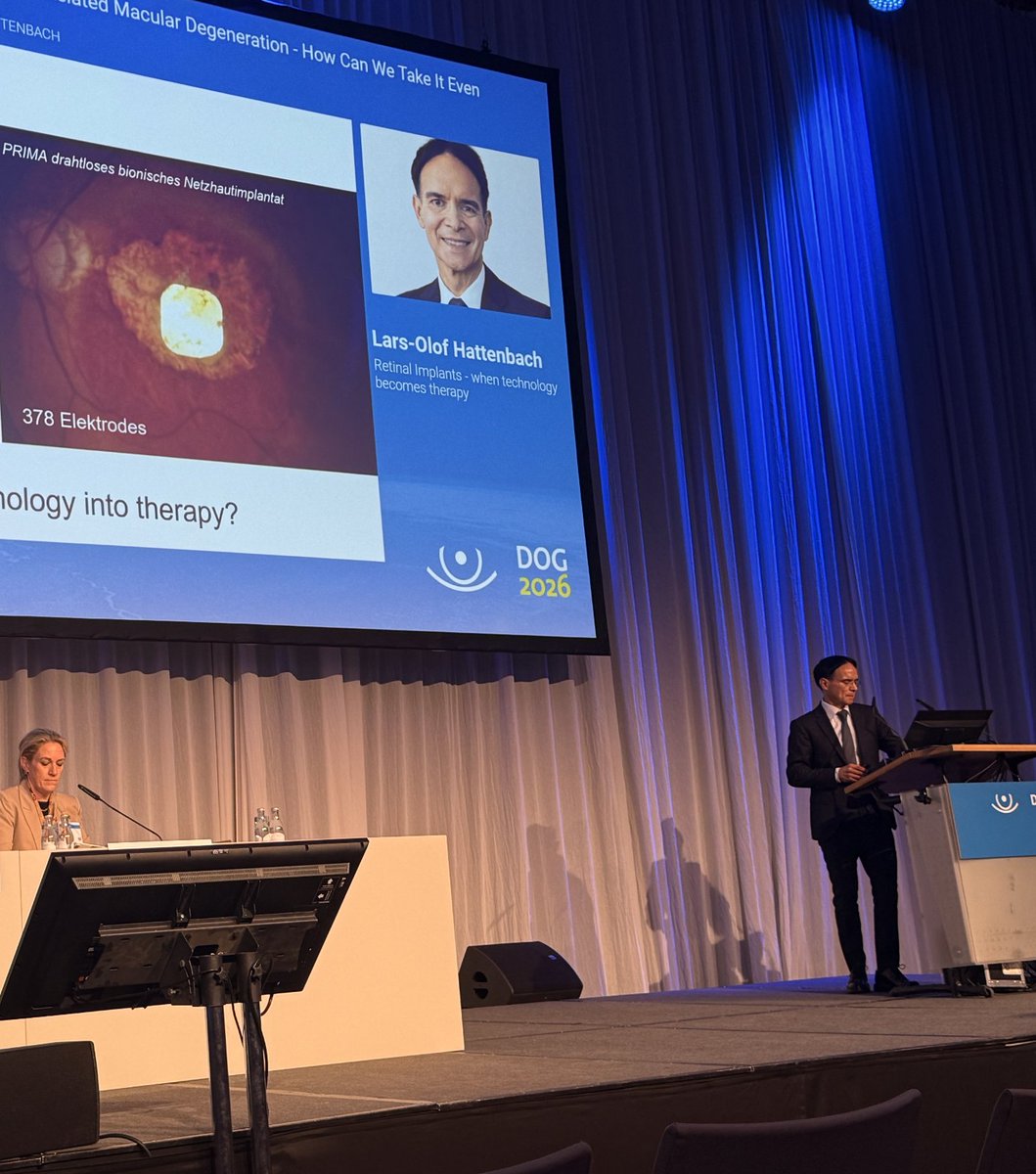
This week at DOG Deutsche Ophthalmologische Gesellschaft 2026 in Berlin, researchers and clinicians behind the PRIMA clinical program shared the latest research and clinical developments across nine scientific sessions.
Thank you to DOG and the physicians, researchers and broader ophthalmology community who joined us this week.
Learn more about PRIMA in the link in the comments.