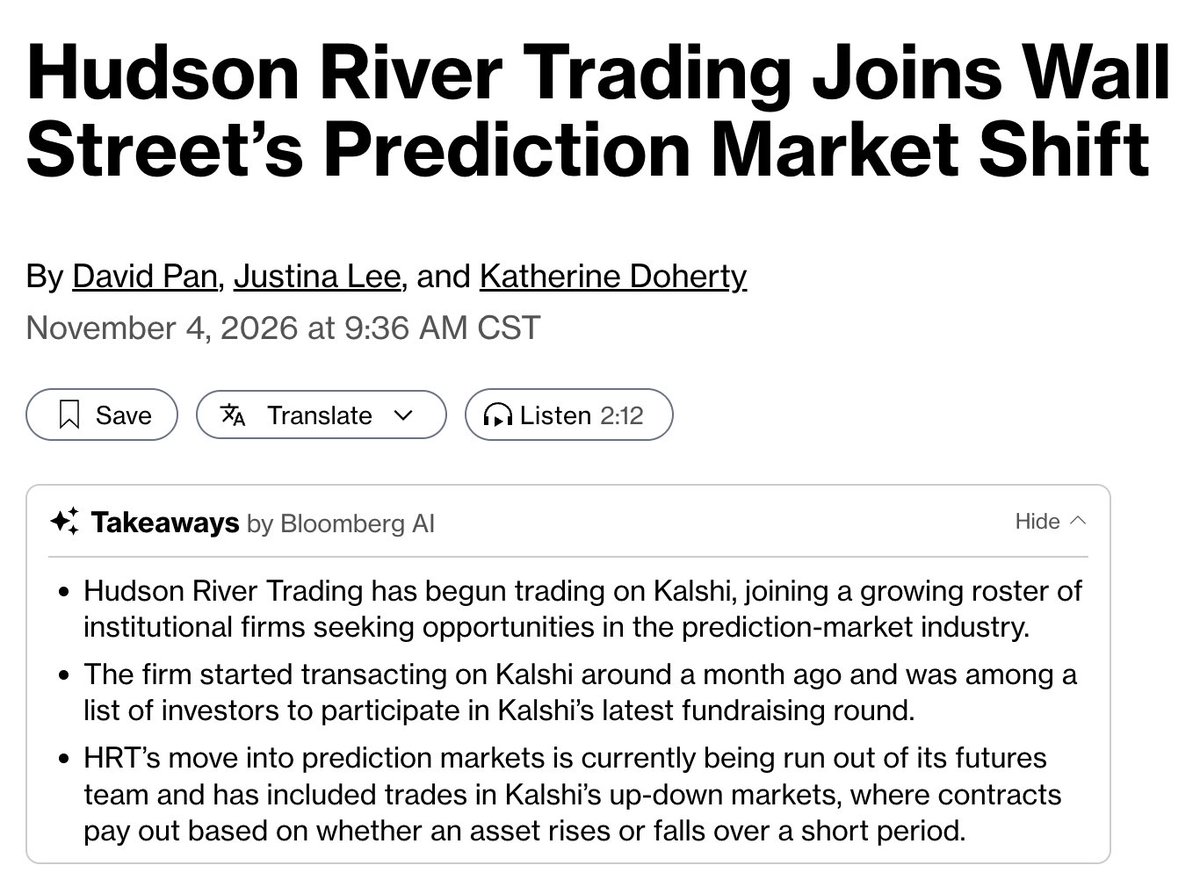
🚨 Hudson River Trading, one of Wall Street’s biggest market makers, has begun trading on Kalshi, Bloomberg reports.
The firm is trading financial contracts, including trades on short-term asset price moves.
Jump Trading and Susquehanna have also built teams to trade prediction markets.
HRT also participated in Kalshi’s $1 billion funding round at a $40 billion valuation.
Prediction markets are becoming a big part of Wall Street’s trading toolkit...
Single stock perps (SSPs) are here. And they're a truly great product. You don’t need to pay rollover fees like with futures, they’re simpler to trade than options, and you can go short just as easy as you can go long.
This is one of the most consequential products we’ve launched and I couldn’t be more proud of the team that worked for over a year to bring them to life. Just this morning, since the stealth launch, our users traded over $300m.
Grateful to be the ones bringing these to America in a regulated way 💚
Prediction markets are now helping people hedge the risk of getting paid late.
Former college athletes are waiting on BILLIONS in NCAA settlement money.
A contract that pays if distributions are delayed could help offset the financial cost of waiting...
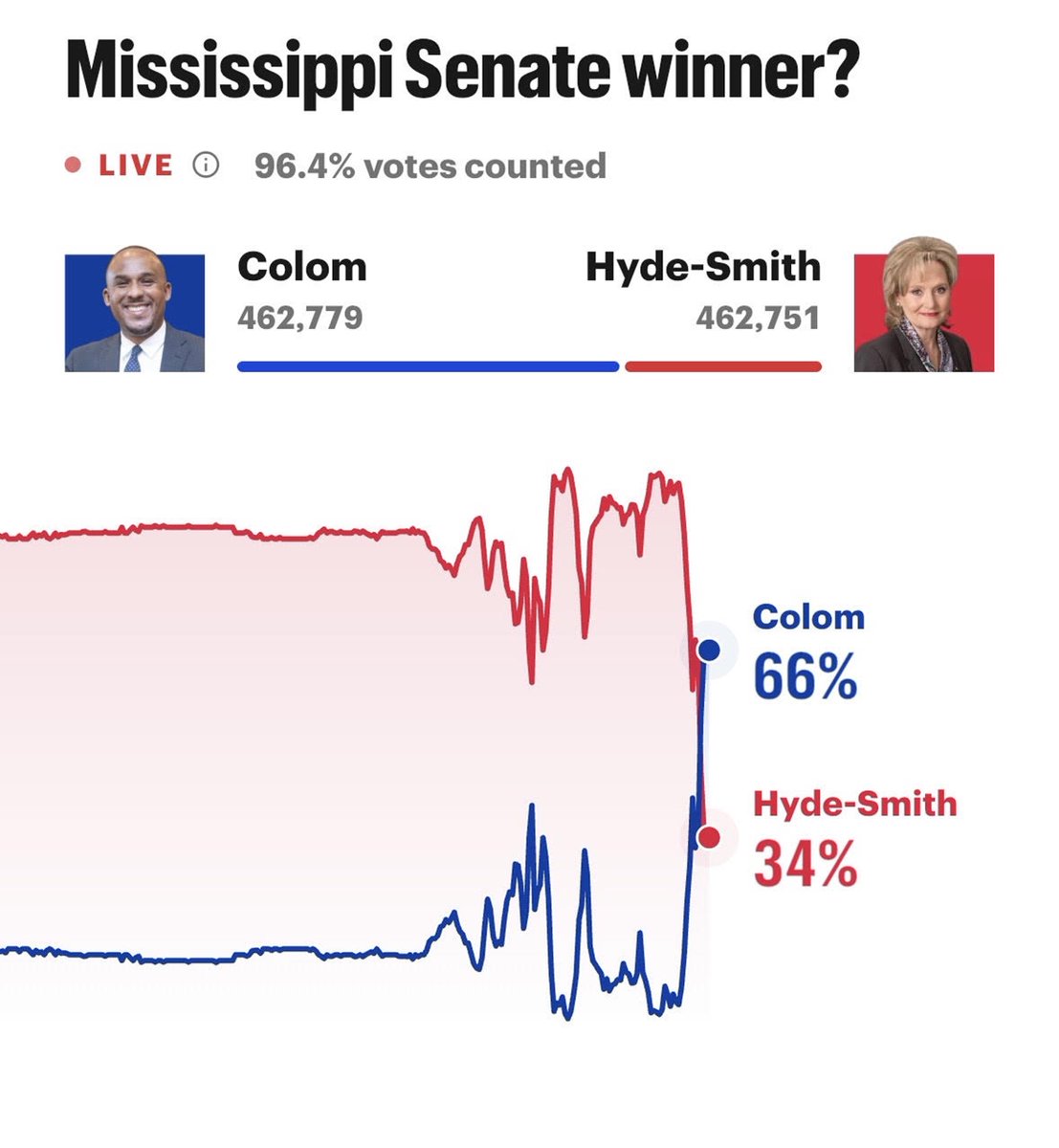
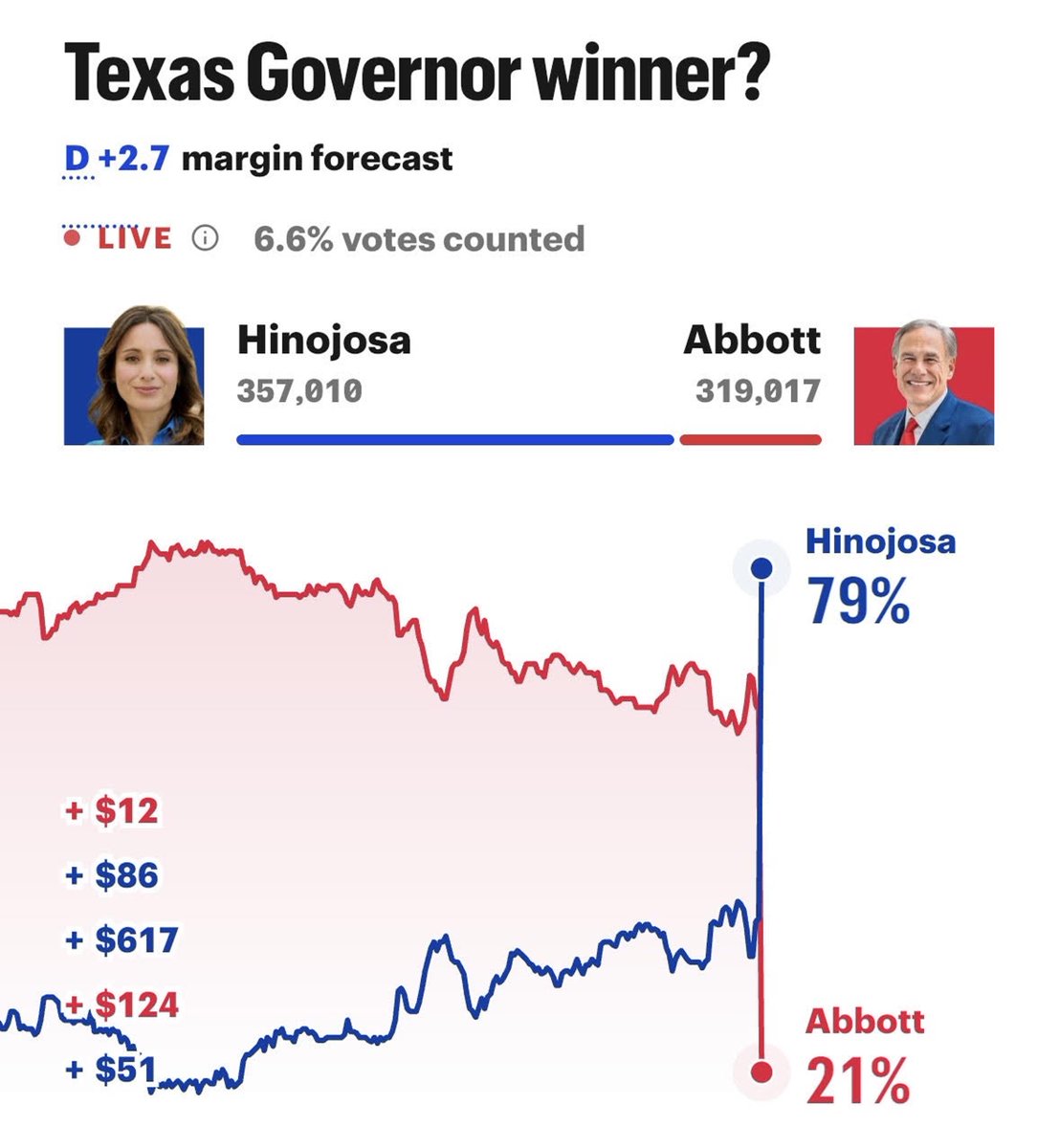
Last night, the power to decide what America sees changed hands.
I have spent a ton of time in DC over the last few months. The elites were certain the markets were off. I heard many variants of “no chance markets are right about X” and “I’ve been in politics for a decade. ‘These people’ don’t really know much.”
Last night, ‘these people’ beat the elites.
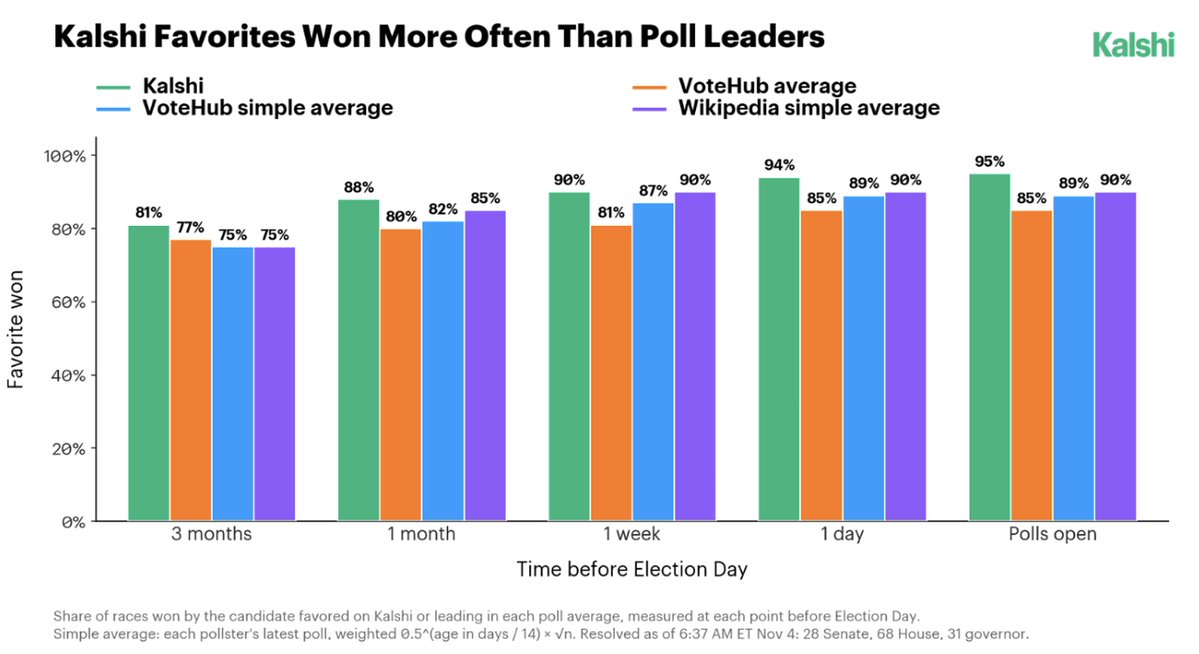
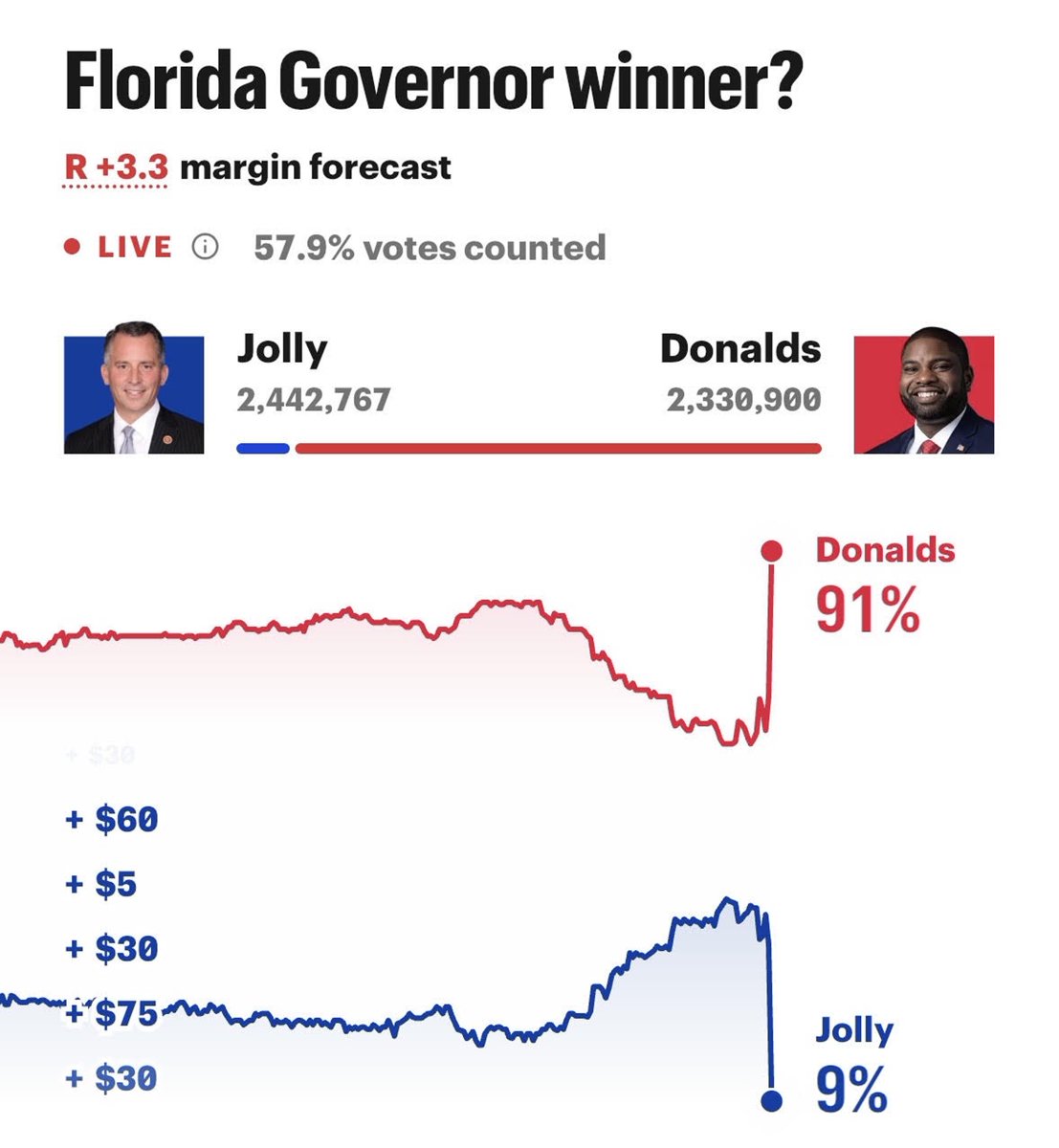
Prediction market favorites won 479 of the first 487 races. That’s 98%.
The elites live in a bubble. They theorize, write, ideate, and mistake credentials for an understanding of lives they’ve never lived. They don’t see and feel what the everyday man, on the ground, sees and feels.
Knowledge is not exclusive to the elites but scattered across millions of people.
Someone knows their hometown better than any national pundit. Someone has followed a local race passionately for months. Someone has followed a local race dispassionately for months. Someone notices a shift in their community before it makes the headlines. Someone is shaped by an incident at work. Someone is shaped by what’s getting harder or easier for their families.
Each holds a piece of the picture that no expert can see in full.
And for the longest time, that knowledge had no way to reach the rest of the world.
For generations, election night meant turning on the TV and waiting for a handful of people to tell you what happened.
Prediction markets change that.
You don't need a title, a large following, or an editor to publish you. All you need is a perspective and the conviction to back it.
That changes who holds power over information.
Anyone can see the market. Anyone can contribute to it. Anyone can question it. No title gives you the final word. No gatekeepers can filter your view.
Sometimes the signal can be wrong. But anyone can challenge the consensus and improve it.
And when people consolidate their knowledge together, something remarkable happens: millions of individual perspectives become a signal that we all can learn from.
Over the last few months, the people showed up on Kalshi to tell the world what they were going to do.
Last night, the megaphone was passed to them.
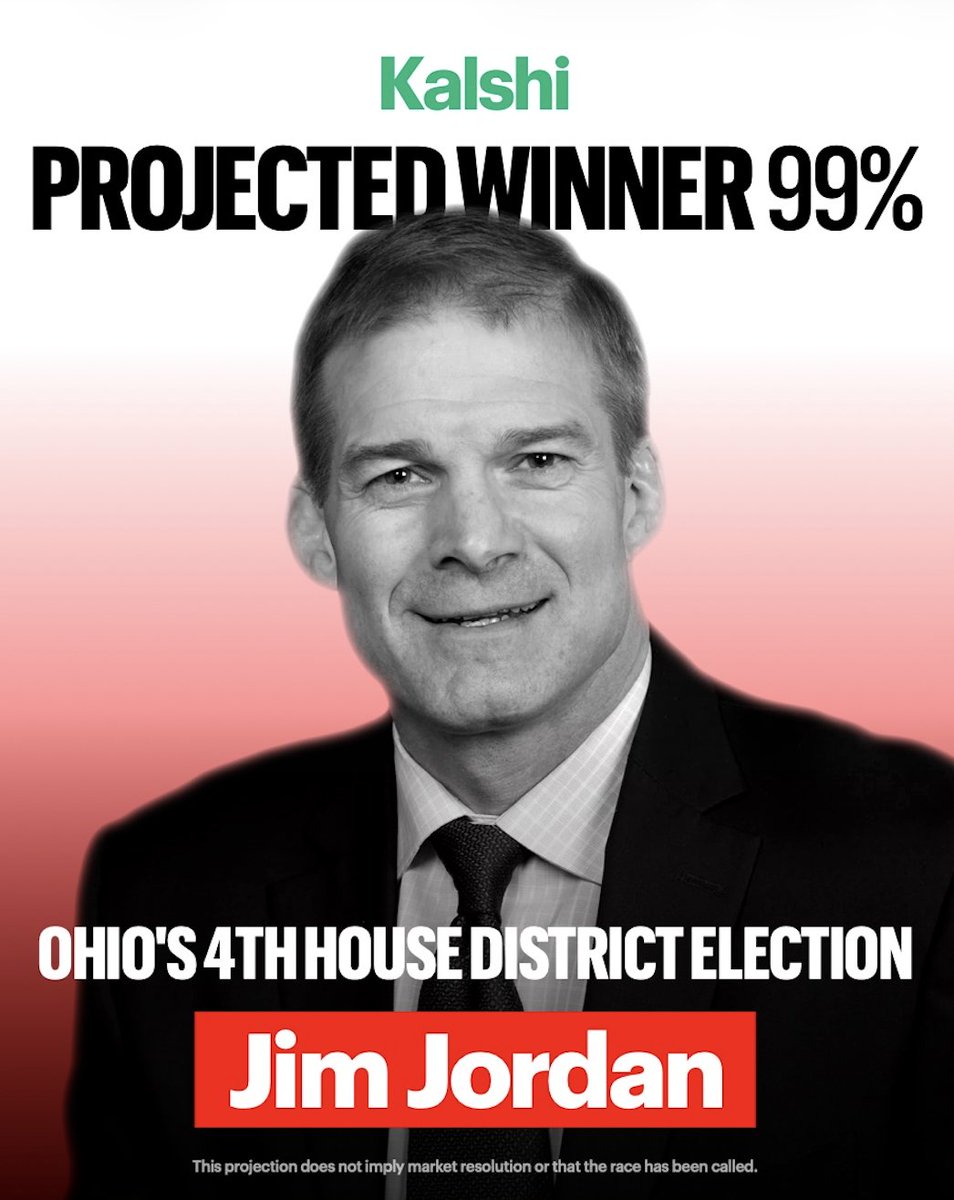
The favorite on Kalshi won 479 of 487 midterm races so far.
That’s 98%, forecasted before a single vote was counted.
The markets beat the polls and the models. The data 🧵
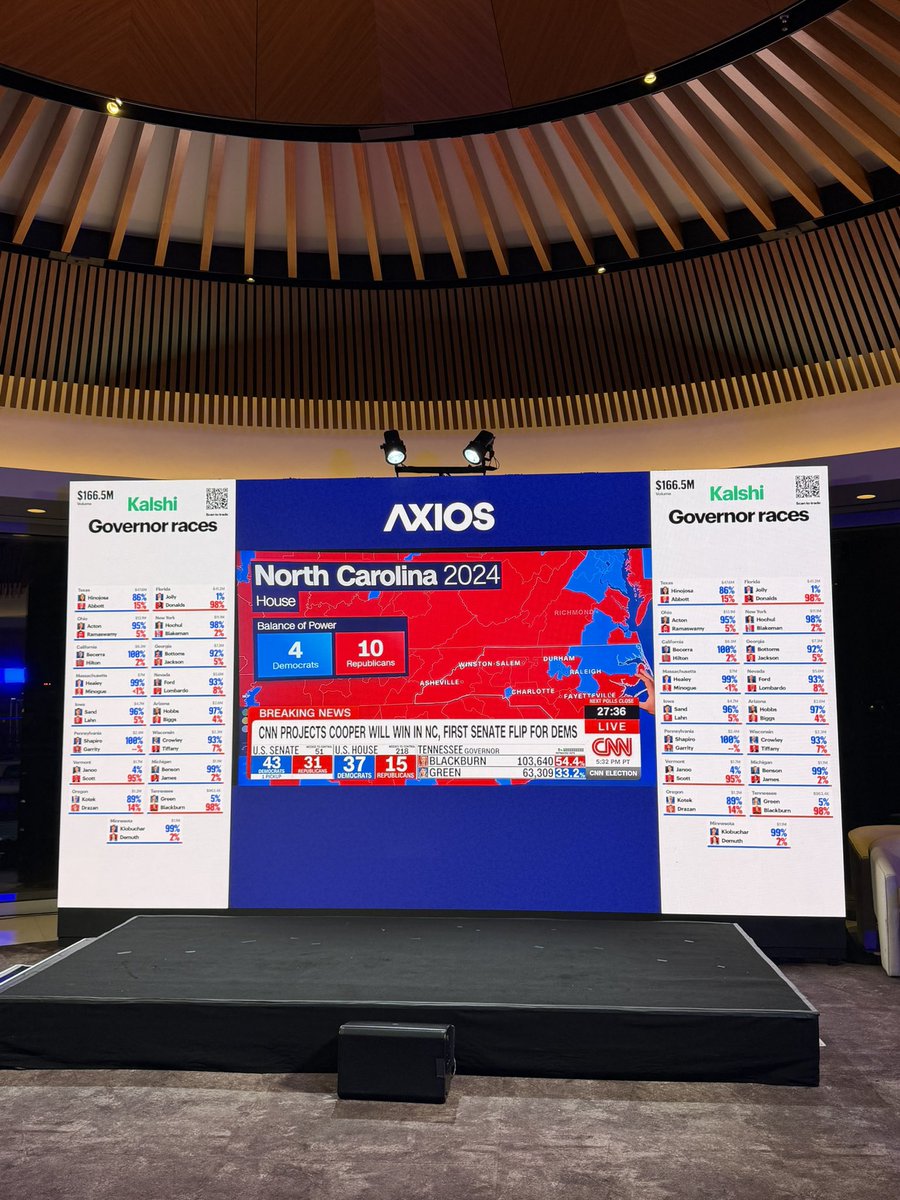
Live (odds!) from the Capitol with @Kalshi and @axios on Election Night. “On a prediction market, anyone — no matter who they are — can challenge the status quo if they disagree with it. They’re a mechanism for aggregating people’s opinions from the bottom up. From the people to the elites,” said @mansourtarek_.