Science Translational Medicine is the leading weekly online journal publishing translational research at the intersection of science, engineering and medicine.
An advanced wearable with motor sensors captures growth metrics and motor growth charts in infants playing at home over the course of more than a year—offering an unparalleled ability to track early patterns in motor and neurodevelopment. @helsinkiuni https://t.co/Qs2MRq5aP8
An analysis of patient data and mice untangles how sympathetic and sensory nerve crosstalk drives progression of oral cancer and triggers neuropathic pain by raising adrenergic sensitivity and peripheral neuroplasticity. @nicole_scheff@PittTweet https://t.co/QV37MIa8EG
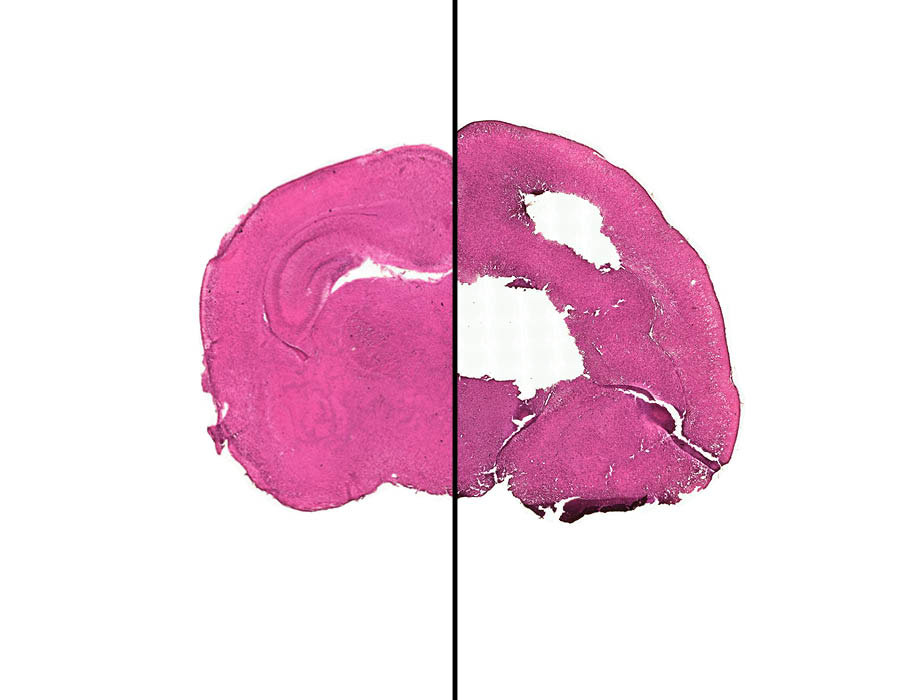
A liposomal nanoparticle therapeutic takes advantage of temporary blood-brain barrier disruption after surgical resection of #glioblastoma tumors to penetrate margins and deliver drugs such as doxorubicin, according to new preclinical work. @FBMH_UoM https://t.co/yeM7xqiaft
Don't miss this week's special issue of #ScienceTranslationalMedicine—featuring a deep dive into the latest cancer neuroscience research. A collection of Research Articles, Reviews, and Viewpoints dissects this emerging field and its clinical implications: https://t.co/Il2mMfxDuE
New single-cell analyses decrypt how hematopoietic stem cells in #SickleCellDisease display signs of #senescence such as DNA damage and cell cycle disruptions, and show that senolytic drugs can restore function in vivo and ex vivo. @StJudeResearch https://t.co/Vs95lg3oNI
A pair of live-attenuated vaccines for #YPestis can protect mice from pneumonic plague by stimulating humoral and cellular immunity—and surprisingly still provides robust protection in mice lacking the cytokine interferon-gamma. @utmbhealth https://t.co/4x7YM7S7Rl
A team untangles the immune mechanisms connecting #EBV to #MultipleSclerosis, showing that CD4+ T cells from patients respond to viral particle components and that this response can be calmed with B cell-depleting therapy. @KjetilBjornevik@HarvardChanSPH https://t.co/wg2zFlegO9
1/ 🧵Thrilled to share that our new paper was just published at @ScienceTM@aaas ! 🎉
We show how the complement system boosts the ability of antibodies to neutralize SARS-CoV-2, especially recent variants. 🦠🧫
https://t.co/3wheB6bJhu
A thread ⬇️
Excited to see one of my all-time favorite projects finally published in @ScienceTM Medicine! 🎉
I had the opportunity to join this project during my final-year medical school. So grateful to my mentor Dr. Amyn Habib for the opportunity. https://t.co/935QzX63Zz
An in-depth analysis of a phase 3 trial of youths with type 1 #diabetes combines RNA seq, kidney MRI, and proteomics to probe how the SGLT2 inhibitor dapagliflozin counteracts the hallmarks of diabetic kidney disease. @PBjornstadMD@UWEndocrinology https://t.co/Yb3xmuG2fh
An advanced wearable with motor sensors captures growth metrics and motor growth charts in infants playing at home over the course of more than a year—offering an unparalleled ability to track early patterns in motor and neurodevelopment. @helsinkiuni https://t.co/Qs2MRq5aP8
The new issue of #ScienceTranslationalMedicine is out now!
An at-home wearable jumpsuit captures motor development patterns in playing infants, a phase 3 trial reveals how an approved drug may treat kidney disease in youth with type 1 diabetes, and more. https://t.co/SsXHZtqnQj
By comparing drug-induced gene expression patterns in the striatum, a team identifies the cardiac drug SB-0107 as a potential adjunct therapy for #ParkinsonsDisease that boosts L-DOPA’s benefits in macaques while mitigating dyskinesia. @aa_bordba https://t.co/1EFEiCvplL
Applying bulk and single-cell #RNAsequencing, a team identifies PTEN as a driver of endothelial, lymph endothelial, and immune cell dysfunction in nonhealing venous leg ulcers in patients, suggesting PTEN inhibition as a possible intervention. @umfrostderm https://t.co/VOLGNpdTOs
Scientists isolate a bacteriophage that switches off a key virulence mechanism in adherent #Ecoli that drive Crohn's disease, and can attenuate #colitis in mice and augment the efficacy of low doses of budesonide. @VerduLab@Kyle_EH_Jackson@Farncombe_GI https://t.co/MTGhy65wiO
Intracortical microstimulation electrodes are safe and produce consistent sensations for as long as a decade in patients with spinal cord injury, supporting their utility in #BrainComputer interface interventions. @CMGreenspon@robert_gaunt1@UChicago https://t.co/Jo2GxKbYQG
A team untangles the immune mechanisms connecting #EBV to #MultipleSclerosis, showing that CD4+ T cells from patients respond to viral particle components and that this response can be calmed with B cell-depleting therapy. @KjetilBjornevik@HarvardChanSPH https://t.co/wg2zFlegO9
New work elucidates how Epstein-Barr virus may provoke T cells to drive multiple sclerosis, a brain-computer interface that restores touch is safe in humans for many years, and more in the new issue of #ScienceTranslationalMedicine. https://t.co/wS1vnEo0lj
A study of T cells from patients with #lupus#nephritis shows these cells are activated by local cytokines and could mediate injury in inflamed kidneys, with some T cells reactive to potentially latent #EpsteinBarr and #CMV. @ChariteBerlin@P_Enghard https://t.co/ZsBonNd4eC
A genetic study of nearly 2700 congenital cerebral ventriculomegaly (#CCV) hydrocephaly patients finds 25% of them have protein-damaging mutations, many of which are linked to neurodevelopmental disorders such as #ASD. @PiN_Harvard@KahleKristopher https://t.co/0O0YRtjKNy