Ever wonder if the universe is trying to tell us something? What if the light all around us is hiding a mind-blowing secret?
Light, it’s everywhere. It wakes you up, guides you home, and paints your world in color. But have you ever wondered if there’s more to it than meets the eye? What if the everyday glow we take for granted is whispering something extraordinary, something about the universe itself?
In this eye-opening book, I dive into the mysteries of light and uncover something wild: Light’s 18 unique properties tell an incredible story about our Creator.
Sounds crazy, right? But stick with me. This information turned my world upside down. This isn’t about heavy science or preachy religion, it’s about seeing things differently.
Light reveals what’s hidden. It’s the ultimate truth-teller, showing what’s really there.
I’m not here to convince you of anything. Whether you’re a skeptic, a dreamer, or just someone who loves a good “what if,” this book will pull you into a journey that connects the dots between the physical world and something bigger.
No PhD, or background in science, or faith required—just an open mind.
Why read it? Because light is something we all get. It’s universal. And through its quirks, you might stumble onto answers to questions you didn’t even know you had.
If you’re intrigued by seeing the universe in a new way, this book is a good place to start.
The Amazing Hummingbird
Hummingbirds are amazing. They are the most energy-efficient flying vehicles on the planet. Their wings can flap anywhere from 50 to 200 flaps per second, while expending extremely small amounts of energy.
Their hearts beat 1200 times per minute to deliver a constant stream of sugar and oxygen to their tissues through a dense network of capillaries to keep up with the energy demands.
Scientists have used high speed video to slow down and understand the dynamics of their flight. They’ve discovered that the tips of their wings trace out the shape of an 8. They also time their muscles to use a process of elastic recoil during stroke reversal. They are able to use a vector combination of drag and force to create lift on both the down stroke and the up stroke.
Scientists have reverse engineered these mechanics to develop a more efficient wind-energy generating system that’s built on flapping wings rather than a rotating blade.
🌌 The Enormous Scale of the Human Body
The human body is a masterpiece of biological engineering, made up of trillions of cells, quadrillions of atoms, and billions of miles of DNA.
Here are the numbers:
⚛️ A Universe of Atoms
At the most fundamental level, the average adult human body contains approximately
7 × 10²⁷ atoms. That’s
7,000,000,000,000,000,000,000,000,000 atoms, or seven octillion atoms.
Composition of the human body by atoms:
• 65% hydrogen
• 24% oxygen
• 10% carbon
• 1% trace elements (nitrogen, calcium, phosphorus, and others)
To put that into perspective: there are more atoms in your body than there are stars in the observable universe, which astronomers estimate at roughly 200 billion trillion (2 × 10²³) stars.
🧫 Trillions of Cells
Those atoms combine to form approximately 37,000,000,000,000 (37 trillion cells).
This is an average estimate for an adult human, though it varies by body size and composition:
• Adult male: about 37 trillion (37,000,000,000,000) cells
• Adult female: about 28 trillion (28,000,000,000,000) cells
• Child: about 17 trillion (17,000,000,000,000) cells
🧠 The Brain’s Neural Web
The human brain is an electrical universe of its own. It contains around 86 billion (86,000,000,000) neurons.
These neurons form 1,000,000,000,000,000 (1 quadrillion) synapses.
Each neuron can link to as many as 10,000 other neurons, creating a mind-boggling network of pathways.
🧬 The Epic Stretch of DNA
Inside nearly every one of these 37 trillion cells lies your genetic blueprint: DNA. This double helix molecule, only a few nanometers wide (a billionth of a meter), contains all the instructions for building and maintaining life.
Each cell contains about 2 meters (6.6 feet) of DNA when fully uncoiled.
Multiply that by 37 trillion cells, and you get a total length of approximately 👉 46 billion miles.
That’s enough DNA to wrap around the earth’s 🌍 equator 1.9 million times.
❤️ A Vast Vascular Highway
The body’s circulatory system forms an extraordinary network of blood vessels that deliver oxygen and nutrients while removing waste.
Tiny capillaries, the smallest blood vessels, weave through every tissue to reach every cell.
This vast network spans about 12,000 miles in an adult human.
That’s long enough to circle nearly halfway around Earth! 🌍
🌍 In summary, your body is composed of:
• 7 octillion (7,000,000,000,000,000,000,000,000,000) atoms.
• 37 trillion (37,000,000,000,000) cells.
• 86 billion (86,000,000,000) neurons.
• 1 quadrillion (1,000,000,000,000,000) synapses.
• 46 billion miles (46,000,000,000 miles) of DNA
• 12,000 miles of blood vessels.
In this book, I demonstrate how light, space, matter, time, and energy possess a unique signature that lead us to the identity of our Creator.
https://t.co/wsYariZlxo
🌌 The Enormous Scale of the Human Body
The human body is a masterpiece of biological engineering, made up of trillions of cells, quadrillions of atoms, and billions of miles of DNA.
Here are the numbers:
⚛️ A Universe of Atoms
At the most fundamental level, the average adult human body contains approximately
7 × 10²⁷ atoms. That’s
7,000,000,000,000,000,000,000,000,000 atoms, or seven octillion atoms.
Composition of the human body by atoms:
• 65% hydrogen
• 24% oxygen
• 10% carbon
• 1% trace elements (nitrogen, calcium, phosphorus, and others)
To put that into perspective: there are more atoms in your body than there are stars in the observable universe, which astronomers estimate at roughly 200 billion trillion (2 × 10²³) stars.
🧫 Trillions of Cells
Those atoms combine to form approximately 37,000,000,000,000 (37 trillion cells).
This is an average estimate for an adult human, though it varies by body size and composition:
• Adult male: about 37 trillion (37,000,000,000,000) cells
• Adult female: about 28 trillion (28,000,000,000,000) cells
• Child: about 17 trillion (17,000,000,000,000) cells
🧠 The Brain’s Neural Web
The human brain is an electrical universe of its own. It contains around 86 billion (86,000,000,000) neurons.
These neurons form 1,000,000,000,000,000 (1 quadrillion) synapses.
Each neuron can link to as many as 10,000 other neurons, creating a mind-boggling network of pathways.
🧬 The Epic Stretch of DNA
Inside nearly every one of these 37 trillion cells lies your genetic blueprint: DNA. This double helix molecule, only a few nanometers wide (a billionth of a meter), contains all the instructions for building and maintaining life.
Each cell contains about 2 meters (6.6 feet) of DNA when fully uncoiled.
Multiply that by 37 trillion cells, and you get a total length of approximately 👉 46 billion miles.
That’s enough DNA to wrap around the earth’s 🌍 equator 1.9 million times.
❤️ A Vast Vascular Highway
The body’s circulatory system forms an extraordinary network of blood vessels that deliver oxygen and nutrients while removing waste.
Tiny capillaries, the smallest blood vessels, weave through every tissue to reach every cell.
This vast network spans about 12,000 miles in an adult human.
That’s long enough to circle nearly halfway around Earth! 🌍
🌍 In summary, your body is composed of:
• 7 octillion (7,000,000,000,000,000,000,000,000,000) atoms.
• 37 trillion (37,000,000,000,000) cells.
• 86 billion (86,000,000,000) neurons.
• 1 quadrillion (1,000,000,000,000,000) synapses.
• 46 billion miles (46,000,000,000 miles) of DNA
• 12,000 miles of blood vessels.
Ever wonder if the universe is trying to tell us something? What if the light all around us is hiding a mind-blowing secret?
Light, it’s everywhere. It wakes you up, guides you home, and paints your world in color. But have you ever wondered if there’s more to it than meets the eye? What if the everyday glow we take for granted is whispering something extraordinary, something about the universe itself?
In this eye-opening book, I dive into the mysteries of light and uncover something wild: Light’s 18 unique properties tell an incredible story about our Creator.
Sounds crazy, right? But stick with me. This information turned my world upside down. This isn’t about heavy science or preachy religion, it’s about seeing things differently.
Light reveals what’s hidden. It’s the ultimate truth-teller, showing what’s really there.
I’m not here to convince you of anything. Whether you’re a skeptic, a dreamer, or just someone who loves a good “what if,” this book will pull you into a journey that connects the dots between the physical world and something bigger.
No PhD, or background in science, or faith required—just an open mind.
Why read it? Because light is something we all get. It’s universal. And through its quirks, you might stumble onto answers to questions you didn’t even know you had.
If you’re intrigued by seeing the universe in a new way, this book is a good place to start.
In this book, I demonstrate how light, space, matter, time, and energy possess a unique signature that lead us to the identity of our Creator.
https://t.co/wsYariZlxo
This is an image of Westerlund 1, a super star cluster in our Milkyway galaxy.
The stars in Westerlund 1 are 50,000 to 100,000 times the mass of our Sun. This star cluster is packed in a region of space that is only six light-years across.
“The heavens declare the glory of God;
the skies proclaim the work of his hands.
Day after day they pour forth speech;
night after night they reveal knowledge.
They have no speech, they use no words;
no sound is heard from them.
Yet their voice goes out into all the earth,
their words to the ends of the world.” - Psalm 19:1-4
In this book, I demonstrate how light, space, matter, time, and energy possess a unique signature that lead us to the identity of our Creator.
https://t.co/wsYariZlxo
This is an image of Westerlund 1, a super star cluster in our Milkyway galaxy.
The stars in Westerlund 1 are 50,000 to 100,000 times the mass of our Sun. This star cluster is packed in a region of space that is only six light-years across.
“The heavens declare the glory of God;
the skies proclaim the work of his hands.
Day after day they pour forth speech;
night after night they reveal knowledge.
They have no speech, they use no words;
no sound is heard from them.
Yet their voice goes out into all the earth,
their words to the ends of the world.” - Psalm 19:1-4
In this book, I demonstrate how light, space, matter, time, and energy possess a unique signature that lead us to the identity of our Creator.
https://t.co/wsYariZlxo
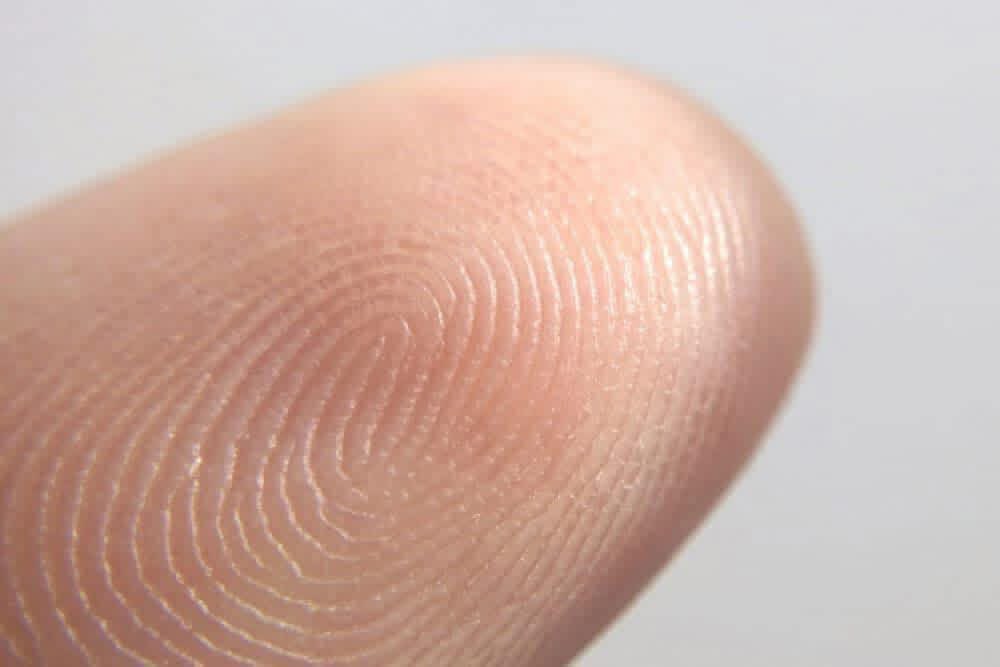
Our fingertips are equipped with ultra-sensitive touch receptors that can differentiate between different types of surface stimuli. The human finger is sensitive enough to measure surface textures with size features down to 13 nanometers (13 billionths of a meter).
Our fingertips possess epidermal ridges and four different types of mechanoreceptors that equip our fingers with the ability to distinguish different amounts of pressure, texture, temperature, and vibration.
There are four different types of mechanoreceptors in our skin that respond to different modes of tactile stimuli. They are differentiated by the amount, type, and depth of pressure that causes their activation, as well as the frequency of vibration as the skin moves over the surface. Once activated, these receptors send electric stimuli to our brain.
Scientists are attempting to develop sensing devices with the same sensitivity, differentiation, and dynamic range as the human finger in order to develop robotic technologies that can manipulate different materials with precision.
Random, or designed?
Our fingertips are equipped with ultra-sensitive touch receptors that can differentiate between different types of surface stimuli. The human finger is sensitive enough to measure surface textures with size features down to 13 nanometers (13 billionths of a meter).
Our fingertips possess epidermal ridges and four different types of mechanoreceptors that equip our fingers with the ability to distinguish different amounts of pressure, texture, temperature, and vibration.
There are four different types of mechanoreceptors in our skin that respond to different modes of tactile stimuli. They are differentiated by the amount, type, and depth of pressure that causes their activation, as well as the frequency of vibration as the skin moves over the surface. Once activated, these receptors send electric stimuli to our brain.
Scientists are attempting to develop sensing devices with the same sensitivity, differentiation, and dynamic range as the human finger in order to develop robotic technologies that can manipulate different materials with precision.
Random, or designed?