We should all be able to encapsulate the main message of a scientific publication in short poem format. This challenges us to be brief, clear and to the point.
By Evan Palmer-Young:
Bee bacteria thrive in niche warm,
giving parasites cause for alarm
When stewed in their acid,
invaders grow flaccid
When heated, They ooze sour charm
bioRxiv; 2023. p. 2023.03.20.533504. doi:10.1101/2023.03.20.533504
By Evan Palmer-Young:
Though high temperatures needed by bee
Plants and insects of viruses free,
'Stead of parasite toast
Seems warm blood of bee host
Stokes the fire of DWV
doi:10.1038/s42003-023-04704-6
When pollen comes from overseas
Is it safe to feed our bees?
We think that it might be wise
To test the ways we sterilize.
We put three methods to the test;
Ethylene oxide was the best.
https://t.co/E8P5WZRYqf
#Science_Poetry
Happy New Year everyone!
Time for poetry by Evan Palmer-Young:
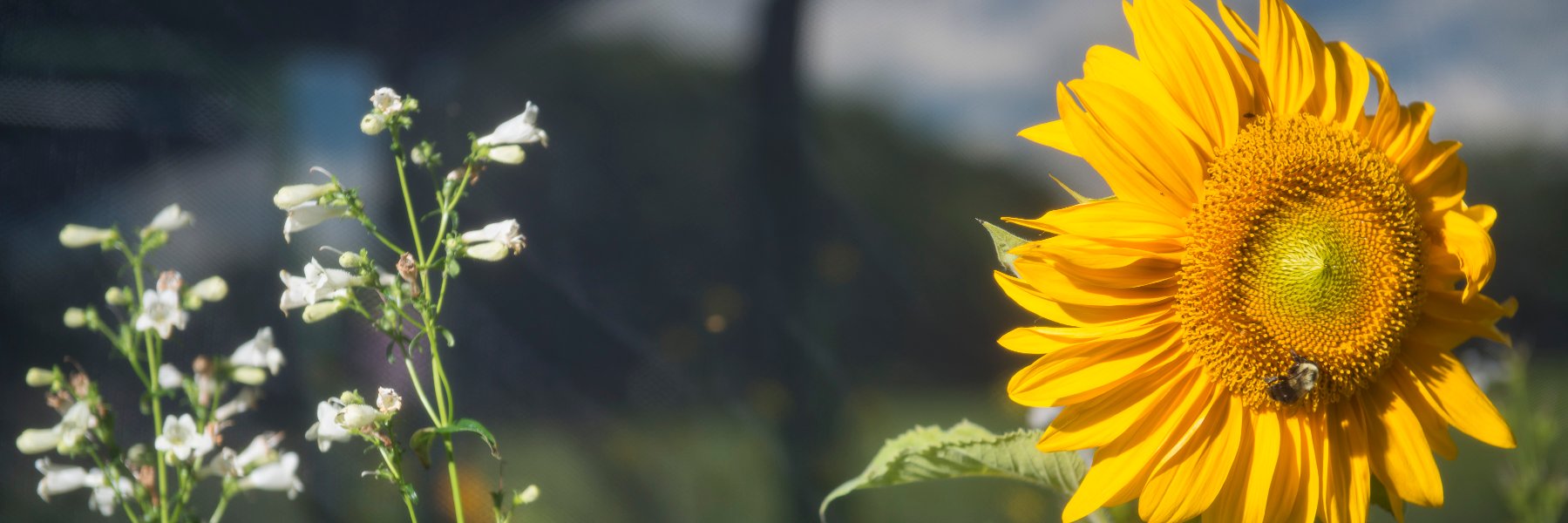
Fields of sunflower blooming in sight
yield for many a bee a delight.
But with bright yellow joy
displaced by corn and soy,
honey bees could lose balm for their mites
https://t.co/2T1OdVajgs
by Evan Palmer-Young:
Diverse flagellates in insects writhe
Yet in honey bees few remain blythe
Match of parasite-host
Unexplained still for most
Could be shaped by plant compounds' sharp scythe
https://t.co/G5B3ICdEdo
https://t.co/9ifhr7R4rL
Who spreads bee disease?
Certainly bees, but who else?
Flies! Darn Diptera.
By Scott McArt
Davis et al. Eristalis flower flies can be mechanical vectors of the common trypanosome bee parasite, Crithidia bombi. Sci Rep 11, 15852 (2021). https://t.co/t9Z1AL99hB
@Science_Poetry
by David Hik
There are strange things done in the midnight sun
Where the pikas and marmots scurry
Now smaller bugs are bigger players
Our plant-herbivore interactions have many more layers
And warming climate is an increasing worry.
@Science_Poetry#Science_Poetry
By Evan Palmer-Young:
Hot and sour: parasite adaptations to honey bee body temperature and pH
doi: https://t.co/MKkUvmPXg4
Heat and acid in honey bee hosts
Mimic mammals' Leishmania moats
Low-pH gut ferment
Structures flagellates' ascent
Heat from honey makes parasites toast
For science, poetry and bugs lovers:
A Natural History of Insects in 100 Limericks:
https://t.co/PgSoxdZbme
I have no affiliation or inside knowledge, this just sounded cool!
Sorry for the looong silence! That latest delightful piece refers to:
Adler et al. 2020. Assessing chemical mechanisms underlying the effects of sunflower pollen on a gut pathogen in bumble bees. Journal of Chemical Ecology 46(8): 649-658. DOI: 10.1007/s10886-020-01168-4
By Lynn Adler:
Sunflower pollen reduces disease.
But how does it function in helping the bees?
It must be the chemicals, so we tried them first.
We tested some compounds in several bursts.
Alas; no effect! What more can we try?
Maybe spikes on the pollen make pathogens die.
By Evan Palmer-Young:
When sweat, bumble, and mason bees sip
Parasites on their guts get a grip
Two Crithidia were found
Swimming 'cross species bounds
Many bees could thus share a bad tryp.
https://t.co/4egRIy5z1b