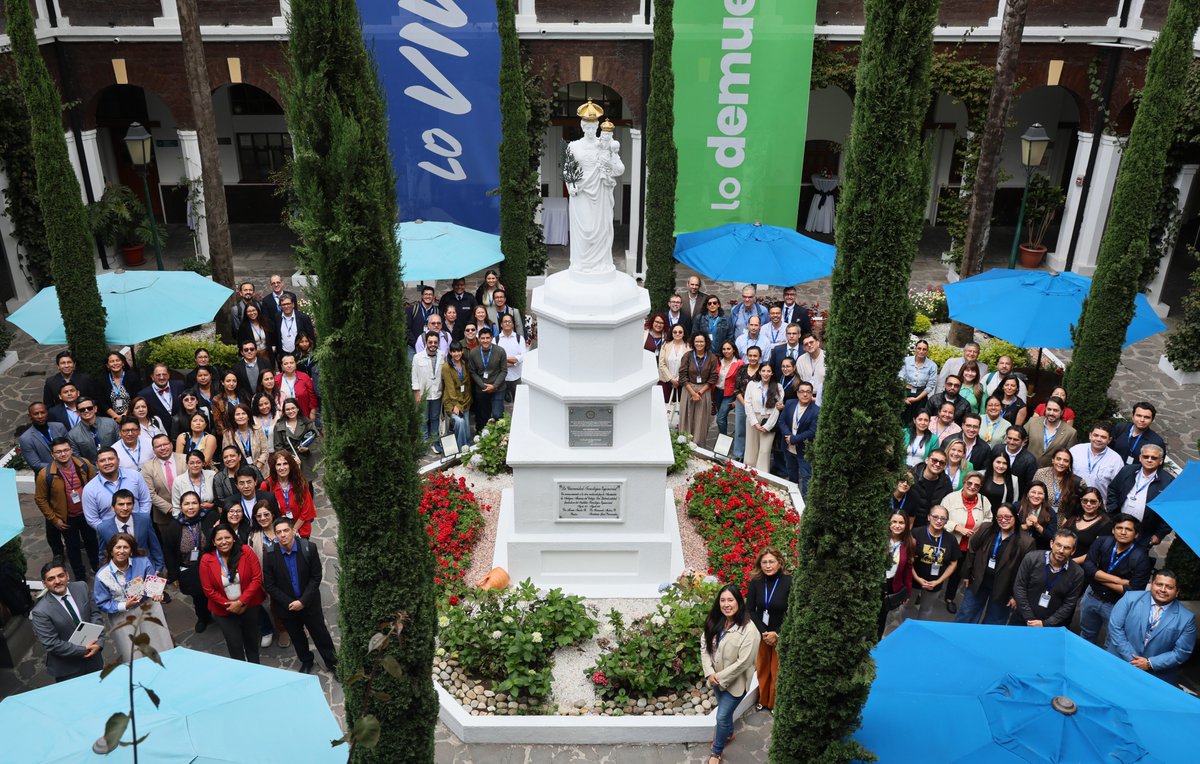
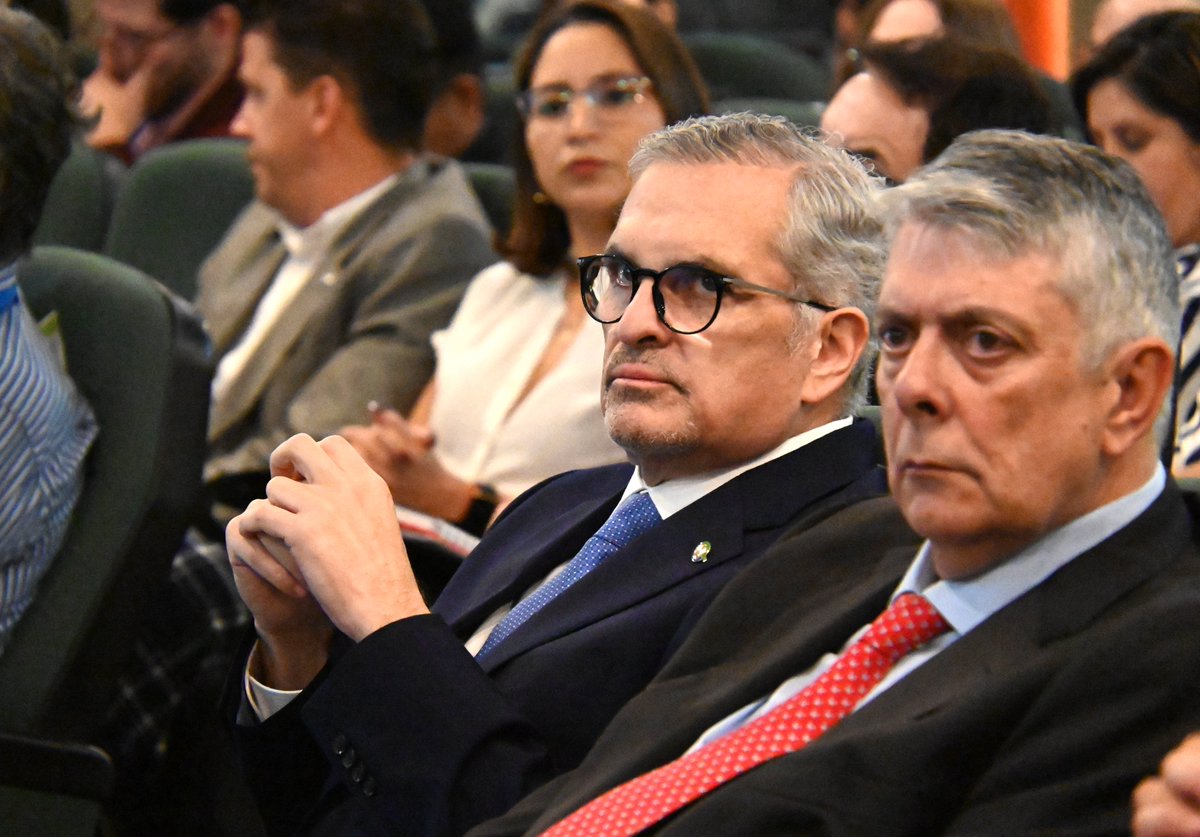
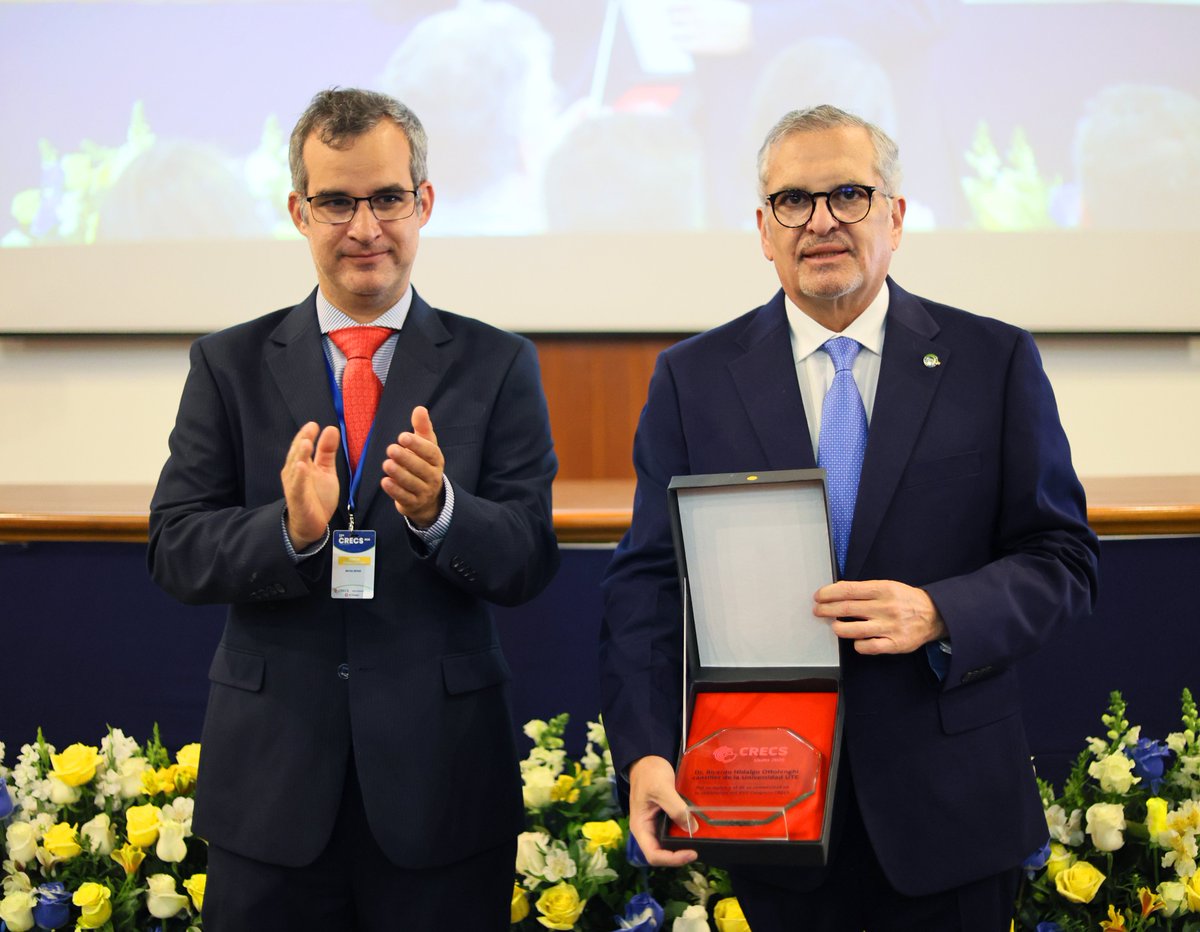
Ecuador fue sede del 17.° Congreso Internacional sobre Revistas Científicas (CRECS) 2026, un encuentro organizado conjuntamente por la Universidad UTE y SCImago.
Durante tres días, especialistas internacionales, representantes de editoriales, universidades, bibliotecas y organizaciones de Iberoamérica compartieron conocimientos, experiencias y buenas prácticas sobre los desafíos y oportunidades de la comunicación científica.
El programa abordó temas como ciencia abierta, inteligencia artificial, edición académica y estrategias para fortalecer la calidad, visibilidad e impacto de la producción científica.
Desliza y revive algunos de los momentos que marcaron esta edición de CRECS en Ecuador.
#CRECS2026 #SomosUTE #RevistasCientíficas #ComunicaciónCientífica
Today at #CRECS2026, @felixdemoya , CEO of SCImago, introduced the SCImago IRIS 2027 Model:
Looking at journals from IRIS. How to identify risks from journals.
🔍 A constructive and early-warning framework against scientific risk. Far from punitive approaches, it allows editorial teams to identify atypical patterns and structural vulnerabilities to proactively manage their reputation. 🛡️
#SCImago #ResearchIntegrity
Advanced scientometric analysis does not judge; it guides institutional decision-making and scientific policy design. Excessive reliance on internal citations affects how research impact is perceived.
By analyzing these patterns, IRIS enables institutions to anticipate scientific risks and consolidate a transparent, solid global positioning.
Explore SCImago IRIS and consult the executive summary. If you require a more in-depth analysis of the results or have any questions, please contact us.
🔗https://t.co/lGku8xj6h3
#ChartOfTheWeek | When does institutional self-citation cease to be a natural dynamic and become a signal of scientific risk?
This metric measures the proportion of an institution’s citations originating from its own authors. While some self-citation is natural, unusually high levels may suggest scientific insularity or attempts to inflate impact.
Let's dive into our #ChartOfTheWeek using IRIS data. 🧵 👇
The normalized Institutional Self-Citation indicator reveals structural asymmetries. Positive scores indicate a higher-than-average exposure to potential integrity risks, whereas negative scores indicate lower exposure:
📌Eastern Europe shows the highest exposure to scientific risk.
📌Africa and Latin America present moderate exposure.
📌 Northern America and Western Europe operate with negative values, reflecting a lower exposure to these risks.
🔗https://t.co/Cykeb3Zh00
The SCImago IRIS platform is not a static system; it is an evolving ecosystem. 🧬📊
With the accelerated advancement of AI in generating texts, data, and images, new scenarios of scientific integrity risk emerge in scholarly communication.
That is why IRIS adapts continuously, developing and incorporating new indicators to help institutions manage these challenges and protect their positioning.
More than a fixed set of metrics, IRIS is a dynamic framework that evolves alongside the future of scholarly publishing.
Read more about the SCImago IRIS platform 👇https://t.co/fD07SguQhF
#SCImagoIRIS #ResearchIntegrity
Starting in minutes | Scientific integrity is a fundamental pillar for scientific advancement. That's why we invite you to the broadcast (in Spanish) where Dr. Félix de Moya will present the conference "Indicadores de Riesgo de Integridad de la Investigación en las universidades colombianas: la plataforma IRIS".
Discover how IRIS helps institutions promote good practices, manage risks, and strengthen the quality of research in the country. 🇨🇴💡
Join here: https://t.co/iXv4uoQXUo
@UCatolicaCo
#RevistaIEEE
📚 La próxima semana, el @ieee_es participará en el 17º Congreso Internacional sobre Revistas Científicas (CRECS 2026), organizado por @UTEoficial y @scimago.
🌎 Un espacio para compartir experiencias y buenas prácticas sobre los retos actuales de la edición científica y mejorar la calidad, visibilidad e internacionalización de las revistas.
🔗 https://t.co/5VbC6FwtTb
Anticipating scientific risks and integrating AI are key to the future of journals. Join SCImago at #CRECS2026:
🔹 @felixdemoya: "Mirando a las revistas desde IRIS. Cómo identificar riesgos desde las revistas"
🔹 @isidroaguillo: "Herramientas de IA con fuentes bibliográficas"
📍 UTE, Quito
🗓️ Sept 23 (🗣️ ES)
🔗https://t.co/Tgg6j0vs6I
SJR quartiles are the starting point for institutional positioning and excellence-driven scientific governance. 📈
To leverage them as a strategic tool, it is vital to understand their nature:
🔄 They are dynamic: They are updated annually based on the ecosystem's behavior.
🔀 They are multi-category: A journal can be Q1 in Geography and Q3 in Environmental Sciences simultaneously.
Rigid regulations are no longer viable. Current trends demand the use of institutional intelligence tools like the SCImago Journal & Country Rank to strategically monitor scientific communication channels. 🌍
Learn how to implement this vision in your institution 👉 https://t.co/lQRBcFPk8t
Sharing a new #SCImagoInsight. The goal is not just to explore the volume increase of female participation in science, but to identify the real transition towards a more balanced ecosystem. 🧵👇
The FemSTP allows decision-makers to assess structural equity and benchmark their talent retention capabilities.
Explore the institutional data here: https://t.co/cthnHD40p7