BREAKING NEWS
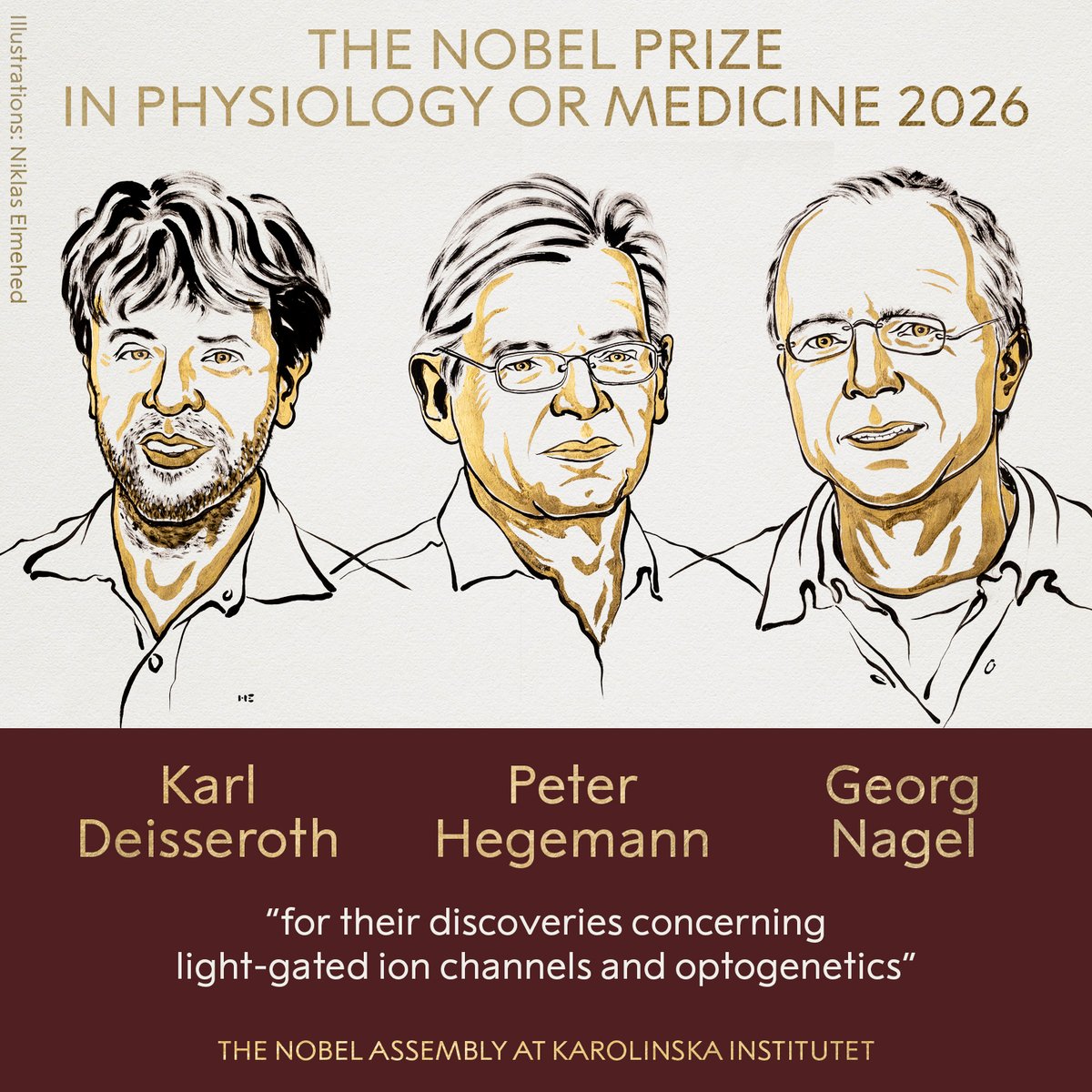
The 2026 #NobelPrize in Physiology or Medicine has been awarded to Karl Deisseroth, Peter Hegemann and Georg Nagel “for their discoveries concerning light-gated ion channels and optogenetics.”
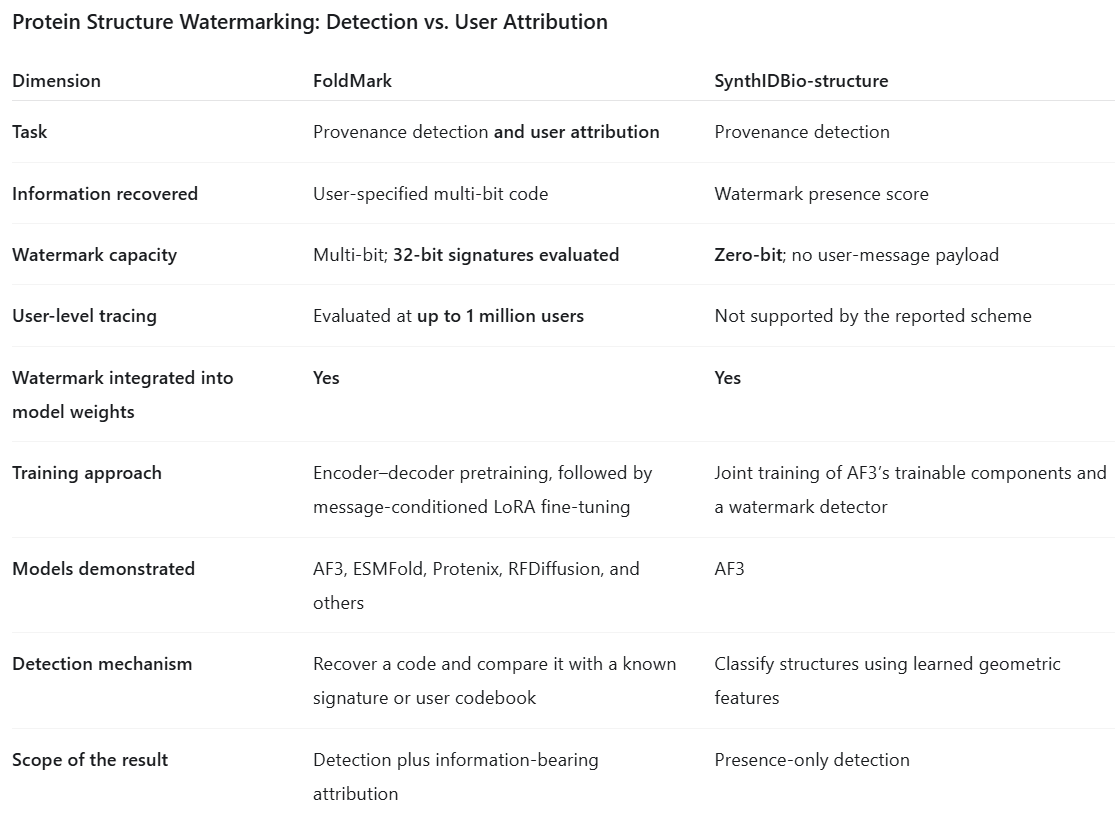
Read DeepMind’s SynthIDBio paper this morning and used ChatGPT to help organize a side-by-side comparison with our FoldMark, particularly the structure watermarking component. Still surprised by how FoldMark is represented.
The paper explicitly states:
“Finally, differentiability from other structure-based watermarks such as FoldMark¹⁵ has not been studied.”
Yet it calls SynthIDBio-structure “considerably simpler” and suggests that directly fine-tuning AF3 is “key” to “state-of-the-art structural accuracy”—without reporting a direct, controlled comparison with FoldMark.
FoldMark already embeds structural watermarks through model fine-tuning. At the task level, SynthIDBio-structure addresses the zero-bit special case of the broader detection-and-attribution problem covered by FoldMark. Our method supports multi-bit attribution, evaluated at up to one million users; their reported structural scheme detects watermark presence without identifying users.
FoldMark paper: https://t.co/QMxMfICdYH
Github: https://t.co/sZT91Qi6Y1
@GoogleDeepMind@demishassabis@pushmeet@davidstutz92
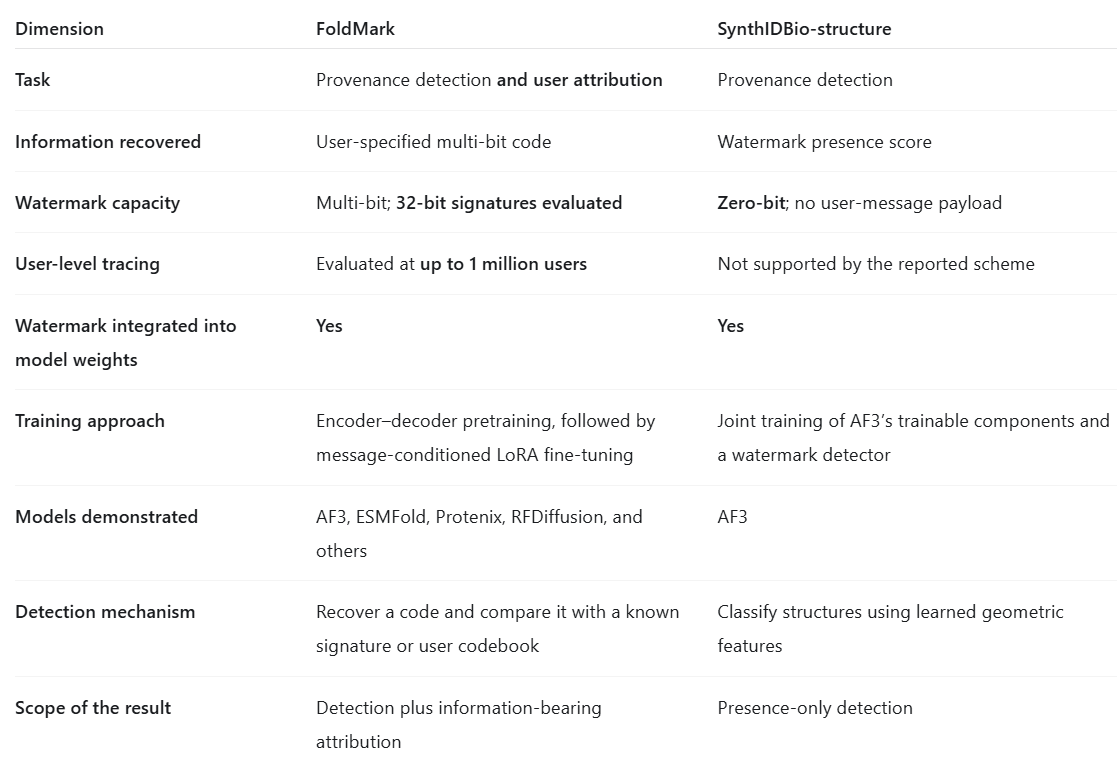
Read DeepMind’s SynthIDBio paper this morning and used ChatGPT to help organize a side-by-side comparison with our FoldMark, preprinted in 2024, particularly the structure watermarking component. Still surprised by how FoldMark is represented.
The paper explicitly states:
“Finally, differentiability from other structure-based watermarks such as FoldMark¹⁵ has not been studied.”
Yet it calls SynthIDBio-structure “considerably simpler” and suggests that directly fine-tuning AF3 is “key” to “state-of-the-art structural accuracy”—without reporting a direct, controlled comparison with FoldMark.
FoldMark already embeds structural watermarks through model fine-tuning. At the task level, SynthIDBio-structure addresses the zero-bit special case of the broader detection-and-attribution problem covered by FoldMark. Our method supports multi-bit attribution, evaluated at up to one million users; their reported structural scheme detects watermark presence without identifying users.
FoldMark paper: https://t.co/QMxMfICdYH
Github: https://t.co/sZT91Qi6Y1
@GoogleDeepMind@demishassabis@pushmeet@davidstutz92@Nature
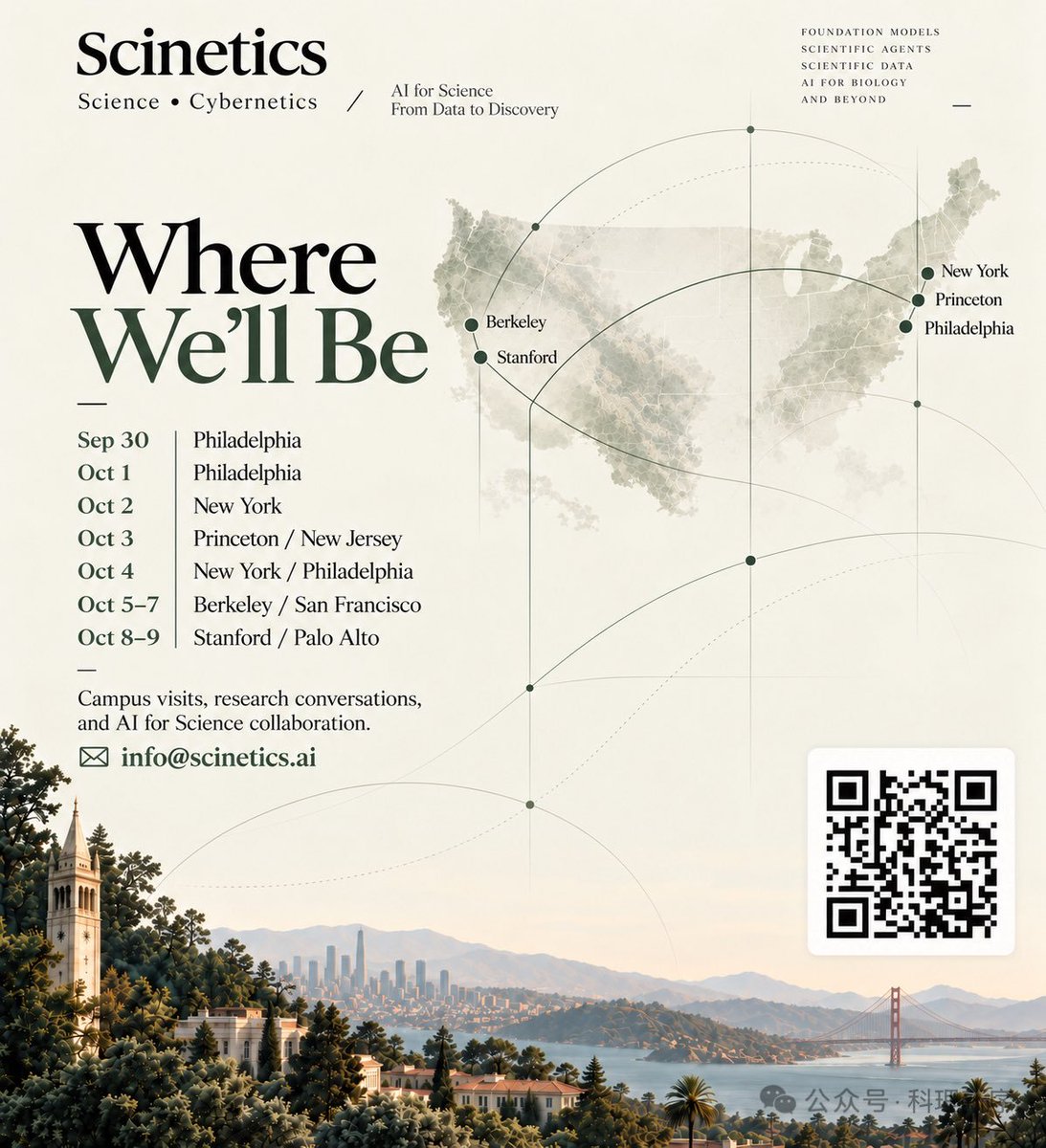
Scinetics North America Tour 2026
Sep 30 – Oct 9
Philadelphia · NYC · Princeton · Berkeley · San Francisco · Stanford · Palo Alto
We’ll also be around for COLM @COLM_conf and SF Tech Week @Techweek_.
We’d love to meet people working across AI for Science, scientific agents, foundation models, biology, scientific data, experiments, and related areas.
Open to research collaboration, recruiting, business collaboration, joint development, or simply exchanging ideas over coffee.
The QR code in the poster supports both Chinese and English. You can also DM us here or leave a comment if you’d like to connect.
Building Intelligence for Science.
Great to see Zaixi Zhang’s @ZaixiZhang FoldMark featured alongside Google DeepMind’s SynthIDBio in Nature today @GoogleDeepMind@davidstutz92@pushmeet .
Protein provenance and attribution are quickly becoming real infrastructure questions for generative biology. Exciting to see both approaches shaping the conversation.
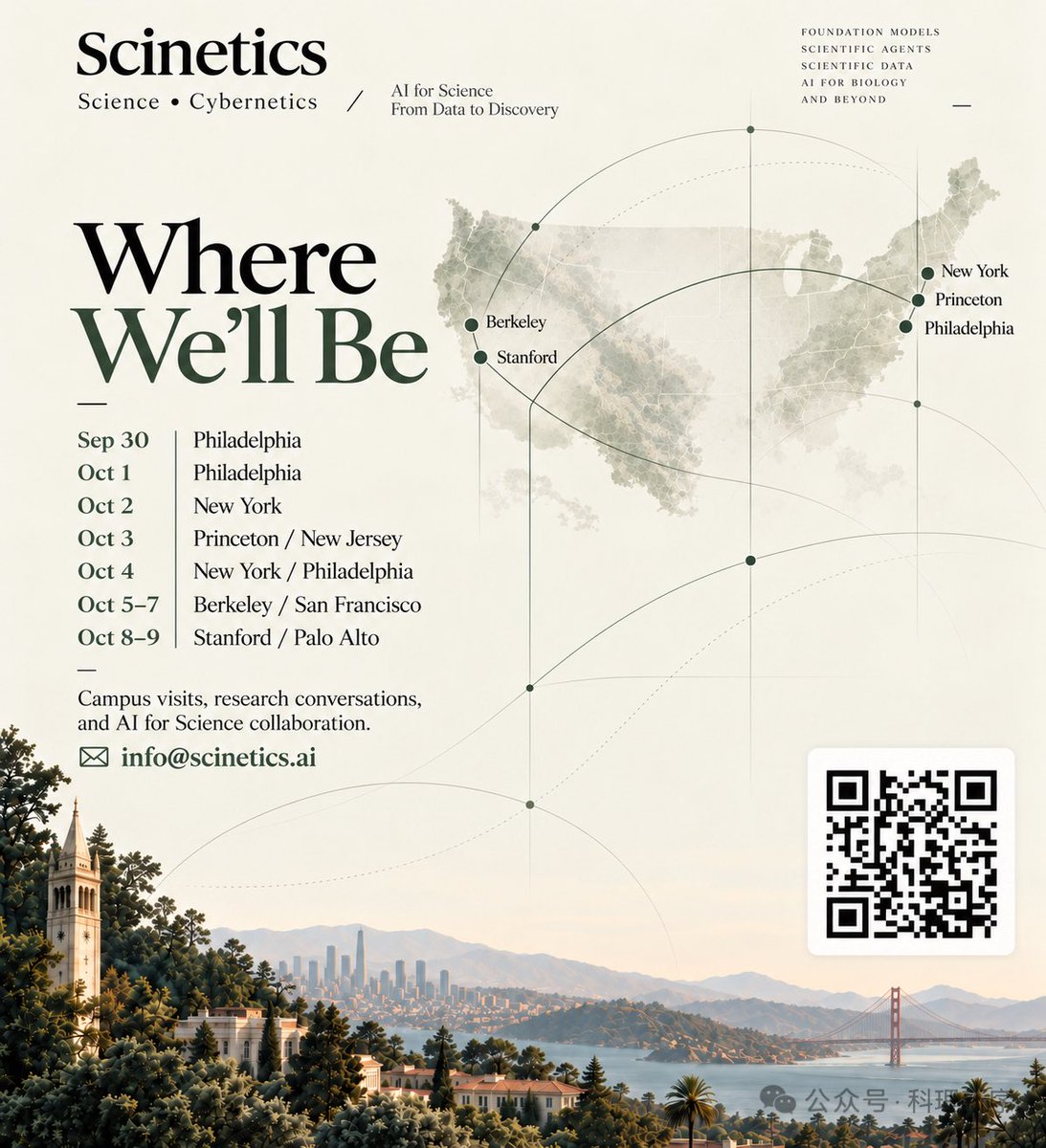
I’ll be traveling across Philly, NYC, Princeton, Berkeley, SF, Stanford and Palo Alto from Sep 30 to Oct 9 for a small Scinetics @Scineticsai tour.
I’ll also be around for COLM @COLM_conf and SF Tech Week @Techweek_ , so would love to meet more people working on AI for Science, scientific agents, foundation models, biology, data, experiments, and related areas.
Open to research, recruiting, business collaboration, or just grabbing a coffee and exchanging ideas. If you’re around, feel free to DM me. (the QR code is in Chinese and English, so DM me is the best way)
Building Intelligence for Science.
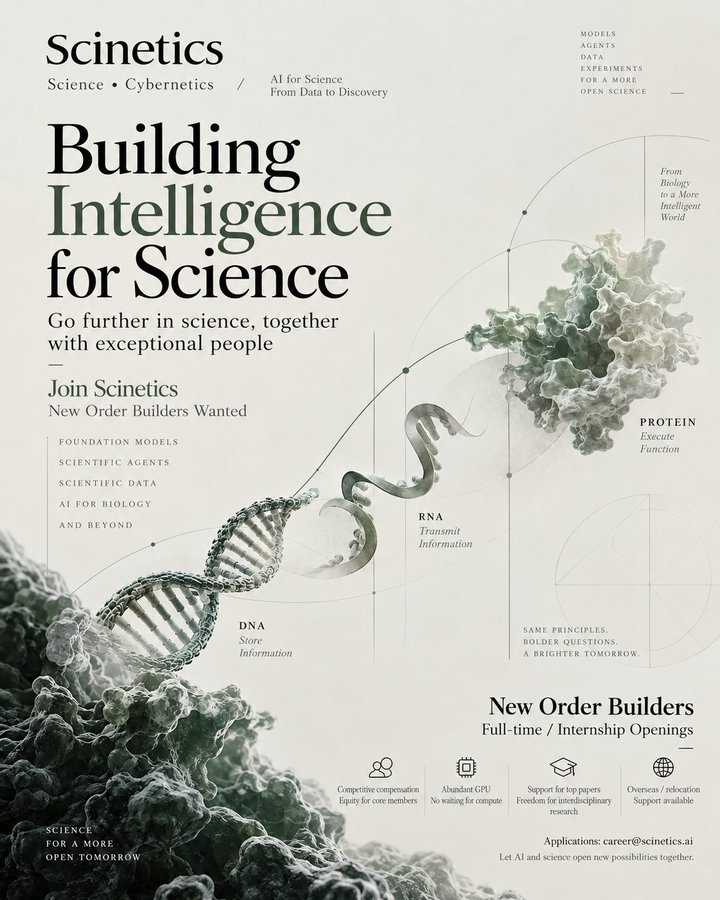
🚀 Scinetics is hiring — Join the next generation of AI for Science Scinetics is building AI systems for scientific discovery.
Our mission is to connect science foundation models, Scientific Agents, scientific data, automated experiments, and real-world feedback, enabling AI to move beyond assisting individual research tasks toward more autonomous scientific discovery. Following our recent nearly $7M seed financing, we are expanding our research and engineering team.
We are hiring for:
📷 Large Model Training Scientist / Engineer (Pre-training)
📷 Scientific Agent / Autonomous Research Scientist & Engineer
📷 Scientific Data & Data Engine Scientist / Engineer 📷 Brand & Content Operations Intern
We are looking for people who want to build, not just use AI. We welcome researchers and engineers from:AI / ML, biology, computational biology, protein design, chemistry, and related fields.
📷 Equity opportunities for key contributors
📷 Support for top-tier research and publications
📷 Relocation support for exceptional candidates 📷 Exceptional internship candidates may be considered for remote collaboration. Join us to build AI that can do science.
Apply: https://t.co/4fde9n5m6k
[email protected]
#ArtificialIntelligence #MachineLearning #BioAI
🚀 Scinetics is hiring — Join the next generation of AI for Science
Scinetics is building AI systems for scientific discovery.
Our mission is to connect science foundation models, Scientific Agents, scientific data, automated experiments, and real-world feedback, enabling AI to move beyond assisting individual research tasks toward more autonomous scientific discovery.
Following our recent nearly $7M seed financing, we are expanding our research and engineering team.
We are hiring for:
1️⃣ Large Model Training Scientist / Engineer
(Pre-training)
2️⃣ Large Model Post-training & RL Scientist / Engineer
3️⃣ Scientific Agent / Autonomous Research Scientist & Engineer
4️⃣ Scientific Data & Data Engine Scientist / Engineer
5️⃣ AI for Biology / Computational Biology Scientist
6️⃣ Brand & Content Operations Intern
We are looking for people who want to build, not just use AI.
We welcome researchers and engineers from:AI / ML, biology, computational biology, protein design, chemistry, and related fields.
Publications are not required. We value:
• Strong research ability
• Open-source contributions
• Technical projects
• The ability to turn ideas into real systems
What we offer:
🌱 Competitive compensation
📈 Equity opportunities for key contributors
🖥️ Strong computing resources
📚 Support for top-tier research and publications
✈️ Relocation support for exceptional candidates
📍 Shanghai, China
🌎 Exceptional internship candidates may be considered for remote collaboration.
Join us to build AI that can do science.
Apply:
https://t.co/ofzFRLyPxg
📩 [email protected]
#AI4Science #ArtificialIntelligence #MachineLearning #BioAI #Hiring
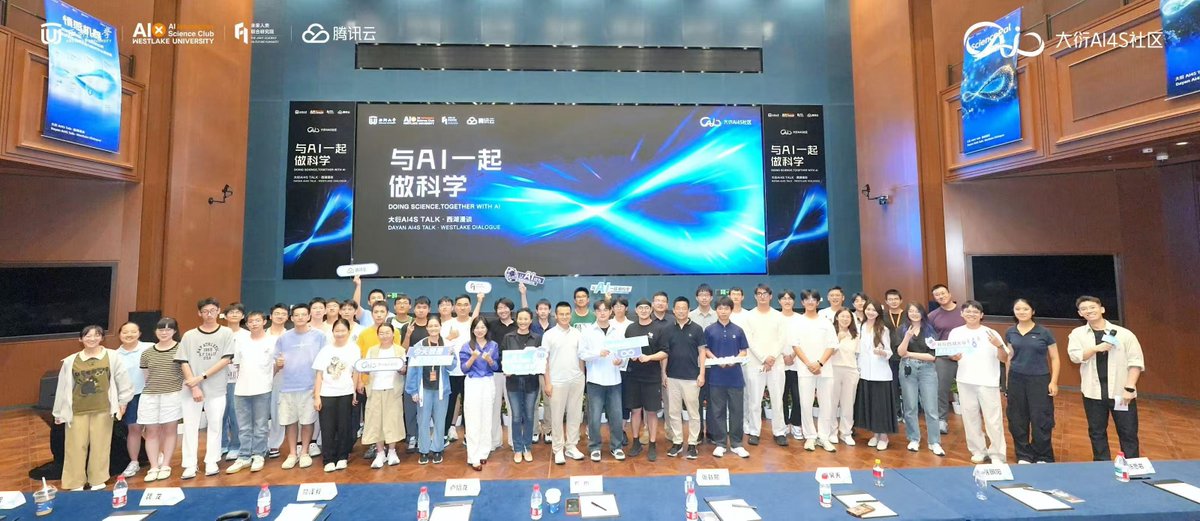
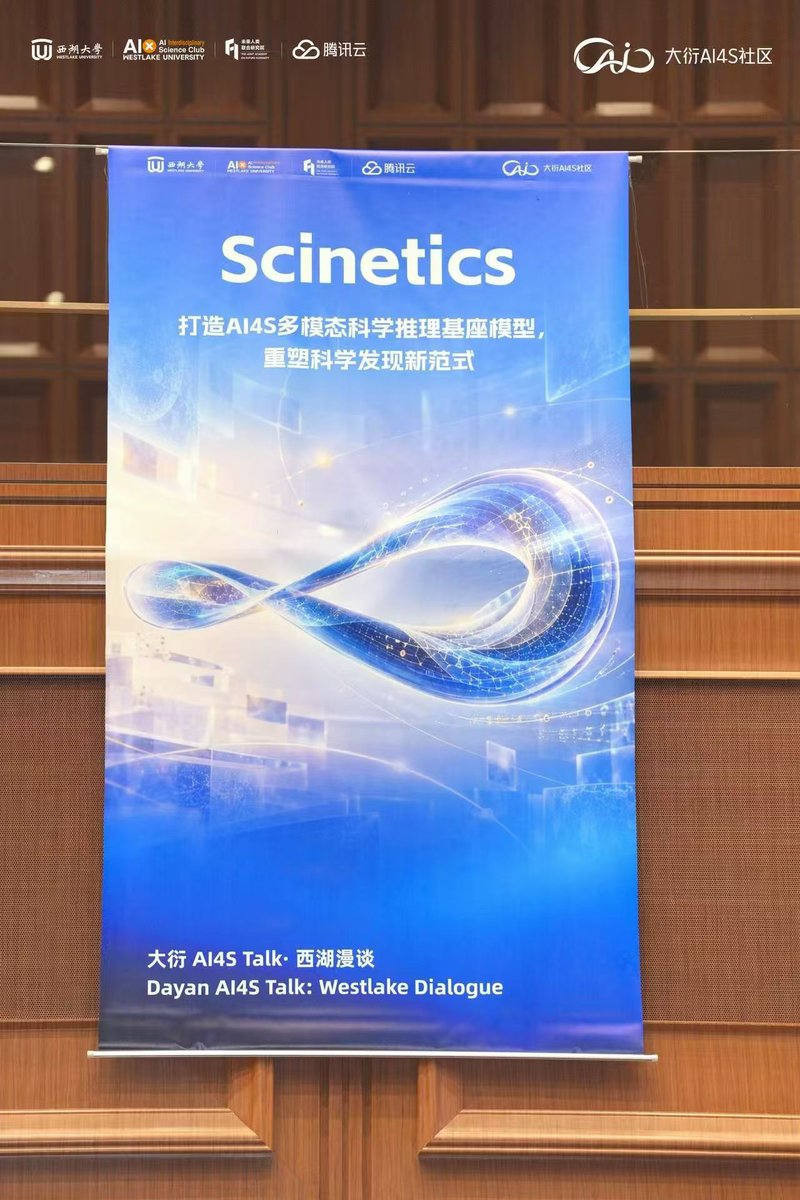
Thrilled to take part in this meaningful AI4S discussion at Westlake University with Scinetics @Scineticsai.
Through our Dayan AI for Science Community, Tencent Cloud hopes to connect with more scientists, to co‑develop scientific‑native foundation models and drive the evolution of AI‑for‑Science.
The future of scientific discovery is built by all of us.
Excited to share that I’ve founded Scinetics and am serving as CEO! 🚀
Our goal is to build AI4Science systems capable of recursive self-improvement (RSI). We’re exploring scaling laws for scientific foundation models and closed-loop discovery systems that connect computation with wet-lab experiments.
Stay tuned for our upcoming technical report—and come build with us!
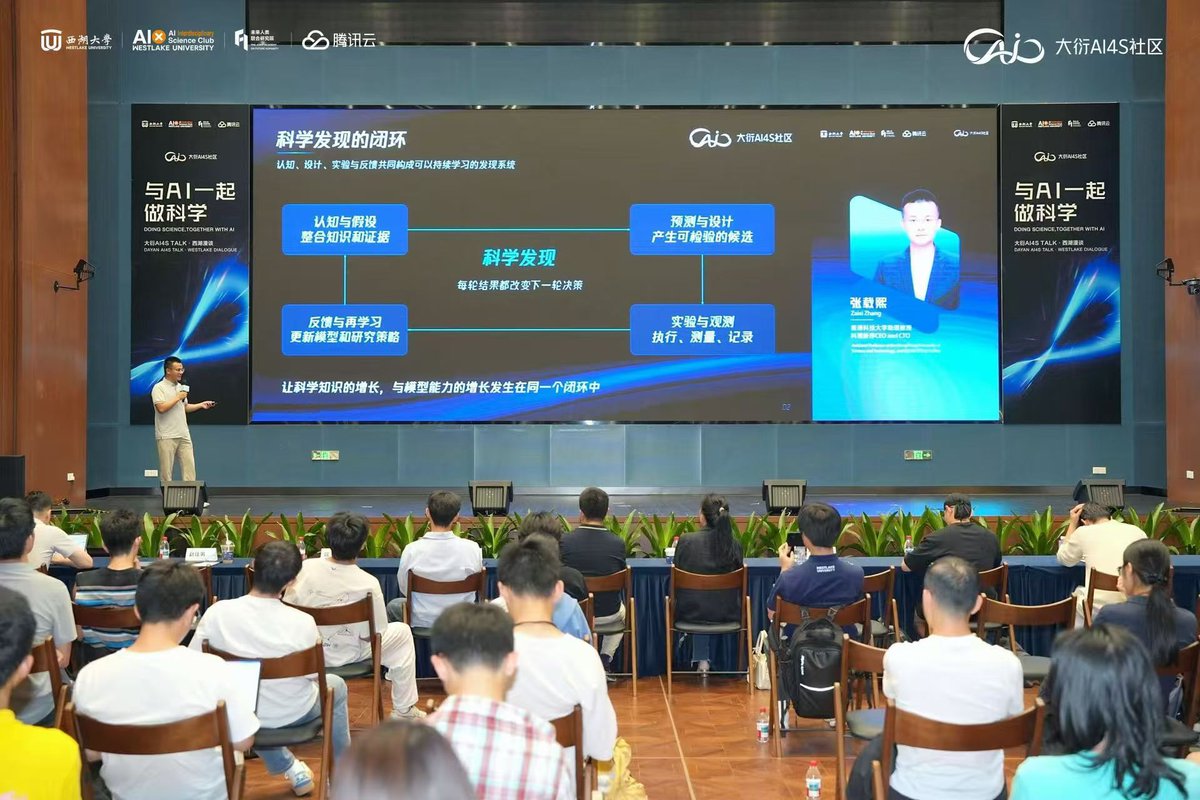
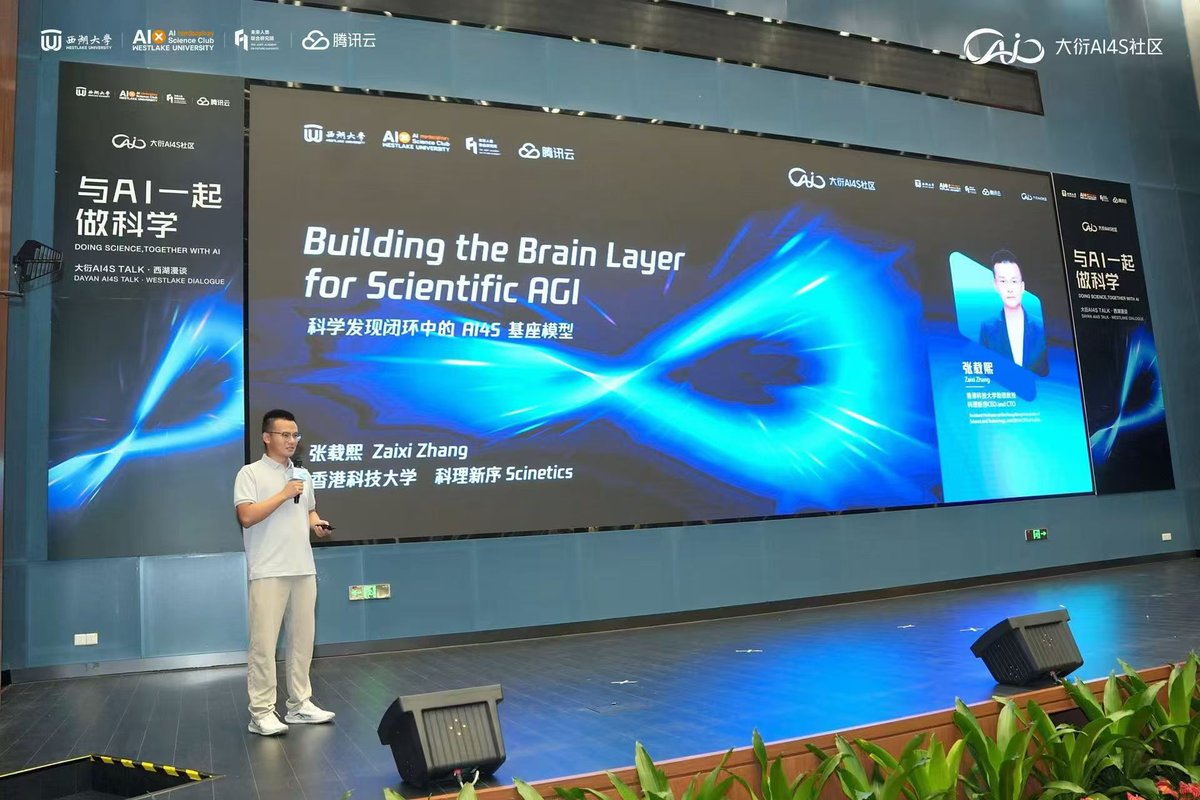
Our Founder & CEO, Prof. Zaixi Zhang @ZaixiZhang, recently spoke at the AI4S event at @Westlake_Uni, together with Tencent Cloud @tencentcloud, on “Building the Brain Layer for Scientific AGI.”
He shared our thinking on science-native foundation models and closed-loop scientific discovery, and exchanged ideas with students on how AI can become a new tool for doing science.
Great to see so much curiosity and energy around AI for Science. The future of science will be built together.
AI was built to understand language. We believe the next generation must learn to understand science.
In our founder interview, Zaixi Zhang @ZaixiZhang shares the vision behind Scinetics: science-native foundation models, scientific agents, and closed-loop systems that connect reasoning, experimentation, and real-world feedback.
Read more ↓
https://t.co/p8YbPiLSxO