#Bitcoin – What's Next?
The Big Sunday Report: All We Need to Know
🚩TA / LCA / Psychological Breakdown:
Congratulations to everyone who followed the plan, both shorts from 120k and 80,500 are printing big and the entire framework from September 2025 has played out with perfection. So what do I expect next?
The Confirmed BlackRock Bottom (CBB):
The final Bitcoin bottom remains what I call the CONFIRMED BLACKROCK BOTTOM (CBB). The region where BlackRock launched its ETF in early 2024, roughly the 40-48k zone, remains my primary target. Bitcoin has not completed its bear market cycle. Stage 4 is finished. Stage 5 has officially begun. The biggest mistake investors are making right now and did in the recent weeks is believing that 60k was the bottom. It wasn't. It's the trapdoor into Stage 5. Every bear market creates a point where people convince themselves the worst is over, only to discover that the most painful phase has not even started yet.
The White Line Support at 60k:
One important short-term observation: the white line support is currently holding at the 60k region. This is a key technical level that has supported price for the entire move since the BlackRock ETF launch. For now, this support is holding, and as long as it does, there is a high probability we see a move back up to the 65-66k region before continuing lower. This is not me betting on this move, this is just an idea to keep in mind. Bitcoin never moves down in a straight line, and at some point the market needs a counter-move to clear liquidity in the other direction. This could very well happen right here at 60k toward 65-66k. The white line will break and thats what i am betting on, but for now it is holding, and that is what we need to respect short-term. None of this affects my trading. I keep holding my shorts from 120k and 80,500, and I do not adjust the position based on short-term fluctuation.
Stage 5 Has Officially Begun:
We are now officially entering Stage 5 of my 6-stage bear market framework, the phase in which the true capitulation should happen. But do not expect the capitulation to happen by next week, or even in the coming few weeks. These moves take time, and my time frame to see the final bottom remains September-October 2026. Expect violent moves below 60k, followed by sharp rallies back above it. Expect brutal short squeezes, painful long liquidations and heavy manipulation in both directions. This phase is designed to inflict maximum pain on both bulls and bears before the final bottom is established. The same people who refused to sell at 100k, 80k and 70k often end up selling at much lower prices because the emotional pressure eventually becomes unbearable.
The Stage 5 Catalyst:
Every major bear market has had a final catalyst. This is the stage where MSTR-type positions come under serious stress, where leveraged players get liquidated, and where large players or even an exchange can collapse. In the previous cycle it was FTX that caused Bitcoin to bottom out. This cycle will likely have its own event that accelerates the final capitulation and catches most participants completely off guard. These moves appear suddenly and destroy positions overnight. This is Stage 5
Summary:
The shorts from 115-125k remain fully open, the shorts from 79-82k remain fully open, Stage 5 is officially underway, and the most emotional phase of this bear market is only just beginning. You are now able to join DrProfitPremium for 7 DAYS FOR FREE! The invite links will be shared in the next 24-48h in the Channel linked below. Join the channel and dont miss out on the invite links: https://t.co/zkdgaR6H3c
THIS IS NOT FINANCIAL ADVICE BUT EDUCATIONAL CONTENT ONLY.
@corbinwilliams@spencerpratt Because that’s not what happened.
Her percentage stays the same, which would mean she DID get votes, at about that percentage. It would go down if she was getting zero votes.
The answer is math.
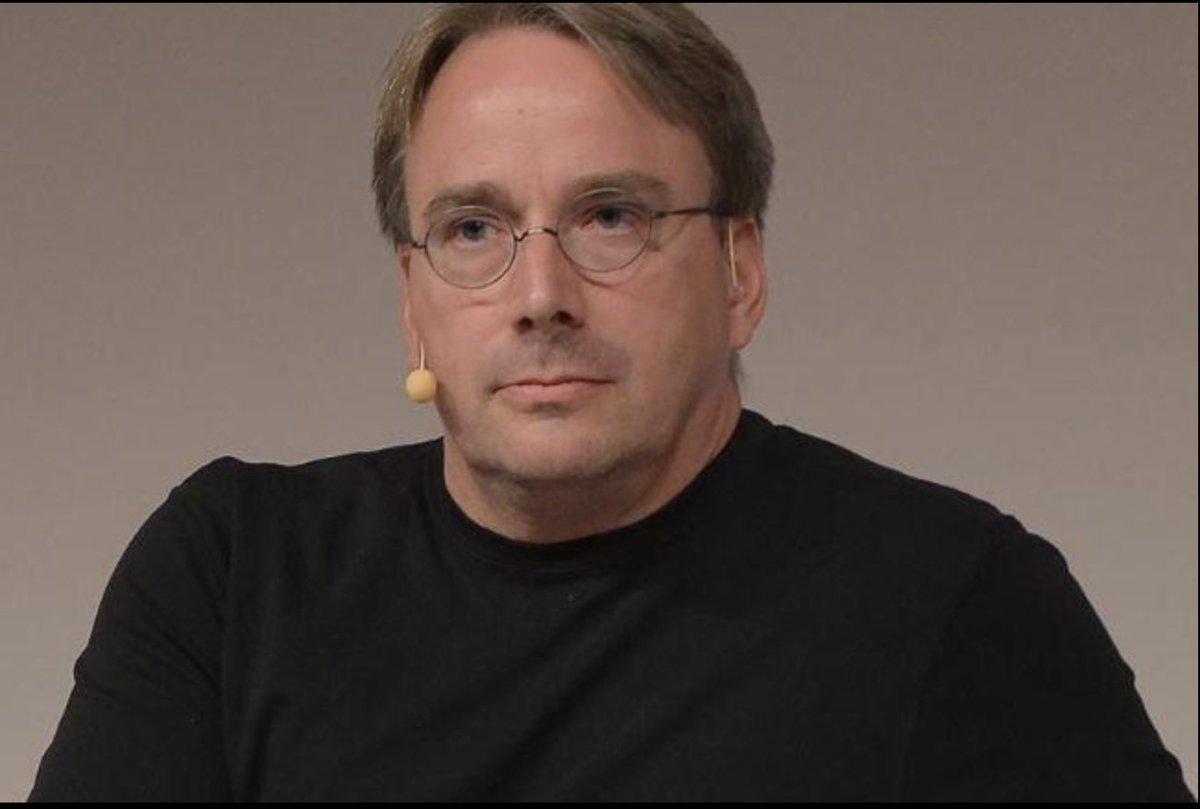
The creator of Linux just publicly called out the AI hype. Word for word.
Linus Torvalds took the stage at Open Source Summit 2026 and said this:
"When I see people saying 99% of our code is written by AI, I literally get angry. Because those same people — I can pretty much guarantee — 100% of their code is written by compilers. But they never say that."
He is not anti AI. The Linux kernel saw a 20% jump in submissions this release because of AI tools. He uses it. He gets it.
His point is something most people are too afraid to say.
AI is a productivity tool exactly like compilers were. Compilers boosted programming by 1000x. AI adds another 10x on top. Enormous. But nobody says "the compiler wrote my code." So why are we saying AI wrote it?
He also flagged something nobody is talking about.
AI is flooding small open source projects with drive-by bug reports. Someone runs a prompt, files a report and disappears when asked for a patch. Maintainers with one or two people are drowning trying to keep up.
"Sometimes AI reports a bug and when you ask for more information the person has done that drive-by and does not even answer your question. That is the real burnout issue."
And his final warning was the sharpest of all.
"People who do not understand the complexity of systems will prompt systems and write processes that will fail."
The AI hype crowd is very loud right now.
Linus has been building real systems for 35 years. When he talks, engineers listen.
Full interview here:
https://t.co/LmXJtvKc4O
Dirac equation ✍️
In 1928, a physicist named Paul Dirac wanted to describe how electrons behave when they move close to the speed of light, but there was no equation that could do this correctly. So he created one. When he solved it, the math gave him two answers, one for the electron and one for a mysterious mirror-image particle with an opposite charge. He wasn't looking for this result, but the equation suggested that for every particle in nature, there must be an opposite an antiparticle. This was the prediction of antimatter, something that no one had ever seen or even thought of at the time. Four years later, scientists found it in the real world just as the math predicted. It was one of the most amazing moments in science, not because someone conducted an experiment and uncovered something new, but because a man sat alone with a pencil, followed the logic of mathematics, and the universe turned out to be exactly what the numbers indicated it should be.
Want to write thrilling stories? Nick Bilton has the playbook.
He's written for Netflix and The New York Times, and this episode is a tell-all class on how to create tension with hooks, cliffhangers, drama, and conflict.
Highlights below:
1. Evil characters only work if readers care about them.
2. The best way to make readers care about an evil character is to humanize them. You can do that by focusing on simple details like how they lose their keys. Or, you can write about their mother because every murderer has a mother who loves them.
3. You can't look down on your characters. You have to look out with them.
4. Rule for writing screenplays: Get into the scene as late as you can, and get out of it as early as you can.
5. Fiction stories have the opposite shape as non-fiction ones.
6. In fiction, the kicker comes at the beginning and the summary comes at the end. In non-fiction, the summary comes at the beginning and the kicker comes at the end.
7. How’d Nick learn to tell better stories? By reading murder mysteries.
8. If the story's good enough, the book will fly off the shelves. Look at the Twilight series. The books sold like crazy even though the writing stinks.
9. How do you write good cliffhangers? Show people a little bit of the future, but don't reveal everything.
10. Ask the question at the end of one chapter and answer it shortly after. The answer doesn't need to come right away, but you have to answer it soon.
11. There are two kinds of stories that work: Big ones about something small, and small ones about something big. Stories in the middle are usually terrible.
12. Nick once asked the legendary journalist David Carr for advice. The response: “Keep typing until it turns into writing.”
13. You can tell a good story without knowing everything that happened, but you do need to know enough to make the reader feel like they're there.
14. Writers often over-describe their scenes. You only need three details. For example, if you're at a campground, you might only need the sight of the pine needles on the ground, the smell of a nearby campfire, and the sound of crickets in the distance.
15. We admire characters more for trying than their successes (this is rule #1 in Pixar's 22 Rules of Storytelling).
That's just a little taste of what's in this episode with @nickbilton. You can watch the full thing below. If you'd rather watch on YouTube or listen on Spotify or Apple, and I've shared those links in the reply tweets.
Wish I found this one, for you guys before today!
If you're not a pure mathematician and you're struggling with functional analysis, check out this masterpiece titled ''An Introduction to Functional Analysis for Science and Engineering'' by David Miller (Stanford University).
If you're looking for a non formal primer, this is it. I'll keep it brief, go and check it out!
🔗👇
"Pure Mathematics" by Stuart Parsonson is a classic text for the study of advanced mathematics. First published in 1970, it covers algebra, trigonometry, analytic geometry, complex numbers, matrices, vectors, polynomial equations, conic sections, probability, and numerical methods with remarkable rigour and clarity.
More than half a century after its publication, I believe it remains a valuable read for anyone seeking to build a strong mathematical foundation and explore classical mathematics in an accurate and systematic way.
https://t.co/uTO1s4Ccbx
A beautiful example of an "optimal stopping problem" – Feynman's restaurant problem – with a great backstory behind it. This is a fun, well written article, and a fun math problem too.
https://t.co/0Nng9KLDHa
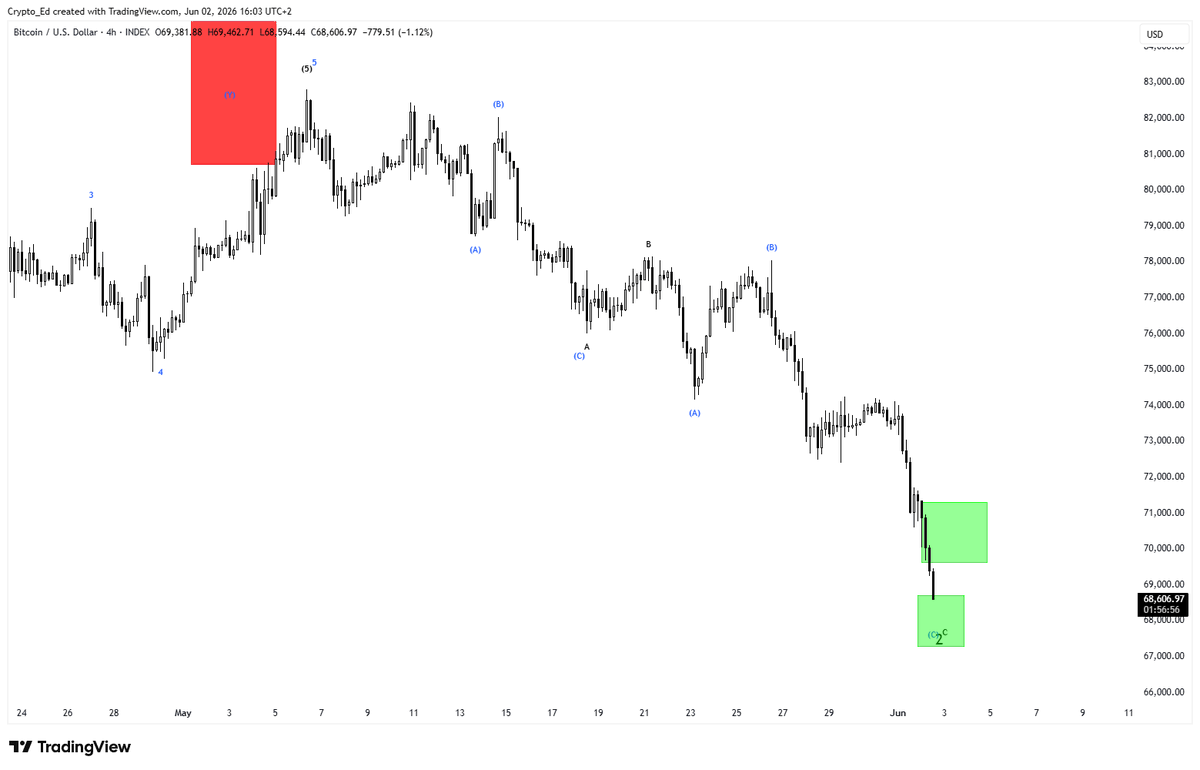
#BTC
As written yesterday: "not 100% convinced about that green box, we might go a bit lower"
Unfolded like that, we're now hitting another box and I think we're close to "a" bounce.
"Computing Neural Network Gradients" is a clear introduction to the mathematics behind backpropagation and gradient computation in neural networks.
Published as part of Stanford CS224N, these notes walk through the chain rule, computational graphs, vectorised derivatives, and efficient gradient calculations with concrete examples rather than black-box formulas.
Gradients are at the heart of modern deep learning. Every parameter update in a neural network, from a small classifier to today's Transformer-based LLMs, ultimately relies on backpropagation and efficient gradient computation.
https://t.co/vQ9xoTDSYD
One under-discussed possibility regarding Thiel's apparent move to Argentina is that Argentina has - for many years - allowed certain wealthy, foreign billionaires to establish de facto parallel states in the country, where the federal government declines to intervene, even to protect its own citizens and laws.
Roughly seven years ago, I traveled to Argentina and wrote about how UK billionaire Joe Lewis (who Trump recently pardoned after he was found guilty of insider trading) had established one such "parallel state" in Argentine Patagonia, and even controls a private airport that the Argentine state doesn't even pretend to monitor. (Article link is below)
Did Milei allow Thiel the opportunity to experiment with one such "parallel state"? Given how Thiel and his associates are eager to create "network states" along similar lines, and Milei's own ideological leanings and personal ties to that crowd, it is an angle worth considering.
My 2019 article on Joe Lewis in Argentina for MintPress: https://t.co/RsFvYxfOiI
"Vectors" is a comprehensive introduction to vectors and the foundations of linear algebra. It covers vector notation, geometric interpretation, vector operations, magnitude, direction, dot products, and vector decomposition, supported by diagrams and visual explanations that make abstract concepts easier to understand.
The guide also provides the conceptual groundwork needed to approach more advanced topics such as matrices, vector spaces, and linear transformations.
Vectors play a fundamental role not only in mathematics and physics, but also in computer science, computer graphics, machine learning, robotics, and data analysis. For example, vector representations are widely used in modern AI systems, where measures such as cosine similarity help compare documents, images, embeddings, and other high-dimensional data.
https://t.co/OHc35nl3Iz