Why Annual Soil and Water Testing is Important for Golf Course Performance
Behind every great playing surface lies data-driven turfgrass management. Conducting annual tests on organic matter, physical characteristics, chemical composition, and water quality provides a solid foundation for maintaining healthy, consistent, and sustainable turf conditions.
Organic Matter Testing: This tracks the accumulation of organic material that affects firmness, water infiltration, and oxygen exchange.
Physical Analysis: This evaluates the distribution of sand particles, porosity, and the overall performance of the root zone.
Chemical Testing: This identifies nutrient balance, salinity levels, and pH, helping to guide precise fertility programs.
Water Quality Testing: This ensures that irrigation sources support turf health and maintain stable soil chemistry.
When performed and interpreted by a qualified consulting agronomist, these tests convert raw data into actionable management strategies. This helps superintendents make informed decisions, reduce inputs, and optimize playability throughout the year.
Science + Experience = Enhanced Playability and Performance.
#TurfgrassManagement #GolfCourseScience #Agronomy #SoilHealth #GolfCourseMaintenance #PrecisionTurf #SustainableGolf
I have been asked my opinion of why the greens at Augusta national are drying out so rapidly and looks so bad on TV.
The first thing they say is it would never look like that when Brad Owen was there.
That couldn’t be further from the truth. These are tournament conditions.
I know that of all the people reading what I’m about to post less than one percent of you has PGA TOUR championship Agronomy experience so you truly won’t understand.
But I’m going to post what I just wrote to a very close colleague of mine.
What Augusta Greens Actually Look Like Under Tournament Setup
Those greens can visually appear:
• Slightly off-color or “dry”
• Tight, almost sealed at the surface
• Firm to the point of sounding hollow underfoot
But that’s often by design, not decline.
⸻
Let’s Talk Real Agronomy (Your World)
1. Firmness vs. Health — The Fine Line
Augusta pushes:
• Low moisture content (VWC)
• High firmness (Gmax)
• Extreme green speeds (13–15+ on the Stimp)
To get there, you:
• Back off irrigation hard
• Use heavy rolling
• Possibly regulate growth aggressively
👉 Result:
The plant is under controlled stress, which can look like decline but is actually peak performance conditioning.
⸻
What Could Be Different Post-Brad Owen?
Let’s be real — no one at Augusta just “drops the ball.” But subtle philosophical shifts can absolutely change surface perception.
1. Moisture Management Philosophy
A new Director might:
• Run leaner moisture targets
• Trust SubAir more aggressively
• Push firmness earlier in the week
👉 Risk:
• Edges and high spots get too dry
• Plant loses elasticity → ball won’t hold → players complain
⸻
2. SubAir & Firmness Aggression
Augusta’s biggest weapon is SubAir.
Changes could include:
• More continuous SubAir use
• Pulling moisture even during marginal stress periods
👉 Outcome:
• Surfaces get firmer faster than roots can keep up
• Optics = “dry/unhealthy”
⸻
3. Growth Regulator Strategy
If they adjusted:
• Trinexapac-ethyl rates
• Frequency or stacking with other PGRs
👉 You could see:
• Slight color loss
• Reduced recovery capacity
• Tighter canopy (great for speed, risky for stress)
⸻
4. Rolling vs. Mowing Balance
If they leaned more into:
• Double/triple rolling
• Less mowing
👉 That can:
• Increase firmness and speed
• But also compact the surface layer, especially on push-up zones
⸻
5. Nitrogen & Spoon-Feeding Adjustments
Even a slight shift like:
• Less frequent spoon feeding
• Lower N inputs pre-tournament
👉 Can lead to:
• Less “pop” in color
• Reduced cushion → firmer, louder, faster greens
⸻
6. Weather Window Misread (This is Big)
Even Augusta can get caught if:
• Evapotranspiration spikes unexpectedly
• Wind + low humidity outrun irrigation corrections
👉 That’s when you see:
• Localized dry spots
• Slight wilt that TV cameras exaggerate
⸻
The Player Factor (Important Reality)
Players say:
“They’re unhealthy”
What they often mean is:
• “I can’t hold this green”
• “The ball isn’t reacting predictably”
• “This is borderline unfair”
👉 That’s not agronomy failure — that’s setup philosophy clashing with playability expectations.
⸻
The Augusta Standard (Why This Matters)
At a place like Augusta:
• “Too soft” = unacceptable
• “Too slow” = unacceptable
• “Slightly stressed but elite performance” = preferred
They intentionally operate:
Right at the edge of agronomic failure… without crossing it
⸻
My Professional Take (Speaking Your Language)
If something is slightly off, it’s most likely:
• A moisture threshold pushed just a hair too low
• Combined with environmental conditions that accelerated stress faster than expected
• Not a systemic decline or poor management
It’s just Tournament Golf
Stop by and visit with Brookside Laboratories/Amplify Consultants (booth #3765) at the GCSAA Conference and Trade Show next week in Orlando, FL. Many consultants from around the country will be present to greet attendees.
Are all soil testing laboratories created equal?
No!!
Brookside Labs provides reliable soil data that depends on more than just running a test. Differences in extraction methods, instrumentation, sample preparation, and quality control can lead to variability in results.
Minimum Levels for Sustainable Nutrition (MLSN) is a modern, data-driven approach to fertility that aligns perfectly with Precision Turfgrass Management on golf courses.
Listen as @J_J_Dempsey presents his groundbreaking trial on Aquaritin 19 vs Urea proving that 6oz of Aquaritin 19 really CAN outcompete 18lbs of Urea!
https://t.co/qu4JtJpZUf
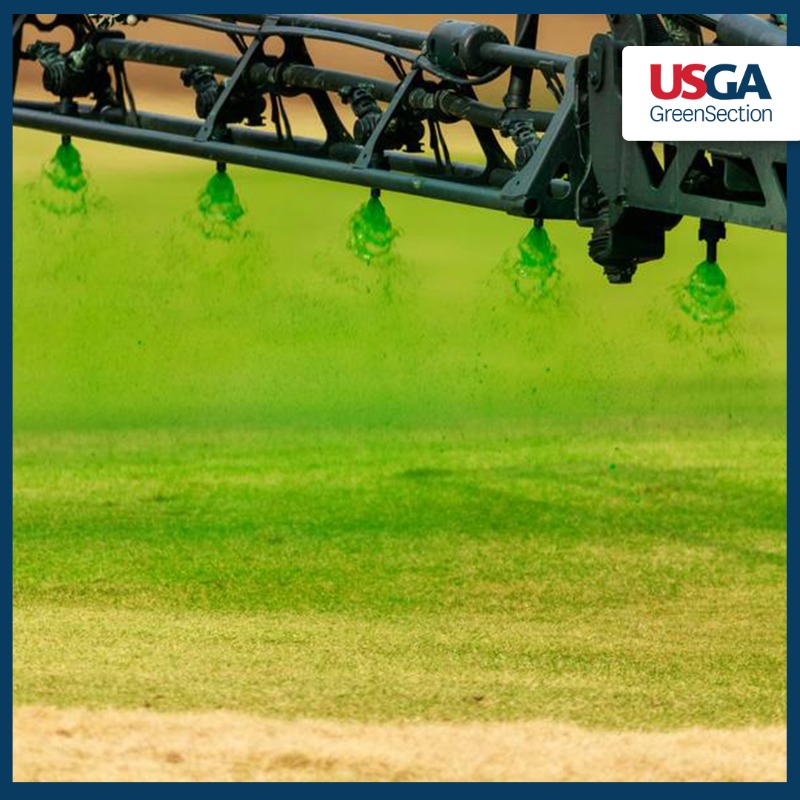
Turf colorants are a practical and cost-effective way to give dormant warm-season turf a green color through the winter, but there is an art to these applications 👇
"I was able to try it out on greens towards the end of our season and I am impressed with the results. Although I did not see much difference in the Aquaritin Sparc vs our normal wetting agent, the impressive part is that Sparc costs 4X less per Acre than our other wetting agent."
https://t.co/AkJlvWJ4xL
Aquaritin 19 on its own, applied at label rates delivered the same turf quality as Urea applications with 4,700 times less N (0.0007 Lbs/1000 vs 0.19 Lbs/1000)
https://t.co/EwBXp5SqLt
In today’s Record, we have information on a variety of late-fall course maintenance topics including aeration, fertilizer applications, and turf colorants. We also have a new video on the value of range mats and much more. Click to subscribe 👇
When it comes to nano-silica vs conventional fertilizers in nutrient uptake and overall performance, there's no comparison. But don't take our word for it.
https://t.co/I0wzqdTGRb
Golf course construction and renovations are currently very popular across the country. With this trend, there is a growing need for careful planning and attention to detail to ensure that projects turn out as intended.
I came across an excellent article by golf course architect Forrest Richardson that emphasizes how every project is the sum of its parts. He highlights the necessity of paying attention to detail, as it contributes significantly to enhancing the game of golf.
In addition to the design and construction team, it is crucial to involve a consulting agronomist. This professional provides chemical and physical testing, monitors quality control during the construction phase, and offers agronomic support as the golf course transitions into the grow-in and maintenance phases with a comprehensive agronomic plan.
https://t.co/ntGRI47UVr
@forrestphx@ncturf@gcsaa@sdgcsa@mngcsa@peaksgcsa
Earthworm casts can be disruptive to playability and maintenance in the fall, but there are ways for superintendents to minimize the impacts.
👉https://t.co/KWVNY2sfPZ