It is not really inaccurate for one to say that the gospels, as an aggregate, fall under “fabrication” even if parts of their contents happen to be correct.
This is especially true if we consider a traditional ḥadīth-transmission grading system (which explains the terminology being used here), rather than examining them solely from a historical perspective.
There are many ways to identify a fabrication (waḍʿ), other than simply looking at the narrators’ credibility among critics or a discontinuity of the chain.
For example, one of the identifiers is if the contents of the transmitted text are known to be rationally false or contrary to the teachings of unequivocal scriptural meanings among Muslims. A Muslim can believe that the gospels were deliberately distorted or subjected to copious errors.
That being said, I personally think that the entire premise is flawed, as ḥadīth-experts don’t believe that the adāʾ—not the taḥammul—of a disbeliever (kāfir) holds any value to begin with.
There is nothing problematic in saying “we have the same God” to Christians, and it is completely baseless to say that translating “Allāh” as “God” is problematic.
Saying the opposite of this is not true to our classical scholarly tradition. It’s just a case of clever-but-not-actually-clever semantics.
If you say “we believe in the same God” to a Christian, you are referring to Al-lāh (“The God” or “God”), that both Muslims and Christians believe in. Believing in other gods doesn’t negate that.
The Qurʾān is a “message” (balāgh) revealed “for people” to “know that He is One God.” [Q14:52] So, when Muslims communicate this to non-Muslims, it is a message from God and a clear, intelligent expression of faith rather than an imposition of a view.
Furthermore, jurists from the Ḥanafī school, who engaged with Persians for a long time, have even argued the validity of saying “ba-nām-e khudā-ye buzurg” to commence one’s prayers (w/ disagreement on conditions).
Can you hear “Allāh” in that phrase? It was translated into Persian. The same has been said about Turkic and African languages. From the Shāfiʿīs, al-Rāfiʿī (d. 623) and others have discussed if derogatory speech about “khudā” (“God” in Persian) makes you a non-Muslim or not.
If a scholar were to truly read and understand the detailed discussions on the category of ʿalamiyyah for the word “Allāh,” and how that discerns it from all His other attributes in light of that categorization, he will never feel comfortable with critics of using “God” or “khudā” or any other word for “Allāh” in a language.
There is nothing understandable at all in claiming “God” is a problematic translation for “Allāh.” It’s just contemporary laymen-shoptalk based on misunderstandings.
On the Famous Couplet for the “Five Objects” [al-Mafāʿīl al-Khamsah]—«حمدت حمدًا حامدًا وحميدا … رعاية شكره دهرًا مديدا»—: Is it Correct? A thread [🧵] on the topic:
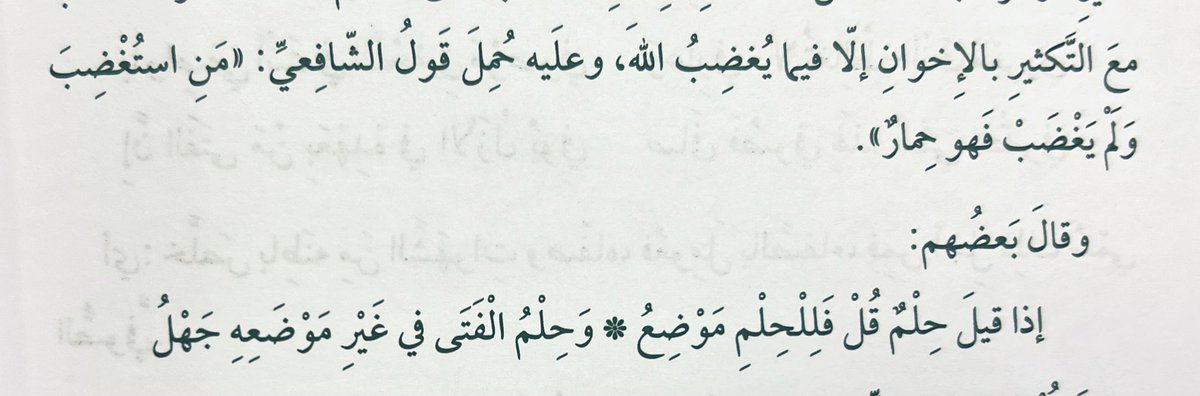
When someone’s stupidity begs for a harsh check, giving him that is more sensible than acting like some eternal sunshine guru. As al-Shāfiʿī famously said, “If one doesn’t get angry when his anger is provoked, he’s a donkey (ḥimār).”





![fahd_ibn_ala's tweet photo. On the Famous Couplet for the “Five Objects” [al-Mafāʿīl al-Khamsah]—«حمدت حمدًا حامدًا وحميدا … رعاية شكره دهرًا مديدا»—: Is it Correct? A thread [🧵] on the topic: https://t.co/3Qr3rghTkv](https://pbs.twimg.com/media/FyNj1nbXwAEzaIs.jpg)