@ScottRobo308 Original inputs come out tax free. Only earnings are taxed (I think). 10 percent penalty should only be on the earnings (I'm not sure how you untangle how much of what's left is original investment vs earnings)
In this prospective matched-cohort study:
• 33% of false-positive #cfDNA cases showed CPM on placental cytogenetic testing '
• CPM pregnancies had lower median birth-weight percentiles, but no significant increase in adverse outcomes
Read more: https://t.co/2sLyVfaXSs
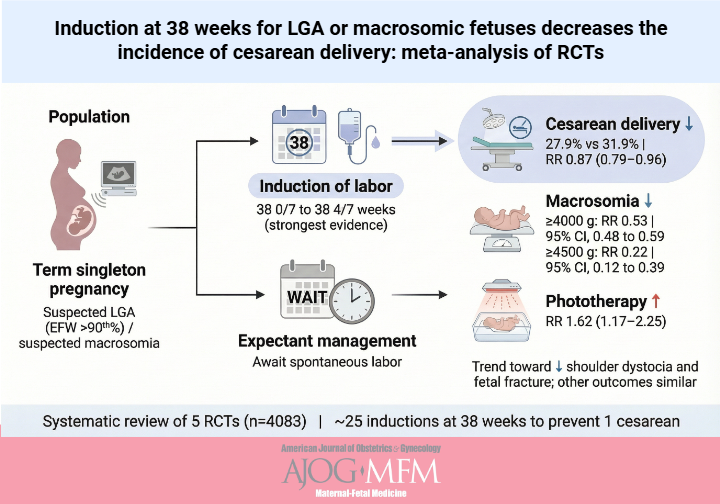
🚨 Hot off the press from AJOG MFM! 🚨 Inducing labor at 38 weeks for suspected LGA cuts cesareans by 13%, lowers macrosomia, and shows fewer complications. Read the full study: https://t.co/Ewy8bOJKp1
AJOG Presents: Early prediction of congenital cytomegalovirus infection and symptoms after maternal primary infection: an in vivo study using cytomegalovirus polymerase chain reaction in chorionic villi and in amniotic fluid https://t.co/fZLId6tQo9
Azithromycin in preterm premature rupture of membranes: population pharmacokinetics and dose optimization - Schematic of the final population pharmacokinetic model https://t.co/dALn87AyQp
Umbilical Artery Doppler Deterioration, Time to Delivery, and Risk of Fetal Death in Early-Onset Severe Fetal Growth Restriction Progressing to Absent or Reversed End-Diastolic Flow https://t.co/7EJGiFNSDM
An Intrapartum Cesarean Delivery Classification System – a prospective eighteen year longitudinal cohort study - Cesarean Delivery categorization into seven subcategories https://t.co/8JN0nJ4dUy
Assessment of cervical softening and the prediction of preterm birth (STIPP study): a prospective cohort study - measurement of cervical consistency in pregnancy https://t.co/aILXlqmN9Y
AJOG Expert Review in Cesarean: Evolution of modern cesarean delivery: historic perspective and new challenges - Long-term surgical complication of multiple cesarean deliveries https://t.co/FixZEUqzYf
AJOG Expert Review in Cesarean: Prophylactic antibiotics to prevent postcesarean infection: which antimicrobial, when, how, and why? https://t.co/Sw6kGyTq2s
K-1 season just started. Between now and early April, millions of investors will receive a form they do not understand from a partnership they invested in.
Most will forward it to their CPA without reading it. That is a mistake.
This is a plain-English guide to reading your K-1. No jargon. No accounting degree. Just the boxes that matter and what they mean for your money.
A Schedule K-1 is what you get when you own a piece of a partnership, an LLC, or a fund. These entities do not pay federal income tax. They pass everything through to you.
The income, the losses, the credits. You pay the tax on your personal return at your own rate.
The K-1 is how the IRS tells you what you owe.
The first thing most investors get wrong is the difference between income and distributions.
These are not the same thing.
Boxes 1 through 11 show your share of what the partnership earned or lost on paper. You owe tax on these amounts whether or not you received a check.
The IRS does not care if the cash hit your bank account. If the K-1 says you earned it, you owe it.
Box 19 shows the cash that went to your bank account. This is what you received.
Here is the part most investors miss.
In a well-run real estate partnership, Box 19 is often higher than the income boxes. That means you received more cash than you owe tax on. The gap is tax-free cash flow, created by depreciation.
If Box 2 shows a negative number, that is a paper loss. Your share of the depreciation. That loss can shield your other passive income from tax.
You collected real dollars. The IRS sees a loss. That is the engine of tax-efficient real estate.
Now go to Part II. Find Box I and Box L.
Box I shows Qualified Nonrecourse Financing. This is your share of the partnership's real estate debt. The IRS lets you count this toward your basis. That means you can take losses and receive cash distributions up to this amount without triggering a tax hit.
Box L tracks your tax basis. Think of it as your skin in the game. Starting in 2026, every K-1 must use the Tax Basis Method. This gives you a clear picture of how much room you have left to take future losses and distributions before you create a taxable event.
Most investors skip these two boxes. Do not. They tell you the health of your position in the deal.
Now the income boxes.
Box 1 is ordinary business income. For limited partners, this is almost always passive income from operations.
Box 2 is net rental real estate income. This is where depreciation lives. A negative number here is a good sign. It means the depreciation write-offs exceeded the rental income. That paper loss offsets other passive income on your return.
Box 9c is Unrecaptured Section 1250 gain. If the partnership sold a property, this is the IRS clawing back the depreciation you took over the years. It is taxed at up to 25%. Not fun, but important to understand.
That covers the basics. If you stopped here, you already know more about your K-1 than most investors.
But there is one more section. And this is where it gets interesting.
Go to Part III. Find these boxes.
Box 8. Short-term capital gains.
Box 9a. Long-term capital gains.
Box 9b. Collectibles gains.
Box 10. Net Section 1231 gain.
If any of those show a positive number, you are not just looking at a tax bill.
You are looking at an eligible capital gain. And eligible capital gains unlock the most tax-advantaged structure for real estate investing that exists in the tax code today.
The Opportunity Zone.
You can take those gains and roll them into a Qualified Opportunity Zone fund. In exchange, three things happen.
You defer the tax on your original gain. A 2025 gain that would create a bill in April 2026 gets pushed to April 2027. Your capital stays working for an extra year.
You invest in real estate that generates bonus depreciation. Those write-offs offset other passive income on your return before the building even stabilizes.
And after ten years, you sell the OZ investment and pay zero federal capital gains tax on the appreciation. Zero depreciation recapture. Every dollar of profit you built over that decade is yours.
No other structure does all three. Not a 1031 exchange. Not a cost segregation alone. Not a charitable trust.
One more thing most investors do not know.
Your K-1 gain has a different deadline than a stock sale. As a limited partner, you can elect to start your 180-day clock from the partnership's filing deadline on March 15. That means a 2025 K-1 gain could give you until September 2026 to invest.
So when your K-1 arrives this month, do not just forward it and forget it. Open it. Read it. Now you know what you are looking at.
And if Boxes 8, 9, or 10 show a positive number, you have a decision to make.
Pay the tax and move on.
Or put that capital to work in a structure designed to build tax-free wealth for the next decade.
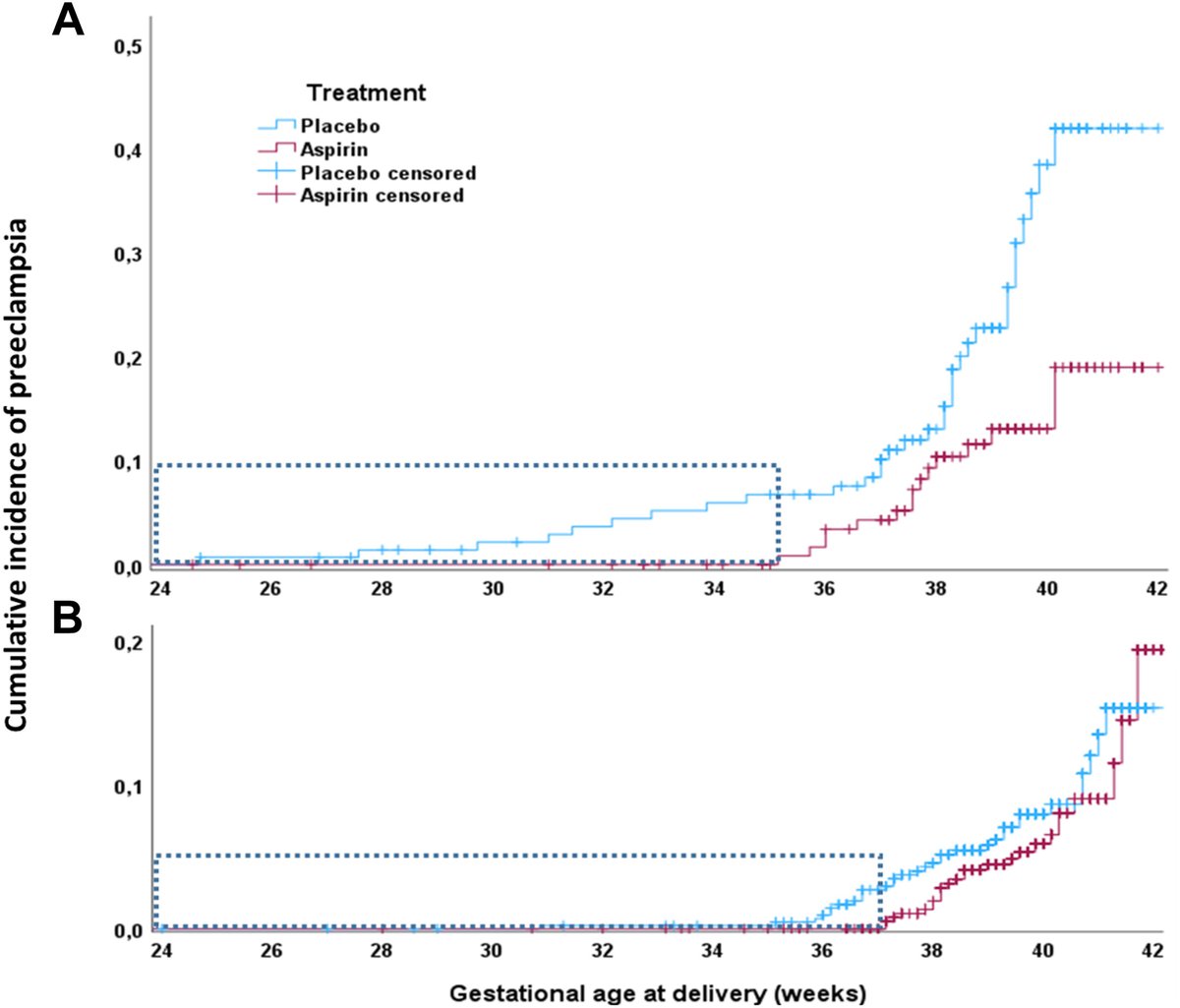
The effect of aspirin on the risk of preeclampsia based on the Fetal Medicine Foundation first-trimester risk - Cumulative incidence of delivery with PE according to the first-trimester FMF risk https://t.co/hppjZUN59D
AJOG Presents: Maternal risk stratification and planned birth improve pregnancy outcomes at term: a population-based cohort study https://t.co/NYwWBE4CLc
AJOG Expert Review: Diabetes in pregnancy and major new advances in diabetes care using long-acting and ultralong-acting insulins - Pharmacodynamics of basal insulins https://t.co/0E3SYfeY4j